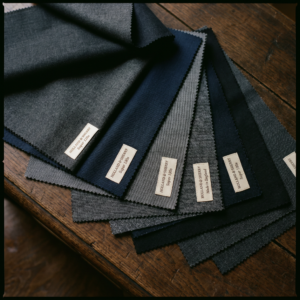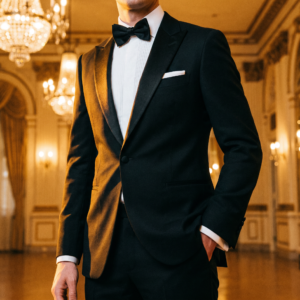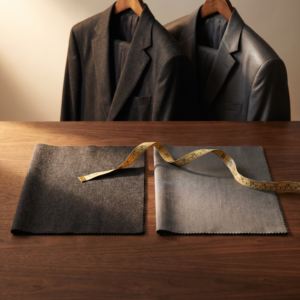
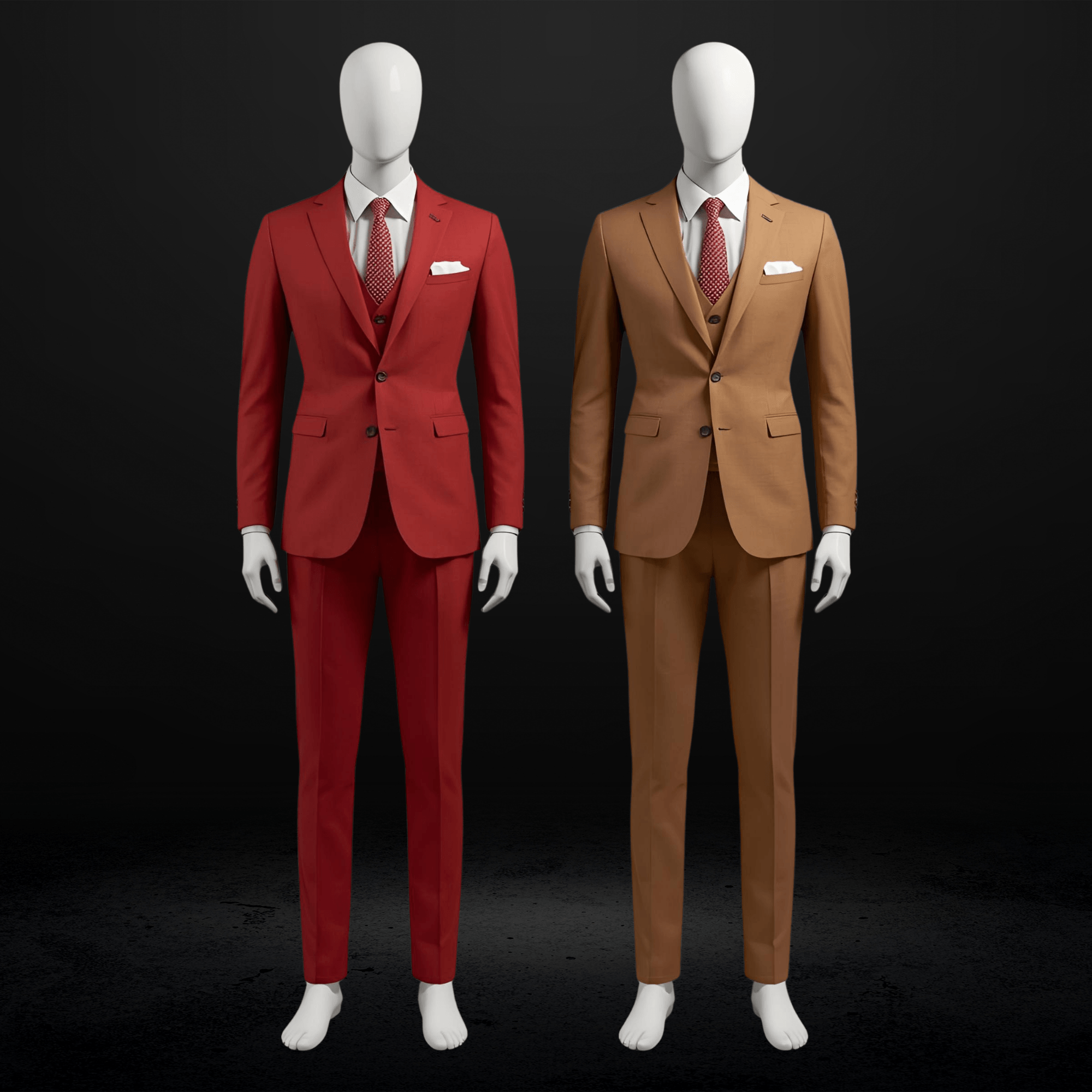
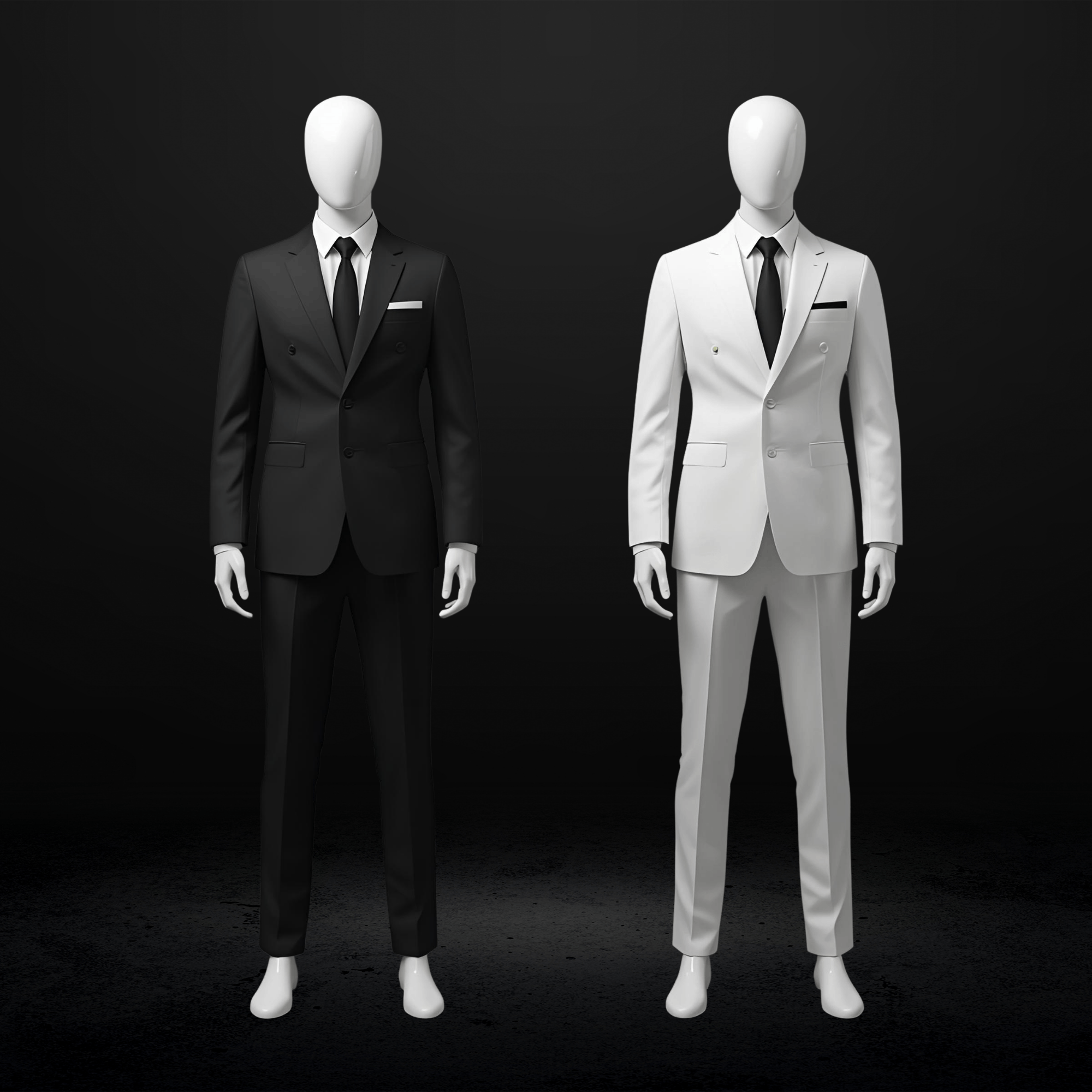
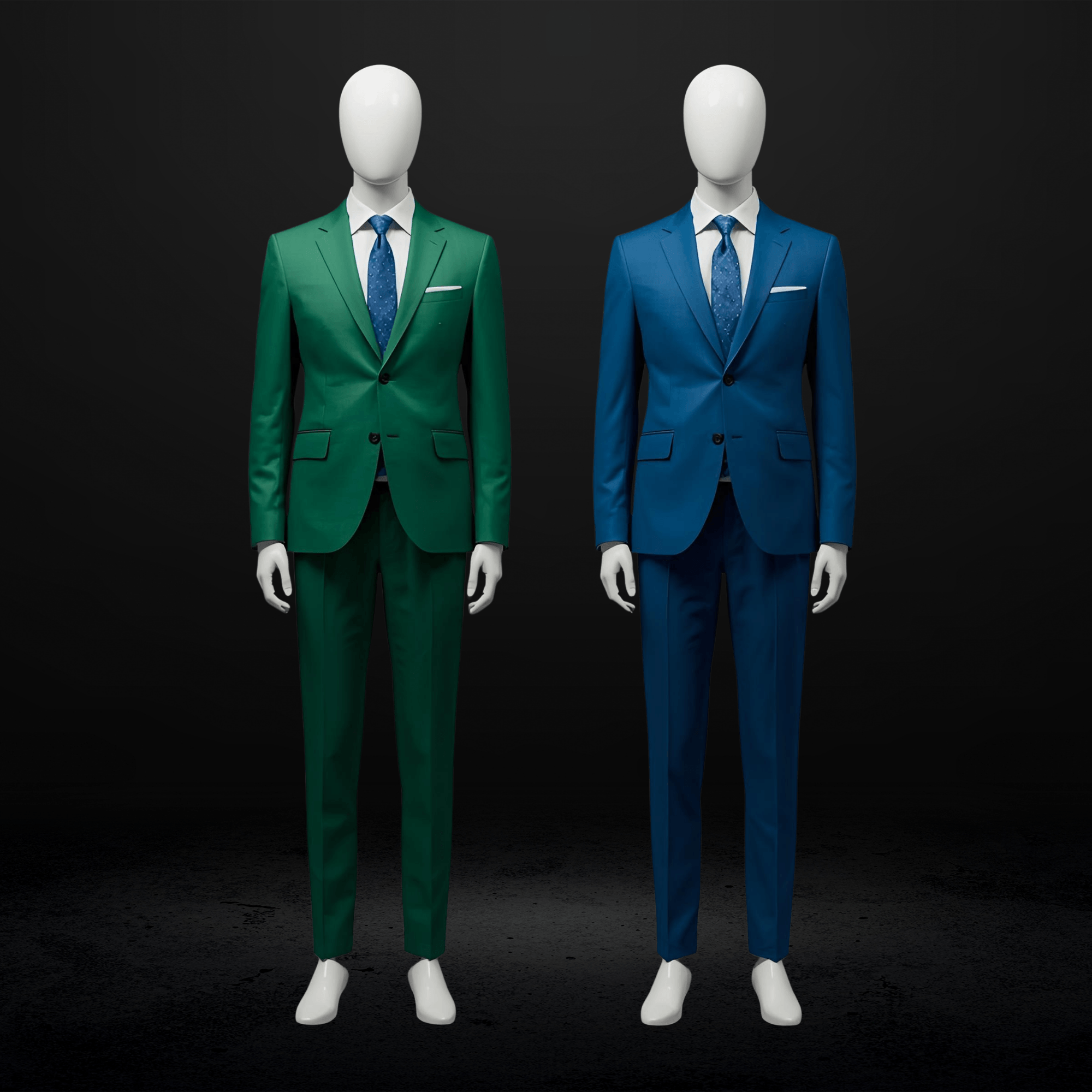
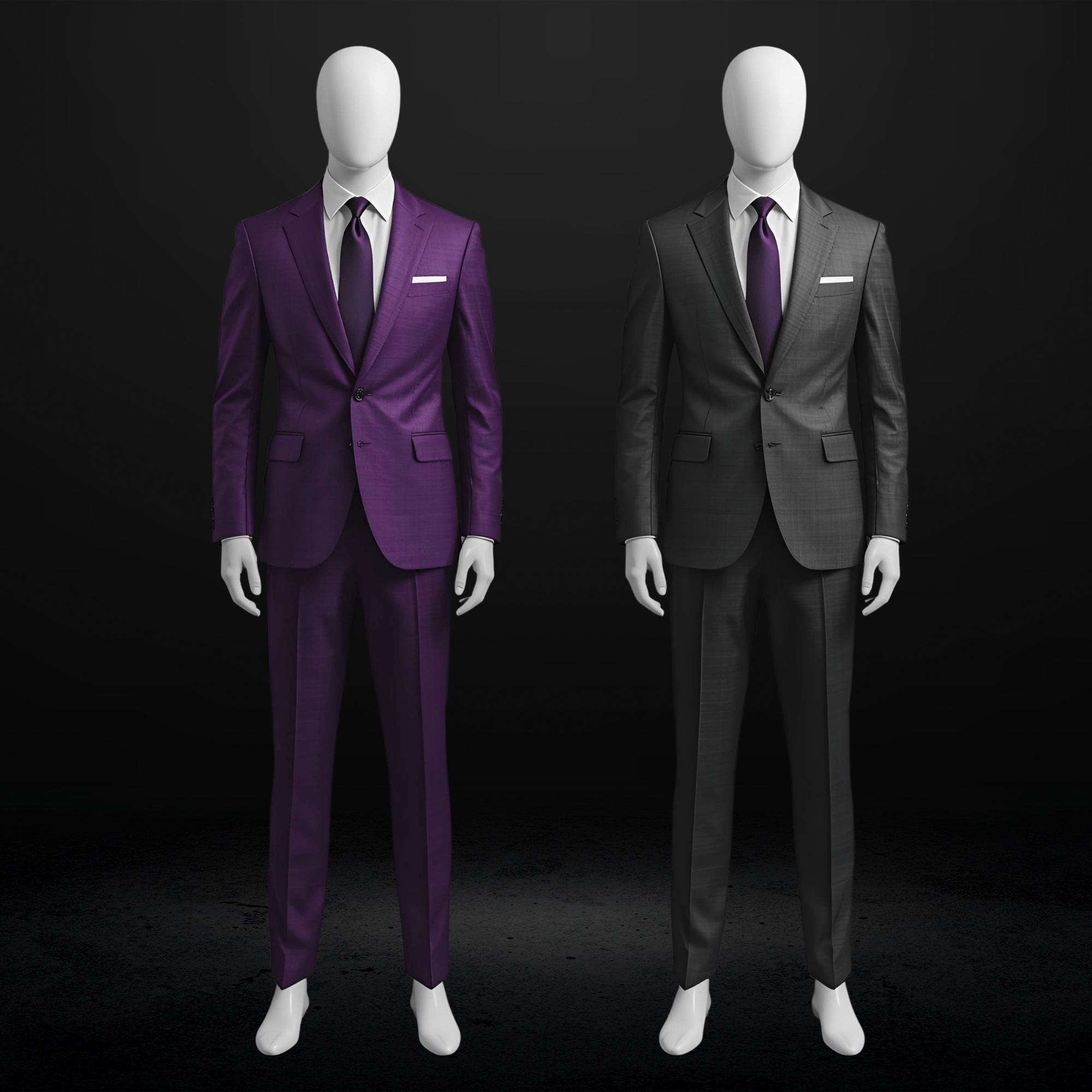
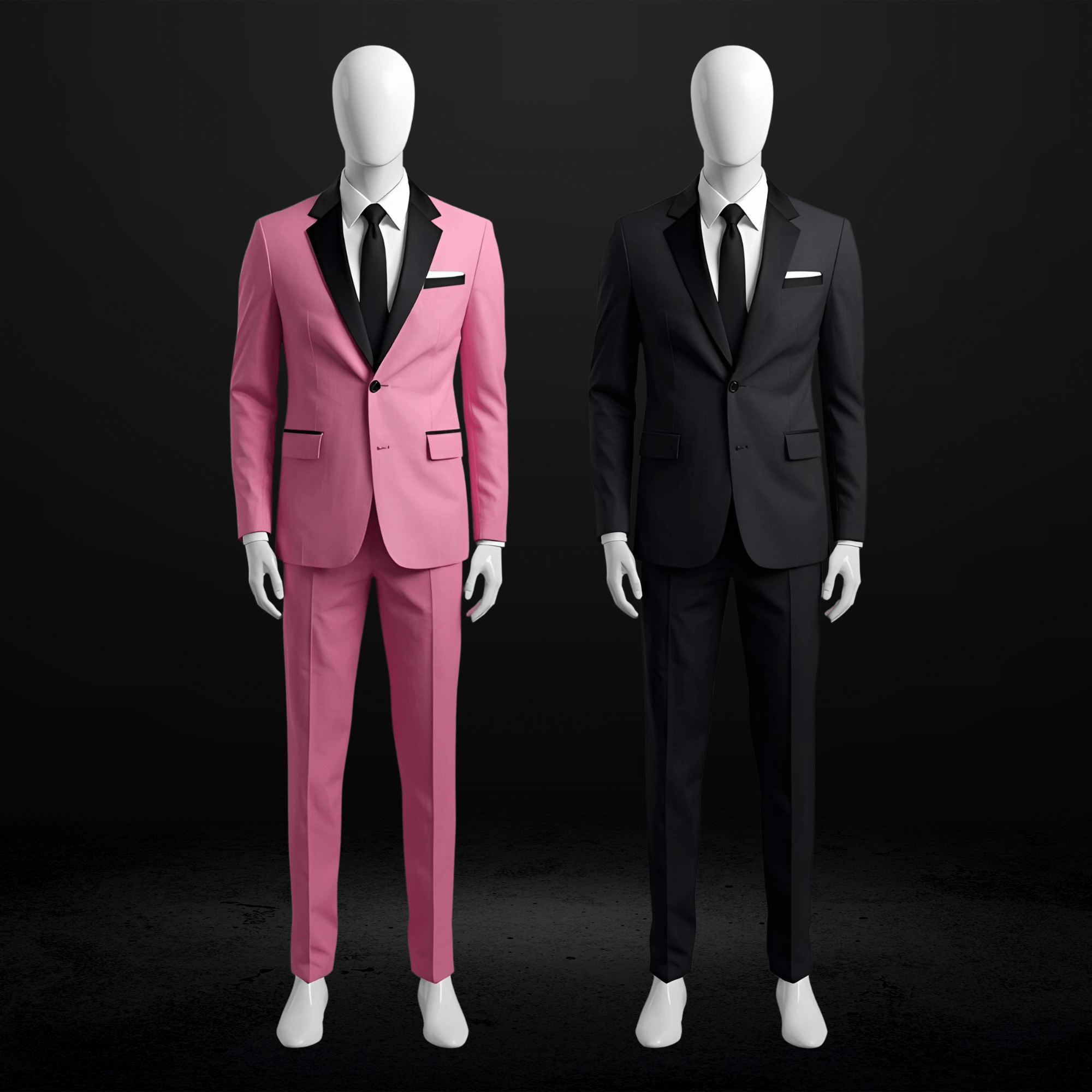
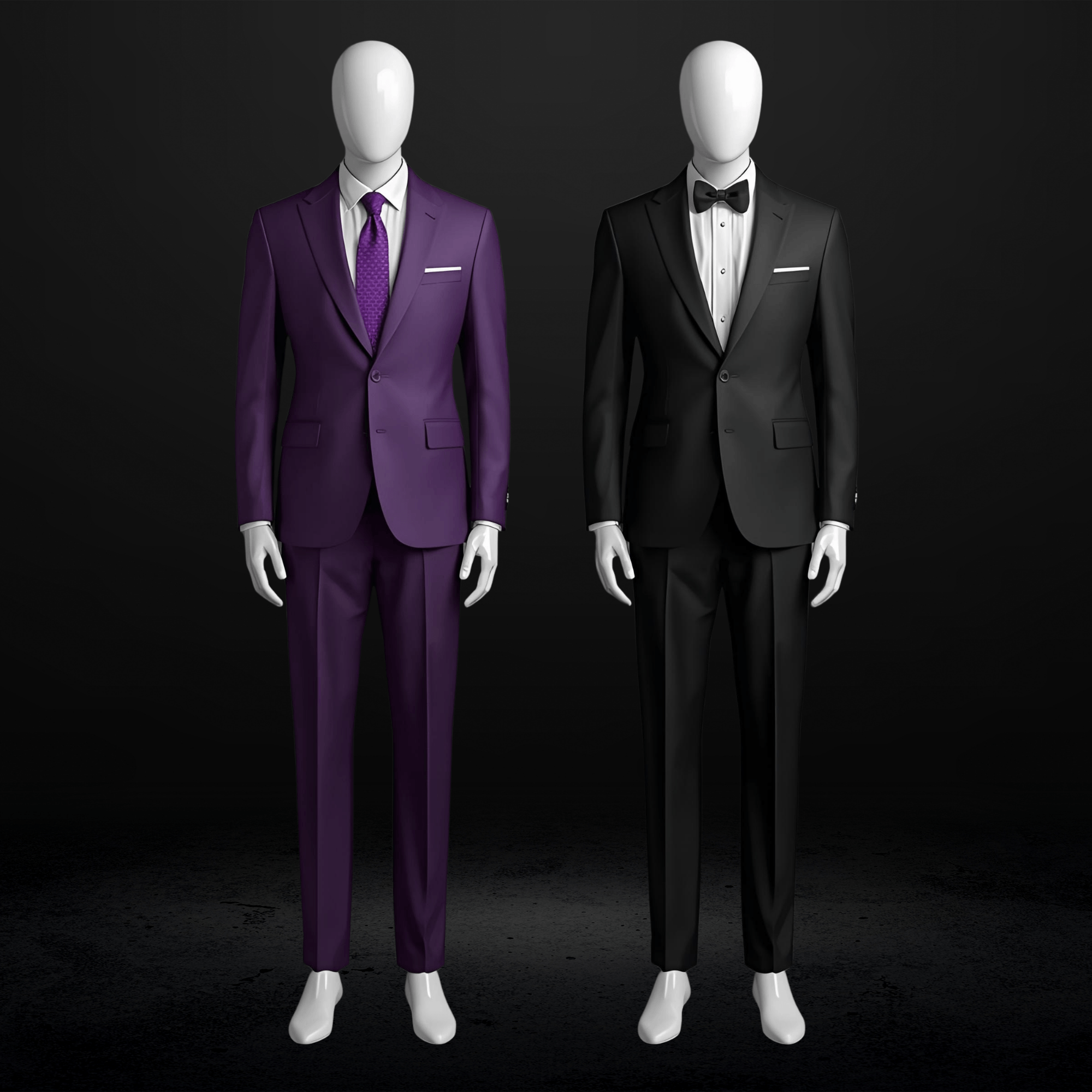
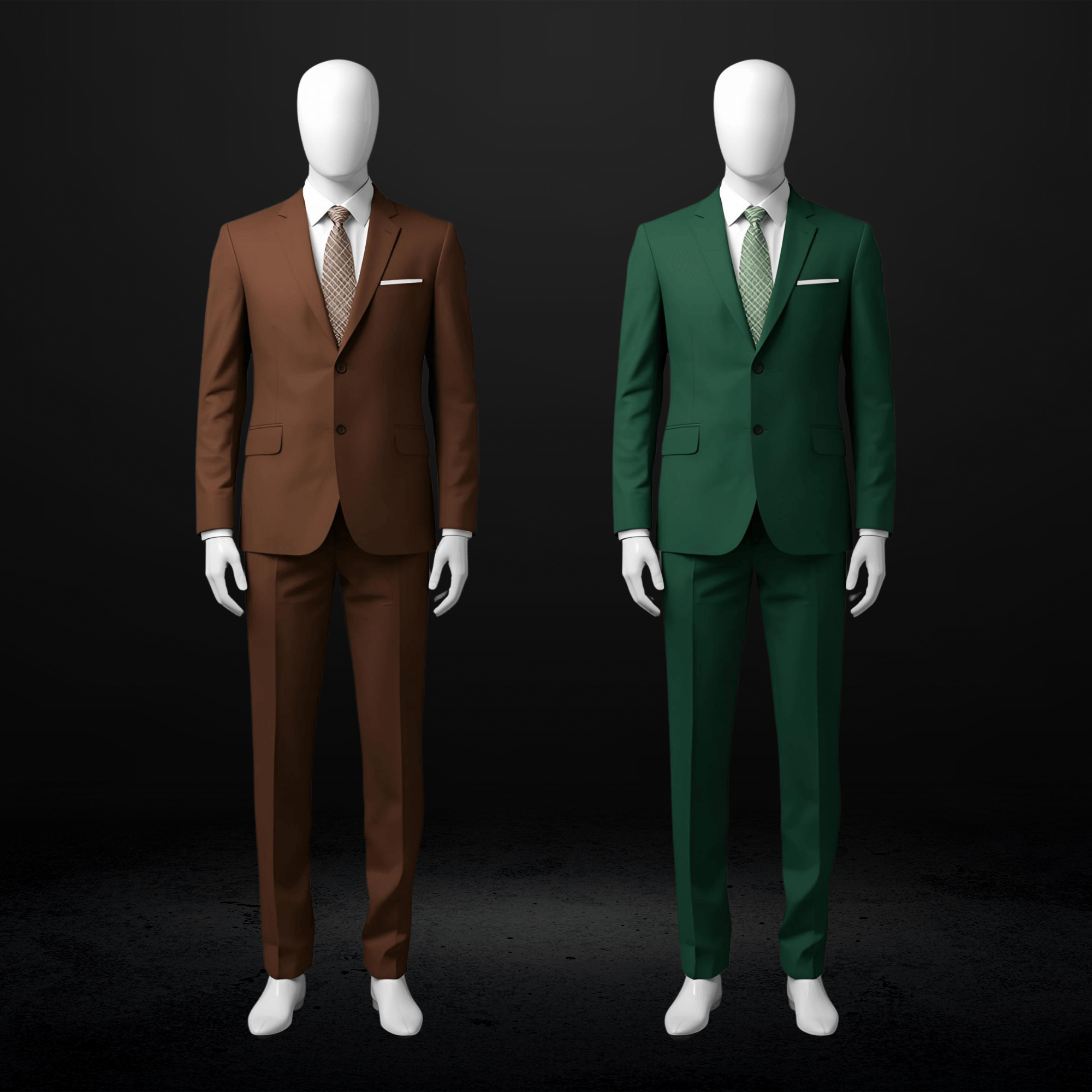
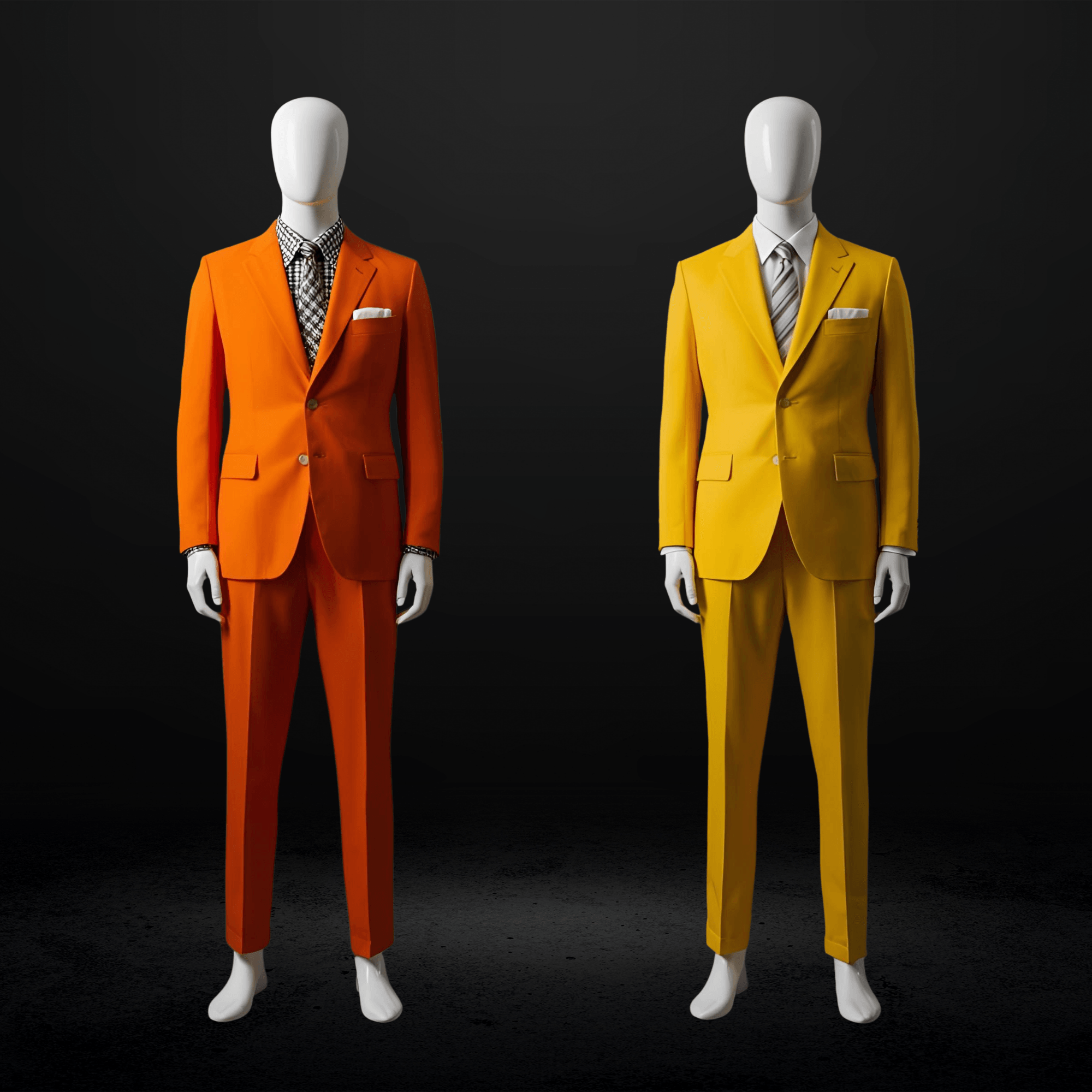
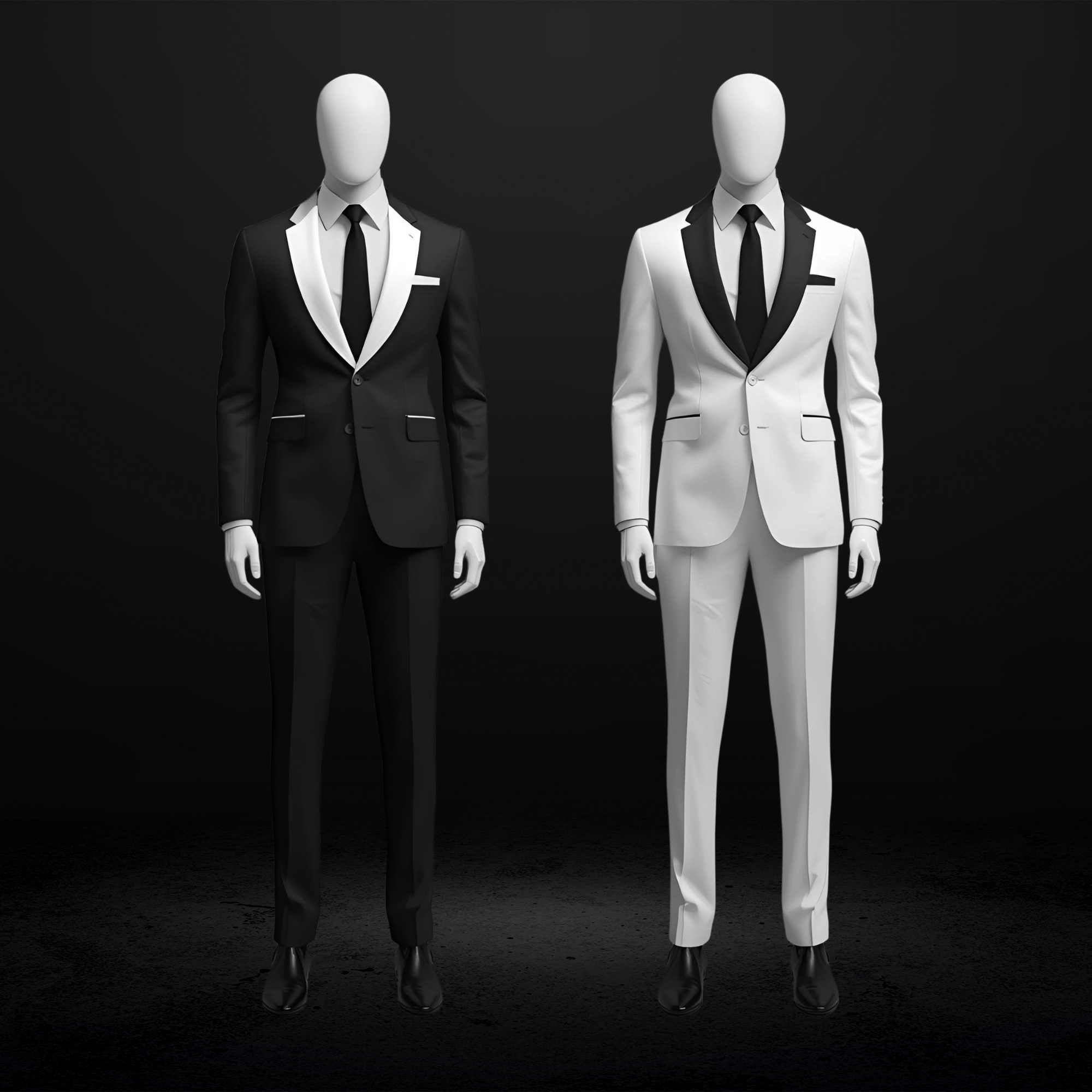
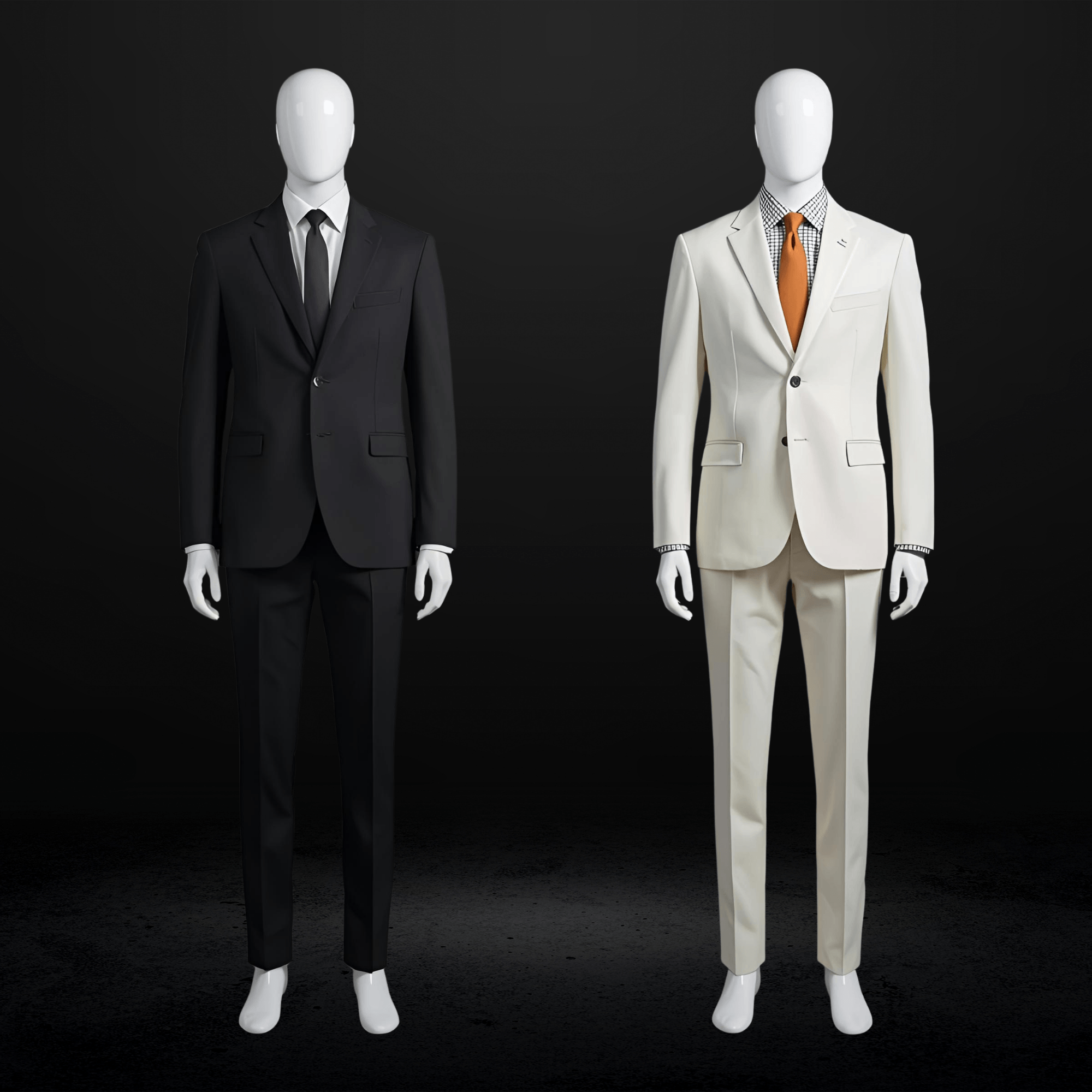
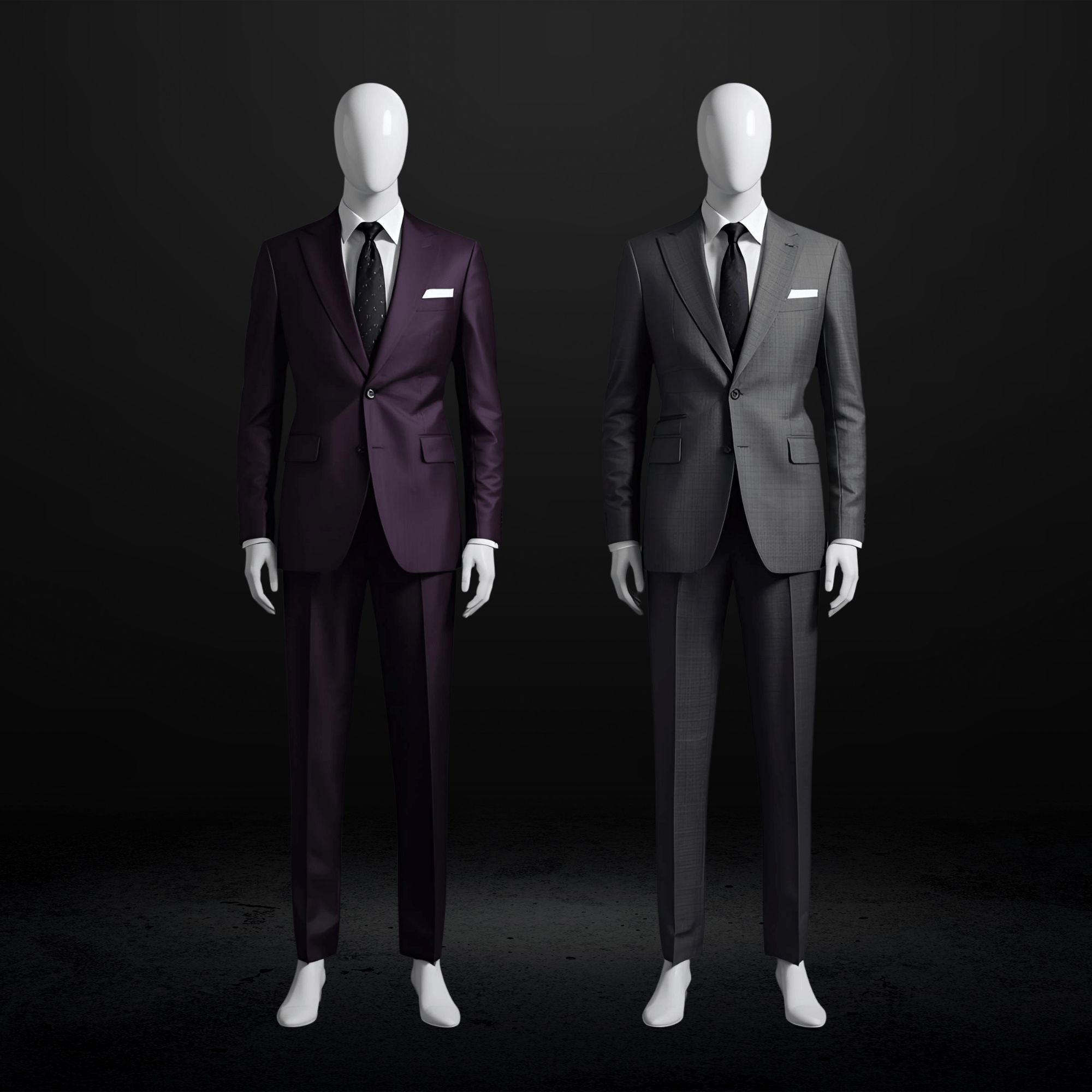
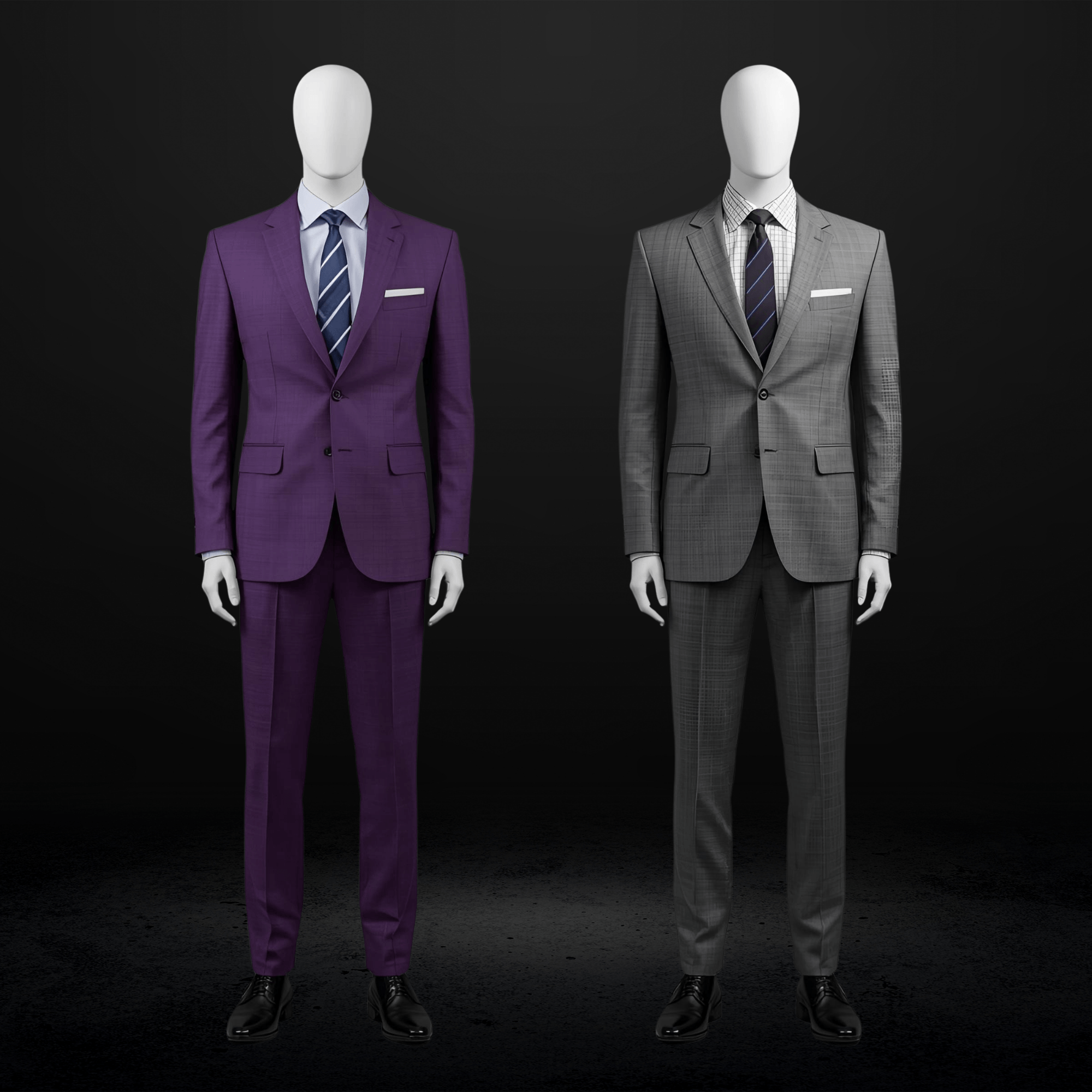
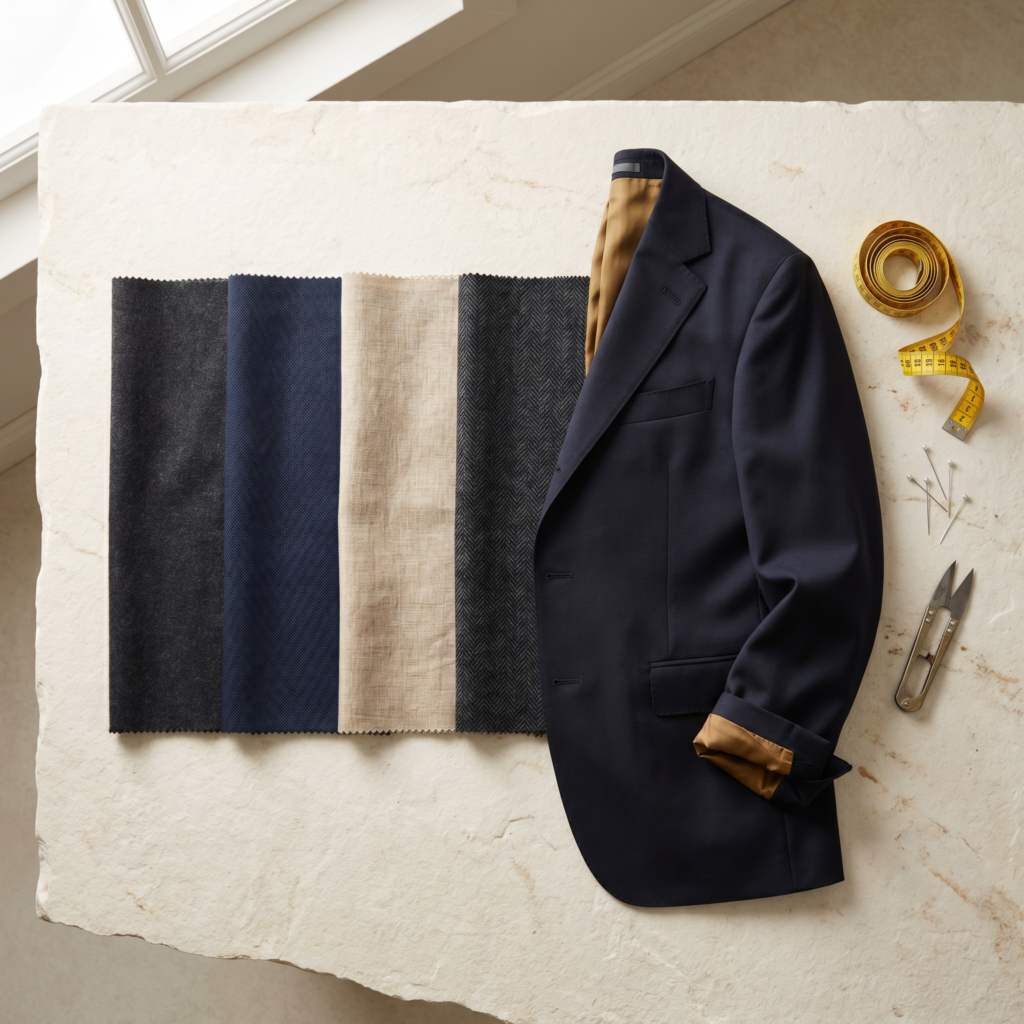
A great single-breasted suit starts with shape, not swatches. The silhouette you choose sets the rules for which fabrics will hang, move, and age the way you want. This guide walks Kansas City men through the three classic silhouettes, the construction methods that hold them together, and the fabrics that suit each one for business, weddings, and prom.
TLDR: Pick the silhouette first, then the fabric. A British structured cut needs firm worsted wool or flannel that can hold padded shape. An Italian soft cut wants fluid, lighter cloth like high-twist wool, fresco, linen, or wool-cashmere blends. An American natural-shoulder cut sits in the middle and is forgiving with most year-round worsteds. Construction (full, half, or fused canvas) decides how long that shape lasts. The Suit Doctor builds custom and made-to-measure suits in Kansas City to match all three.
A suit is a system, not a swatch
Most guys start fabric shopping the wrong way. They pick a color or a Super number off a swatch card, then ask the tailor to “make it look sharp.” That order fails because cloth does not create the shape of a jacket on its own. The shoulder line, the chest, and the waist all come from how the jacket is cut and built. Fabric only decides whether that shape stays crisp or falls soft.
Think of it like a building. The silhouette is the architecture. The construction (canvas, padding, lining) is the frame. The fabric is the exterior. A heavy stone facade does not belong on a glass pavilion, and a sheer linen does not belong on a stiff military shoulder. Match the parts and the suit looks intentional. Mismatch them and the jacket fights itself every time you move.
Kansas City makes this even more interesting. Our weather swings from 95 degree humid Julys at Loose Park weddings to 20 degree January mornings at the Plaza. One fabric cannot do all of that well. Picking the right silhouette first lets you pick a fabric that handles the season and the occasion you actually own the suit for.
Why silhouette must come first
A single-breasted suit can be cut three classic ways, and each one demands different things from the cloth.
The British or English structured silhouette uses padded shoulders, a defined chest, and a suppressed waist. The Woolmark Company describes this style as having padded shoulders, two vents, a pinched waist, and flap pockets. The Savile Row Bespoke Association sets the technical benchmark for this kind of construction, requiring that “jacket foreparts” be “fully hand canvassed” as one of its core member standards. That structure needs a fabric with body. Mid-weight to heavy worsted wool, worsted flannel, and firmer twills hold the shape. Soft, drapey cloth collapses under it.
The Italian soft silhouette, especially the Neapolitan version, goes the other way. The Neapolitan tailoring tradition, exemplified by houses like Cesare Attolini, took the padding out of the chest and shoulder so the jacket would fit “as soft and lightweight as a shirt.” That cut wants fluid, lighter cloth that can drape on its own. High-twist wool, fresco, linen, and cashmere blends shine here. Heavy, stiff cloth fights the relaxed shoulder.
The American sack or natural-shoulder silhouette lives between the two. Brooks Brothers, the originator, describes its No. 1 Sack as featuring “unpadded shoulders, undarted front and flat-front trouser.” This straighter, less suppressed cut has been a Brooks Brothers signature since the early 20th century. It forgives a wide range of fabrics, which is why it stayed popular as American business dress for decades.
Pick the silhouette that fits your build, your job, and the occasions you wear it for. Then the fabric question gets a lot easier.
How suit construction connects fabric and silhouette
Construction is the layer most customers never see, and it controls how long your suit holds the shape you paid for.
Full canvas construction uses a layer of natural canvas (often horsehair and wool) sewn in by hand or machine and floating between the outer fabric and the lining. Tailors widely report that a floating canvas drapes naturally and shapes to your chest over years of wear. It is the most expensive method and the most forgiving with high-quality cloth.
Half canvas construction runs canvas through the chest and lapel only, with a fused interlining below. Industry practice treats this as the practical middle ground for made-to-measure suits. You get the lapel roll and chest shape of canvas where it matters most, at a more workable cost.
Fused construction glues the outer fabric to a backing with adhesive. It is the cheapest method and the fastest to produce. The trade-off, widely reported by tailors, is that fused jackets can stiffen, bubble, or separate after repeated dry cleaning, and the front of the jacket looks flatter because nothing is floating underneath.
Why does this matter for fabric choice? Because soft, lightweight cloth (linen, lighter Italian wools, cashmere blends) needs canvas to give it any shape at all. Fused construction kills the drape of those fabrics. Heavier worsted and flannel are more forgiving of half canvas because the cloth carries its own structure. If you are spending $1,200 or more on a custom suit, the canvas conversation is one of the most important details to settle before you pick a swatch.
The best fabrics for a single-breasted suit
Worsted wool, the year-round workhorse
Worsted wool is the standard fabric for tailored business suits. The Woolmark Company explains that worsted yarns are produced from longer wool fibres that are combed so all the fibres run parallel and short fibres are removed. The result is a yarn that is very strong and produces very smooth woven fabrics.
In plain English: worsted wool has a clean surface, holds a press, and resists everyday wear. It is the safest single fabric to own if you only buy one suit.
Fabric weight matters more than most customers realize. Suit cloth is most often quoted in grams per linear metre (g/m) at the mill’s standard cloth width, usually about 150 cm. Vitale Barberis Canonico, one of the major Italian mills, publishes weights for its Classic Range that map to these practical categories:
| Class | Weight (g/m at ~150 cm width) | Best season in Kansas City | Example use |
|---|---|---|---|
| Lightweight | Under about 250 g/m | Spring and summer | Outdoor weddings, July events |
| Mid-weight | About 260 to 320 g/m | Year-round | Daily business suit, prom |
| Heavyweight | 330 g/m and up | Fall and winter | Flannel suits, winter weddings |
A rough rule: 250 g/m runs about 8 ounces per square yard. If a number on a swatch confuses you, ask which one the mill is quoting and your fitter can translate.
Super numbers describe the fineness of the wool fibre. The system is owned by the International Wool Textile Organisation (IWTO) and administered by The Woolmark Company. The IWTO Code of Practice sets the maximum mean fibre diameter for each Super claim, tested under method IWTO-08 (Projection Microscope). Higher numbers mean finer fibres.
| Super claim | Maximum mean fibre diameter |
|---|---|
| Super 100s | 18.75 microns |
| Super 110s | 18.25 microns |
| Super 120s | 17.75 microns |
| Super 130s | 17.25 microns |
| Super 150s | 16.25 microns |
| Super 180s | 14.75 microns |
| Super 200s | 13.75 microns |
Each step of 10 means 0.5 microns finer. The trade-off is real. Finer wool feels softer and looks dressier, but it is more delicate. For daily business wear in Kansas City, Super 100s through Super 130s is the practical sweet spot. Super 150s and above feel luxurious and drape beautifully, but the cloth shines at wear points faster, snags more easily, and is best saved for weddings, special events, and rotation pieces. If you commute, sit in a desk chair, and need one suit to last, do not chase the highest number on the swatch card. Not sure where to land for your work week? Our team can walk you through every choice before you commit to anything.
Flannel, the cool-weather classic
Flannel is wool that has been brushed or milled to give it a soft, fuzzy surface. There are two kinds, and the difference shows up in how the suit ages.
Worsted flannel uses long, combed worsted fibres underneath the brushed finish. Fox Brothers, the West of England mill founded in 1772 and credited as the original creator of flannel in 1803, describes its worsted flannels as smooth strong cloths woven with yarns spun from long combed wool fibres. That smoother, denser yarn drapes cleanly and resists wear better, especially at elbows, seat, and inner thighs.
Woolen flannel uses shorter, carded fibres. The cloth feels softer and fuzzier in the hand and reads more casual. The trade-off, widely reported by tailors and customers, is that woolen flannel develops a sheen at wear points faster and can stretch or bag with regular hard use.
Flannel weight matters for drape. Mills produce flannel from about 250 g/m up to 500 g/m and beyond. As a general rule, 300 g/m and up gives the fuller, more sculpted drape that flannel is famous for, with 340 to 500 g/m being the classic mid- to heavyweight range for jackets and suits. Lighter flannels exist, but they wear and drape more like a regular worsted than a true flannel.
In Kansas City, flannel is at its best from late October through March. It is too warm for July. A charcoal worsted flannel suit is one of the most useful winter pieces a man can own.
Linen, built for Kansas City summers
Linen is the most breathable suiting fabric, full stop. The Alliance for European Flax-Linen and Hemp documents, citing a 2014 study by the CETELOR laboratory at the University of Lorraine, that linen “allows more air flow through the fabric” and that flax is “most permeable to water vapour and therefore perspiration.” That breathability comes from flax’s hollow internal channel, called the lumen, that wicks moisture away from the skin.
The catch is that flax fibres have low elastic recovery. In plain English: linen does not bounce back. Wrinkles are part of the fabric, not a defect. A pressed linen jacket will crease the first time you sit in your car at the Power and Light District, and that is normal. The cloth was designed to look lived in.
Because linen has so little spring, it does not hold a sharp padded shoulder well. A British structured silhouette in linen looks tortured by the end of an afternoon. Linen wants a soft Italian or natural-shoulder cut, lighter canvas, and a relaxed lining (or no lining at all). For a July wedding at a Loose Park pavilion or a rooftop event in Crossroads, linen is unbeatable. For a courtroom or a bank office, choose a high-twist worsted instead.
Cashmere blends, dressy without the regret
Cashmere is the soft, fine undercoat of the cashmere goat. The Cashmere and Camel Hair Manufacturers Institute defines cashmere as fibre with a mean diameter not exceeding 19 microns, tested by IWTO Test Method 8. Premium cashmere fibres typically run 14 to 18 microns and are far shorter than worsted wool, with staple lengths around 28 to 42 mm.
Those short, fine fibres are why cashmere feels so soft and why pure cashmere suits do not hold up well to daily wear. Cashmere fibre is somewhat weaker than fine wool. Shorter fibres mean more loose ends at the surface, which leads to faster pilling, and lower abrasion resistance means the suit loses its shape sooner.
For most customers, a wool-cashmere blend is the smarter choice. A blend of 90 to 95 percent worsted wool with 5 to 10 percent cashmere keeps most of wool’s durability and adds a softer hand and a slight sheen. It still drapes best in soft or natural-shoulder silhouettes. Save pure cashmere for outerwear, sport coats worn occasionally, or special-occasion suits that will not see weekly use.
Cotton, casual and crisp
Cotton suits read crisp, matte, and slightly more casual than wool. Cotton has lower elastic recovery than wool, which means it does not return to shape as cleanly after stretching. The Woolmark Company documents that each merino wool fibre is “like a coiled spring that returns to its natural shape after being bent,” giving wool its natural wrinkle resistance. Cotton has no equivalent coil. Once it creases at the elbow or knee, the crease often stays.
Cotton suits work well for warm-weather travel, summer weddings with a relaxed dress code, and creative offices. For a more practical, polished look in similar weight, a high-twist worsted wool (sometimes called fresco) gives you the breathability of an open weave with the wrinkle recovery of wool. For most Kansas City customers, high-twist worsted is the better single purchase.
Matching fabric to silhouette: a quick reference
| Silhouette | Best fabrics | Fabrics to avoid | Construction match |
|---|---|---|---|
| British structured | Mid to heavy worsted wool, worsted flannel, firm twills | Pure linen, drapey cashmere, soft tropicals | Full canvas |
| Italian soft (Neapolitan style) | High-twist worsted, fresco, linen, wool-cashmere blends, lightweight flannel | Heavy structured worsteds, stiff suiting | Full or half canvas, light padding |
| American natural shoulder | Year-round worsted, mid-weight flannel, wool-linen blends, hopsack | Very heavy structured cloth | Half or full canvas |
Use this table as a starting point, not a rulebook. Your fitter should adjust based on your build, your climate, and what you already own.
What this means for business, wedding, and prom suits
Business suits in Kansas City
For most professional jobs in Kansas City, a mid-weight worsted wool in Super 110s to 130s, cut in either an American natural shoulder or a lightly structured British silhouette, is the strongest single purchase. It works at the Plaza, in Leawood, and downtown. Charcoal and navy travel everywhere. If you only own one suit, go year-round mid-weight, half or full canvas, and do not over-spec the Super number. Want this dialed in for your work week? Our Kansas City custom business suit options walk through fits and fabrics built for daily wear.
Wedding and groomsmen suits
Weddings depend on season and venue. A May ceremony at a downtown hotel can handle a year-round worsted in any silhouette. A July ceremony outdoors in Liberty or Lee’s Summit calls for linen, wool-linen blends, or a high-twist worsted in a soft Italian cut. A November wedding at a barn venue near Weston wants flannel or a heavier worsted with a structured shoulder. Coordinating seven groomsmen across body types is a separate problem that fabric choice cannot solve alone, which is why we offer dedicated group services. See our Kansas City custom wedding suit program for how we coordinate fabric, fit, and timeline across a wedding party.
Prom suits
Prom is in April or May for most Kansas City schools, which means warm gym lobbies, photo sessions outside, and dance floors that get hot fast. A lightweight to mid-weight worsted in a softer silhouette is the most comfortable choice. Bold colors, patterns, and texture all read well in photos. Save heavy flannels and structured British cuts for fall events.
Practical steps to choose your fabric
- Decide the silhouette first. Look at photos of British, Italian, and American cuts and pick the one that matches your build and your style.
- Define the season and occasion. A summer wedding suit and a year-round business suit are not the same fabric.
- Set the construction. Full canvas for a long-life flagship suit. Half canvas for a strong everyday made-to-measure. Avoid fully fused construction at this price level.
- Pick the fabric family. Worsted wool for daily wear, flannel for winter, linen or high-twist worsted for summer, wool-cashmere blends for dressy occasions.
- Choose weight before Super number. Mid-weight (around 260 to 300 g/m) is the safest year-round target. Super 110s to 130s is the daily-wear sweet spot.
- Confirm the cloth in person if possible. Online photos lie about color and texture. A free in-shop consultation or our mobile fitting service (fee credited toward your purchase) gets the swatches in your hands.
Frequently asked questions
Is a higher Super number always better? No. Higher Super numbers mean finer wool fibres, which feel softer and look dressier, but the cloth is more delicate and shines at wear points faster. For a daily business suit, Super 110s to 130s holds up better than Super 180s.
What weight of wool works year-round in Kansas City? Mid-weight worsted wool in the 260 to 300 g/m range is the most flexible. It handles spring through fall comfortably, and an undershirt and overcoat extend it into winter.
Can I wear a linen suit to a Kansas City wedding? Yes, especially for outdoor or warm-weather ceremonies. Choose a soft, lightly structured silhouette, expect wrinkles by the reception, and own them as part of the look.
What is the difference between worsted and woolen flannel? Worsted flannel uses long, combed fibres under the brushed surface and drapes cleanly with strong wear resistance. Woolen flannel uses shorter, carded fibres, feels softer, and is more casual, but it shines and stretches faster with hard use.
Are pure cashmere suits worth it? For most customers, no. Cashmere fibres are shorter and weaker than worsted wool, so pure cashmere suits pill and lose shape with regular wear. A wool-cashmere blend gives you most of the softness with the durability of wool.
What construction should a $1,200 to $2,000 custom suit have? At that price, half canvas is the practical floor and full canvas is the premium upgrade. Fully fused construction does not justify the spend on a custom suit.
Do I need to know all of this before my fitting? No. A good fitter walks you through silhouette, construction, and fabric in plain language. Knowing the basics just helps you get more out of the conversation.
Key takeaways
- Silhouette decides the rules, fabric follows. Pick the cut first.
- Full or half canvas construction is the right floor for a custom suit at this price.
- Mid-weight worsted in Super 110s to 130s is the safest single suit for Kansas City.
- Flannel rules winter, linen rules summer, wool-cashmere blends dress up special occasions.
- Higher Super numbers are softer, not stronger. Match the number to how often you will wear it.
Ready to build a single-breasted suit that actually fits Kansas City life?
The Suit Doctor has been building custom and made-to-measure suits in Kansas City since 2020. We offer free in-shop consultations and a mobile fitting service (fee credited toward your purchase) so you can choose silhouette, construction, and fabric without guessing. Whether you need a daily business suit, a wedding party fitted across seven groomsmen, or a flannel suit ready for January, we can walk you through every choice in this guide in person. Schedule a Kansas City mobile suit fitting for busy professionals or reach out through our Kansas City contact page to get started.
The Suit Doctor. Custom and made-to-measure suits in Kansas City since 2020.