Your wedding day is one of the few moments in life when every detail truly matters. The right tuxedo does more than make you look sharp. It tells your story, matches the feel of your wedding, and photographs beautifully for decades. This guide walks Kansas City grooms through the full custom tuxedo process: when a tuxedo is the right call, how to choose the lapel, fabric, and fit, and what happens from your first consultation to the final fitting.
TLDR: A custom tuxedo is the right choice for black-tie and formal evening weddings. The three decisions that shape the entire look are lapel style, fabric, and fit. Plan on four to six months between your first consultation and the wedding to get the widest fabric selection and avoid rush fees. Below is the full step-by-step.
Tuxedo vs. Suit: How to Know Which One You Need
Before you book a fitting or browse swatches, you need to settle one question: is your wedding a tuxedo occasion or a suit occasion? The answer comes down to timing, venue, and formality.
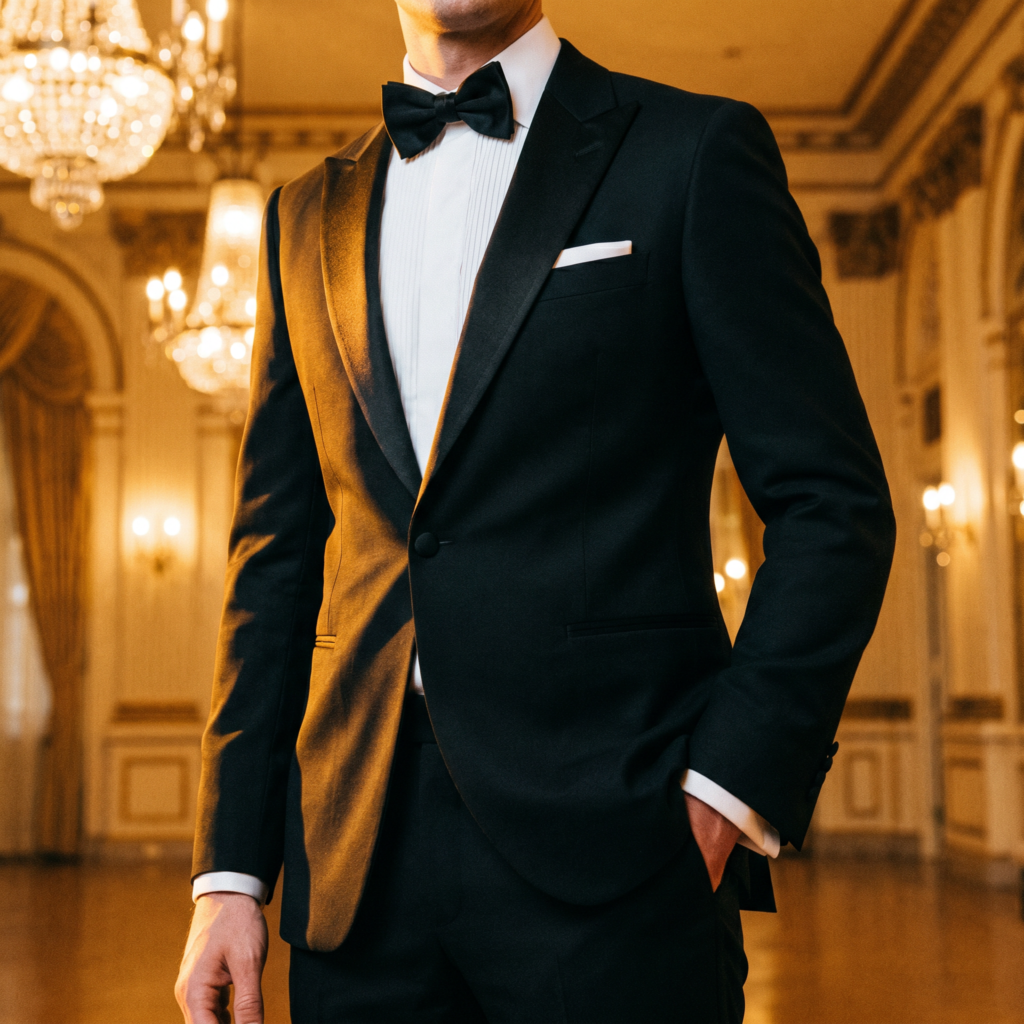
Tuxedos are formal evening wear. Traditional dress code etiquette pegs the tuxedo to events that begin after 6 PM. The satin details on a tuxedo (satin-faced lapels, satin-covered buttons, and the satin trouser stripe) are designed to catch evening light: chandeliers, candlelight, and dim reception halls. Under bright afternoon sun, that same satin can look out of place.
Here is a simple breakdown of when each option fits:
Wedding StyleTimingBest ChoiceBlack-tie ballroom or upscale hotelEveningTuxedo requiredSemi-formal indoor venueEveningTuxedo or dark suitOutdoor garden or vineyardAnySuitRustic barn or farm venueAnySuitDestination or beach weddingAnySuitDaytime ceremony, any venueBefore 6 PMSuit
The structural difference between a suit and a tuxedo is simpler than most people realize. A tuxedo is fundamentally a suit with satin detailing: satin lapels, satin-covered buttons, and a satin stripe down the outer seam of each trouser leg. A suit uses the same fabric throughout, with no satin accents. That uniformity makes suits versatile across many occasions, while the tuxedo’s satin signals one thing clearly: formal evening event. If you want a deeper comparison, the groom suit vs tuxedo Kansas City guide walks through the decision in more detail.
One important note: if your wedding invitation specifies a dress code, that settles the question.
- White tie: Extremely rare; requires an evening tailcoat with white vest and white bow tie. Beyond standard tuxedo territory.
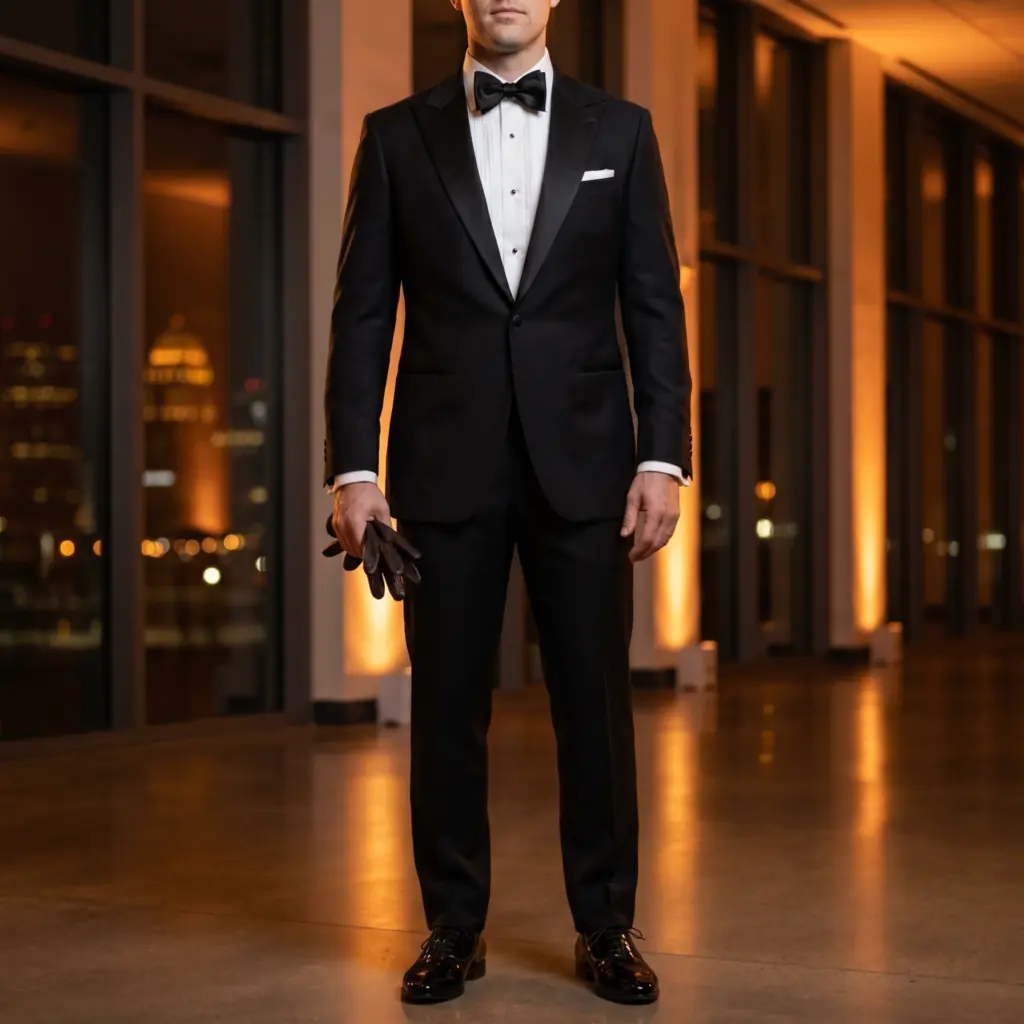
- Black tie: Traditional tuxedo required. Black jacket with satin lapels, bow tie, formal shirt, patent leather shoes.
- Black tie optional: Tuxedo or a dark formal suit. As the groom, wearing the tuxedo helps you stand apart from guests who opt for suits.
- Formal or semi-formal: A well-fitted suit in navy, charcoal, or black. Tuxedo works but is not required.
- Cocktail or dressy casual: Suit territory. Flexibility on colors and styles depending on setting.
The Anatomy of a Custom Tuxedo: What You Are Actually Choosing
Once you know a tuxedo is right for your wedding, the real customization begins. A custom tuxedo is not a single item. It is a collection of decisions, and each one shapes the final look.
Lapel Style: The First Thing Everyone Notices
Your lapel is the most visible design choice on a tuxedo jacket. There are three styles, and each carries a different level of formality and personality.
Peak lapel: The most formal option. Sharp, upward-pointing edges that angle toward your shoulders. This structure adds visual width and authority, giving you a broader silhouette. Peak lapels are the traditional choice for black-tie events and galas. They work especially well with structured jackets in black or midnight blue.
Shawl lapel: The hallmark of classic formal eveningwear. The shawl lapel has smooth, rounded edges with no break at the collar, creating a continuous curve from the jacket down. It conveys vintage glamour and is most at home on dinner jackets, velvet tuxedos, and red carpet-inspired looks. Ideal for evening weddings and winter events where elegance is the priority.
Notch lapel: The most versatile style. The notch lapel features a small triangular cutout where the lapel meets the collar. It is cleaner and less formal than the peak or shawl, which makes it well-suited for modern wedding styles, semi-formal events, and garden ceremonies. If you want a tuxedo that walks the line between classic and contemporary, the notch lapel delivers that balance.
Lapel width matters too. A width of 2.75 to 3.25 inches gives you a balanced, timeless appearance that suits most body types. Going too narrow looks trendy. Going too wide can overpower your frame.
Lapel fabric is the other factor most grooms overlook. Satin lapels are the most traditional finish, creating a subtle sheen against the jacket fabric. Grosgrain lapels have a ribbed texture that is slightly more understated. Both are correct. The choice comes down to how polished versus how contemporary you want the overall look.
Fabric: The Decision That Shapes Everything Else
Fabric determines how your tuxedo looks, feels, moves, and holds up through a full wedding day. For Kansas City grooms, season matters because you know your exact date and can plan precisely.
Wool is the gold standard for custom tuxedos. Fine worsted wool offers natural breathability, durability, and a clean drape that holds its shape through hours of ceremony, cocktails, dinner, and dancing. Wool adapts well to different climates and resists wrinkles, which is why it is the most reliable choice for classic black or midnight-blue tuxedos. A Kansas City fall or winter wedding is ideal wool territory.
For summer Kansas City weddings, heavier fabrics work against you. Lightweight tropical-weight wools are woven in an open, porous pattern specifically designed for maximum air circulation, so you stay cool while maintaining the structure and elegance of a formal garment. Linen blends are another warm-weather option, though their tendency to wrinkle means they require more maintenance throughout the day.
Velvet is a specialty choice for evening winter weddings or grooms who want a fashion-forward black-tie look. Velvet absorbs light rather than reflecting it, creating a rich visual effect. It photographs beautifully under evening lighting and pairs naturally with shawl lapels. Just know that velvet is firmly a cold-weather, evening fabric. It does not belong at a June outdoor wedding.
Silk blends add sheen and a smooth hand to the jacket. They work well in tuxedos where you want a slightly more elevated finish. A silk-wool blend gives you the drape of silk with the durability of wool.
Here is a quick seasonal guide for Kansas City tuxedo fabrics:
SeasonRecommended FabricWhy It WorksSpring (March-May)Lightweight wool or wool blendVersatile, handles variable tempsSummer (June-August)Tropical-weight wool, linen blendBreathable, keeps you coolFall (September-November)Mid-weight worsted woolStructured, rich drape for photosWinter (December-February)Heavy worsted wool, velvetWarmth, texture, elegance
Fit: The Factor That Overrides Everything Else
No lapel choice or fabric selection matters if the fit is wrong. A custom tuxedo built to your specific measurements will always outperform a rental or off-the-rack garment, no matter what it costs. Here is what correct fit looks like in the key areas:
Shoulders: The shoulder seam should align exactly with where your natural shoulder ends. This is the most critical measurement in the entire jacket. If the shoulder is wrong, nothing else can compensate for it. No alteration can fix an off-shoulder seam without rebuilding the jacket.
Chest and jacket closure: When you button the jacket, it should lie flat across the chest with no pulling or gaping at the button. You should be able to slide a hand inside the jacket without it pulling tight.
Jacket length: The bottom of the jacket should fall at the base of your thumb when your arms hang naturally at your sides. This rule holds across most body types and proportions.
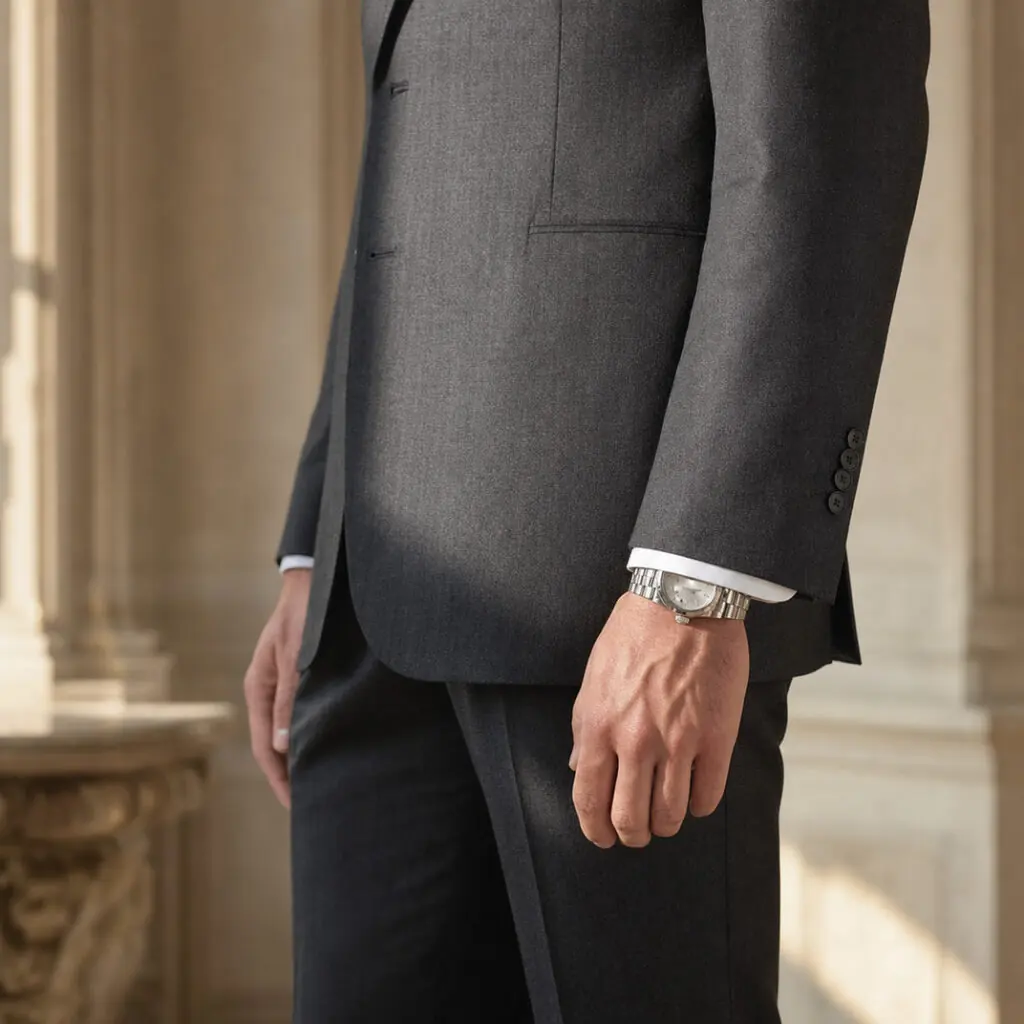
Sleeve length: About half an inch of your shirt cuff should show below the tuxedo sleeve. This detail signals proper tailoring and gives the look a polished finish.
Trouser break: The trouser leg should have a slight, clean break at the top of your shoe, with no pooling at the ankle or excessive bunching. Tuxedo trousers are typically hemmed to your exact shoe height, so wear the shoes you plan to wear on your wedding day to your final fitting.
How the Custom Tuxedo Process Works at The Suit Doctor
The Suit Doctor has been building custom and made-to-measure tuxedos and suits for Kansas City grooms and groomsmen since 2020. The process is designed to take the guesswork out and keep your timeline on track.
Step 1: Start with Your Wedding Date
Every timeline works backward from one date. The Suit Doctor recommends reaching out at least three to four months before the wedding, and earlier if you are coordinating a larger groomsmen group. Starting early means more fabric options, less stress, and no rush fees.
At your first conversation, the team will ask about the size of your wedding party, the overall formality of the ceremony, and whether your groomsmen are local or traveling in. These details shape how your fitting schedule is structured so nothing gets missed in the final weeks.
Two ways to meet: You can visit The Suit Doctor’s Kansas City shop for an in-shop consultation at no charge, or book a mobile fitting for a $200 fee that is applied as a credit toward your suit when you order. The $200 fee is non-refundable if no order is placed, so the in-shop visit is the lower-commitment way to start.
Not sure where to start? The Suit Doctor’s groom and groomsmen suits in Kansas City page is the best first stop. You will see the service in detail, then schedule a consultation to start your build.
Want to see how this plays out in a real build? Explore our custom wedding suits page - it walks through fabrics, construction, and what to expect at your first appointment.
Step 2: Define Your Wedding Day Look
This step is about establishing the visual direction for you and your groomsmen before anyone gets measured. The Suit Doctor works through the overall wedding aesthetic with you: venue, season, time of day, your partner’s dress, and the wedding color palette all factor in.
You will also decide how you want to stand apart from your groomsmen. Some grooms choose a completely different tuxedo to set themselves apart at first glance. Others prefer the same garment as their groomsmen but with subtle distinctions: a unique lapel, a vest the groomsmen do not wear, or a different accessory set. Both approaches photograph well, and the team will walk you through what each option looks like in practice.
Tip: Bring inspiration photos or your partner’s Pinterest board to this appointment. The more context the team has about the overall aesthetic, the better they can make sure your tuxedo fits the bigger picture.
Step 3: Select Your Fabric and Style
At the consultation, the team brings a full selection of fabric swatches so you can see and feel every option in person. This matters more than it sounds. Photos and screens cannot show you how a fabric catches light, how it drapes when you move, or how it feels against your skin when the temperature rises.
You will choose your fabric weight, color, and any pattern or texture. For groomsmen, the team helps you decide whether the full group wears the same fabric as the groom or a coordinating option that ties the look together while letting you stand apart. Custom tuxedos at The Suit Doctor typically start around $1,200 and move up based on fabric choice and construction details, with transparent pricing presented at your consultation.
Step 4: Get Measured
A proper custom tuxedo consultation runs about two hours and captures the full set of measurements needed to build the garment from scratch to your individual pattern. Posture, shoulder slope, and body proportions are all factored in, not just basic chest and inseam.
For groomsmen, the team coordinates measurements whether they are local or coming in from out of town, including mobile fitting options that can bring the fitting room to a central location like your home or the best man’s place.
Step 5: Production and Fittings
Once measurements and fabric are finalized, construction begins. A made-to-measure tuxedo typically requires several weeks of production. During this window, you will have at least one intermediate fitting to assess the partially constructed garment, address any adjustments, and confirm the final details.
Pro tip: Your final fitting should happen two to four weeks before the wedding. Bring the shoes you will wear on the day. Trouser length is measured to your actual heel height, and the wrong shoes mean a re-hem, which adds time.
Your Custom Tuxedo Timeline at a Glance
Wedding planning moves fast, and groom attire often gets pushed down the list while venues and catering take priority. That delay creates problems. Here is the timeline that keeps everything on track:
Timeframe Before WeddingWhat to Do6 to 9 monthsResearch, consult, determine formality and style direction4 to 6 monthsBook consultation, select fabric and style, place order2 to 3 monthsIntermediate fitting, confirm groomsmen have all ordered4 to 6 weeksFinal fitting, bring wedding shoes and shirt1 to 2 weeksSteam and press if neededWedding dayPick up or confirm delivery, store properly until ceremony
Starting at 6 months gives you the full range of fabric options, comfortable fitting windows, and time to make adjustments without rushing. If your timeline is compressed to three or four months, custom made-to-measure is still achievable, but popular fabrics may have limited availability and rush fees may apply. For the full planning view, the Kansas City wedding suit timeline breaks each phase down in more detail.
Important note on body changes: A custom tuxedo is built to your exact measurements at the time of fitting. Major weight changes between your fitting and your wedding (more than 10 to 15 pounds in either direction) may require rebuilding parts of the jacket rather than a simple alteration. If you are planning a significant fitness program or other major changes before the wedding, time the fitting accordingly.
Coordinating the Groom and Groomsmen
One of the most common mistakes in wedding party attire is treating the groom’s tuxedo and the groomsmen’s looks as separate decisions. They are not. They are one visual system that needs to work together in photographs and in person.
How to Stand Out Without Standing Apart
The groom should be immediately recognizable in any wedding photo, but the gap between groom and groomsmen does not have to be dramatic. Some approaches that photograph well:
- Different jacket: Groom in a tuxedo with peak lapels, groomsmen in suits with the same fabric and color
- Lapel distinction: Groom in a shawl lapel tuxedo, groomsmen in notch lapel suits in a coordinating shade
- Accessories only: Same jacket as groomsmen, but groom wears a vest, different tie, or boutonniere style that sets him apart
- Color shift: Same cut and lapel style, but groom in midnight blue while groomsmen wear charcoal or navy
Tip: Coordinate with your partner early. Your attire should match your partner’s formality level. If your partner wears a ball gown or cathedral-length train, a tuxedo matches that formality. If your partner wears a shorter, lighter dress for a garden party, a suit is likely more visually cohesive.
Ready to coordinate the full wedding party? The Suit Doctor’s guide to coordinating groomsmen suits in Kansas City covers exactly how to structure the look so everyone appears intentional, not like they are wearing a uniform.
Managing Out-of-Town Groomsmen
Groomsmen who live outside Kansas City are often the biggest coordination headache in the wedding party. The Suit Doctor’s mobile fitting service addresses this directly. For groomsmen traveling in for the wedding weekend, the team can schedule a group fitting at a central location, get everyone measured in one session, and coordinate the order from there.
For groomsmen who cannot travel in, the team handles remote measurement coordination to make sure everyone is fitted accurately before production begins.
Tuxedo Accessories: The Details That Finish the Look
A custom tuxedo jacket and trousers are the foundation. The accessories are what make the look complete and personal.
Bow Tie vs. Necktie
The bow tie is the traditional tuxedo accessory and the correct choice for black-tie occasions. It comes in two styles:
- Self-tie (or “freestyle”): You tie it yourself. The slight imperfection of a hand-tied bow is considered a mark of authenticity in formal circles.
- Pre-tied: Convenient, consistent, and perfectly symmetrical every time. Appropriate for most modern weddings.
A necktie with a tuxedo is acceptable at semi-formal occasions and modern weddings where you want a less traditional look. It works especially well with a notch lapel tuxedo at an outdoor or destination event.
Shirt Options
A tuxedo shirt traditionally features a bib front (also called a pleated or Marcella bib) with studs instead of standard buttons. This detail adds formality and visual texture to the front panel. French cuffs with cufflinks are the standard complement.
For a more modern take, a plain-front dress shirt with a Windsor knot or bow tie works well and keeps the overall look cleaner.
Pocket Square and Boutonniere
The pocket square coordinates with your tie or bow tie but does not need to match exactly. A classic white pocket square in a flat fold works at any level of formality. For a personal touch, a fold that mirrors an element of your partner’s bouquet or your wedding colors adds intentional detail to the look.
Your boutonniere should echo the flowers in the bridal bouquet, even if it is a single stem. This small connection between your look and your partner’s creates visual cohesion in photos without requiring coordination of the actual garments.
When you're ready to put this into practice, you can book a mobile fitting at your home or office with Brandon and get measured in person.
Shoes
Black patent leather is the traditional tuxedo shoe and the correct choice for black-tie occasions. Cap-toe Oxfords in patent leather are the most classic option. For modern weddings where you want something slightly less formal, a high-polish black leather Oxford in a non-patent finish works well.
Pro tip: Wear the exact shoes you plan to wear on your wedding day to your final fitting. Trouser hem length is measured to your specific heel height, and the difference between a dress shoe and a loafer can change the hem by a quarter inch or more.
FAQ: Custom Tuxedos for Kansas City Grooms
Q: What is the difference between a custom tuxedo and a tuxedo rental?
A rental is a production garment designed to fit a range of body types. A custom or made-to-measure tuxedo is constructed from your exact measurements and built to your proportions. The fit is fundamentally different: seams fall where they should, the jacket shapes to your actual chest and shoulders, and the trousers sit and move the way they should. You also own it when the day is done.
Q: How much does a custom tuxedo cost in Kansas City?
Custom made-to-measure tuxedos at The Suit Doctor typically start around $1,200 and move up based on fabric and construction details. Pricing is presented transparently during your consultation.
Q: How far in advance should I order my custom tuxedo?
Start at least three to four months before your wedding. For the smoothest experience with the widest fabric selection and no rush fees, five to six months out is ideal.
Q: Can I wear a custom tuxedo if my wedding is during the day?
Technically, tuxedos are classified as evening wear and are most appropriate for events beginning after 6 PM. For a daytime wedding, even a formal one, a well-fitted suit in a rich fabric is typically the more appropriate choice. That said, modern weddings do not follow rules as strictly as they once did. If you feel strongly about wearing a tuxedo for a daytime ceremony, a notch lapel in a lighter shade (like a medium gray or champagne ivory) reduces the evening formality and can work well for afternoon events.
Q: Should my groomsmen wear matching tuxedos or suits?
This depends on your wedding’s overall formality and your personal preference. At a black-tie wedding, it is most cohesive for the entire wedding party to be in tuxedos. At a semi-formal or cocktail-level wedding, mixing groomsmen in suits while the groom wears a tuxedo is a popular approach that naturally distinguishes the groom from the party. The Suit Doctor helps coordinate these decisions so the full group looks intentional and cohesive.
Q: What is a shawl lapel tuxedo, and is it right for my wedding?
A shawl lapel has smooth, curved, unbroken edges with no notch or peak. It is the most elegant and traditionally formal lapel style, most often seen on dinner jackets and classic evening tuxedos. It works beautifully at evening weddings, especially winter celebrations, and pairs naturally with velvet or rich wool fabrics. If you want a look that says “classic formal” without any ambiguity, the shawl lapel delivers that immediately.
Q: Can The Suit Doctor accommodate out-of-town groomsmen?
Yes. The Suit Doctor handles remote measurement coordination for groomsmen who cannot come to Kansas City. For groomsmen traveling in for the wedding weekend, the mobile fitting service can schedule a group session at your home, a hotel, or another central location to get everyone measured in one visit.
Q: What should I wear to my tuxedo fitting?
Wear a well-fitting dress shirt and dress trousers or slacks. Avoid bulky sweaters or loose-fitting layers that add volume over your actual body. For your final fitting, bring the dress shoes you plan to wear on your wedding day and your dress shirt so the tailor can set the sleeve length correctly.
Q: Is a custom tuxedo worth it compared to renting?
For most grooms, yes. Rentals are designed for easy turnover, not for perfect fit, and the difference shows in every photograph. You also own the garment, which means future black-tie events and formal occasions do not require another rental.
Q: Do I need to coordinate my tuxedo with my partner’s dress?
Yes, and the earlier you do this, the better. Your attire should match your partner’s level of formality. A ball gown calls for a tuxedo. A short cocktail dress calls for a suit. A cathedral-length gown at a formal evening ceremony is the clearest signal that a tuxedo is appropriate. Share your vision with your partner early, and ask whether they have preferences about how the wedding party attire relates to the overall aesthetic.
Key Takeaways
- Tuxedo vs. suit: Tuxedos are the right choice for black-tie and formal evening weddings. For daytime ceremonies, outdoor venues, or casual settings, a well-fitted suit is typically more appropriate.
- Lapel selection: Peak lapel for maximum formality and authority. Shawl lapel for classic elegance and vintage glamour. Notch lapel for modern versatility.
- Fabric by season: Tropical-weight wool for Kansas City summer weddings. Mid-weight worsted wool for fall and spring. Heavy wool or velvet for winter evenings.
- Fit is everything: Shoulders must align exactly with your natural shoulder end. No alteration can fix an off-shoulder seam without rebuilding the jacket.
- Start early: Three to four months minimum, five to six months ideal. Multiple fittings require time between appointments.
- Coordinate deliberately: Distinguish the groom from the groomsmen through lapel style, accessories, or subtle details that show clearly in photographs.
- Own it: A custom tuxedo is a garment you keep. Rentals go back. Custom pieces serve you for every formal occasion ahead.
Ready to Build Your Custom Tuxedo in Kansas City?
You now understand the decisions that define a custom tuxedo: when it is the right choice, how to select a lapel style and fabric that match your wedding, what the fitting process looks like, and how to coordinate the full wedding party without the stress.
The Suit Doctor builds custom and made-to-measure tuxedos and suits for Kansas City grooms and groomsmen. Every detail is handled, from fabric selection and precise measurements to groomsmen coordination and wedding-day timing.
The Suit Doctor offers:
- Custom and made-to-measure tuxedos built to your exact measurements
- Full groomsmen coordination for local and out-of-town wedding parties
- Mobile fitting services at your home or a central location
- Accessories and styling guidance to complete the full look
- A clear timeline built around your wedding date
Ready to start? Schedule your Kansas City tuxedo consultation with The Suit Doctor.
The Suit Doctor | Custom and Made-to-Measure Suits and Tuxedos for Kansas City Grooms Who Take Their Wedding Day Seriously.
Get measured for a suit built around how you actually live.
Fittings for grooms, groomsmen, and the whole wedding party.