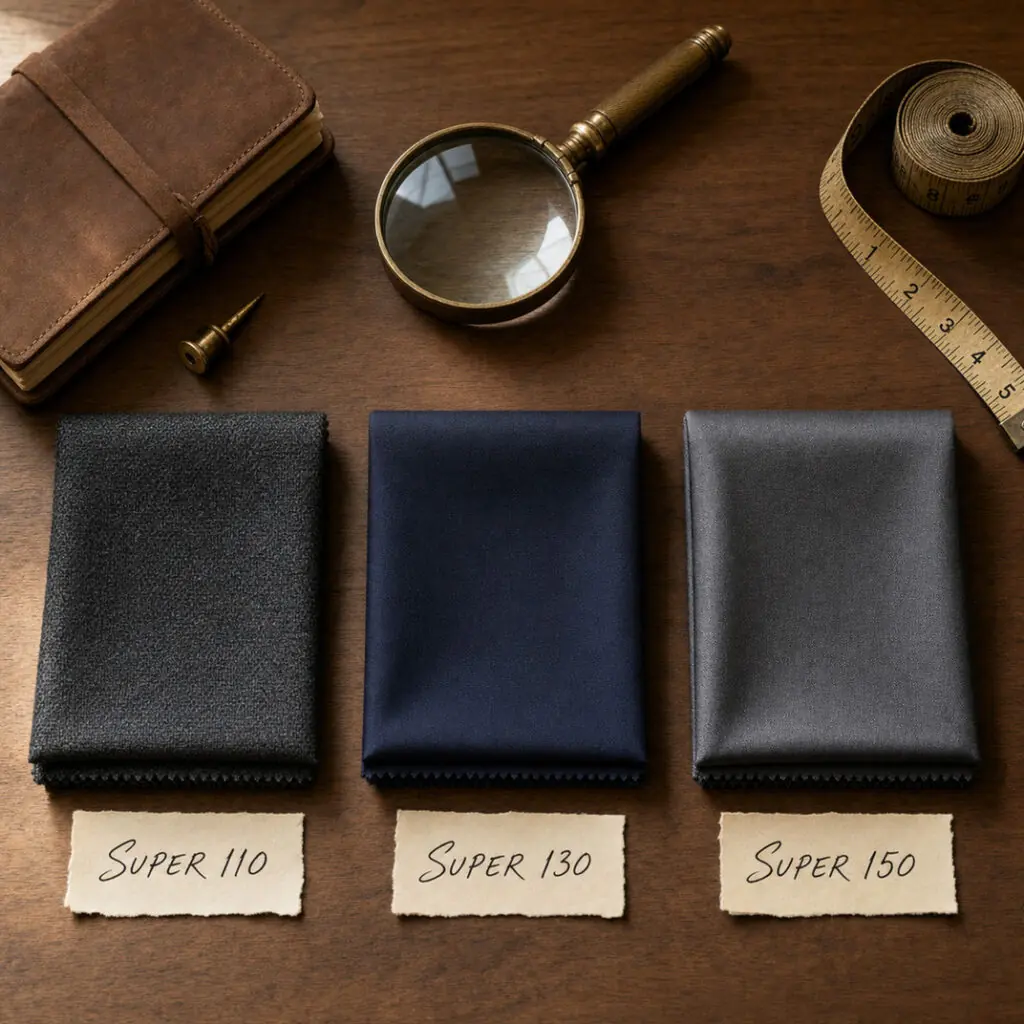
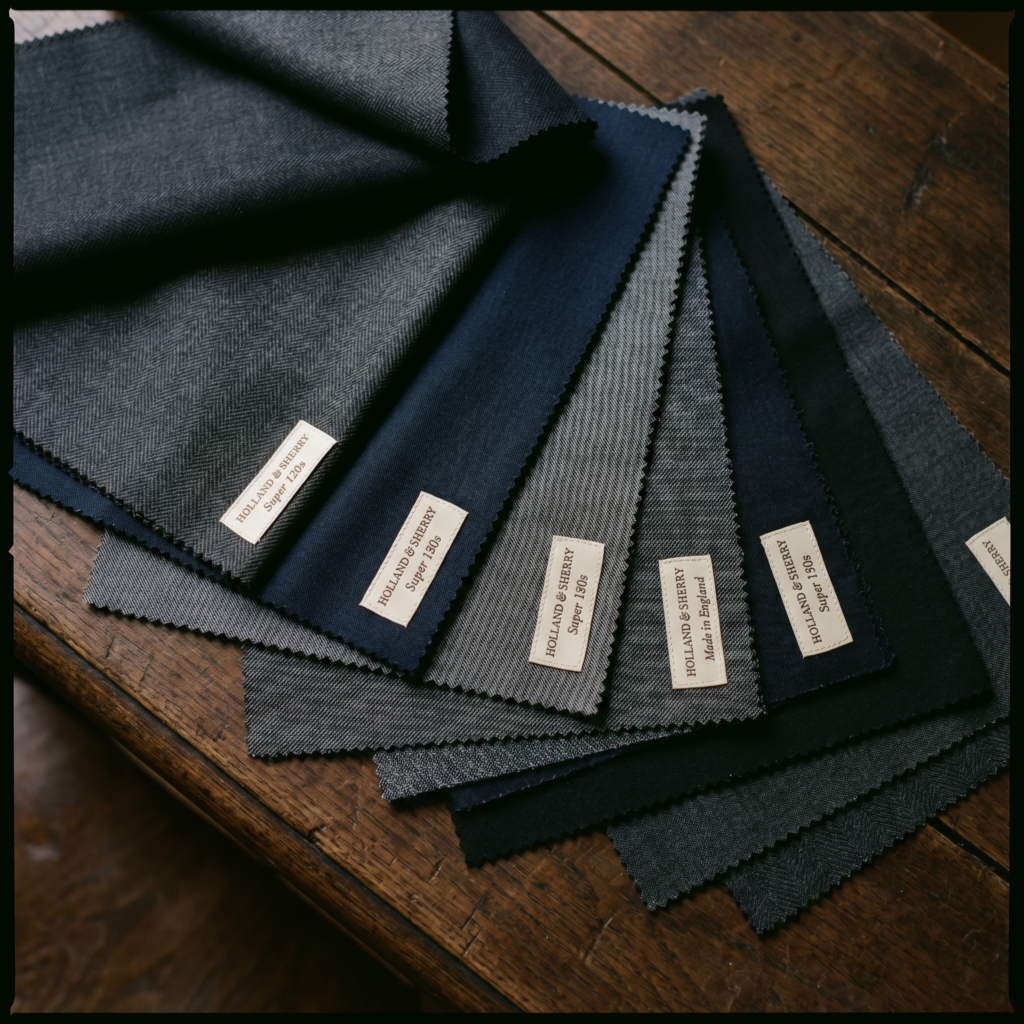
You have probably seen it on a fabric tag or heard it from a salesperson: “This is a Super 120s wool.” Maybe they said it with quiet confidence. Maybe you nodded along and kept browsing. Either way, you left without really knowing what it meant.
This guide closes that gap. You will learn exactly what Super numbers measure, why a higher number is not always better, and how to use this knowledge to choose the right fabric for the suit you are actually building, whether you are building it in Kansas City or thinking about your next one.
TLDR: Super numbers measure the fineness of individual wool fibers in microns. Higher numbers mean finer, softer wool. But finer is not the same as better. The right Super number depends on how often you will wear the suit, the occasion it is for, and the Kansas City climate. For most men, Super 110s to Super 130s is the sweet spot.
Where the Term “Super” Comes From
The word “super” is not marketing language. It has a specific history rooted in the British wool trade.
Early British wool merchants graded their wool by quality using a simple scale: low, medium, fine, and super. “Super” designated the finest grade available at the time. Over decades, that designation evolved into a numbered system tied to actual fiber measurements, giving clothiers and tailors a standardized way to communicate fabric quality.
Today, the Super S system is owned and registered by the International Wool Textile Organisation (IWTO) and administered by The Woolmark Company. To carry a certified Super designation, a fabric must be made of pure new wool, and the fiber diameter must be independently measured against the IWTO standard. The official scale runs from Super 80s, the coarsest permitted grade, through Super 210s, the finest currently codified. Higher tiers have been proposed but are not part of the standing certified scale.
One important caveat: the word “Super” can only appear on pure new wool fabrics under IWTO rules. Wool-blend fabrics drop the word “Super” and use just the number, such as “120s” instead of “Super 120s.” Not every mill or brand follows these rules strictly, so understanding what you are reading on a tag matters.
What the Number Actually Measures
Here is the plain-language explanation.
Each wool fiber is a physical strand of material with a measurable diameter. That diameter is expressed in microns, which are millionths of a meter. The Super number tells you the maximum average fiber diameter of the wool in that fabric. A smaller diameter means a finer, thinner fiber. A thinner fiber means a higher Super number.
That is the entire system. Higher number, thinner fiber.
Under the IWTO Code of Practice, each step of ten on the Super scale corresponds to exactly 0.5 microns less in allowed maximum fiber diameter. Here are the numbers you will see most often:
Super NumberMaximum Fiber DiameterSuper 80s19.75 micronsSuper 90s19.25 micronsSuper 100s18.75 micronsSuper 110s18.25 micronsSuper 120s17.75 micronsSuper 130s17.25 micronsSuper 140s16.75 micronsSuper 150s16.25 micronsSuper 160s15.75 micronsSuper 180s14.75 micronsSuper 200s13.75 micronsSuper 210s13.25 microns
To put that in perspective, the difference between Super 100s and Super 150s is about 2.5 microns. A typical human hair is roughly 70 microns wide. You are talking about differences invisible to the naked eye that still have a real impact on how the fabric feels and behaves.
What Super numbers do NOT measure:
- Thread count (that is a different measurement entirely)
- Fabric weight, which is measured in grams per square meter (GSM)
- Overall quality of the suit construction
- Durability on its own
That last point matters more than most people realize.
What Happens as the Number Goes Up
As wool fibers get finer, several things change at once. Some of them are benefits. Some of them are trade-offs.
The Benefits of Higher Super Numbers
Softness: Finer fibers create a smoother surface because there are fewer microscopic scales per strand catching against your skin. A Super 150s fabric will feel noticeably softer and more refined than a Super 100s.
Drape: Finer fibers produce a more fluid drape. The fabric falls more elegantly from your shoulders and moves with you more naturally. This is especially visible in photographs, which is why higher Super numbers are often recommended for weddings and formal events.
Sheen: As fibers get finer, they reflect light more uniformly, creating a subtle luminosity in the fabric. This is part of what gives a Super 150s or Super 180s suit its polished appearance under event lighting.
Light hand: Finer fibers can be woven into lighter-weight cloth while maintaining structure. A Super 150s at 220 GSM will feel airier than a Super 100s at the same weight.
The Trade-offs of Higher Super Numbers
Durability: This is the critical point most salespeople skip. Finer fibers are physically more delicate. They are more susceptible to friction, pilling, and the wear that comes from sitting at a desk, commuting, and moving through a full workday. A Super 180s suit worn three or four times a week will show wear faster than a Super 110s worn on the same schedule.
Wrinkle resistance: Lower Super numbers typically have more natural resilience. The thicker, more tightly twisted fibers spring back more easily after being compressed. Higher Super fabrics tend to wrinkle more readily and hold those wrinkles longer.
Care requirements: The higher the Super number, the more attention the garment needs. Super 150s and above should be dry cleaned only when necessary. Frequent cleaning breaks down fine wool fibers over time. In between wears, air the suit out, store it on a wide padded hanger, and rotate it with other suits.
Price: Finer wool is rarer. Premium high-Super fabrics carry meaningful price increases at each step up the scale, and the difference compounds when paired with reputable mill construction.
The Most Important Thing Most Salespeople Get Wrong
Here is where things go sideways in too many fabric consultations: Super number is not the same as suit quality.
A Super 150s label tells you the fibers are fine. It tells you nothing about how the fabric was woven, how the suit was constructed, or whether the mill that produced it has any real quality standards.
Want to see how this plays out in a real build? Explore our our services page - it walks through fabrics, construction, and what to expect at your first appointment.
The Super S system is regulated when used properly, but enforcement varies outside of strict Woolmark certification programs. A mill can put a high Super number on a label without that number being independently verified. The number also says nothing about construction: canvas quality, hand-stitching, the cut, or the accuracy of the measurements.
A useful way to think about this: a Super 120s fabric from Vitale Barberis Canonico (one of the oldest continuously operating wool mills in the world, founded in 1663 in Biella, Italy) will typically perform better and last longer than a Super 150s from an unknown importer. The Super number is an input, not an output. What the mill does with the fiber, how it is spun, woven, and finished, determines the final quality of the cloth.
When you are evaluating fabrics, ask about the mill, not just the number. Vertically integrated mills like Vitale Barberis Canonico, Loro Piana, and Ermenegildo Zegna control wool sourcing from farms through finished fabric. Their Super 110s or Super 120s fabrics represent a fundamentally different level of craftsmanship than an unmarked bolt of fabric wearing the same label.
Super Numbers and Fabric Weight: Two Different Things
This is a distinction that confuses a lot of people, so it is worth being direct about it.
Super numbers measure fiber fineness. Fabric weight is measured separately in grams per square meter (GSM). They are independent variables. You can have a lightweight Super 100s fabric or a heavyweight Super 180s fabric depending entirely on how the mill chose to weave it.
Why does this matter? Because weight is what determines how a suit feels in terms of warmth and structure, not the Super number. A Super 120s fabric at 320 GSM is a structured, warm, winter-weight cloth. The same Super 120s at 200 GSM is a breathable, warm-weather option.
For Kansas City specifically, this distinction is practical. Summer in Kansas City means heat and humidity from June through August. The right choice is not just a high Super number. It is a lighter fabric weight, typically 180 to 230 GSM, in a fabric that breathes. A Super 110s or Super 120s at 200 GSM will keep you cooler and more comfortable through a long summer day than a Super 150s at 280 GSM.
Which Super Number Is Right for You?
The honest answer depends on three things: how often you will wear the suit, what occasion it is for, and your climate.
Here is a practical guide:
Super NumberBest UseKey CharacteristicsSuper 80s to 100sHeavy daily wear, travel suitsMaximum durability, wrinkle resistance, coarser handSuper 100s to 120sBusiness suits, frequent wearersIdeal balance of softness and durabilitySuper 120s to 140sBusiness and formal occasionsNoticeably softer, some luxury feel, still practicalSuper 140s to 160sWeddings, formal events, special occasionsExcellent drape and softness, requires more careSuper 160s and aboveBlack-tie, galas, rare occasionsExceptional luxury, most delicate, highest cost
For the Everyday Business Suit
If you wear a suit three to five days a week, Super 100s to Super 120s is your range. These fabrics are durable enough to handle regular wear, hold a crease well, resist everyday wrinkling, and still feel polished and professional. A Super 120s in a good wool from a reputable mill is one of the most reliable investments a professional man can make in his wardrobe.
Tip: For your daily driver suit, prioritize fabric quality and construction over a high Super number. A Super 110s from an excellent mill will outlast and outperform a Super 150s from a lesser source every time.
Ready to build a workhorse suit you will actually wear? Start with The Suit Doctor’s custom business suits in Kansas City page to see how the consultation works.
For a Wedding or Formal Event Suit
When the occasion comes around once or the suit will be worn only a handful of times per year, moving into Super 130s to Super 150s territory makes sense. The softer hand, better drape, and slight sheen photograph beautifully. You are not asking the fabric to survive daily abuse, so the reduced durability is not a meaningful trade-off.
For Kansas City weddings, fabric weight matters as much as Super number. A Super 130s or Super 140s at 210 to 240 GSM handles spring and fall ceremonies comfortably. For a summer wedding, look for the same range in a lighter weave at 180 to 220 GSM.
For a Once-in-a-While Luxury Piece
If you are building a suit specifically for black-tie events, galas, or occasions where the suit comes out a few times per year, Super 150s and above deliver the drape and softness those settings deserve. Just know going in that these fabrics require more careful handling, proper storage, and a lighter cleaning schedule.
How to Care for Fine Wool Fabrics
The higher the Super number, the more intentional your care routine needs to be. These principles apply across the range but become more important as the number climbs:
- Dry clean only, and sparingly. Frequent dry cleaning breaks down fine wool fibers. Air the suit out after each wear instead of cleaning it after every use.
- Use wide, padded hangers. Wire hangers distort the shoulder structure over time. A well-shaped wooden or padded hanger preserves the jacket’s form between wears.
- Rotate your suits. Even a Super 150s will last years with proper rotation. Wearing the same suit every day accelerates wear regardless of the Super number.
- Steam, do not iron. A steamer removes wrinkles from fine wool without the pressure and heat of a direct iron. If you must iron, use a pressing cloth and low heat.
- Store properly between seasons. Cedar blocks or a breathable garment bag protect fine wool from moths and dust without trapping moisture.
Is Investing in a Higher Super Number Worth It?
The instinct to go higher is natural. The number on the tag feels like an objective measure of quality, and a Super 150s sounds like a clear upgrade from a Super 110s. The honest answer is that it depends entirely on what you will do with the suit.
For a man building his first quality suit or rebuilding a wardrobe of suits he wears every week, a Super 110s or Super 120s from a reputable mill is the better investment. You get the drape, the polish, and the professional appearance you want, with durability that holds up to real-world use. The difference between that suit and an off-the-rack alternative is dramatic. The difference between that suit and a higher Super number is much smaller, and the trade-offs swing against the higher number for daily wear.
For a man who already has a few good suits and is adding a special-occasion piece, moving into the Super 130s to Super 150s range is where the math changes. The fabric will be worn lightly, photographed often, and stored carefully. That is the right environment for fine wool. For a deeper read on whether custom is worth it generally, see why made-to-measure beats off-the-rack for Kansas City professionals.
FAQ: Super Numbers Explained
Q: Is a Super 150s suit always better than a Super 100s?
Not necessarily. A Super 150s is softer and finer, but it is also more delicate and less durable. For a suit you will wear regularly, a Super 100s or Super 120s from a quality mill is often the smarter investment. “Better” depends entirely on your intended use.
When you're ready to put this into practice, you can book a mobile fitting at your home or office with Brandon and get measured in person.
Q: What Super number should I choose for a Kansas City summer wedding?
For a Kansas City summer wedding, the Super number matters less than the fabric weight. Look for Super 120s to Super 140s in a lightweight construction at 180 to 230 GSM. The lighter weave keeps you cooler while the higher Super number gives you the drape and softness you want in wedding photos.
Q: Can you feel the difference between Super numbers?
Yes, especially as you move up the range. The jump from Super 100s to Super 150s is noticeable when you handle both fabrics. The 150s feels significantly softer and smoother. The difference between Super 120s and Super 130s is subtler but still detectable to most people when both swatches are in hand.
Q: Does a higher Super number mean the suit will last longer?
The opposite is closer to true. Higher Super numbers use finer, more delicate fibers that are more susceptible to everyday wear. A Super 100s or Super 110s will typically outlast a Super 160s worn on the same schedule.
Q: What does it mean when a fabric tag just shows a number without the word “Super”?
Under IWTO rules, the word “Super” can only appear on pure new wool fabrics. A fabric labeled simply “120s” without “Super” is likely a wool blend rather than 100 percent pure new wool. The fiber fineness designation is still meaningful, but the fabric composition differs from a certified Super 120s.
Q: Is there a governing body that certifies Super numbers?
The system is owned by the IWTO and administered by The Woolmark Company. However, Woolmark certification applies when mills and manufacturers participate in the program. Not all fabrics carrying Super numbers are independently verified. This is why mill reputation matters. A Super 120s from a respected mill carries real credibility. An unverified label from an unknown source does not.
Q: What Super number does The Suit Doctor use for custom suits?
The Suit Doctor works with a range of fabrics across multiple Super ratings, selected based on each client’s intended use, occasion, and personal preference. During your consultation, you will handle physical swatches from each option so the choice is based on real-world feel, not just a number on a tag.
Q: What is the highest Super number available?
Under the current IWTO Code of Practice, Super 210s is the highest codified rating, with a maximum fiber diameter of 13.25 microns. Higher tiers have been proposed but are not part of the standing certified scale. Fabrics at this level are extremely delicate, expensive, and rare.
Key Takeaways
- Super numbers measure fiber fineness, not quality, thread count, or durability. Higher means thinner fiber, not better suit.
- The IWTO sets the standard. Super 100s = maximum 18.75 microns. Super 120s = maximum 17.75 microns. Super 150s = maximum 16.25 microns. Each step of ten = 0.5 microns less.
- Higher Super numbers are softer and more refined but also more delicate and require more careful handling.
- For everyday business suits: Super 100s to Super 120s delivers the best balance of comfort and durability.
- For weddings and formal events: Super 120s to Super 150s gives you the drape and softness that photograph beautifully.
- Super number and fabric weight are separate. A Super 120s can be woven light for summer or heavy for winter. Always consider GSM alongside the Super number.
- Mill reputation matters more than the number. A Super 110s from a top mill will outperform a Super 150s from an unknown source.
- Kansas City summers require lighter weights. For warm-weather suits, prioritize fabric weight (180 to 230 GSM) alongside the Super number.
Walk In, Hold the Fabric, and Decide
You now understand what those numbers actually mean. A Super number tells you one important thing about your fabric: how fine the wool is. Everything else (construction, weight, mill quality, how the suit is built around those fibers) determines what you actually end up wearing.
The best way to choose is still to hold both options in your hands and feel the difference yourself. No article can replicate that.
The Suit Doctor offers:
- Full fabric swatch consultations so you can feel every option before committing
- Custom and made-to-measure suits across a range of Super numbers and fabric weights
- Honest guidance on matching fabric to occasion, season, and lifestyle
- Mobile fitting services so the consultation comes to you
- Transparent pricing and a clear explanation of every trade-off
Ready to choose your fabric in person? Schedule your Kansas City custom suit consultation with The Suit Doctor and hold every option in your hands before deciding.
The Suit Doctor | Custom and Made-to-Measure Suits for Kansas City Men Who Know What They Want.
Get measured for a suit built around how you actually live.
See every service, from full custom builds to mobile fittings.