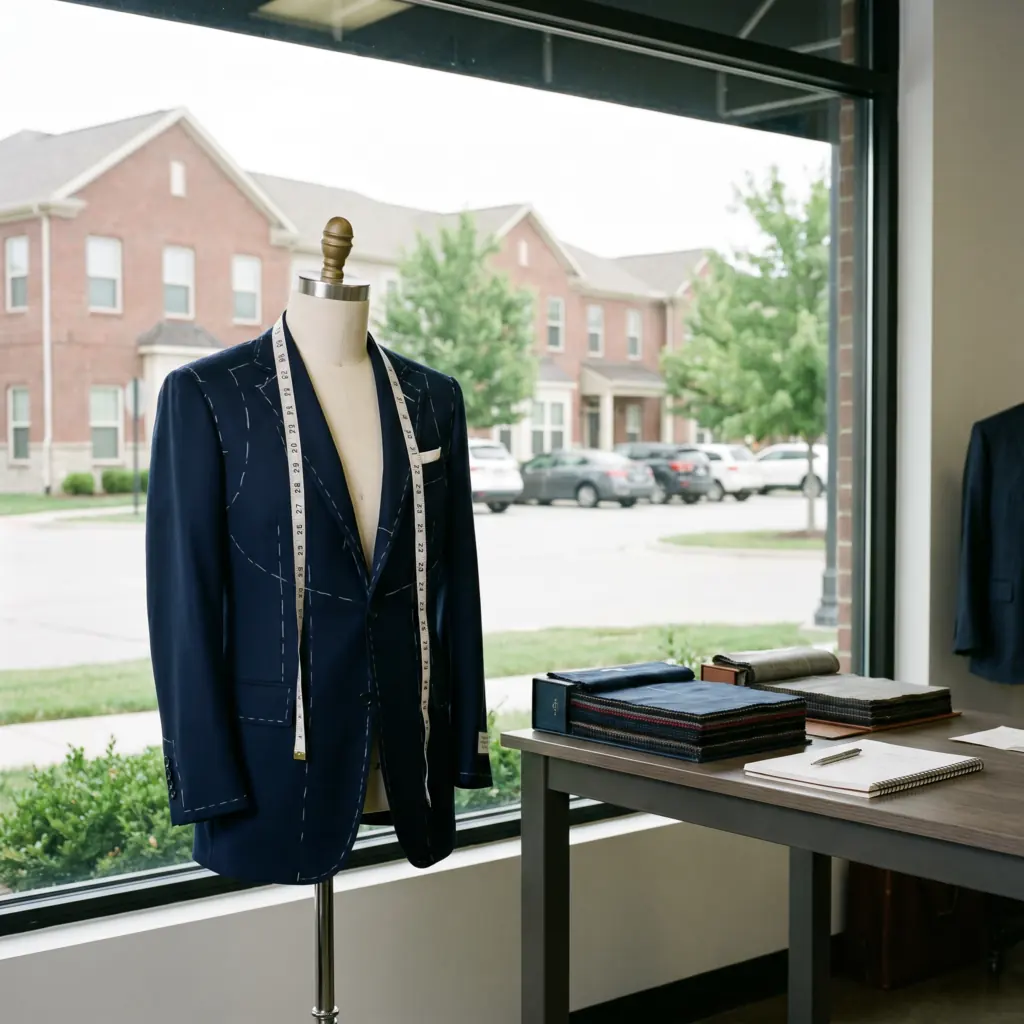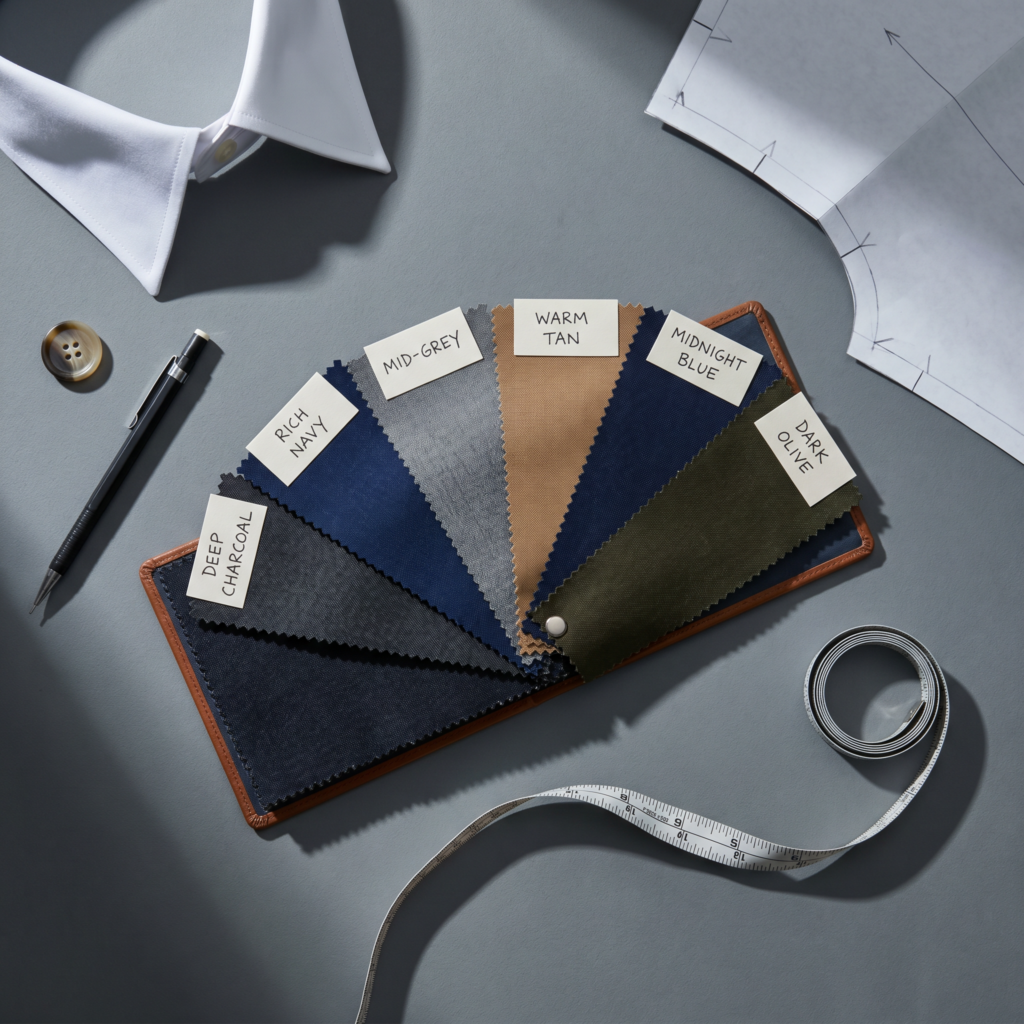
A sharp custom suit gets you most of the way there. Accessories carry you the rest. This guide walks you through suit accessories, ties, pocket squares, belts, and dress shoes with the coordination rules that separate a polished look from a rental-night outfit. Whether you are dressing for the office, a Plaza wedding, or prom, you will leave with a clear system you can actually use.
TLDR: Your tie width should match your lapel. Your belt must match your shoes in color and finish. Your pocket square should complement your tie, not match it. Your socks should match your trousers, not your shoes. Master those four rules and you will out-dress ninety percent of the room. The rest of this guide shows you how to apply them across every occasion you actually dress up for.
You spent real money on a custom suit. The suit is only the beginning of the outfit. A perfectly tailored jacket paired with the wrong tie, a mismatched belt, or athletic socks undercuts every dollar of that investment in a single glance.
Accessories are where most men quietly lose the look. They are also where you gain the most for the least money. A good knit tie and a linen pocket square can change a suit more than a second suit would. This guide gives you the rules that professional clothiers use, in plain language, so you can build outfits that work without second-guessing every morning.
Why Accessories Matter More Than You Think
Research from Princeton University found that people form first impressions in roughly one hundred milliseconds, faster than the time it takes to blink. Broader peer-reviewed research on how clothing shapes first impressions confirms those rapid judgments extend to inferences about status, competence, and professionalism. A separate peer-reviewed study in the Journal of Fashion Marketing and Management compared the same men photographed in custom suits versus off-the-rack and found observers rated the tailored versions significantly higher on confidence, success, and perceived earnings, even after a five-second glance.
The practical takeaway is that the details on the outside of your jacket do most of the talking before you ever open your mouth. A tie that is three inches too short, a brown belt with black shoes, or a pocket square that matches the tie exactly are not small errors. They register as signals about attention to detail long before anyone gets to your handshake. The good news is that the rules are not secret. Once you understand the foundation, the same small set of principles applies to every suit you will ever wear.
The Foundation: How Your Shirt Sets Up Every Accessory
Before you think about ties, start with the shirt. Your collar shape dictates which tie knot will look balanced, and your cuff style decides whether cufflinks are on the table.
Collar choice dictates knot choice
The knot of your tie should fill the space between your collar points. A narrow point collar looks crowded under a fat Full Windsor and airy under a small Four-in-Hand. A wide spread collar, sometimes called a Windsor or English collar, looks empty under a Four-in-Hand and balanced under a Half or Full Windsor. The rule of thumb is simple: the wider the collar spread, the larger the knot.
Point collars and button-down collars pair best with the Four-in-Hand. Semi-spread collars, the most versatile option for business, pair well with either the Four-in-Hand or the Half Windsor. Wide spread and cutaway collars call for the Half or Full Windsor. Wing collars, the tall stand-up collars with folded-back points, are reserved for black tie and white tie, and they only pair with a self-tie bow tie.
When to wear French cuffs
Barrel cuffs button shut with one or two buttons and need no further hardware. French cuffs, also called double cuffs, fold back on themselves and require cufflinks to close. French cuffs dress an outfit up a full notch and belong with business formal suits and black tie. A single French-cuff shirt under a conservative navy or charcoal suit with a pair of simple silver or mother-of-pearl cufflinks reads as more deliberate than any tie upgrade will. If your shirt is off-the-rack or custom-ordered with barrel cuffs, you can skip the cufflinks section entirely and focus your accessory budget elsewhere.
One fit note worth mentioning: your shirt cuff should show about a quarter to half an inch beyond your jacket sleeve when your arms hang at your sides. If yours does not, that is usually a jacket-sleeve issue, which is one of the most common signs your suit does not fit properly in Kansas City.
Tie Width and Length: The Lapel Rule Explained
The most important rule in the tie world is the one almost nobody talks about: your tie width should roughly match your jacket lapel width. A three-inch lapel calls for a tie between two and three-quarters and three and one-quarter inches wide. Wear a two-inch skinny tie with a three-and-a-half-inch lapel and the proportions collapse. Wear a three-and-a-half-inch tie with a slim modern lapel and you look like you borrowed someone else’s outfit.
Classic tie width runs three and a quarter to three and a half inches. Modern standard is three inches. Slim runs two and a half to three inches. Skinny, which has mostly left serious menswear, is anything under two and a half. If you are buying one tie to go with one suit, match it to the lapel on that jacket and you cannot go wrong.
Length matters almost as much. A properly tied tie should end right at the top of your belt buckle. Too short is the more common mistake and tends to happen with Windsor knots, which consume more fabric. If you are over six foot two or you prefer the Windsor, look for extra-long ties that run sixty-one to sixty-three inches rather than the standard fifty-eight.
Fabric signals formality. Silk in satin or twill weaves is the most formal and reads year-round. Grenadine, a textured silk weave, gives you a formal tie with visual interest. Wool and cashmere ties are semi-formal to casual and belong in fall and winter, where merino wool’s natural properties for tailoring give them a soft hand and excellent drape. Knit ties, whether silk or wool, dress down a suit in a flattering way and are a smart first upgrade if your tie drawer is all solid silks. Linen and cotton are warm-weather casual.
Knots that match your collar
The four knots you actually need to know are the Four-in-Hand, the Half Windsor, the Full Windsor, and optionally the Pratt. Here is how they line up with collars and formality:
KnotShapeSizeBest CollarBest ForFour-in-HandAsymmetric, elongatedSmallPoint, button-down, tabDaily, versatileHalf WindsorSymmetric triangleMediumSemi-spread, medium spreadBusiness, weddingsFull WindsorLarge symmetric triangleLargeWide spread, cutawayMost formal businessPratt (Shelby)Symmetric, moderateMediumSpreadShorter ties, tall men
If you only learn one knot, make it the Four-in-Hand. It is the most versatile, works with the broadest range of collars, and its slight asymmetry gives it a hand-tied character that symmetrical knots can lack.
One finishing detail worth practicing: the dimple. As you tighten the knot, pinch the tie fabric between your thumb and forefinger just below the knot. A centered vertical dimple signals that the tie was hand-finished rather than pulled flat.
Tie bars and where they go
The tie bar is a small piece of metal that clips your tie to your shirt placket. It is one of the easiest accessories to get right and one of the most commonly misused.
Place the bar between your third and fourth shirt button. Higher and it looks like a tie clasp from the nineteen-fifties. Lower and it disappears behind your jacket when buttoned. The bar must clip both the tie and the shirt, otherwise it will flip sideways throughout the day. Width-wise, the bar should span roughly three-quarters of your tie width and should never extend past the edges. Skip the tie bar with a waistcoat or a cardigan, since the added layer already holds the tie in place.
How to Wear a Pocket Square: Complement, Never Match
The single most common pocket-square mistake is wearing a square that matches the tie exactly. Matching sets, usually sold together as a combo at the same register, shout rental night. The goal is coordination, not duplication.
Think of the pocket square as a supporting color, not a repeat of the tie. Three techniques that reliably work: pull a secondary color out of the tie and use that as the square’s primary color; use the same color family but a different shade, such as a hunter-green tie with a sage-green square; or go complementary by picking a color opposite the tie on the color wheel, such as burgundy with forest green.
When in doubt, a plain white linen pocket square folded flat, sometimes called the TV fold or presidential fold, works with every color tie, every color suit, and every occasion from a morning interview to a black-tie wedding. Buy two or three white linen squares before you buy a single patterned one. They will carry more outfits than any other single accessory you own.
Four folds worth learning
The presidential or TV fold shows only a straight horizontal edge above the pocket and is the most formal choice. The one-point fold, where a single triangle peaks above the pocket, is the default business fold. The puff, made by pinching the center of the square and tucking the edges, works best in silk and looks relaxed without looking sloppy. The two-point or crown fold, with two or more peaks, reads more creative and suits weddings and galas.
The square should peek one to one and a half inches above the pocket. Any more and it looks like you are displaying it. Any less and it disappears.
Want to see how this plays out in a real build? Explore our our services page - it walks through fabrics, construction, and what to expect at your first appointment.
Belt and Shoe Matching: The One Rule You Can’t Break
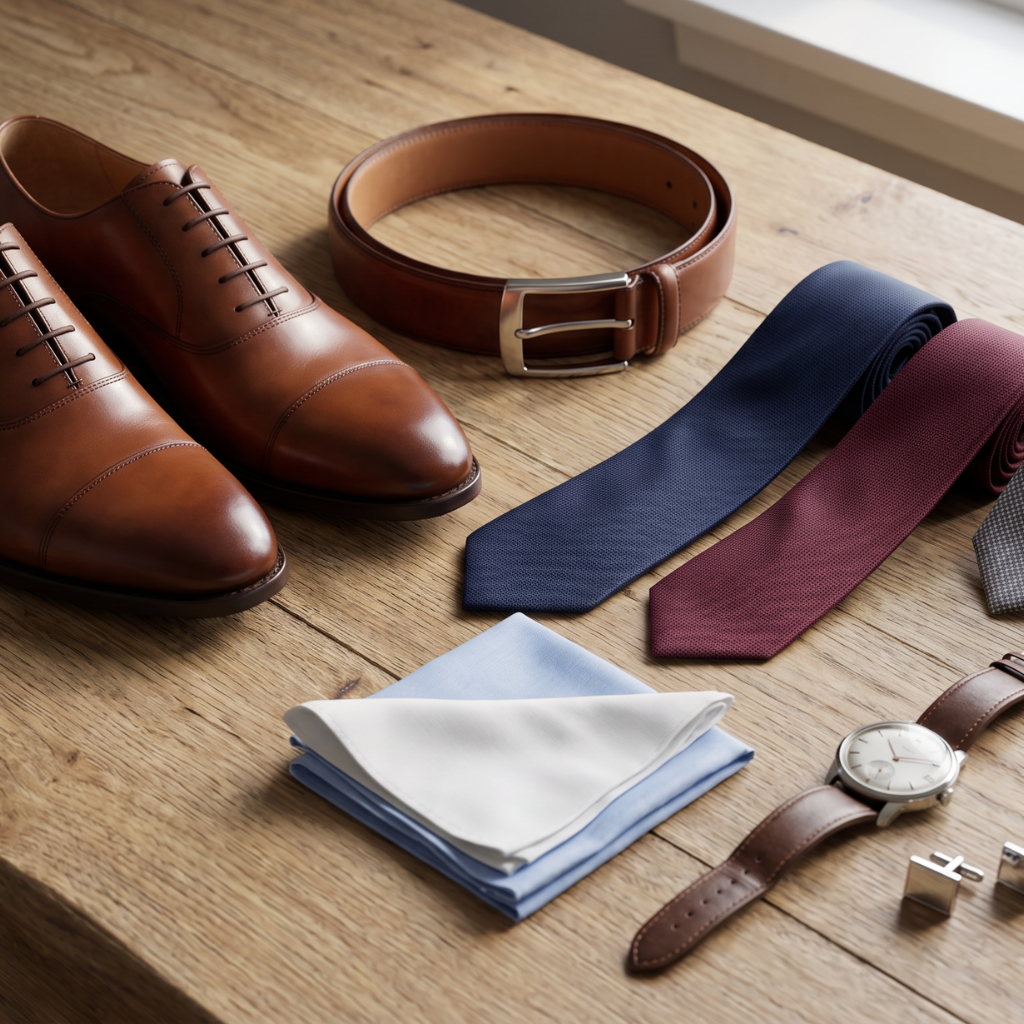
This is the rule that trips up more men than any other: your belt should stay in the same color family as your shoes. A dark brown belt with medium brown shoes works perfectly. A burgundy belt with cordovan shoes works. Suede pairs best with suede. The unbreakable version of this rule is actually simpler than the exact-match version most men try to follow: never mix brown with black. Do that, and you undermine everything else in the outfit.
Dress belt width
A proper dress belt runs one and a quarter to one and three-eighths inches wide, with one and a quarter inches (about thirty-two millimeters) as the classic ideal. Anything one and a half inches or wider crosses into casual territory and belongs with jeans and chinos.
The buckle should be simple: a flat frame buckle in polished silver or antique brass. Large logo buckles, plaque buckles, and anything Western-inflected belongs to different outfits. Your belt size is your waist plus two inches.
Dress shoe formality, from most to least formal
Shoe formality runs on a clear hierarchy. At the top sits the plain-toe Oxford, closed-laced with the quarters stitched under the vamp, typically in black calfskin. Next comes the cap-toe Oxford, which adds a horizontal seam across the toe and remains the universal business dress shoe. Semi-brogues and full-brogue wingtips add decorative perforations, stepping down slightly in formality but gaining character. The Derby, also called the Blucher, opens the lacing with the quarters sewn on top of the vamp and reads as business-casual. Monk straps close with buckles instead of laces. Loafers, including penny, bit, and tassel styles, are the most casual end of what you can wear with a suit.
One clarification that helps enormously: brogue is a decoration, not a shoe type. Those perforations can appear on Oxfords, Derbies, or any other style. An Oxford is defined by the closed lacing. A Derby is defined by the open lacing. Calling a Derby a brogue is like calling any shoe with laces a sneaker.
Shoe-suit color coordination
Shoe ColorWorks WithAvoid WithBlackNavy, charcoal, medium gray, blackBrown suits, tan suitsDark brownNavy, gray, tan, brown, oliveBlack suits, strict black tieMedium brownNavy, gray, tan, brownBlack, strict black tieBurgundy / CordovanNavy, gray, tan, brown, charcoalStrict black tie onlyTanTan, light gray, summer suitsCharcoal, blackPatent blackTuxedo onlyEvery daytime suit
Burgundy, also sold as cordovan or oxblood, is the most versatile shoe color most men do not own. If you are asking which shoes look best with a navy suit, burgundy often beats both black and standard brown for visual interest. A single pair of burgundy cap-toe Oxfords or monk straps covers navy, gray, tan, and brown suits equally well. If you own one pair of dress shoes, make them black cap-toes. If you own two, add burgundy second.
Quality matters at this tier. Goodyear-welted construction, which stitches the upper to the sole through a strip of leather called the welt, allows shoes to be resoled multiple times and can extend the life of a pair to twenty or thirty years with proper care. Horween Leather Company in Chicago, one of the oldest operating tanneries in the United States, produces the shell cordovan that many legacy American and English shoemakers use for their highest-end lines. The six-month vegetable-tanning process behind premium American leather is why a three-hundred-dollar Goodyear-welted Oxford will outlast five pairs of cemented-sole dress shoes at eighty dollars each.
Dress Socks, Watches, and Cufflinks: The Finishing Details
Socks: match your trousers, not your shoes
Almost every man gets this wrong the first time. Socks should match your trousers, not your shoes. Matching to the trousers creates an unbroken vertical line from your knee to the top of your shoe, which visually lengthens the leg and keeps the eye moving smoothly. Matching to the shoe instead creates a sharp break at the ankle.
For a suit, the length should be over-the-calf. Mid-calf socks slip down throughout the day and show bare leg when you sit or cross your legs, which is the single most visible menswear mistake at conference tables and dinner parties. No-show socks belong with casual loafers, never with a suit.
Novelty socks have a place in business casual if the base color stays in the trouser family and the pattern is small-scale. For interviews, funerals, court appearances, and serious client meetings, stay in solid trouser-matching colors. No one has ever been dinged for conservative socks.
Watches: the strap matters more than the dial
A dress watch has a case between thirty-four and forty millimeters wide, a slim profile under ten millimeters thick, a simple dial with minimal complications, and a leather strap. The archetype is the Patek Philippe Calatrava or the Cartier Tank: flat, quiet, and clearly a watch meant to be worn under a cuff. Sport watches with metal bracelets, chronograph dials, and forty-plus millimeter cases work with most business suits in modern interpretation but break the formality of a tuxedo.
The strap color should match your shoes and belt. Black leather strap with black shoes. Brown strap with brown shoes. Hardware metals should stay consistent across your watch case, belt buckle, cufflinks, tie bar, and wedding band. If your watch is silver-toned, keep the rest silver. If it is gold, keep the rest gold. Mixed metals look unintentional even when they are not.
Cufflinks: only when the shirt requires them
Cufflinks are needed when the shirt has French, also called double, cuffs or single cuffs. If your shirt has standard barrel cuffs with buttons, cufflinks are simply not a part of the outfit.
Sterling silver or gold in simple shapes works for business. Mother-of-pearl or black onyx is correct for black tie. Avoid novelty cufflinks, engraved initials, and anything described as “fun” in the product listing when the occasion is serious. The chain-link back style, where two connected faces show on both sides of the cuff, is the most refined mechanism and reads as a quiet luxury choice versus the spring-loaded bullet-back most men own.
Putting It Together: One Suit, Four Occasions
Here is where most guides fall short. They explain each accessory in isolation and leave you to figure out how it all combines. Let’s walk through how one navy suit, which is the most versatile single suit anyone can own, transforms across four very different Kansas City occasions with nothing more than accessory changes.
Country Club Plaza wedding, late summer Saturday evening. Navy suit, white shirt with a semi-spread collar, burgundy grenadine tie in a Half Windsor, burgundy cap-toe Oxfords, matching burgundy belt, white linen pocket square in a one-point fold, navy over-the-calf socks, slim silver-and-black dress watch.
Downtown professional interview, Tuesday morning. Same navy suit, white shirt with a point collar, solid navy silk tie in a Four-in-Hand, black cap-toe Oxfords, black dress belt, white linen pocket square in the presidential fold, black over-the-calf socks, silver tie bar, silver watch on a black strap.
Chiefs Sunday dinner downtown, mid-December. Navy suit, light blue shirt with a button-down collar, cashmere knit tie in charcoal or burgundy, dark brown suede monk straps, matching suede belt, subtle patterned silk square, dark brown merino over-the-calf socks.
Evening cocktail fundraiser, Crossroads gallery. Navy suit, white French-cuff shirt, self-tied black silk bow tie, plain black cap-toe Oxfords polished high, black silk over-the-calf socks, white linen TV-fold pocket square, silver and mother-of-pearl cufflinks, no belt, slim dress watch.
Same suit. Four entirely different looks. This is the argument for custom-making a single excellent suit and rotating accessories rather than owning four mediocre ones, and it is also why the depth of a custom suit fitting in Kansas City covers more than just measurements. The suit has to be cut to work across every occasion you actually attend.
Common Suit Accessory Mistakes (And How to Fix Them)
A few patterns come up again and again. The first is the tie that ends two or three inches above the belt buckle, which usually happens with a Windsor knot tied in a standard-length tie. Buy extra-long ties if you are tall, or switch to a Four-in-Hand. The second is the brown-belt-with-black-shoes accident. Hang dress belts with their matching shoes to eliminate it. The third is white athletic socks with dress shoes, the single most visible mistake in professional dress, which you can fix by buying a rotation of black, navy, and charcoal over-the-calf merino socks.
Less obvious but just as common is the matched tie-and-pocket-square set. Coordinate, do not duplicate. Equally damaging is over-accessorizing, where a tie bar, lapel pin, pocket square, cufflinks, watch, and bracelet all compete. Pick two or three focal accessories and let the rest stay quiet. Clip-on suspenders with a suit is another one. Real braces button to the inside of the waistband. Clip-ons damage the trousers and read as costume.
Frequently Asked Questions
Q: Do my belt and shoes really have to match exactly?
When you're ready to put this into practice, you can book a mobile fitting at your home or office with Brandon and get measured in person.
Yes, in color and ideally in finish. Smooth calf shoes take a smooth calf belt. Suede shoes take a suede belt. Burgundy shoes take a burgundy belt, not a generic brown one. This is the one menswear rule with no exceptions in formal and business-formal contexts.
Q: What do I wear with a tuxedo?
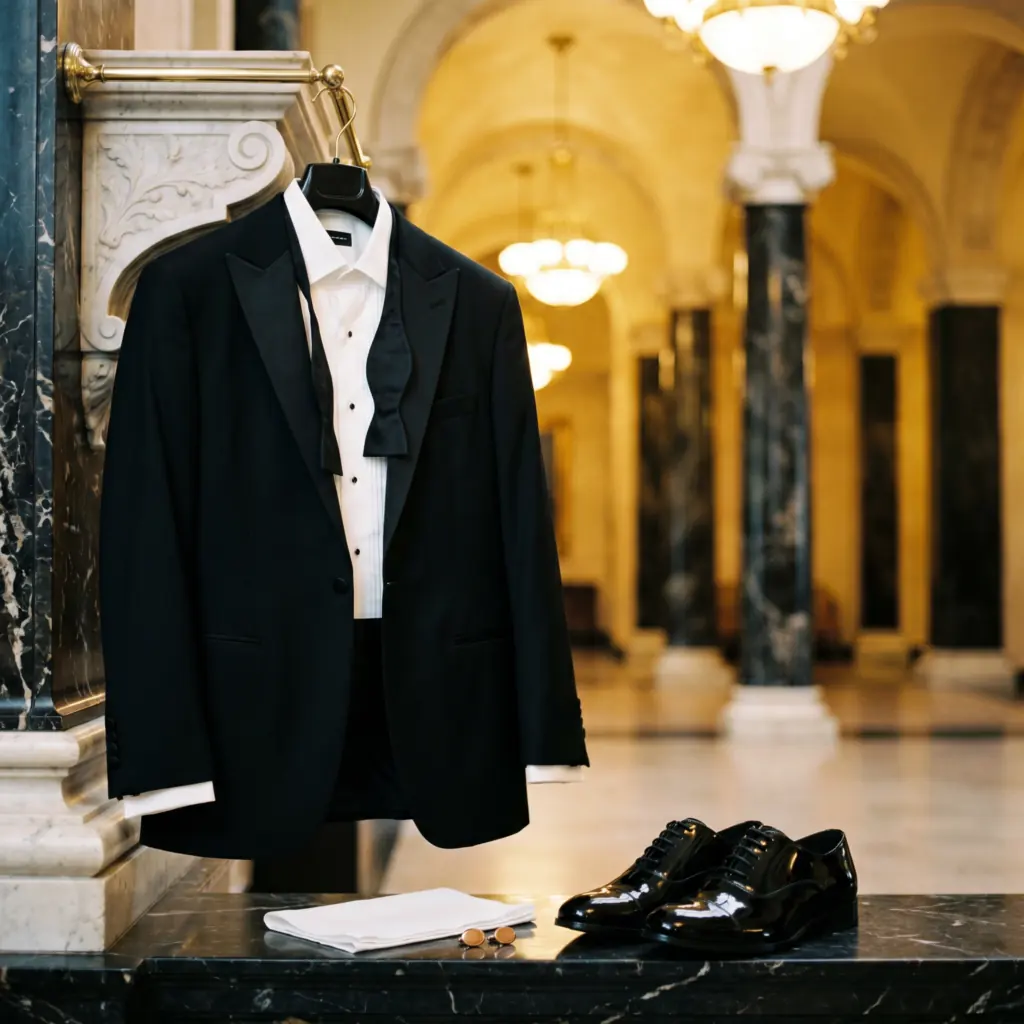
Black patent or highly polished black cap-toe Oxfords, fine black silk over-the-calf socks, a self-tie black silk bow tie matching the lapel finish, mother-of-pearl or black onyx studs and cufflinks, white linen TV-fold pocket square, and either a black silk cummerbund or a low-cut black waistcoat, never both. No belt. No sport watch.
Q: Can I wear brown shoes with a black suit?
No. Brown shoes do not work with a true black suit. If you want a dark suit that gives you room to wear brown or burgundy shoes, choose charcoal or navy instead. More on this in our guide to choosing your first business suit color in Kansas City.
Q: Should my tie match my pocket square?
Never exactly. They should coordinate, which usually means pulling a secondary color from the tie and using it as the primary color of the square, or pairing a patterned tie with a solid white or solid colored square.
Q: How wide should my tie be?
Match tie width to your lapel width, within about a quarter inch. A three-inch lapel takes a three-inch tie. This single rule fixes more accessory-coordination issues than any other.
Q: Do I need cufflinks?
Only if your shirt has French cuffs or single cuffs, both of which fold back and cannot close without them. Standard barrel cuffs button shut on their own and do not take cufflinks.
Q: What color socks should I wear with a navy suit?
Navy over-the-calf socks. The rule is to match the socks to the trousers, not the shoes. This creates a clean vertical line from knee to shoe.
Q: Are knit ties appropriate for business?
Yes, in business-casual and smart-business contexts. A solid navy or burgundy knit silk tie reads modern and deliberate. For conservative business formal, interviews, and serious client meetings, stay with woven silk in solid or small-pattern weaves.
Key Takeaways
- Foundation first: Your shirt collar dictates which tie knot looks balanced, and your cuff style determines whether cufflinks belong in the outfit.
- Tie width equals lapel width: Match them within a quarter inch.
- Pocket square complements, never matches: White linen in a flat fold is the universal safe choice.
- Belt must match shoes: Color and finish. Brown with brown, black with black, suede with suede, cordovan with cordovan.
- Socks match trousers, not shoes: Navy suit equals navy socks. Over-the-calf length is the only correct length for a suit.
- Shoe formality runs from Oxford to loafer: Black cap-toe Oxfords handle all business-formal. Burgundy is the most versatile second pair.
- Hardware metals stay consistent: Watch case, belt buckle, tie bar, cufflinks, and wedding band should all lean silver-tone or all lean gold-tone.
- One great suit with varied accessories beats four mediocre ones: The same navy suit transforms across four occasions with nothing more than tie, shoe, and pocket square changes.
Ready to Build a Complete Look?
You now understand how every accessory on a suit connects to the others, from the collar that sets up your tie knot to the belt that has to match your shoes. The next step is working with someone who builds the suit around how you actually plan to wear it, including which accessories you already own and which occasions sit on your calendar.
The Suit Doctor offers:
- Custom and made-to-measure suits built from individual patterns to your measurements
- Mobile fittings at your home or office, with the fitting fee applied as credit toward your order
- Coordination on accessories, including lapel width, sleeve length, and trouser break
- Group services for weddings and corporate teams, with consistent fit across the party
- Fabric selection suited to Kansas City’s full range of weather
To start a conversation, head to the Kansas City custom suit consultation page and request a fitting. If you are planning a wedding, start with groom and groomsmen suit fittings in Kansas City. If the occasion is prom, see the dedicated prom suit styling guide for Kansas City.
The Suit Doctor | Custom and Made-to-Measure Suits for Men Who Take Their Look Seriously.
Get measured for a suit built around how you actually live.
Style advice paired with true made-to-measure tailoring.