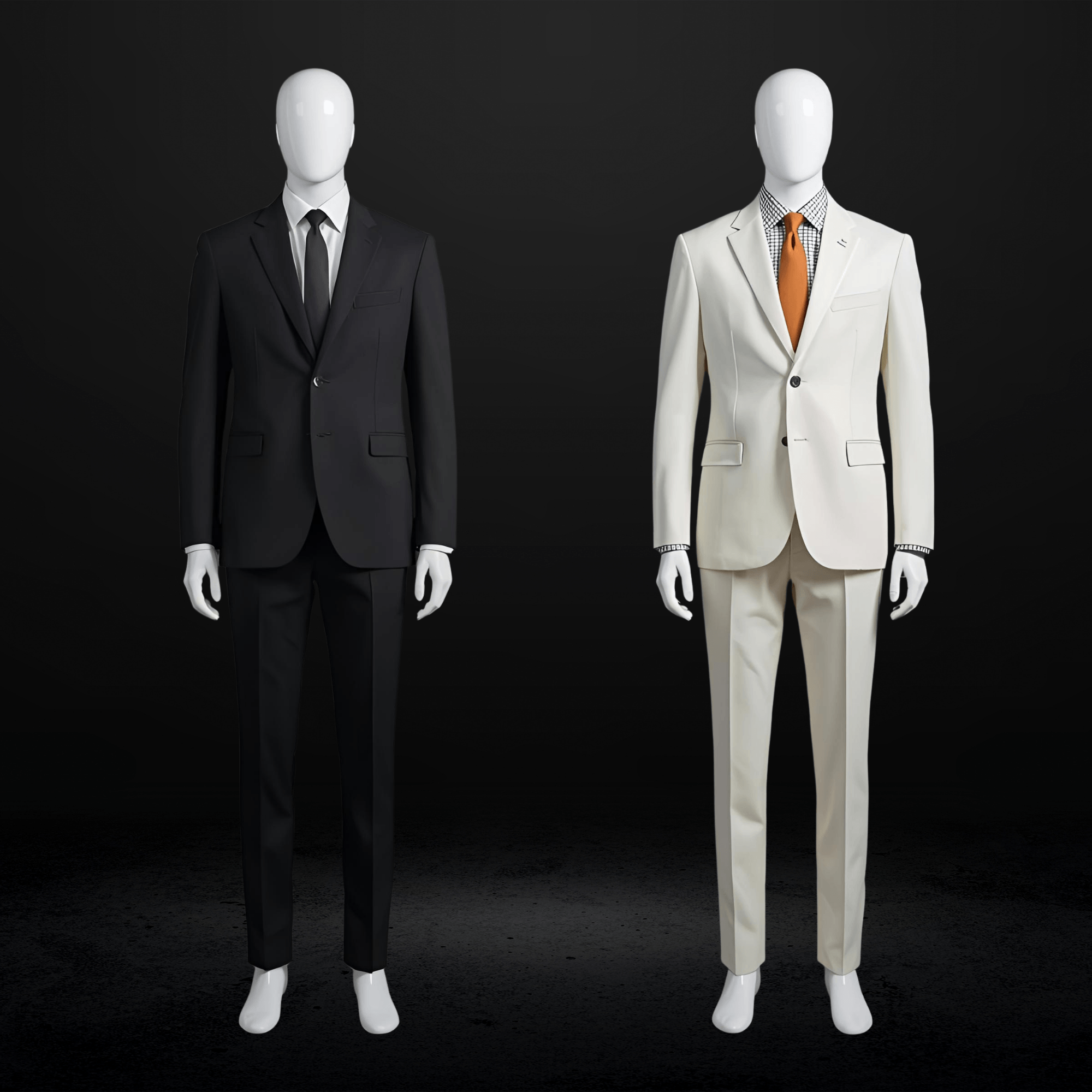
Summary: The choice between single-breasted and double-breasted suits is bigger than buttons. Each style affects fit, formality, and how your body reads in the room. This guide breaks down the technical differences, the body-type rules, the 2026 trend shift, and the honest guidance you need to pick the right style for how you actually live.
TL;DR: Single-breasted suits are the versatile default most men reach for first. Double-breasted suits bring more presence and formality, and they are back in a big way for 2026 with shorter, softer, and lighter cuts that fit more bodies than the boxy 1980s version did. Fit is the deciding factor for either style.
The moment your suit game grows up
Most men buy their first suit for a job, a wedding, or a prom. That first one is almost always single-breasted. Navy or charcoal. Two buttons. Safe and smart.
Somewhere along the way, a second or third suit opens the door to a bigger question. What style do I actually want? Not what style should I own, but what style fits the person I want to be when I walk into a room?
This is where single-breasted vs double-breasted becomes a real decision. One is a workhorse. The other is a statement. Both can look incredible with the right fit, and both can flop without it. This guide walks you through the technical, the body-type, the occasion, and the trend so you can pick with confidence.
What is a single-breasted suit?
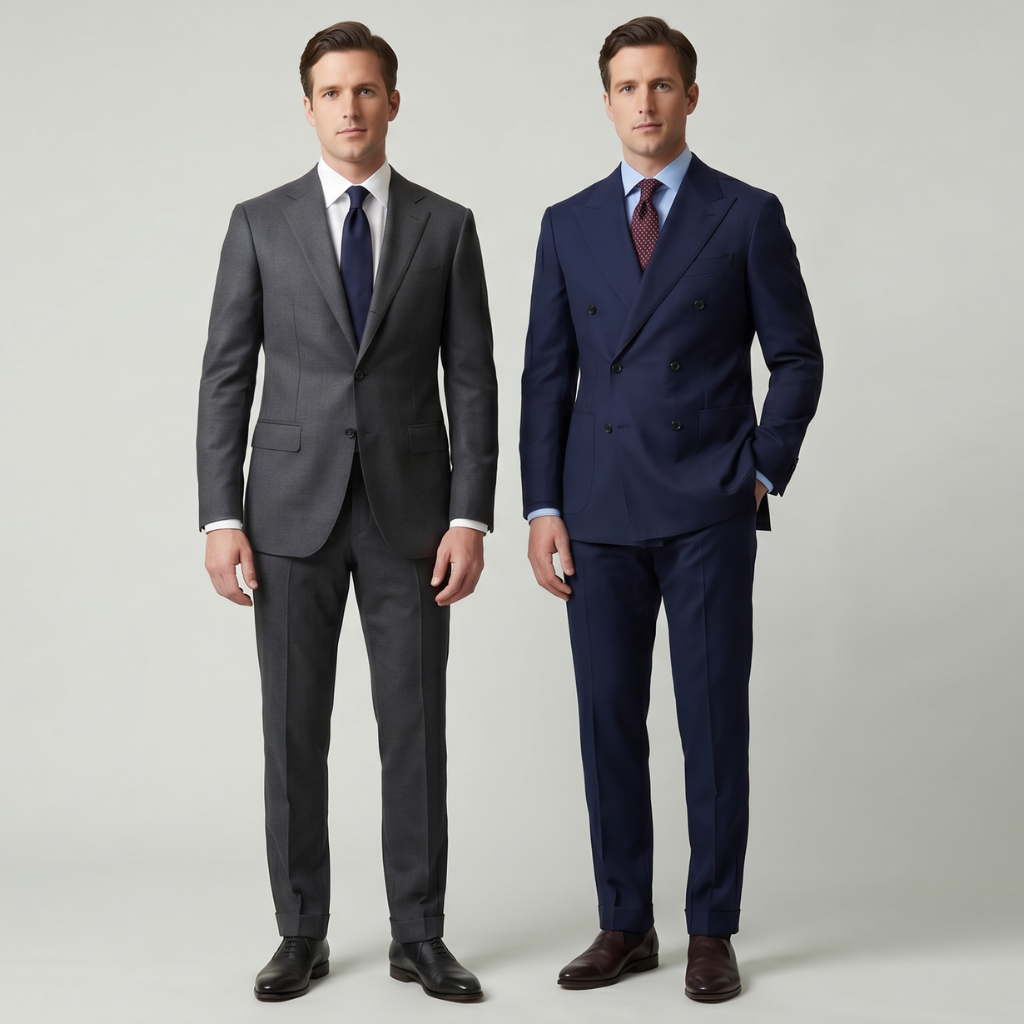
A single-breasted suit has one column of buttons down the center front. The jacket closes with a narrow overlap of fabric, usually an inch or less. Most ready-to-wear single-breasted jackets today have two buttons, though one-button and three-button versions are still available.
The lapel is most often a notch lapel, where the upper and lower edges meet with a small triangular cutout. Peak lapels, which point upward toward the shoulder, are also available on single-breasted jackets but read slightly more formal.
Because the front panels meet at the center rather than overlap, the single-breasted silhouette reads cleaner and more streamlined. The V-shape that opens above the buttoning point lengthens your torso and creates a vertical line that flatters nearly every body type. This is why single-breasted is the default recommendation for most men, most of the time.
What is a double-breasted suit?
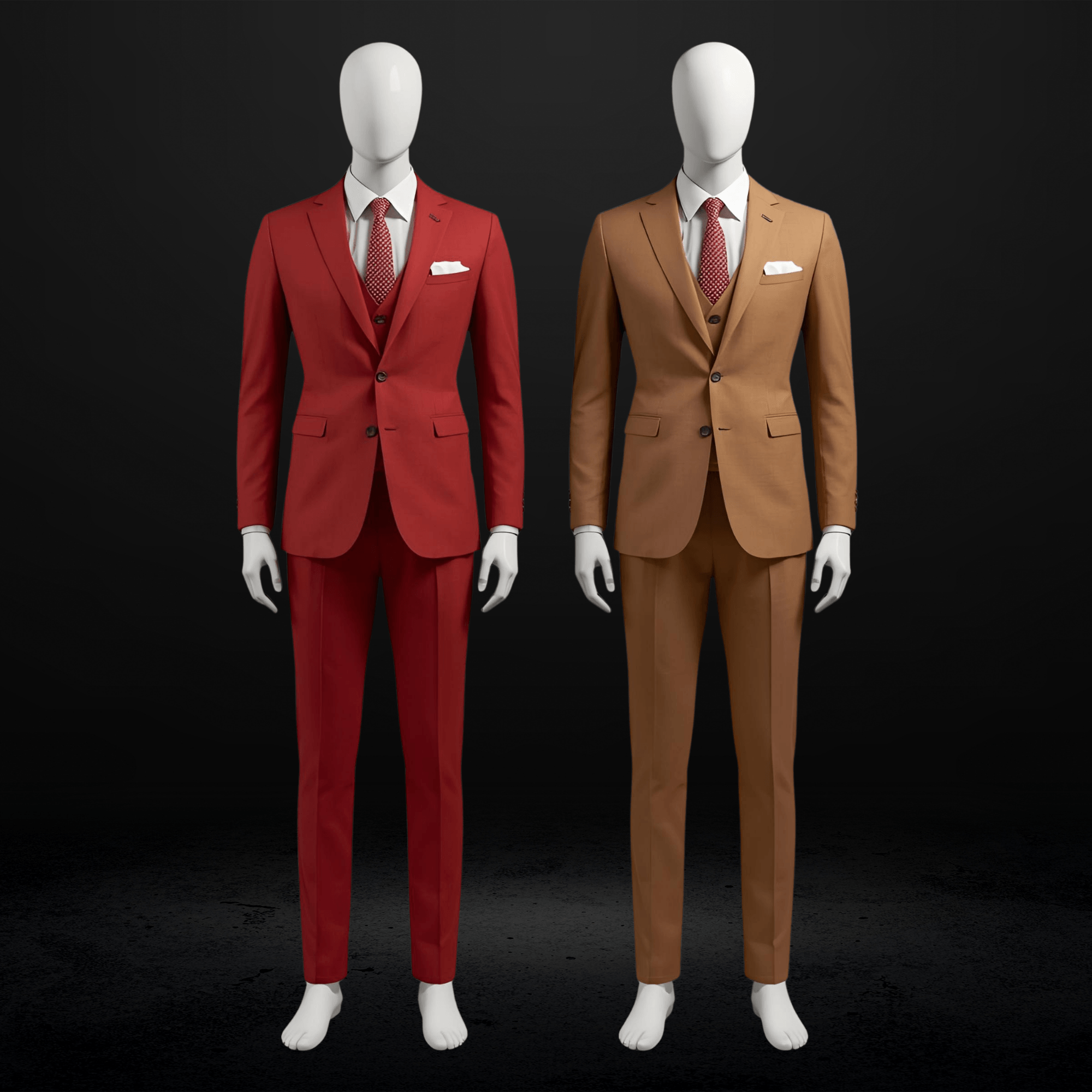
A double-breasted suit has two parallel columns of buttons with overlapping front panels. The jacket closes with a substantial overlap of fabric, often more than an inch wide across the buttoning point.
Lapels on double-breasted jackets are almost always peak lapels, and they are typically wider than the lapels on single-breasted suits. The wider peak lapel works with the structured front to create a bolder, more commanding silhouette. The cut itself traces back to 19th-century naval and military coats, where the overlapping front had a practical job against the weather. The technical vocabulary we still use today comes from the bespoke tailoring houses that refined the civilian version through the 20th century.
Double-breasted jackets also carry more fabric by design. That extra layer is part of why the style was historically favored for winter suits and overcoats, and why a well-fitted double-breasted reads slightly warmer on the body than a single-breasted in the same cloth. The style creates a defined waist, a broader chest, and a strong V-shape when the fit is right.
Single-breasted vs double-breasted: key differences at a glance
Before we get into body type and occasion, here is a side-by-side view of how the two styles compare across the details that actually matter:
| Feature | Single-breasted | Double-breasted |
|---|---|---|
| Button columns | 1 | 2 |
| Typical button count | 1, 2, or 3 | 4 or 6 (4×2 or 6×2 most common) |
| Lapel style | Usually notch, sometimes peak | Almost always peak, wider |
| Front overlap | Minimal, about an inch | Substantial, full overlap |
| Formality | Versatile across casual to formal | More formal, commanding |
| Silhouette | Streamlined, elongates torso | Structured, accentuates V-shape |
| Closed or open | Works open or closed | Should stay buttoned when standing |
| Body type fit | All body types | Athletic frames first; others with right fit |
| Versatility | High (workhorse option) | Medium (statement piece) |
| Warmth | Lighter | Warmer (extra layer of fabric) |
The biggest takeaway from this table is simple. Single-breasted is the flexible option. Double-breasted is the specific option. Neither is better. They do different jobs.
Understanding button configurations: 6×2, 4×2, 6×1, and 4×1
Here is where most guides skip the detail that actually matters for a double-breasted decision. Double-breasted jackets are described by a two-number code. The first number is how many buttons you can see on the front. The second number is how many actually fasten. Everything else is decoration.
The most common configurations are:
- 6×2. Six visible buttons, two fasten. This is the standard modern double-breasted and the safest starting point. The closure falls at or near the natural waist, creating the classic cinched shape.
- 6×1. Six visible buttons, one fastens. This gives a longer lapel sweep and a more dramatic look. It was the Golden Era 1930s to 1940s cut, and it is the hardest to get right because the long lapel exaggerates every fit flaw.
- 4×2. Four visible buttons, two fasten. This is the quiet workhorse for shorter men and shorter torsos. Less vertical real estate means less risk of looking crowded across the chest.
- 4×1. Four visible buttons, one fastens. Softer and less busy than a 4×2. Another strong option for shorter frames who want a relaxed cut.
- 6×3. Six visible buttons, three fasten. Rare and a statement, with a higher buttoning point that rides close to the collar.
Pro tip: When you look at a double-breasted jacket online or in a shop, the first thing to check is the code. It tells you more about how the suit will actually wear than any marketing photo.
Which suit style fits your body type?
Fit is the variable that unlocks both styles. The cut of the suit matters more than the brand, the price, or the fabric. Here is how each style tends to work across different body types.
Single-breasted recommendations
Single-breasted works for every frame. If you are buying your first suit or your tenth, this style is the default.
- Shorter and stockier builds: A two-button single-breasted with a low buttoning point elongates the torso. The long lapel sweep is the most flattering vertical line a suit can give you.
- Fuller figures: The single clean line skims the midsection instead of drawing a visible horizontal across the front. Less bulk at the closure equals a cleaner look.
- Taller men: A three-button or higher-buttoning two-button helps balance a long torso because the closure sits higher on the body.
Double-breasted recommendations
Double-breasted shines on athletic and taller, leaner frames. The structured front needs a balanced canvas to photograph and move well.
Shorter men under about 5’9″ can absolutely wear double-breasted, but three rules apply:
- Fit must be impeccable. Close to the body through the chest, sleeves, torso, and thighs. Any excess fabric looks bulky, and bulk is what makes a double-breasted read as heavy.
- Jacket length must be shorter than standard. The hem should end right where your seat meets your legs, not below. A longer jacket shortens your leg line and kills the silhouette.
- Choose a 4×2 or 4×1 configuration, not a 6×2. A shorter torso cannot carry three rows of buttons without crowding. Four buttons total reads clean.
Fuller midsections are the harder fit for double-breasted. The overlapping front adds visible bulk across the exact place where you want a vertical line. Single-breasted usually wins for that body type. Slim men, on the other hand, often look exceptional in double-breasted because the cinched-waist construction gives structure the frame does not produce on its own.
Before you lock in a style, it is worth a quick check of basic fit signs. Our guide on Kansas City suit fit signs to watch for walks through the shoulder, chest, sleeve, and length cues that decide whether any suit will actually work on you.
Single-breasted vs double-breasted by occasion
Style also has to match the event. Here is how the two stack up across the occasions most men build their wardrobes around.
Business and the office
For most office settings, single-breasted in navy or charcoal is the right first pick. It reads as competent, versatile, and safe in the best sense of the word. You can wear it to interviews, client meetings, and daily work without overthinking it.
Double-breasted in the office is a second-tier suit, not a first one. In sales, client-facing roles, leadership presentations, and investor conversations, a well-cut double-breasted in navy or charcoal adds authority and presence. It is showing up more often at the executive level because it signals that the wearer thought about the room before walking in.
For interviews, default to single-breasted unless you know the firm culture rewards flair. A double-breasted interview suit can read as overconfident in conservative industries.
Weddings
Grooms are the biggest winners in the double-breasted conversation. A well-fitted double-breasted suit or tuxedo separates the groom from every guest in every photo. The wider peak lapel and defined waist photograph powerfully in both daylight and reception lighting.
Groomsmen and guests should default to single-breasted. Double-breasted on a wedding guest risks reading as upstaging the host of the day. The exception is a black-tie wedding where double-breasted tuxedos are an established classic choice.
Daytime weddings and lighter venues suit lighter fabrics. Linen, cotton blends, and open weaves work in both single- and double-breasted cuts for summer weddings in softer colors.
Prom and formal events
Single-breasted is still the default for prom because it is forgiving and easy to wear. For the senior who wants to stand out in photos, double-breasted in a modern cut is a photograph-ready choice. The cinched waist is especially flattering on lean, athletic young men, and a slightly bolder color like deep green or burgundy pushes it toward memorable without going costume.
For galas, black-tie events, and formal evenings outside of weddings, double-breasted is a strong statement choice that photographs well.
Everyday professional wear
Single-breasted is the daily driver. It should make up most of a working rotation. Double-breasted works best as the second or third suit that lives in the closet for specific moments, not as the suit you reach for on a normal Tuesday.
Not sure which style your frame actually flatters? A fit and style consultation can answer that in minutes. You can book a Kansas City suit style consultation and try both cuts side by side before committing.
Are double-breasted suits in style in 2026?
Yes, and the comeback is real. Industry and trend coverage through 2025 and into 2026 has repeatedly highlighted the double-breasted suit as one of the defining silhouettes of the year. Major fashion publications, including recent coverage of the double-breasted revival, have tracked how runway showings through 2025 and into 2026 reshaped the cut for modern bodies.
The 2026 double-breasted is not the 1980s double-breasted. The updates are specific and intentional:
- Shorter jacket stance. Hems ride higher, closer to the natural break at the hip, which keeps the silhouette clean on more body types.
- Softer shoulders. Less padding, less roping, less linebacker energy. The modern shoulder reads natural rather than structured.
- Lighter fabrics. Stretch weaves and lighter wools make the cut more wearable across seasons and more forgiving for men carrying some weight.
- Leaner lapels with better placement. Wide peak lapels are still the default, but the proportions are cleaner and the placement is higher on the chest.
- More color range. Deep navy, forest green, ivory, stone, and earth tones have joined the standard charcoal and midnight blue in runway and retail collections.
If your picture of a double-breasted suit is shaped by your father’s 1980s version, the current cut is worth a fresh look. The same style name covers a very different garment now.
How to choose between single and double-breasted
If you are staring down a decision and need a simple framework, here it is.
- If this is your first or second suit, go single-breasted. Navy or charcoal, two buttons, notch lapel. Build the basics first.
- If you already own two or three single-breasted suits, a double-breasted is an excellent third or fourth move. It gives you a distinct second-tier suit for events that ask for more presence.
- If you are under about 5’9″, choose a 4×2 double-breasted with a shorter jacket length. Skip 6×2 and 6×1 configurations until you have worked with a tailor on the fit.
- If you carry weight through the midsection, lean single-breasted. The clean vertical line is more flattering than the overlapping front for that body type.
- If you want to stand out in wedding photos, double-breasted is the move. This is the one context where the statement works for you, not against you.
- If you want versatility above all, single-breasted wins. You can wear it to nearly any event with minor styling changes.
- Match the occasion to the style. Conservative industries favor single-breasted. Creative fields, luxury sectors, and evening events are more open to double-breasted.
When in doubt, try both on with the same tailor, the same mirror, and the same feedback loop. The right answer usually becomes obvious on the second or third try.
Frequently asked questions
What is the main difference between single-breasted and double-breasted suits? A single-breasted suit has one column of buttons and a small front overlap. A double-breasted suit has two columns and overlapping front panels. The double-breasted cut is more formal and structured, while the single-breasted cut is more versatile across occasions.
Which suit style is more formal, single-breasted or double-breasted? Double-breasted reads more formal in almost every context. The wider peak lapel, overlapping front, and structured silhouette signal a higher formality level. Single-breasted can still work for formal events, especially in a peak-lapel tuxedo cut, but double-breasted is the stronger formal statement.
Can short men wear double-breasted suits? Yes, with three rules. The fit must be impeccable, the jacket must be shorter than a standard double-breasted length, and the configuration must be a 4×2 or 4×1 instead of a 6×2. Applied together, these rules let shorter men wear double-breasted without the boxy problem that usually comes with the style.
Is single-breasted or double-breasted better for a wedding? For the groom, double-breasted is a standout choice that separates him from guests in photos. For groomsmen and guests, single-breasted is safer and shows better respect for the host of the day. Black-tie weddings are the exception where double-breasted tuxedos are fair game for guests.
Are double-breasted suits in style in 2026? Yes. Major fashion publications, runway collections, and retail trend data all point to a clear double-breasted revival through 2025 and into 2026. The modern cut has shorter, softer, and lighter characteristics than the 1980s version, which makes it wearable on more body types.
Which suit style is better for business and the office? Single-breasted is the everyday default. Double-breasted is a strong second-tier option for client meetings, pitches, and leadership moments where presence matters. Both belong in a full professional rotation, just in different roles.
How do I know my 6×2 from my 4×2? The first number is the total visible buttons on the front of the jacket. The second number is how many of those actually fasten. A 6×2 has six visible and two working. A 4×2 has four visible and two working. The rest are decorative.
Do I have to keep a double-breasted jacket buttoned? When standing, yes. A double-breasted jacket is cut to sit correctly when closed, and the overlapping front hangs awkwardly when open. You can unbutton when seated at a meal or in a car, but close it again before you stand. A single-breasted jacket is more forgiving about being worn open.
Can I wear a double-breasted suit to a job interview? Be careful here. In conservative industries like finance, law, and medicine, a double-breasted suit can read as overconfident or stylistically forward for an interview. In creative fields, luxury retail, or industries that reward visible style, it can work for the right candidate. When in doubt, stick with a well-cut single-breasted in navy or charcoal.
Are double-breasted suits warmer than single-breasted? Slightly, yes. The overlapping front panels add an extra layer of fabric across the chest and midsection. For hot climates or summer weddings, choose a lighter fabric like linen, cotton blend, or a lightweight wool to offset the extra layer. Winter rewards the warmer double-breasted without any compromise.
Key takeaways
- Button structure. Single-breasted has one column and a small overlap. Double-breasted has two columns and a full overlap.
- Lapel language. Single-breasted usually carries a notch lapel. Double-breasted is almost always a peak lapel, wider and bolder.
- Formality scale. Double-breasted reads more formal and commanding. Single-breasted is the versatile workhorse.
- Body-type rules. Single-breasted flatters every frame. Double-breasted is best on athletic and taller, leaner builds, with specific rules for shorter men.
- Button code literacy. 6×2 means six visible and two working. 4×2 means four visible and two working. Everything else is decoration.
- 2026 trend. Double-breasted is back with shorter stance, softer shoulders, stretch fabrics, and broader color options.
- Buttoning discipline. Double-breasted stays buttoned when standing. Single-breasted is flexible.
- First-suit logic. Start with single-breasted navy or charcoal. Add double-breasted once your basics are in place.
Ready to find your style?
You now know the technical, body-type, and occasion differences between single-breasted and double-breasted suits. The next step is trying both styles with someone who can tell you what is actually working for your frame.
The Suit Doctor offers:
- Personalized guidance on fit, fabric, and style choice
- Made-to-measure suits for business, weddings, and prom
- Mobile fittings and convenient tailoring services
- A streamlined, expert-guided experience from first consultation to final fitting
If any of these sound like you, it is time to book a conversation:
- You already own your basics and want a distinct second-tier suit for bigger rooms.
- You are getting married and want to stand apart from your groomsmen in every photo.
- You have wondered whether double-breasted actually works for your body type.
- You own a suit that has never quite felt right and want to know why before buying the next one.
Explore our custom business suits in Kansas City to see how the process works, or reach out directly to start your fitting. One well-fitted suit in the right style will outlast three in the wrong one.
The Suit Doctor | Custom and Made-to-Measure Suits for Men Who Take Their Look Seriously.