This guide compares wool and polyester suits across the factors that actually decide how you look, feel, and present yourself: breathability, drape, durability, care, longevity, and value. You will learn when wool is worth the investment, when a quality wool blend earns its place, and why a 100% polyester suit rarely belongs in a serious wardrobe. The Suit Doctor builds custom and made-to-measure suits in Kansas City, and this is the honest comparison we give clients face to face.
TLDR: Wool wins on breathability, drape, and long-term value. Polyester wins on price and wrinkle resistance but loses on comfort, longevity, and how it photographs. For business, weddings, and any event where you want to look intentional, wool or a high-wool blend is the right call. Read on for the side-by-side that helps you choose with confidence.
You are about to spend real money on a suit. Maybe it is your first one. Maybe it is the suit you wear to close deals. Maybe it is the one you will wear in wedding photos that hang on a wall for fifty years. The fabric you choose decides almost everything that follows: how you feel at hour eight, how the jacket photographs in natural light, and whether the suit still looks sharp at year five or looks tired by month six.
Most men never get a straight answer on this. They get marketing copy. Below is the side-by-side we walk clients through in fittings, with the trade-offs spelled out so you can decide for yourself.
What Wool and Polyester Actually Are
Before comparing, it helps to understand what you are choosing between. The fiber determines everything else.
Wool: A Natural Performance Fiber
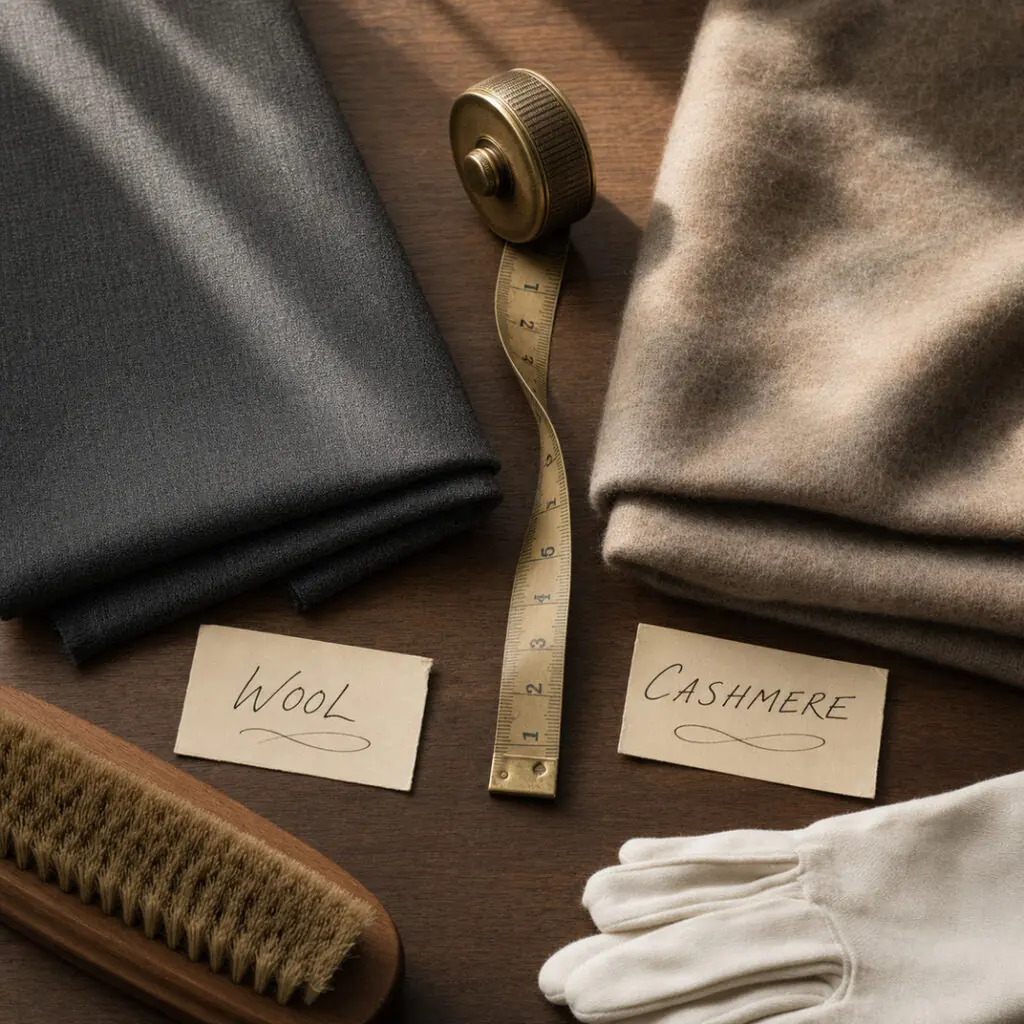
Wool comes from sheep, most often Merino for fine suiting. Each fiber has a natural crimp that traps air, which is why wool insulates in winter and breathes in summer. Wool fibers also absorb a meaningful amount of moisture vapor before they feel damp, which helps keep you dry on a humid Kansas City August morning.
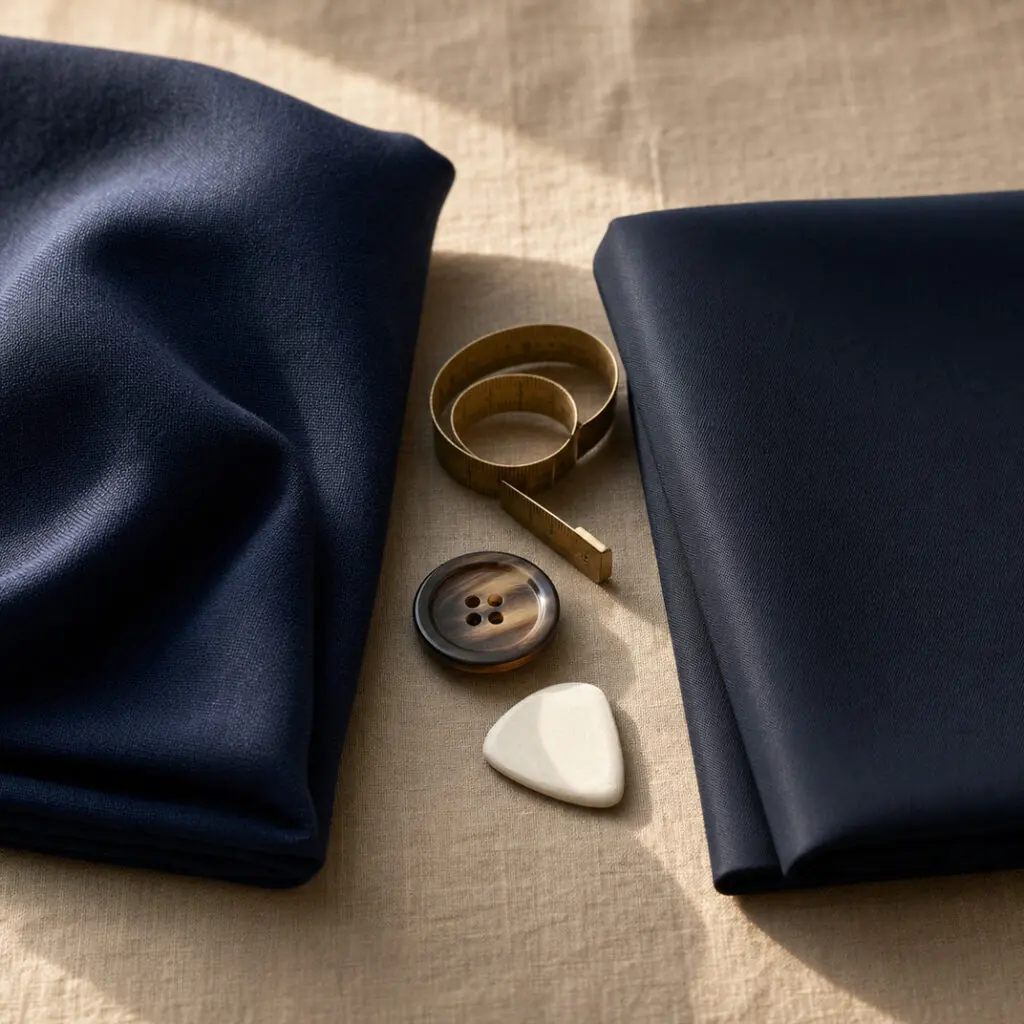
Suit wool is graded by Super numbers (Super 100s, 120s, 150s, and so on). The number refers to the fineness of the yarn. Higher numbers feel softer and drape more elegantly, but they are also more delicate. For most men, Super 110s to Super 130s is the sweet spot for daily wear.
Polyester: A Synthetic Plastic Fiber
Polyester is a synthetic fiber made from petroleum-based plastics. The fibers are smooth, sealed, and non-porous, which is why polyester resists wrinkles and dries quickly. It is also why polyester traps heat and sweat against your skin.
In suiting, 100% polyester usually shows up in budget rental tuxedos and entry-level off-the-rack suits. A small percentage of polyester (often 10 to 30%) blended into a wool suit can add wrinkle resistance and stretch without destroying the fabric’s natural character.
Wool vs Polyester: The Side-by-Side
Here is the head-to-head comparison across the factors that matter most when you are wearing the suit, not just buying it.
- Breathability: Wool: Excellent. Fibers trap air and release moisture vapor.; Polyester: Poor. Sealed fibers trap heat and sweat.
- Drape: Wool: Natural, fluid, holds shape.; Polyester: Stiff or shiny, often looks flat.
- Wrinkle resistance: Wool: Good. Wrinkles fall out overnight.; Polyester: Excellent. Resists creases.
- Durability: Wool: High. Resists pilling, holds color.; Polyester: Variable. Can pill at stress points.
- Comfort in heat: Wool: Comfortable up to the mid-80s with tropical weights.; Polyester: Uncomfortable above 70°F for most men.
- Care: Wool: Dry clean, steam, brush. Rests between wears.; Polyester: Machine washable in some cases.
- Longevity: Wool: 10 to 20 years or more with care.; Polyester: 2 to 5 years before looking tired.
- Cost (entry): Wool: Higher upfront.; Polyester: Lower upfront.
- Cost per wear: Wool: Low over time.; Polyester: Higher over time (replacement cycle).
The table tells most of the story, but each row has nuance worth understanding before you commit your money.
Breathability and Comfort: Where Polyester Falls Apart
If you have ever worn a polyester suit to a summer wedding, you already know. The jacket feels like a plastic bag by hour two. The shirt under it is soaked. Your collar shows it.
Wool’s natural crimp creates microscopic air pockets that let heat and moisture vapor move away from your skin. Tropical-weight wools (7 to 9 oz) and high-twist wools are designed specifically for warm weather and outperform almost any synthetic in real conditions. Our Kansas City summer suit fabric guide breaks down which weights and weaves handle Missouri humidity without quitting on you.
Polyester is sealed. The fibers do not absorb moisture, which sounds good in theory but in practice means sweat sits between your skin and the fabric. You get hotter, you hold odor more, and the suit traps that odor in a way wool does not. This is also why polyester athletic wear builds up smell so quickly. The same physics applies to a polyester suit jacket.
Real-world scenario: A groom we worked with last summer was set on a budget polyester suit for an August outdoor ceremony in Edgerton. We talked him into a tropical-weight wool instead. He told us afterward he was the only groomsman not visibly drenched in the photos.
Pro tip: If breathability matters, look for tropical-weight wool in the 7 to 9 oz range with a high-twist (often called “fresco”) weave. It feels slightly crisp in the hand and breathes like an open window.
Drape and Appearance: How the Suit Actually Looks
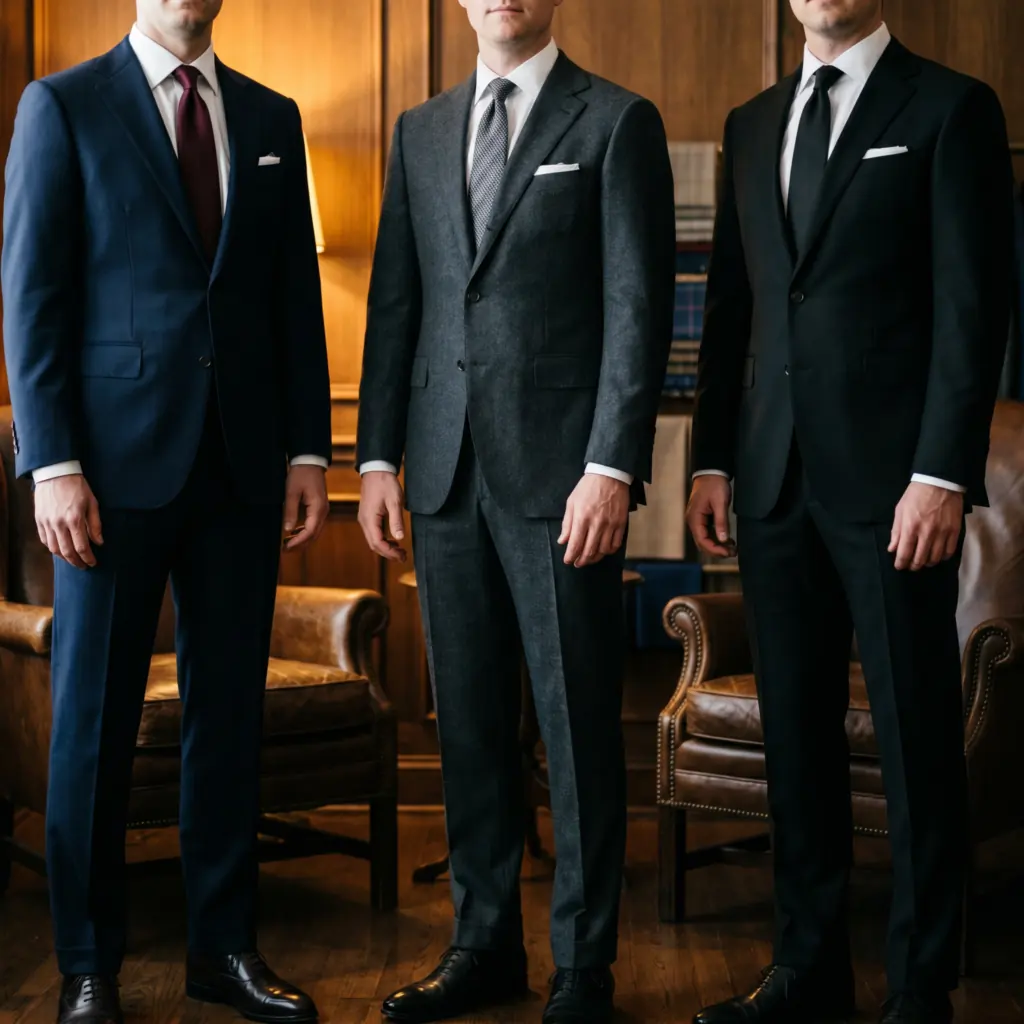
Drape is the way fabric falls on your body. Wool has natural drape because the fibers have weight and structure that follow your shape. A well-cut wool suit looks like it belongs on you. The shoulders sit clean, the chest stays smooth, and the trousers break exactly where they should.
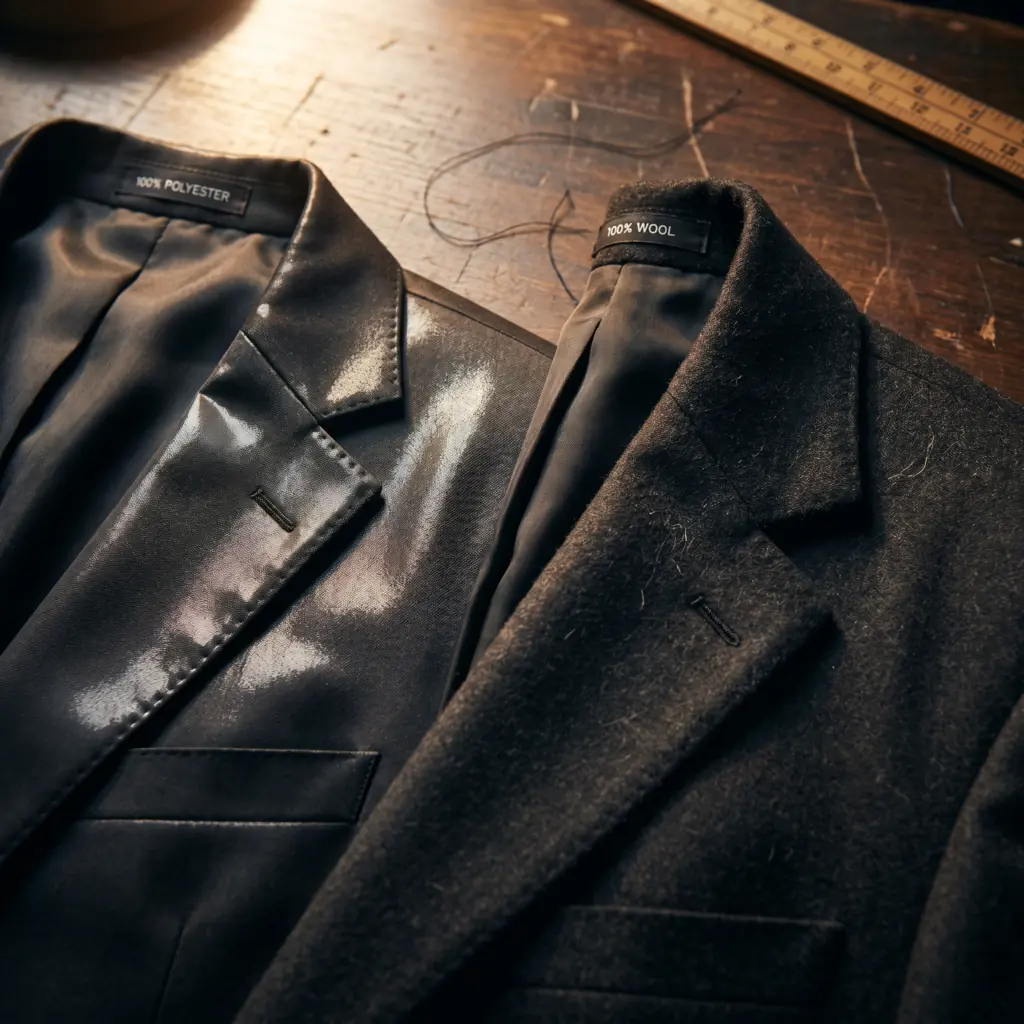
Polyester drapes differently. Lower-grade polyester can look shiny under direct light, especially in photographs with flash. The fabric tends to either hang stiffly or cling unnaturally, depending on the cut. In wedding photos, polyester often photographs with a sheen that makes the suit read cheaper than it actually was.
How Photographs Reveal the Difference
Want to see how this plays out in a real build? Explore our business suits page - it walks through fabrics, construction, and what to expect at your first appointment.
Here is something most men do not think about until it is too late. Polyester reflects light differently than wool. Camera flash and harsh outdoor sun pick up that reflection. Wool absorbs and diffuses light, which is why finer suits photograph rich and deep in color while budget synthetics photograph hot and flat. If your suit is going to be in photographs you will keep, this matters.
Durability and Longevity: The True Cost Conversation
This is where the math gets interesting.
A quality wool suit, properly cared for, lasts 10 to 20 years. We have clients still wearing wedding suits we built a decade ago, with the only changes being minor alterations as their body shifted. The fabric still holds color, the canvas still molds to their chest, and the suit still looks intentional.
A 100% polyester suit usually starts to show wear in 2 to 5 years. The fabric pills at the inner thighs and underarms, the color fades unevenly, and the lining starts to separate from the shell. The suit does not so much fail as quietly stop looking sharp.
The pattern most men miss is cost per wear, not sticker price. A cheap synthetic suit that gets replaced every few years can quietly cost more across a decade than one good wool suit that lasts the whole stretch and still photographs well in year ten. Our breakdown of what a tailor-made suit price really includes walks through how to think about that math for your own budget.
Care Differences That Matter
Wool benefits from breathing time between wears. Hang it on a wide wooden hanger, brush it down with a soft horsehair brush, and steam out wrinkles between dry cleanings. Most wool suits should be dry-cleaned only when actually soiled, not on a schedule.
Polyester can sometimes be machine-washed, which sounds like an advantage. The trade-off is that washing speeds up the breakdown of the fibers and the construction. Polyester suits tend to look fine for a season, then suddenly look used.
Pro tip: Buy a wool suit your first time. Buy two pairs of trousers if you can. Trousers wear out faster than jackets in any fabric, and rotating trousers doubles the life of the jacket.
When Polyester Actually Makes Sense
We are honest about trade-offs. There are situations where a polyester or high-polyester-blend suit is the right tool.
Truly short-term use: A rented prom tuxedo worn once. Do not buy what you will wear twice.
Travel-only suits: Some men want a wrinkle-resistant suit that lives in a suitcase. A quality wool-polyester blend (around 70/30) gives you most of the benefits of wool with added wrinkle resistance.
Extremely tight budgets with extremely light use: If you wear a suit twice a year and replacement is acceptable, the math can work.
Stretch and movement requirements: A small percentage of polyester or elastane blended with wool adds stretch for men who need a more mobile suit.
The pattern: blends earn their place, 100% polyester rarely does.
Wool Blends: The Smart Middle Ground
A wool blend is a wool suit with a small percentage of another fiber woven in. Common blends include wool with polyester, wool with elastane, or wool with silk and linen for warm weather. Done right, these blends keep the benefits of wool while adding properties wool alone does not have.
- Wool/polyester: Typical ratio: 70/30 or 80/20; What it adds: Wrinkle resistance, lower cost
- Wool/elastane: Typical ratio: 98/2 or 97/3; What it adds: Stretch and recovery
- Wool/silk: Typical ratio: 70/30; What it adds: Subtle sheen, drape, softness
- Wool/linen: Typical ratio: 60/40; What it adds: Breathability, summer texture
A 70/30 wool-poly blend is a respectable working suit. It wrinkles less, costs less, and still drapes acceptably. A 100% polyester suit and a 70/30 blend are not the same thing, and the difference shows up in the mirror.
Choosing Your Suit Fabric: A Simple Decision Framework
Use this flow when you are deciding what to invest in.
- Define the use case. Daily business wear, wedding, prom, special event, or travel?
- Define the wear frequency. Daily, weekly, monthly, or once?
- Define the photographic stakes. Will this be in photos you keep for decades?
- Define the climate. Hot and humid, four-season, or cold-heavy?
- Set your budget honestly. Include alterations, shoes, shirt, and accessories.
- Match fabric to all of the above.
For most men in the Kansas City metro, the answer for a primary suit is a wool or high-wool blend in a four-season weight (9 to 11 oz). For wedding suits specifically, the answer is almost always wool.
When you're ready to put this into practice, you can book a mobile fitting at your home or office with Brandon and get measured in person.
Pro tip: When in doubt, ask to see the suit in natural daylight, not just store lighting. Walk it to a window. Polyester reveals itself in sunlight. Wool gets richer.
Common Mistakes Men Make Choosing Suit Fabric
A few patterns we see over and over in consultations:
Buying for sticker price, not cost per wear. The cheapest suit in the room is often the most expensive one over a decade.
Ignoring fabric weight. A 13-oz winter wool worn to an August wedding is misery. So is a tropical-weight worn in February.
Assuming “wrinkle-free” means “good.” Polyester does not wrinkle because it cannot move. That is not always a feature.
Believing online photos. Polyester photographs much better on a model in studio light than it does on you at a real wedding.
Skipping the in-person feel test. Fabric tells you the truth the moment you touch it. Trust your hand.
Frequently Asked Questions
Is polyester ever as good as wool? No. Not for breathability, drape, photographic quality, or longevity. A high-wool blend with a small polyester percentage can be a smart compromise, but 100% polyester is never the equal of 100% wool in a suit.
What is the best fabric for a wedding suit? Wool, almost without exception. The weight depends on season. Tropical-weight (7 to 9 oz) wool for late spring and summer, four-season (9 to 11 oz) for fall and early spring, and heavier wools or flannels for winter weddings.
Can I tell wool from polyester by touch? Yes. Wool feels warmer, drier, and slightly springy. Polyester feels cooler, smoother, and often slightly slick. In sunlight, polyester often shows a faint sheen wool does not.
Are wool suits hot in summer? Not when the weight and weave are right. Tropical-weight wools and high-twist weaves are designed for heat and routinely outperform polyester in warm weather. The myth that “wool is hot” comes from wearing the wrong weight wool in the wrong season.
Do polyester suits photograph badly? Often, yes, especially in flash or direct sun. The fibers reflect light in a way that can read as cheap on camera. If photos matter, and at a wedding they do, choose wool. If you are unsure which fabric will photograph best for your venue and lighting, schedule a consultation and bring your venue photos.
What about Super 150s or Super 180s wool? Beautiful in hand, but delicate. These finer wools are best for special-occasion suits worn rarely and treated gently. For a working suit, Super 110s to 130s gives you most of the elegance and far more durability.
Is dry cleaning bad for wool? Frequent dry cleaning is. Spot clean when possible, steam between wears, and only dry clean when actually needed (usually two to four times a year for a regularly worn suit).
Key Takeaways
- Wool is the default for serious suits. Better breathability, better drape, better photography, longer lifespan.
- Polyester saves money upfront, costs more over time. Replacement cycles and reduced versatility erase the savings.
- Blends can be smart, 100% polyester rarely is. A 70/30 wool-poly blend is a respectable working suit.
- Fabric weight matters as much as fiber. Tropical-weight wool beats polyester in summer comfort and looks.
- Photographs reveal the truth. Wool reads rich on camera, polyester often reads cheap.
- Care extends value. Rotating trousers, brushing, steaming, and minimal dry cleaning add years to a wool suit’s life.
Ready to Choose the Right Suit Fabric for Your Next Investment?
You now understand how wool and polyester actually perform once the suit is on your body, in the room, and in the photos. The next step is talking through your specific needs with someone who handles these fabrics every day.
The Suit Doctor specializes in helping men make this decision once and make it right.
- Personalized fabric guidance based on your use, climate, and budget
- Custom and made-to-measure suits for business, weddings, and prom
- Convenient mobile fittings throughout the Kansas City metro
- A streamlined, expert-guided process from first consultation to final fitting
Ready to get started? Book your custom suit consultation in Kansas City and let’s build a suit that earns its place in your wardrobe.
The Suit Doctor | Custom and Made-to-Measure Suits for Men Who Take Their Look Seriously.
Get measured for a suit built around how you actually live.
Suits built for boardrooms, travel, and long days on your feet.