Cashmere has a reputation as the upgrade fabric. Softer than wool, more luxurious, and significantly more expensive. The truth is more nuanced. Cashmere shines in specific situations and falls short in others, and most men who buy a 100 percent cashmere suit end up wishing they had bought a cashmere-wool blend instead. This guide walks through what cashmere actually is, how it compares to wool in every meaningful category, and when the upgrade genuinely earns its place in a Kansas City wardrobe.
TLDR: Wool is the workhorse fiber for suits because it is durable, breathable, and holds shape. Cashmere is softer and warmer but far more delicate and prone to pilling. A 90/10 or 85/15 wool-cashmere blend gives you most of the softness with much more durability. Read on for when pure cashmere is worth it and when the blend is the smarter buy.
The Cashmere Mystique
Cashmere has built a reputation that outruns the fiber itself. Men hear “cashmere suit” and imagine a clear upgrade from workhorse wool. Sometimes that is accurate. Often it is not.
Cashmere is genuinely a remarkable fiber. It is also, in pure form, one of the most delicate fibers used in tailoring, and most men who buy a 100 percent cashmere suit do not understand what they are getting until they have worn it ten or fifteen times and it has started to pill, shine, or wear at the elbows and seat.
This guide walks through what cashmere actually is, how it stacks up against wool in every category that matters, and when the upgrade is worth your money. We have built both fabrics for Kansas City clients for years, and the honest answer is more interesting than the marketing.
What Cashmere Actually Is
Cashmere is harvested from the soft undercoat of cashmere goats, raised primarily in Mongolia, China, Iran, and a few other regions. The undercoat grows in to protect the goat from extreme winter cold and is combed out by hand each spring.
A single goat produces only a small amount of usable cashmere per year, so it takes the fiber from several goats to make one suit. The labor of combing, sorting, and processing is what drives the cost. The result is a fiber dramatically finer than even premium Merino wool, and that fineness creates the soft hand, the slight sheen, and the cloud-like drape cashmere is known for.
What Wool Actually Is in a Suit Context
Most suit wool is Merino wool, sourced from Merino sheep primarily in Australia, New Zealand, and parts of South America. Merino is the gold standard because the fibers are long, fine, and crimped, which creates yarns that are smooth, elastic, and durable.
Quality wool is typically rated by Super number (Super 100s, 120s, 150s, and so on), which indicates the fineness of the yarn. Higher numbers mean finer fibers and a softer hand, but also more delicate fabric. Most working business suits use Super 110s to Super 130s, which balances softness and durability.
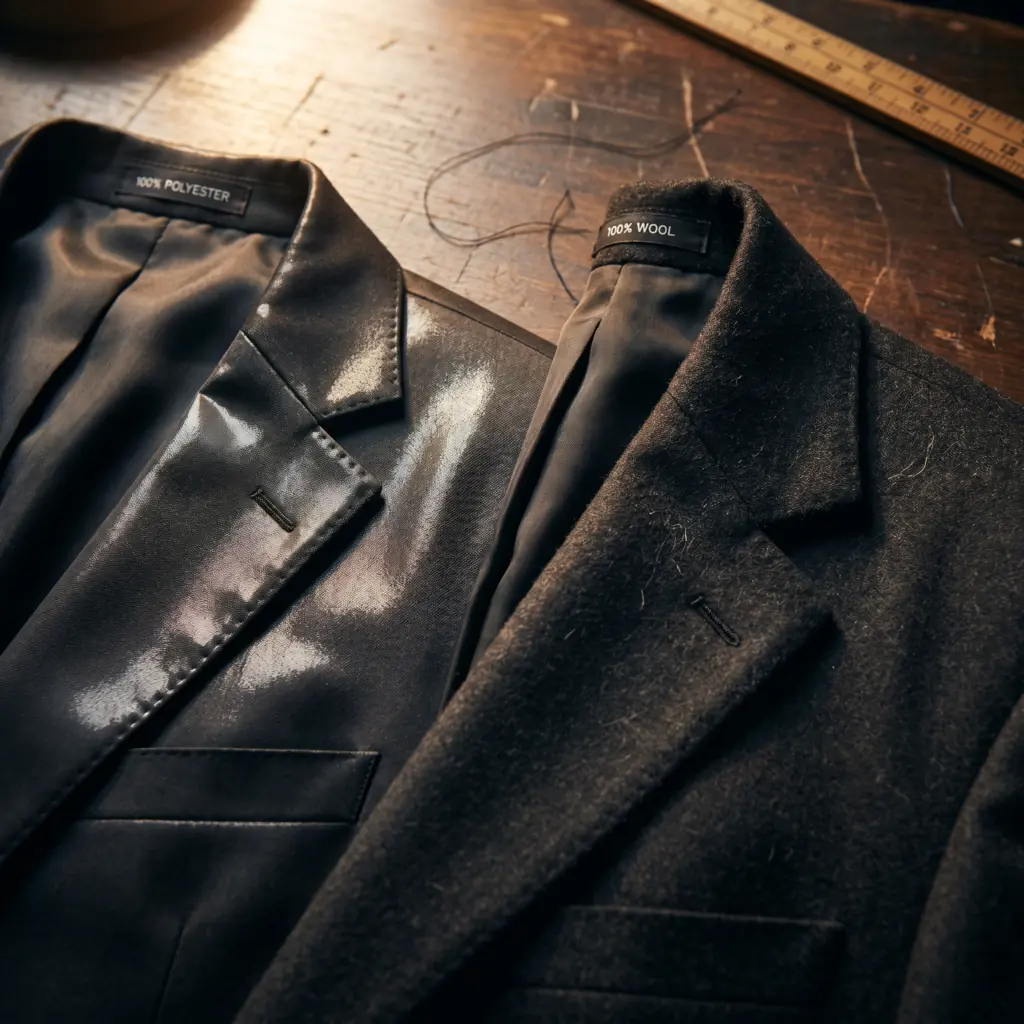
Wool has one structural advantage cashmere does not. The natural crimp of wool fiber gives it elasticity. A wool jacket bounces back from creasing, holds its shape under stress, and resists wrinkles in a way no other natural fiber can match. This is the property that makes wool the workhorse of tailoring.
Cashmere vs Wool: Side by Side
- Softness: 100% wool: Soft, depending on Super number; 100% cashmere: Exceptionally soft, almost cloud-like; Wool-cashmere blend (90/10 or 85/15): Noticeably softer than pure wool
- Drape: 100% wool: Crisp and structured; 100% cashmere: Fluid and luxurious; Wool-cashmere blend (90/10 or 85/15): Slightly softer than wool
- Warmth: 100% wool: Warm, breathable; 100% cashmere: Significantly warmer per ounce; Wool-cashmere blend (90/10 or 85/15): Slightly warmer than wool
- Durability: 100% wool: Excellent, holds shape for years; 100% cashmere: Poor for daily wear, prone to pilling; Wool-cashmere blend (90/10 or 85/15): Good, retains most wool durability
- Wrinkle resistance: 100% wool: Excellent; 100% cashmere: Poor; Wool-cashmere blend (90/10 or 85/15): Very good
- Pilling: 100% wool: Minimal with quality wool; 100% cashmere: Common at friction points; Wool-cashmere blend (90/10 or 85/15): Minimal
- Maintenance: 100% wool: Brush, hang, dry clean as needed; 100% cashmere: Careful storage, gentle handling, frequent rest; Wool-cashmere blend (90/10 or 85/15): Similar to wool
- Relative cost: 100% wool: Baseline for quality; 100% cashmere: Several times higher than wool; Wool-cashmere blend (90/10 or 85/15): Between premium wool and pure cashmere
- Best for: 100% wool: Daily wear, year-round, any occasion; 100% cashmere: Occasion wear, cold weather, statement looks; Wool-cashmere blend (90/10 or 85/15): Daily wear with an elevated feel
The Real Differences in Wear
Specs are useful, but the lived experience of wearing each fabric is where the honest comparison lives.
A wool suit feels like a tool. It snaps back at the end of a long day, takes a beating gracefully, and looks the same on year three as it did on day one. It does what you ask without much thought.
A pure cashmere suit feels like an event. Putting it on changes the way you carry yourself. The drape is unlike any wool you have worn, and the hand is softer than your best dress shirt. And then, somewhere around the tenth wear, you notice a small shiny patch at the seat from sitting in a leather chair, or a tiny pill behind the knee. The fabric is reminding you it is delicate.
Want to see how this plays out in a real build? Explore our business suits page - it walks through fabrics, construction, and what to expect at your first appointment.
A wool-cashmere blend feels like a wool suit that woke up in a better mood. The hand is softer, the drape slightly more fluid, and the fabric still holds shape, still resists wrinkles, still survives a real workweek. Most men who try a quality blend never go back to pure wool for their nicer suits.
When Cashmere Is Worth the Upgrade
Cashmere earns its price tag in specific situations.
Cold-weather occasion wear. A cashmere or cashmere-blend dinner jacket for winter events is genuinely better than wool. The warmth is real, the drape photographs beautifully, and you are not putting it through daily rotation.
Statement pieces in a deep wardrobe. If you already own three or four great wool suits and you are adding a piece for special occasions, a cashmere blazer or three-piece is a real upgrade in the right context.
A topcoat or overcoat. This is where cashmere shines brightest. A cashmere overcoat is one of the most genuinely luxurious garments you can own, and the wear conditions, worn over a suit rather than in direct friction, match the fabric’s strengths.
Year-round travel for client-facing roles. Lawyers who fly, executives in client-facing work, men whose suits are part of their professional currency. A cashmere-blend suit travels and packs better than you would expect and reads as quietly elevated.
When Cashmere Is Not Worth It
There are also clear situations where cashmere is the wrong call.
A daily-wear suit. A 100 percent cashmere suit worn four days a week starts showing wear within months. The seat, elbows, and inner thigh shine and pill, and you end up replacing an expensive suit in two or three years.
First suit purchase. If you are buying your first quality suit, a great wool is dramatically better value. You get more years of wear, more occasions covered, and more learning about how a suit fits you. Save cashmere for suit number three or four.
Hot or humid climates without seasonal use. Cashmere is warm. Wearing it in Kansas City August humidity is the wrong instinct. A high-twist tropical wool outperforms any cashmere in summer. Our Kansas City summer suit fabric guide covers warm-weather options in detail.
Frequent single-suit travel. Cashmere wrinkles more than wool and recovers from creasing more slowly. If you are living out of a garment bag, wool is the answer.
The Sweet Spot: The Wool-Cashmere Blend
For most men, the right answer is a wool-cashmere blend, typically 90 percent wool with 10 percent cashmere, or 85 percent wool with 15 percent cashmere.
What you get: most of the softness and slight drape of cashmere, almost all of the durability and wrinkle resistance of wool, a noticeably nicer hand than pure wool when you put it on, and a price between premium wool and pure cashmere.
A 90/10 blend reads as a slightly elevated wool suit. A blend with a higher cashmere ratio reads closer to pure cashmere and behaves more like it, including the durability tradeoffs. The 90/10 and 85/15 ratios are the sweet spot for daily-wear elevation. To see where blends fit alongside the rest of the worsteds and weaves, our guide to business suit fabrics and how to choose in Kansas City lays out the full range.
A Real-World Example
A Kansas City finance executive came to us last winter for a third suit. He already owned two solid half-canvas wool suits in steady rotation and wanted to upgrade. Cashmere was on his mind because he had read about it everywhere.
We talked through how he wore his suits. Five days a week, often back-to-back, always to the office, occasional client dinners. We steered him away from 100 percent cashmere and toward an 85/15 wool-cashmere blend in a deep charcoal with a subtle birdseye pattern.
The price landed between his existing wool suits and the pure cashmere option he had been considering. Three years in, the suit is his favorite. It still looks new, the cashmere softness is still there in the hand, and it has not pilled because the wool gives it the structural backbone cashmere lacks.
That is the math we keep arriving at. The blend wins the use-case argument for most men. Pure cashmere is for specific occasions, specific climates, or specific roles in a deep wardrobe.
Pro Tip From The Suit Doctor
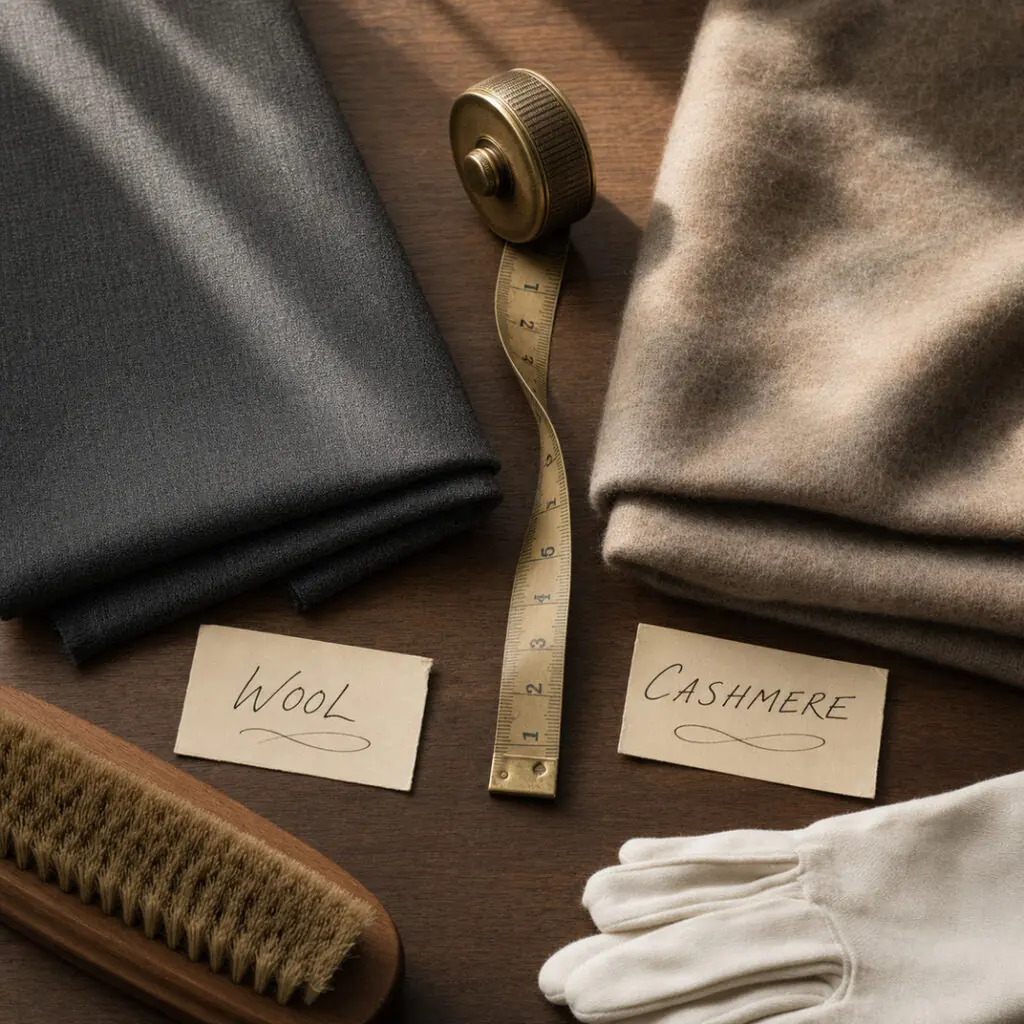
If you are weighing a cashmere upgrade, do the touch test in person before deciding. Bring your favorite wool jacket to the showroom and feel a comparable cashmere-blend fabric side by side. The difference is real, and it is the most honest way to decide if the price gap matches your priorities. Marketing photos cannot communicate hand-feel. Your hand can.
Frequently Asked Questions
Is cashmere always more expensive than wool? In comparable quality tiers, yes. Cashmere fiber costs significantly more than wool fiber, and the price scales through the supply chain. A pure cashmere suit at the same construction level as a wool suit costs several times as much.
When you're ready to put this into practice, you can book a mobile fitting at your home or office with Brandon and get measured in person.
Does cashmere wrinkle more than wool? Yes, considerably. Wool’s natural fiber crimp gives it elasticity cashmere does not have. A wool suit recovers from creasing overnight. A cashmere suit may need pressing.
Can I wear a cashmere suit in summer? Generally no. Cashmere is significantly warmer than wool ounce for ounce. Lightweight summer cashmere exists, but the better summer answer is a tropical-weight wool or a high-twist fresco.
Will a cashmere suit pill? Almost certainly, especially at high-friction areas like the inner thigh, elbows, and seat. Cashmere fiber is short and fine, which is why it feels soft, but those same properties mean fibers break and pill faster than wool.
Are cashmere-wool blends as luxurious as pure cashmere? Not quite, but very close. An 85/15 or 90/10 blend captures most of the softness and drape of cashmere while keeping wool’s durability and wrinkle resistance. The hand is noticeably softer than pure wool but slightly less luxurious than pure cashmere.
How should I care for a cashmere suit? Brush after every wear with a soft natural-bristle brush. Hang on a wide wooden hanger with a shoulder shape. Rest the suit between wears for at least 24 hours, ideally 48. Dry clean only when necessary, no more than twice a year. Spot clean stains immediately with a damp cloth.
Is there a difference between Mongolian and Chinese cashmere? There is, but it is more about fiber length and processing than country of origin. Long-fiber cashmere from any region is more durable than short-fiber. Look for “long staple” or “premium grade” rather than fixating on country.
Can a cashmere suit be made-to-measure? Absolutely. Many quality made-to-measure programs offer cashmere and cashmere-blend fabrics, and we work with both regularly. The construction process is the same, but the fabric handling during cutting and sewing requires more care.
What is “pashmina” and how does it relate to cashmere? Pashmina is a very fine grade of cashmere. It is rarely used in suits because it is too delicate. You will see it more often in scarves and shawls.
How long should a cashmere suit last? A 100 percent cashmere suit in regular rotation starts showing wear in two to three years. A cashmere-wool blend lasts close to as long as a pure wool suit, many years with proper care. The blend wins on lifespan almost every time.
Key Takeaways
- Wool is the workhorse fiber for daily wear because of its durability and shape retention.
- Cashmere is softer, warmer, and more luxurious in drape, but delicate and prone to pilling.
- A 90/10 or 85/15 blend delivers most of the cashmere upgrade with much better durability.
- Pure cashmere is best reserved for occasion wear, cold weather, or a deep wardrobe.
- Cashmere costs several times more per yard than comparable wool.
- For most men, the blend is the smarter upgrade than pure cashmere.
Touch the Fabric Before You Decide
You now understand where cashmere genuinely earns its premium and where a blend gives you more for your money. The next step is feeling the difference yourself before you commit to a fabric tier.
The Suit Doctor keeps wool, blend, and pure cashmere swatches on hand so you can decide with your own hands.
- A side-by-side touch test across wool, blend, and pure cashmere
- Custom and made-to-measure suits for business, weddings, and special occasions
- Convenient mobile fittings throughout the Kansas City metro
- Honest guidance on which fabric tier matches how you actually wear suits
Ready to get started? Book your fabric consultation in Kansas City and feel the difference before you choose.
The Suit Doctor | Custom and Made-to-Measure Suits for Men Who Take Their Look Seriously.
Get measured for a suit built around how you actually live.
Suits built for boardrooms, travel, and long days on your feet.