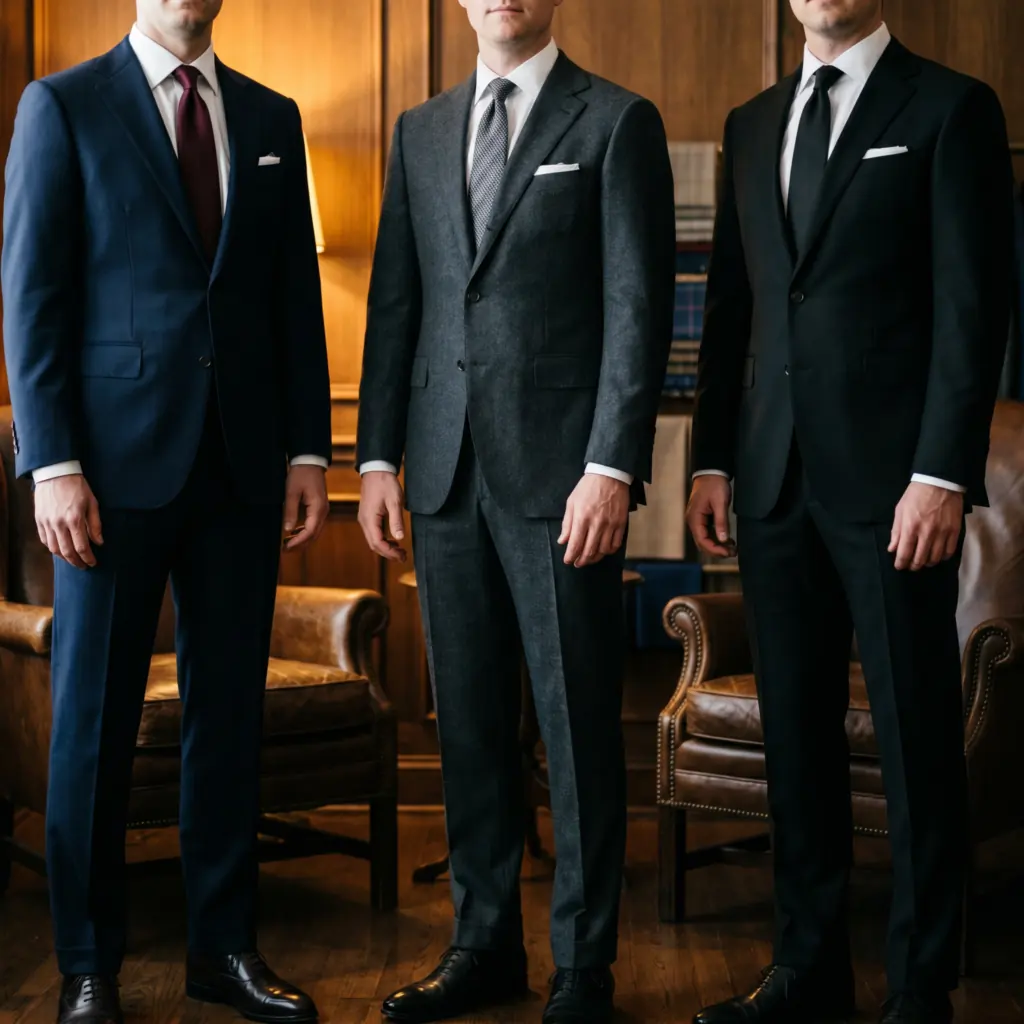
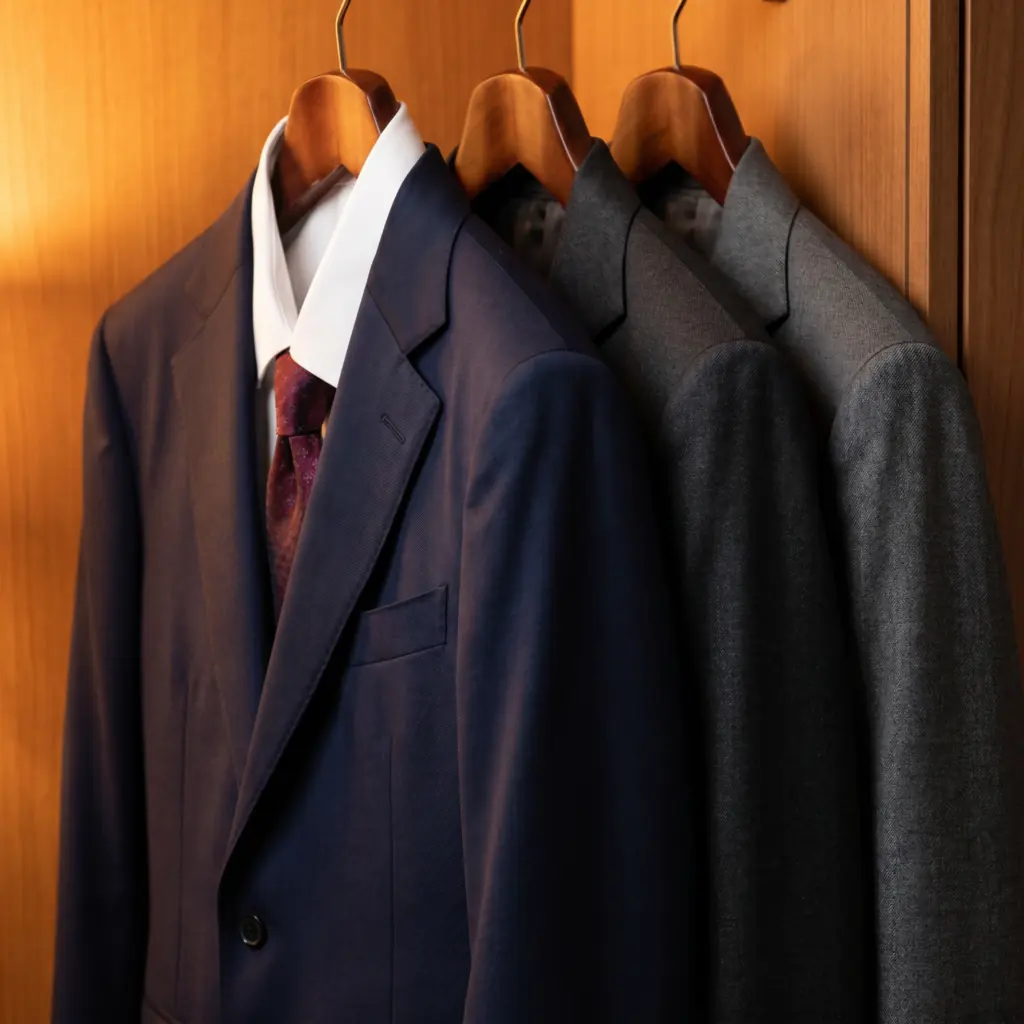
Most Kansas City professionals own too many suits that do not work hard enough. A closet with six mediocre options is far less useful than three excellent ones that cover every situation you actually face. This guide walks you through the exact three suits that belong in every KC executive’s wardrobe, why they work, and how to build them so they serve you for years.
TLDR: Every Kansas City executive needs a midnight navy suit, a charcoal grey suit, and a medium grey or versatile third suit that bridges formal and business-casual settings. Get the fit right and these three cover 95% of your professional life. Read on to understand exactly what to look for in each one.
Why Three Suits Are Enough (If You Choose Correctly)
The common mistake ambitious professionals make is buying more suits rather than better ones. A wardrobe of six ill-fitting or poorly coordinated suits creates decision paralysis every morning and never quite delivers the right look for any occasion.
Three well-chosen, precisely fitted suits do the opposite. They form a coherent system. The jackets, trousers, and waistcoats can mix and match to create visually distinct outfits. Each suit pulls more weight because it was chosen to complement the others. And when every suit fits exactly right, the confidence you carry into a Monday morning meeting, a client lunch, or an evening event is completely different from what a room full of mediocre options can produce.
The professional wardrobe standard in most menswear guides points to navy and charcoal as the essential foundation suits, with a lighter grey or versatile pattern as the third. This combination works because each suit occupies a slightly different position on the formality spectrum while all staying within the range acceptable for serious professional settings.
Suit One: The Midnight Navy Foundation
Why it exists: Navy is the most reliable and versatile suit color in modern professional settings. It reads as serious and authoritative without the starkness of black, and it coordinates with more shirt and tie combinations than any other color.
What to Look for in Your Navy Suit
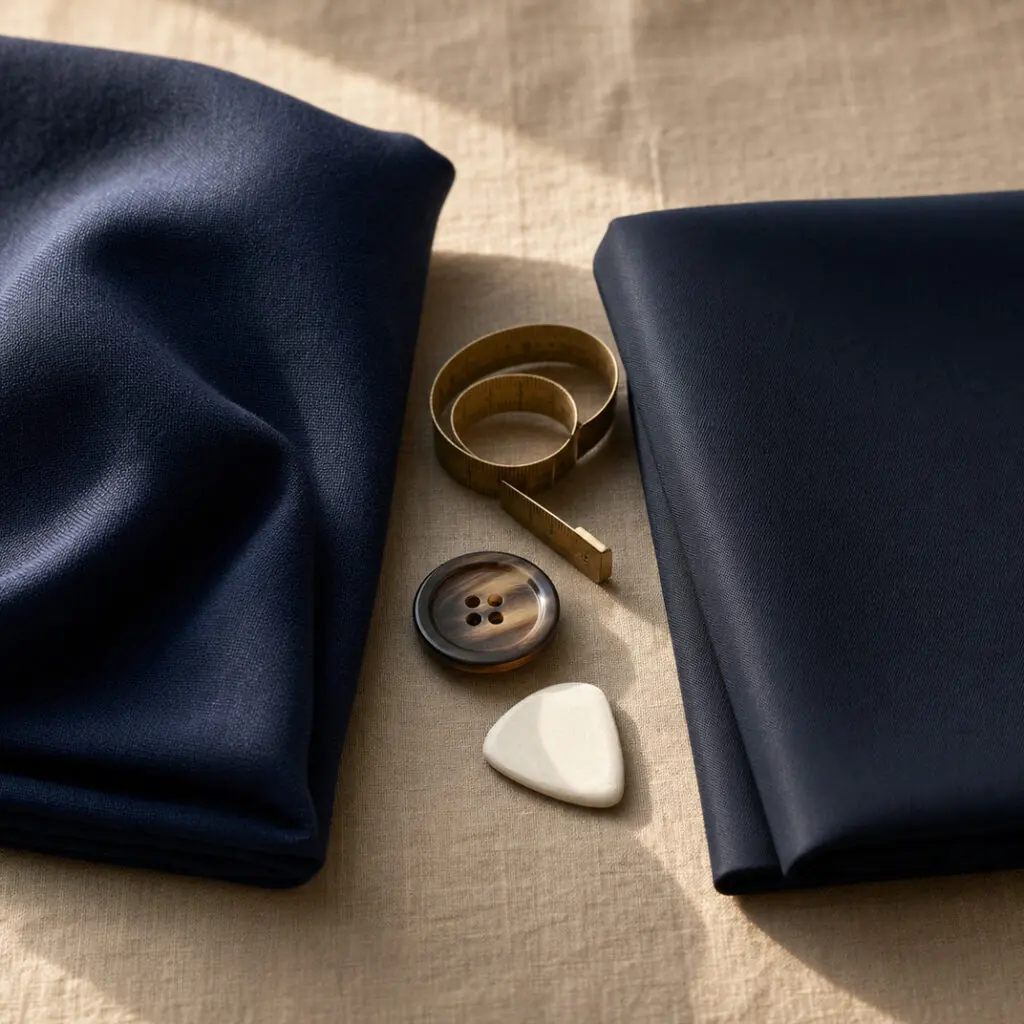
Shade: Go deep. A midnight navy or dark navy reads as significantly more professional and formal than a medium or bright blue. Medium blues can veer into cocktail territory. Midnight navy works in board rooms, courtrooms, client presentations, and formal evening events.
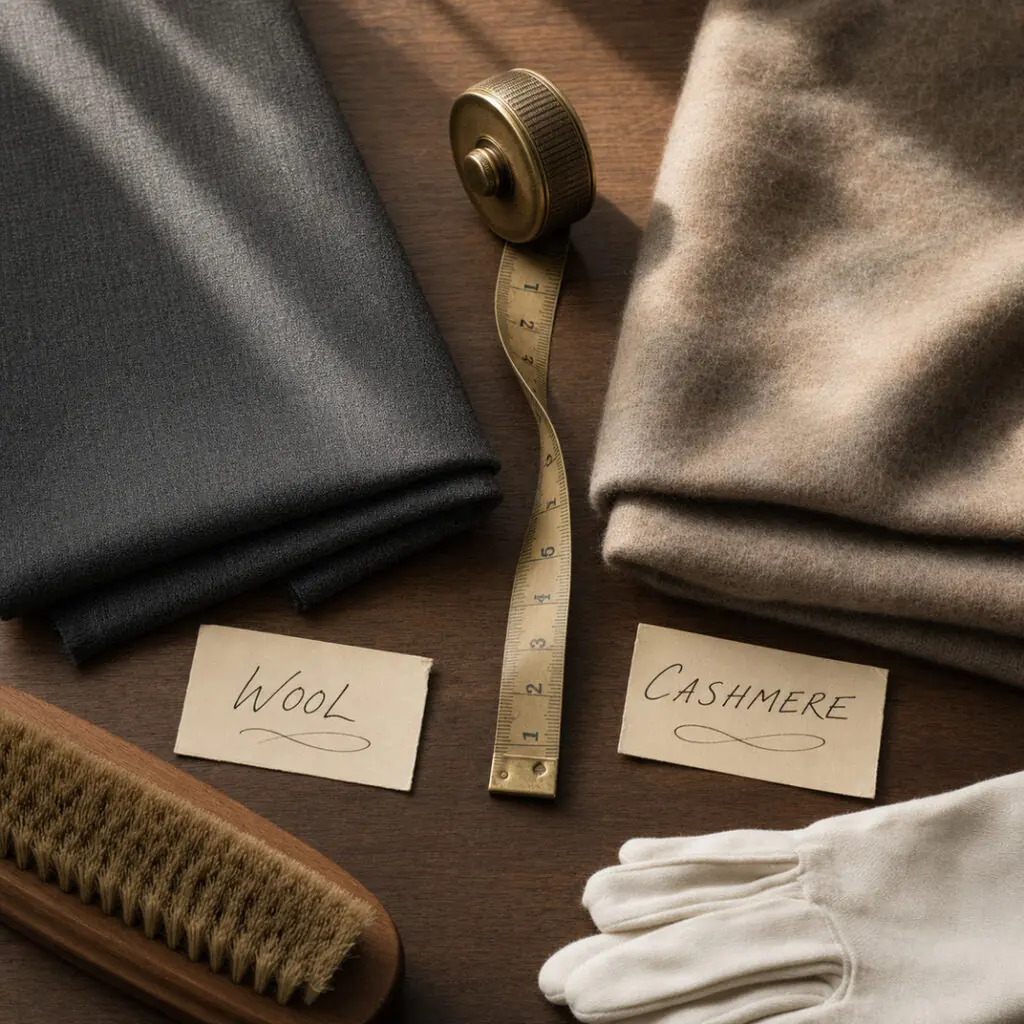
Fabric: For a suit that serves you year-round in Kansas City’s variable climate, choose a mid-weight worsted wool in the Super 100s to Super 120s range, ideally at 270 to 300 GSM. This weight handles spring, fall, and the climate-controlled environments that define most of your workday. For a suit explicitly built for Kansas City winters, move up to a flannel or heavier worsted at 300 to 340 GSM.
Construction: Canvas construction (where an internal layer of horsehair and linen canvas gives the jacket its shape and helps it mold to your body over time) produces a better-fitting, longer-lasting jacket than fused construction (where interfacing is glued to the outer fabric). A full-canvas or half-canvas construction is worth the investment in a suit you plan to wear frequently for years.
Fit details that matter most:
- The shoulder seam should align exactly with where your natural shoulder ends. Shoulder fit cannot be significantly corrected after the fact.
- Your jacket should button without pulling across the chest or back.
- Trousers should sit at your natural waist, not ride up or gap when you sit.
- Jacket sleeves should show 0.5 to 1 inch of shirt cuff when your arms hang naturally.
How Often You Will Wear It
Your navy suit will likely be your most frequently worn option. It handles client-facing meetings, presentations, job interviews, business dinners, and weddings where you need to look sharp but are not in the wedding party. It is the suit you reach for first because it rarely gets anything wrong.
Suit Two: The Charcoal Grey Authority
Why it exists: Charcoal grey is the most formally powerful suit color a professional can wear outside of black-tie events. It commands rooms, reads as authoritative in any business setting, and creates a visual gravity that navy, while versatile, does not quite deliver.
If your navy suit is your most versatile option, your charcoal suit is your most powerful one.
What to Look for in Your Charcoal Suit
Shade: True charcoal, which sits between medium grey and black on the color spectrum, is the target. Avoid going too light (this slides toward mid-grey, which belongs in the third suit slot) or too dark (near-black suits lose the professional versatility charcoal provides and can look harsh in business settings).
Fabric: Charcoal in a smooth worsted wool is the classic choice and produces a crisp, authoritative look that works well in more formal corporate environments. Charcoal flannel is a powerful option for Kansas City winters, adding texture and warmth while retaining the suit’s formality. A fine, subtle herringbone pattern in charcoal adds visual interest without sacrificing the seriousness of the color.
Configuration: Consider a three-piece charcoal suit. The waistcoat maximizes the suit’s formal range (you can wear all three pieces for the highest-stakes situations) while also giving you more outfit options when you wear the waistcoat as a standalone piece with other trousers.
The Charcoal Suit’s Specific Strengths
Unlike navy, which works across most professional contexts, charcoal excels in specific high-stakes situations:
- First-day and job interview situations: Charcoal grey signals authority, preparation, and seriousness without the aggression of black.
- Client presentations where you need to project confidence: The color communicates that you are in control.
- Courtrooms and formal hearings: Charcoal is widely recognized as the power professional choice in legal and government settings.
- Formal evening events in business contexts: When navy would work but you want to make a stronger impression.
Charcoal also pairs with virtually every shirt and tie combination because it is essentially a neutral. White shirts, blue shirts, pale pink, and fine stripes all work. Nearly every tie color is compatible.
Suit Three: The Versatile Third
Why it exists: Your navy and charcoal suits cover the formal end of your professional wardrobe. The third suit needs to bridge the gap between those formal options and the increasingly common business-casual environment, while still being capable of looking sharp in a professional setting.
Want to see how this plays out in a real build? Explore our business suits page - it walks through fabrics, construction, and what to expect at your first appointment.
This is where you have the most flexibility in your wardrobe. There are three strong options for the third suit, and the right one depends on your specific professional environment in Kansas City.
Option A: Medium Grey (The Classic Third)
A medium grey in a smooth worsted wool or subtle texture creates the most combinations when mixed with pieces from your navy and charcoal suits. The jacket can be worn over navy or charcoal trousers. The trousers can go under a navy or charcoal jacket for a business-casual combination that looks intentional rather than mismatched.
Medium grey also photographs well in less formal settings and works for Kansas City’s spring and fall networking events, outdoor business functions, and after-hours client entertainment.
Option B: A Subtle Pattern (Glen Plaid, Windowpane, or Herringbone)
A suit in a refined pattern adds character to your wardrobe without sacrificing professionalism. The key is keeping the color palette within your navy and charcoal range. A navy-and-grey windowpane check, a grey-ground glen plaid, or a charcoal herringbone can all be worn formally as a complete suit while also functioning as separates in more relaxed settings.
Pattern suits also demonstrate a level of style awareness that solid-color suits cannot. In industries where creative competence matters, or in environments where senior executives use clothing as a signal of confidence and taste, a well-chosen pattern suit communicates that you understand the rules well enough to work within them.
Option C: A Lighter Business Blue (For Creative or Tech Environments)
If your professional world is less traditionally corporate, a light-to-medium blue in a textured fabric (fine hopsack, birdseye weave, or subtle texture) creates a suit that works across business casual and business formal settings. The jacket works exceptionally well as a standalone blazer with chinos or dark jeans for KC’s casual-leaning business environments, while the full suit still reads as professional when paired with a white shirt and tie.
- Midnight Navy: Primary Function: Daily versatility; Formality Range: Business casual to formal; Best Industry Fit: All industries
- Charcoal Grey: Primary Function: Authority and formality; Formality Range: Business formal to black-tie adjacent; Best Industry Fit: Finance, law, corporate
- Medium Grey: Primary Function: Bridging and mixing; Formality Range: Business casual to formal; Best Industry Fit: All industries
- Pattern (Glen Plaid / Windowpane): Primary Function: Distinction and range; Formality Range: Semi-formal to formal; Best Industry Fit: Creative, senior executives
- Light Business Blue: Primary Function: Creative versatility; Formality Range: Business casual to formal; Best Industry Fit: Tech, creative, entrepreneurial
How the Three Suits Work Together
The real power of this system is not just in what each individual suit can do. It is in how they combine.
With three well-chosen suits, you gain several additional outfit options by mixing pieces:
- Navy jacket + charcoal or grey trousers: Creates a sharp business-casual look that reads as intentional and coordinated.
- Charcoal jacket + grey trousers: Works well in slightly less formal settings, maintaining a professional appearance without the full weight of the charcoal suit.
- Grey jacket + navy trousers: A reverse combination that creates a lighter, more relaxed look appropriate for creative environments, networking events, or business-casual Fridays.
Not sure which fabrics will give you the most mixing flexibility? The team at The Suit Doctor can pull fabric swatches and show you exactly which combinations work before you commit to anything. That conversation is exactly what a Kansas City business suit consultation is designed for.
Getting the Fit Right in Kansas City’s Professional Context
A custom or made-to-measure suit is not just about looking good in a mirror. It is about how you feel in high-stakes situations. A suit that fits precisely does not distract you. You simply present yourself.
The fit elements that make the biggest difference:
Shoulders: The single most important measurement. The shoulder seam should sit exactly at the edge of your natural shoulder. Shoulders that are too wide make you look like you borrowed the jacket. Shoulders that are too narrow pull and restrict movement.
Chest: The jacket should button without pulling or creating an X-shape at the button. A comfortable hand should pass behind the lapel when the button is done.
Jacket Length: The bottom of your jacket should graze your knuckles when your arms hang naturally. This gives clean proportions regardless of how tall or short you are.
Trousers: The waistband should sit at your natural waist, not your hips. Trousers should have enough room in the seat and thigh to sit comfortably without pulling or riding up. Hems should break slightly at the shoe.
Sleeve length: With your arms hanging naturally, you want 0.5 to 1 inch of dress shirt cuff showing. This small detail is one of the most visible indicators of a well-fitted suit.
If you have an unusual body type, such as an athletic build, a longer torso, or broader shoulders, made-to-measure eliminates the problem entirely by building the garment to your exact measurements rather than fitting you into someone else’s pattern.
Building Your Wardrobe Over Time
You do not have to build all three suits at once. Start with the navy. Wear it through your next 90 days of professional life and notice every situation where you wish you had a different option. That observation tells you exactly what to prioritize for suit number two.
A good made-to-measure suit should last 5 to 10 years with proper care and rotation. Building the wardrobe over 12 to 18 months and investing properly in each suit delivers far more value than buying three mediocre options at once.
For more on what The Suit Doctor’s made-to-measure process looks like, including fabric selection, construction options, and the fitting timeline, visit our Kansas City custom suit pricing guide.
When you're ready to put this into practice, you can book a mobile fitting at your home or office with Brandon and get measured in person.
Frequently Asked Questions
Q: Can I start with just one suit and build from there?
Yes, and this is often the smarter approach. Start with navy. It is the most forgiving and versatile option, which means it will serve you in more situations while you decide what gaps remain. Once you identify those gaps from actual experience, you choose your second suit to fill them.
Q: Should I buy a suit with an extra pair of trousers?
Yes, whenever possible. Trousers wear out significantly faster than jackets because they see more friction and stress. Having two pairs of trousers for each suit jacket extends the life of your wardrobe substantially and gives you more flexibility if one pair needs to be cleaned or pressed.
Q: Is a black suit appropriate for Kansas City business settings?
Black suits are typically reserved for formal evening events, funerals, and black-tie occasions. In standard business settings, a black suit reads as slightly off-key compared to charcoal or navy. It lacks the visual warmth and professional versatility that a well-chosen charcoal provides. Start with charcoal for your dark suit.
Q: How many suits do I need if I wear a suit every day?
If you wear a suit daily, a minimum of three lets you rotate properly and give each suit time to rest and air out between wearings. Suits that are worn day after day without rest compact their fibers and wear significantly faster. A three-suit rotation for daily wear is the practical minimum.
Q: Does fabric matter as much as fit?
Both matter, but in different ways. Fit is immediately visible and affects how you carry yourself. Fabric quality affects how the suit drapes, how long it lasts, and how it holds up through a long day. In general, fit is the higher priority, but a poorly made fabric in a great fit will still degrade quickly. At The Suit Doctor, both are addressed together.
Q: What is the difference between made-to-measure and bespoke?
Made-to-measure starts from a base pattern that is adjusted to your specific measurements. You get a precise fit and significant customization options at a more accessible investment than full bespoke. Bespoke creates a unique pattern from scratch for each individual client, which requires more fittings and a significantly higher investment. The Suit Doctor specializes in made-to-measure, which delivers the custom fit most executives need at a realistic price point.
Key Takeaways
- Start with navy: It is the most versatile professional suit color and should be the foundation of any executive’s wardrobe.
- Add charcoal second: It provides formal authority that navy cannot fully replicate.
- Choose your third strategically: Medium grey maximizes mix-and-match potential. A subtle pattern adds distinction. A light blue adds range for creative environments.
- Canvas construction lasts longer: Full or half-canvas construction produces a better-fitting, more durable suit than fused construction.
- Super 100s to Super 120s is the daily wear sweet spot: Fine enough to look polished, durable enough to withstand regular use.
- Shoulders are the most critical fit point: They cannot be corrected after construction. Everything else can be adjusted.
- Suits need rest: Never wear the same suit two days in a row. A three-suit rotation at minimum keeps each garment in better condition longer.
- Build deliberately: Starting with navy and adding thoughtfully creates a more functional wardrobe than buying multiple suits at once without a system.
Ready to Build Your KC Executive Wardrobe?
You now understand which three suits you need, why each one earns its place, and how to approach fit and fabric with precision. The next step is working with a tailor who can guide the fabric selection, take your measurements with the care they deserve, and deliver a suit that genuinely works for your professional life in Kansas City.
The Suit Doctor offers:
- Made-to-measure business suits in premium worsted wools, flannels, and seasonal fabrics
- Expert fabric selection guidance with samples in hand
- Full-canvas and half-canvas construction options
- Mobile fitting appointments at your home or office, on your schedule
- A streamlined, expert-guided process designed for busy professionals
Ready to start your wardrobe?
Reach out to request your Kansas City business suit consultation when you are ready to begin.
The Suit Doctor | Custom and Made-to-Measure Suits for Men Who Take Their Look Seriously.
Get measured for a suit built around how you actually live.
Suits built for boardrooms, travel, and long days on your feet.