The “Super” number on a wool suit fabric label gets used like a quality score, but it does not measure quality. It measures fiber fineness, and finer is not always better. A Super 110s suit will outlast a Super 150s suit by years under daily wear, while a Super 150s feels more luxurious in the showroom. This guide explains what Super numbers actually mean, when each tier makes sense, and how to pick the right number for the way you will actually wear the suit.
TLDR: Super numbers measure how fine the wool fiber is, not how good the fabric is. Super 100s through 120s is the everyday workhorse range that handles daily wear. Super 130s and up feels softer but wears out faster. A high-quality Super 110s from a top mill beats a low-quality Super 150s every time. Read on to match the number to how often you will wear the suit.
What “Super” Actually Measures
The Super number tells you the fineness of the individual wool fibers in the cloth. Lower numbers mean thicker, more durable fibers. Higher numbers mean thinner, softer, more delicate fibers.
The system traces back to the IWTO (International Wool Textile Organisation) standard, where each Super number corresponds to a fiber-fineness range measured in microns. Microns are millionths of a meter, so we are talking about extremely small differences in fiber thickness that produce noticeable differences in how the fabric feels and behaves.
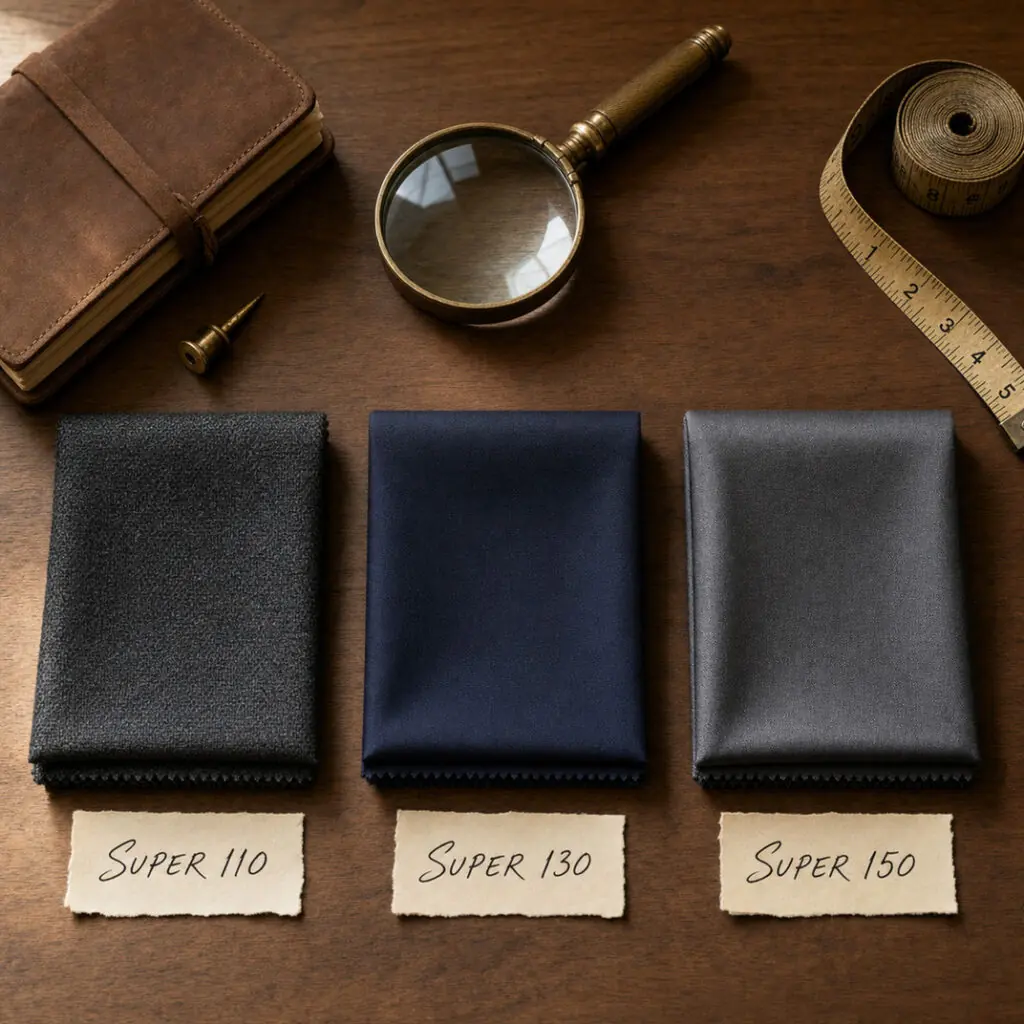
Roughly How the Tiers Line Up
- Super 100s: Relative fineness: Coarsest of the fine wools; What this feels like: Robust, slightly textured hand
- Super 110s: Relative fineness: Slightly finer; What this feels like: Smooth but durable
- Super 120s: Relative fineness: Finer again; What this feels like: Soft, refined drape
- Super 130s: Relative fineness: Noticeably fine; What this feels like: Finer hand, more sheen
- Super 140s: Relative fineness: Very fine; What this feels like: Silky, more delicate
- Super 150s: Relative fineness: Extremely fine; What this feels like: Very soft, cashmere-like, delicate
- Super 180s and up: Relative fineness: Finest made; What this feels like: Extremely delicate, special occasion only
Each step up the ladder shaves a little more off the fiber diameter. The exact micron figure for each tier is defined by the IWTO standard, but the practical takeaway is simpler: higher number, finer and softer fiber, less durability.
What Super Numbers Do Not Tell You
This is where most marketing breaks down. The Super number alone does not tell you the weight of the fabric (a Super 120s can be made in summer or winter weight), the weave (twill, plain, hopsack, fresco), the mill quality or the source of the wool, the construction of the finished suit, or whether the fabric is pure wool, a blend, or has stretch added.
A Super 110s from a top Italian mill will outperform a Super 150s from an unknown mill in almost every category that matters.
The Durability Tradeoff
The single most important thing to understand about Super numbers is the inverse relationship between fineness and durability. Finer fibers are weaker fibers. A very high-Super wool has fibers so thin that they abrade against themselves during normal walking, causing the seat of trousers to shine and pill quickly.
This is not a defect. It is physics. Thinner fibers cannot withstand the same friction as thicker ones. A high-Super suit in regular rotation will develop shine at the seat and elbows, pilling under the arms and along the inner thighs, thinning at high-friction points, and loss of shape after dry cleaning.
A Super 100s or 110s suit in the same rotation will last years longer. This is why most reputable Italian mill cloth aimed at daily business wear sits in the Super 100s to Super 130s range, not higher.
The Practical Sweet Spot for Each Tier
Super 100s and 110s: The Daily Driver
These are the suits that genuinely live in a wardrobe. Worn two to four times a week, dry cleaned a few times a season, and still looking sharp after several years.
Want to see how this plays out in a real build? Explore our our services page - it walks through fabrics, construction, and what to expect at your first appointment.
Best for: first suit, daily commute suit, client-facing professional who wears suits regularly. Strengths: durable, holds shape, recovers from wrinkles well, takes color cleanly. Weaknesses: slightly less luxurious feel than higher numbers. This is where most suit buyers should start.
Super 120s: The Best All-Around Choice
If there is a single number to recommend for the man who wears a suit regularly and wants something that feels elevated, it is Super 120s. The cloth has a noticeably finer hand than Super 100s while still holding up to two to three wears per week under normal rotation.
Best for: second suit, a wedding suit that will also get business use, the professional who values feel. Strengths: refined drape, smoother hand, still durable enough for repeat wear. Weaknesses: more expensive than Super 110s without a dramatic difference in look.
Super 130s and 140s: The Upper Practical Range
These tiers feel meaningfully softer. The drape is more fluid and the fabric has a subtle sheen in good light. The tradeoff starts showing up in durability, especially at the seat of trousers.
Best for: special suits worn once or twice per week with rotation, weddings, formal events. Strengths: beautiful hand, elevated drape, photographs well. Weaknesses: wears out faster than 110s or 120s, needs more rotation and care.
Super 150s and Above: Special Occasion Territory
Once you pass Super 150s, the cloth becomes genuinely delicate. A Super 150s suit feels exquisite in hand, often with a cashmere-like softness and visible drape. But it is not built for daily use.
Best for: wedding suits worn for a single event, formal galas, awards nights. Strengths: luxurious in every sense, soft to touch, fluid drape. Weaknesses: pills, shines, and abrades under regular wear, requires careful handling. A Super 150s worn weekly will look tired within a year. The same suit worn once a quarter for special occasions will look magnificent for a decade.
What About Super 180s and 200s?
These exist almost entirely as a flex. The fabric is impossibly soft and extraordinarily expensive, but it is not built for any normal definition of wearing a suit. It snags, pills, and abrades under conditions a Super 120s would shrug off. Most professionals will never own one, and that is fine.
How Super Numbers Interact With Fabric Weight
This is the piece that gets missed in most marketing. A Super number says nothing about how heavy the cloth is. You can have a Super 110s in a light summer weight or in a heavy winter weight, and a Super 130s in a typical year-round weight.
Weight affects warmth, drape, and seasonality. The Super number affects feel and durability. They are independent variables and you need to consider both. For year-round Kansas City wear, a mid-weight cloth in Super 110s or 120s handles four-season use better than almost any other combination. For brutal summer humidity, drop the weight and consider a high-twist fresco weave regardless of the Super number. Our guide to business suit fabrics and how to choose in Kansas City walks through weight and weave alongside fiber fineness.
A Real Example From Our Kansas City Showroom
A client came in last spring asking specifically for a Super 180s wedding suit because he had read that higher Super numbers meant better quality.
Three things were happening here. First, his definition of “better” was based on a fabric review article, not on how the suit needed to perform. Second, a Super 180s in his budget would have come from a mill that does not have the wool sourcing or finishing to make a Super 180s that actually performs. Third, he was going to wear the suit at an outdoor September Kansas City wedding, then use it for client meetings afterward.
We talked through the trade-offs. He ended up with a Super 130s from a top Italian mill in a year-round weight. The suit looked elegant at the wedding, has held up to twice-weekly business use for the past nine months, and still drapes beautifully. Had he gone with the Super 180s, he would have an exquisite-feeling suit that looked tired by Christmas.
Pro Tip
When a tailor quotes you a Super number without naming the mill, that is the warning sign. The mill matters as much as the number. A Super 130s from a top mill like Vitale Barberis Canonico, Reda, Marzotto, Loro Piana, or Drago performs differently from a Super 130s from an unbranded source. Always ask: what mill, what weight, what weave. If the answer is just “Super 130s,” dig further. For more on reading the numbers on a suit label, see our explainer on what those numbers on your suit actually mean for Kansas City buyers.
Frequently Asked Questions
Is a higher Super number always better quality? No. Higher Super numbers indicate finer fibers, which produce softer-feeling fabric, but finer fibers are also less durable. A high-quality Super 110s from a reputable mill will perform better in daily wear than a Super 150s from a lesser mill.
What Super number do high-end designer suits use? Most premium ready-to-wear suits use fabric in the Super 110s to Super 130s range. Special-occasion or limited collections sometimes use Super 150s or higher, but these are not designed for heavy rotation.
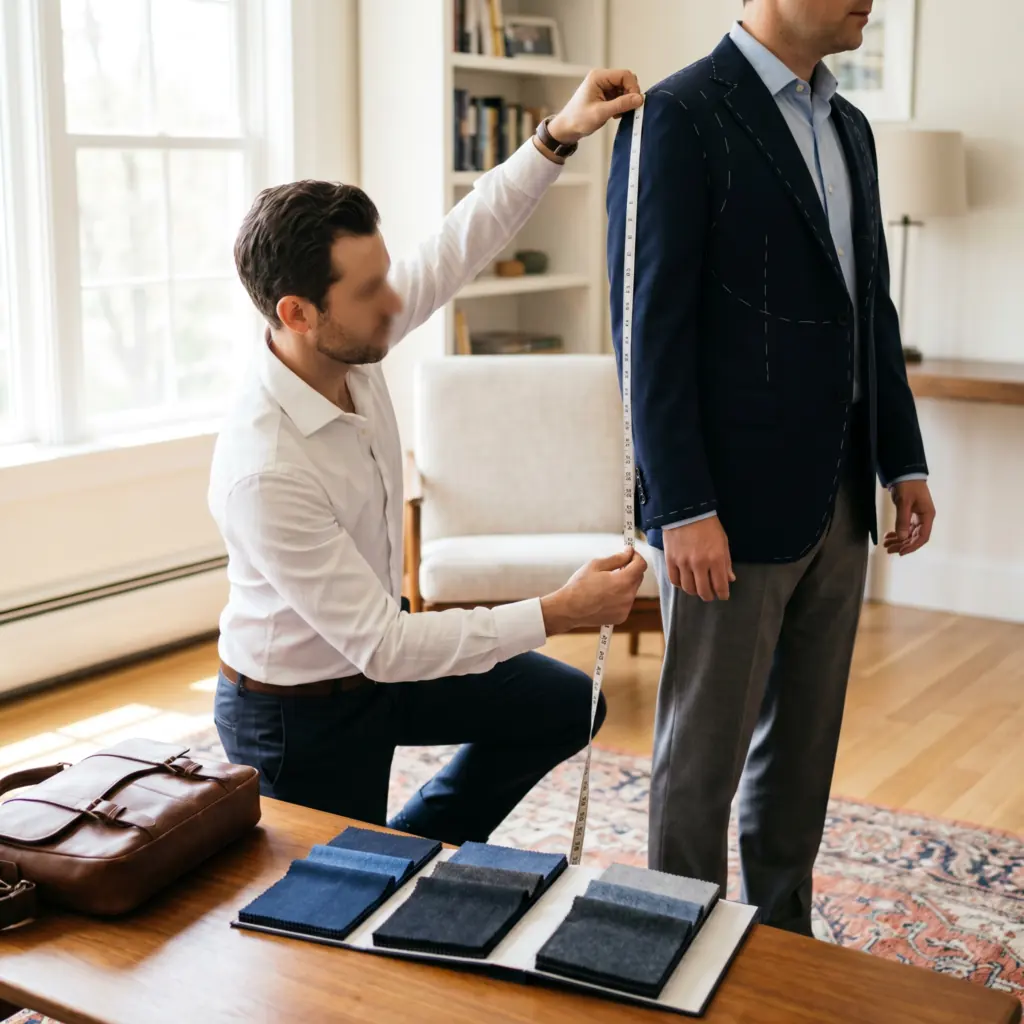
When you're ready to put this into practice, you can book a mobile fitting at your home or office with Brandon and get measured in person.
Will a Super 150s suit really shine and pill from normal wear? Yes, especially at high-friction areas like the seat of the trousers, the inner thighs, and the elbows. Finer fibers cannot withstand the same abrasion as thicker ones. This is a known property of the fabric, not a defect.
How can I tell what Super number a suit fabric actually is? Reputable mills list the Super number on the fabric edge along with the mill name, composition, and weight. Custom and made-to-measure tailors should be able to show you this for any cloth they offer. If they cannot, that is a sign to ask more questions.
Is Super 100s lower quality than Super 130s? Not in any meaningful sense. Super 100s uses slightly thicker fibers, which makes the fabric more durable and slightly more textured. For everyday business suits, Super 100s and 110s are often the better choice because they last longer.
Does the Super number affect how the suit wrinkles? Indirectly. Finer fibers in higher Super numbers tend to wrinkle more easily and recover less quickly. Weave matters significantly too, with high-twist weaves wrinkling less regardless of fiber fineness.
What Super number should a first suit be? Super 110s or Super 120s is the right starting point for almost everyone. You get a refined hand and good drape without the durability tradeoffs of higher numbers.
Are Super numbers used on suits that are not pure wool? The official IWTO Super grading system applies to new, pure wool. If you see Super numbers on blended fabrics, the term is being used loosely as a marketing reference rather than a formal classification.
What about Super numbers on cashmere blends? The grading system technically applies to pure wool. If you see a Super number on a wool-cashmere blend, treat it as a guideline only and ask about the specific composition and mill.
Key Takeaways
- Super numbers measure wool fiber fineness, not overall quality.
- Super 100s through 120s is the right range for everyday professional wear.
- Super 130s through 150s feels more luxurious but trades off durability.
- Super 160s and above is reserved for limited-wear special occasion garments.
- Mill quality and fabric weight matter as much as the Super number.
- For a first or daily suit, Super 110s or 120s in a mid-weight Italian wool is the most reliable choice.
Build a Suit Around the Right Cloth
You now understand what the Super number actually tells you, and why the mill and the weight matter just as much. The next step is feeling the difference between tiers in your own hands before you commit.
The Suit Doctor carries swatches across the full Super range from named Italian mills.
- A side-by-side feel test from Super 110s through the finer tiers
- Honest guidance on which number matches how often you will wear the suit
- Custom and made-to-measure suits for business, weddings, and special occasions
- Convenient mobile fittings throughout the Kansas City metro
Ready to get started? Book your fabric consultation in Kansas City and choose the right cloth for the way you actually wear suits.
The Suit Doctor | Custom and Made-to-Measure Suits for Men Who Take Their Look Seriously.
Get measured for a suit built around how you actually live.
See every service, from full custom builds to mobile fittings.