A double-breasted suit is one of the most visually commanding things a man can wear. But it is also one of the most unforgiving. The structure, the peak lapels, and the wider front panel all depend on fabric that can hold its shape, drape cleanly, and carry the weight of the silhouette. Choose the wrong fabric and the suit looks soft and shapeless. Choose the right one and it looks like authority itself.
This guide breaks down exactly which fabrics work for double-breasted suits, why they work, what to avoid, and how to match your fabric to the season and occasion.
TLDR: Double-breasted suits require fabrics with weight, structure, and drape. Wool flannel, mid-weight worsted wool, and tweed are the strongest choices. Lightweight tropicals and unstructured materials undermine the silhouette. Read on for the full breakdown by fabric and season.
Why Fabric Matters More in a Double-Breasted Suit
A single-breasted suit can forgive a lot. A soft, unstructured fabric still looks reasonable in a two-button jacket. The double-breasted cut has no such forgiveness. If you are still weighing the two styles against each other, our Kansas City guide to single-breasted versus double-breasted suits breaks down the differences.
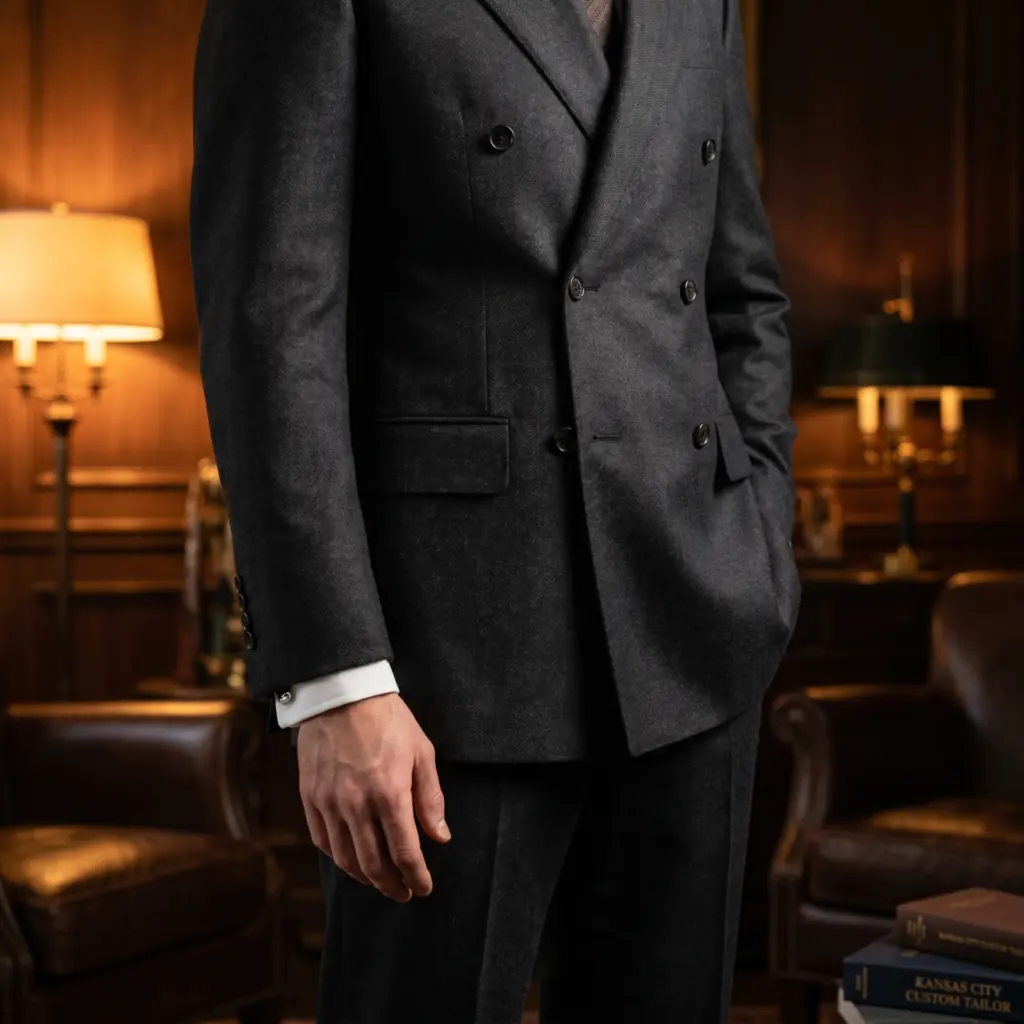
The extra fabric across the front of a DB suit creates a panel that needs support. The peak lapels, which are the standard choice for double-breasted jackets, hold their shape best when the fabric behind them has enough body to resist rolling or drooping. The wide chest requires a fabric that drapes in a controlled way rather than bunching or sagging.
This is why fabric selection is arguably more critical for a double-breasted suit than for any other style. A lightweight or loosely woven material will look like you borrowed a jacket two sizes too large. A properly weighted, structured fabric creates the visual line that makes a double-breasted suit worth wearing.
The good news is that the best fabrics for DB suits are also some of the most satisfying to wear. They tend to be heavier, warmer, and richer in texture than year-round workhorse fabrics. When you choose correctly, the suit becomes a statement piece that single-breasted options simply cannot match.
What Makes a Fabric Right for a Double-Breasted Suit?
Before getting into specific fabrics, it helps to understand what properties you are looking for.
Weight and Body
A fabric with more weight holds its structure better. Mid-weight and heavyweight fabrics, typically in the 290 to 380 GSM (grams per square meter) range, give the jacket the body it needs to drape cleanly and keep the front panel flat. Lighter fabrics, below 250 GSM, tend to be too soft for the DB silhouette.
Drape
Drape is how a fabric falls and moves with the body. A fabric with good drape hangs from the shoulder in smooth, controlled lines rather than clinging, wrinkling, or gathering at stress points. Wool fabrics are naturally superior in drape compared to synthetics, and this is one reason wool remains the standard material for double-breasted suits.
Structure and Finish
Tightly woven fabrics hold their shape through a long day of wear. A loosely woven or heavily textured fabric can look impressive at first but loses its shape quickly. For a suit you want to wear repeatedly and have hold up across seasons and occasions, the weave needs to be dense and consistent.
The Best Fabrics for Double-Breasted Suits
Wool Flannel: The First Choice for Fall and Winter
Flannel is the classic fabric for double-breasted suits, and it earned that reputation for very good reasons. Flannel is a woollen fabric made by brushing the surface of the cloth to raise the fibers, creating a soft, matte texture that photographs beautifully and carries significant visual weight.
For a double-breasted suit, flannel’s natural body and slight heft do exactly what the silhouette requires. The lapels hold their shape. The front panel lies flat. The shoulders carry the structure without looking stiff.
Look for a wool flannel in the 290 to 340 GSM range for the ideal balance of warmth and wearability. A woollen flannel (made from carded, shorter fibers) will be softer and warmer, ideal for true cold-weather wear. A worsted flannel (made from combed, longer fibers) has a finer texture, slightly less body, but better drape and versatility across seasons.
Best colors in flannel for DB suits: Charcoal is the gold standard. The combination of the double-breasted silhouette and charcoal flannel is one of the most formally powerful looks in menswear. Mid-grey and deep navy are strong alternatives. Subtle patterns like herringbone work exceptionally well in flannel.
Season: Fall and winter, October through March in Kansas City.
Mid-Weight Worsted Wool: The Year-Round Workhorse
If you want a double-breasted suit you can wear across more of the year, a mid-weight worsted wool is your answer. Worsted wool uses long-staple fibers that are combed parallel before spinning, producing a smooth, tightly woven fabric with a clean surface finish and excellent shape retention.
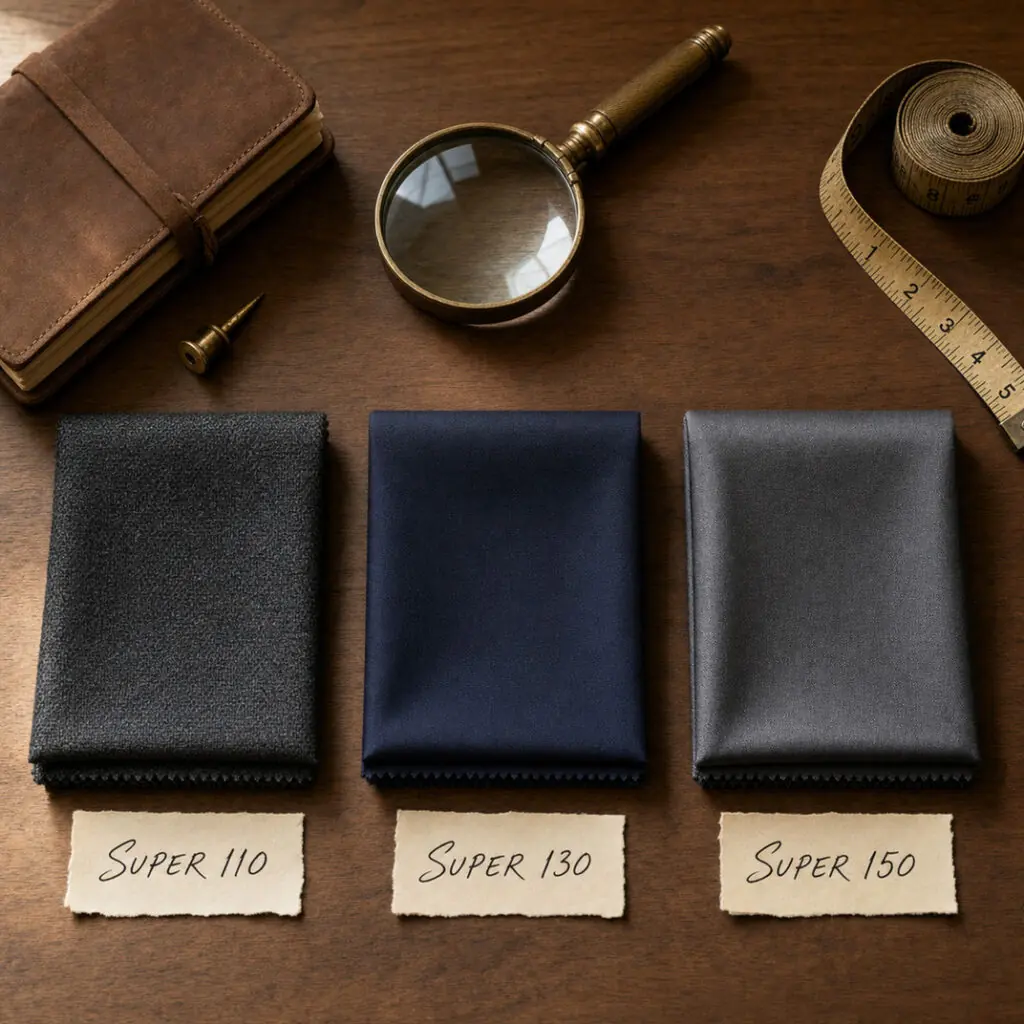
For a double-breasted suit, a worsted wool in the 300 to 340 GSM range provides the structure and drape the silhouette requires while remaining comfortable in climate-controlled offices and moderate outdoor temperatures. A Super 100s or Super 110s worsted at this weight gives you durability, refined appearance, and the fabric body a DB suit demands.
Worsted wool also wrinkles less than flannel and holds a crease in the trouser leg with more precision, which contributes to the sharp overall look the double-breasted silhouette calls for.
Best colors in mid-weight worsted for DB suits: Midnight navy, charcoal, and dark grey. Mid-weight worsted in a subtle chalk stripe is a particularly elegant choice for a double-breasted jacket.
Season: Year-round in Kansas City, with comfort from early fall through late spring and in climate-controlled environments all year.
Tweed: The Country Statement
Tweed is a heavy, textured fabric made from carded wool fibers, typically woven in a herringbone, houndstooth, or check pattern. It has a rough, nubby hand feel and significant weight, usually in the 380 to 450 GSM range.
For a double-breasted suit, tweed creates an intensely textured, visually distinctive piece that works beautifully in rural, outdoor, or heritage-inspired settings. Think a November wedding at a farm venue, a hunting-inspired event, or any occasion that calls for something that feels deliberately substantial.
Tweed is not appropriate for formal business settings or black-tie events. Its texture and visual weight place it firmly in semi-formal to casual territory. But within that range, a double-breasted tweed suit is genuinely striking.
Want to see how this plays out in a real build? Explore our our services page - it walks through fabrics, construction, and what to expect at your first appointment.
Best colors in tweed for DB suits: Earth tones, heather grey, and traditional patterns in brown, green, and rust.
Season: Fall and early winter only. Tweed is too heavy and too casual for spring or summer.
Heavyweight Worsted Wool: The Formal Authority
For double-breasted suits intended for the most formal contexts, a heavyweight worsted wool in the 340 to 380 GSM range provides maximum structure and a truly authoritative drape. This fabric weight is used in classic English tailoring for exactly this purpose: suits that need to hold a precise, imposing silhouette across long days, photographs, and formal events.
This is the fabric for a groom who wants a double-breasted suit at a formal winter wedding, a senior executive who wants a suit that commands the room, or anyone who wants the full impact of the double-breasted style.
Best colors in heavyweight worsted for DB suits: Charcoal, midnight navy, and dark grey.
Season: Fall and winter. This weight is too warm for spring and summer in Kansas City.
Fabrics to Avoid in a Double-Breasted Suit
Some fabrics that work well in single-breasted suits actively undermine a double-breasted silhouette.
- Tropical wool (under 220 GSM): Why It Fails for DB Suits: Too lightweight; front panel loses structure and sags
- Linen: Why It Fails for DB Suits: Wrinkles heavily; no body to hold lapels or panel flat
- Cotton or cotton blends: Why It Fails for DB Suits: Insufficient drape; folds awkwardly across the wide front
- Loosely woven hopsack: Why It Fails for DB Suits: Lacks the density needed to hold the DB silhouette
- Synthetic blends: Why It Fails for DB Suits: Poor drape; often shines under light; loses shape quickly
The common theme is insufficient weight and body. If a fabric does not have enough substance to hold a clean, flat front panel and sharp lapels, the double-breasted cut will expose that weakness immediately.
Fabric by Season: A Quick Reference
- Fall (Oct-Nov): Best DB Fabric: Wool flannel or mid-weight worsted; Target GSM Range: 290 to 340
- Winter (Dec-Feb): Best DB Fabric: Wool flannel or heavyweight worsted; Target GSM Range: 310 to 380
- Spring (Mar-May): Best DB Fabric: Mid-weight worsted; Target GSM Range: 280 to 310
- Summer (Jun-Aug): Best DB Fabric: Not recommended for DB; use single-breasted; Target GSM Range: N/A
The double-breasted suit is fundamentally a cooler-weather garment. The extra layer of fabric across the front adds warmth and visual weight that works beautifully in fall and winter but becomes uncomfortable in Kansas City summers.
Why Canvas Construction Matters Even More for DB Suits
In a single-breasted suit, fused construction can produce a passable result. In a double-breasted suit, full-canvas or half-canvas construction is not optional if you want the jacket to perform correctly.
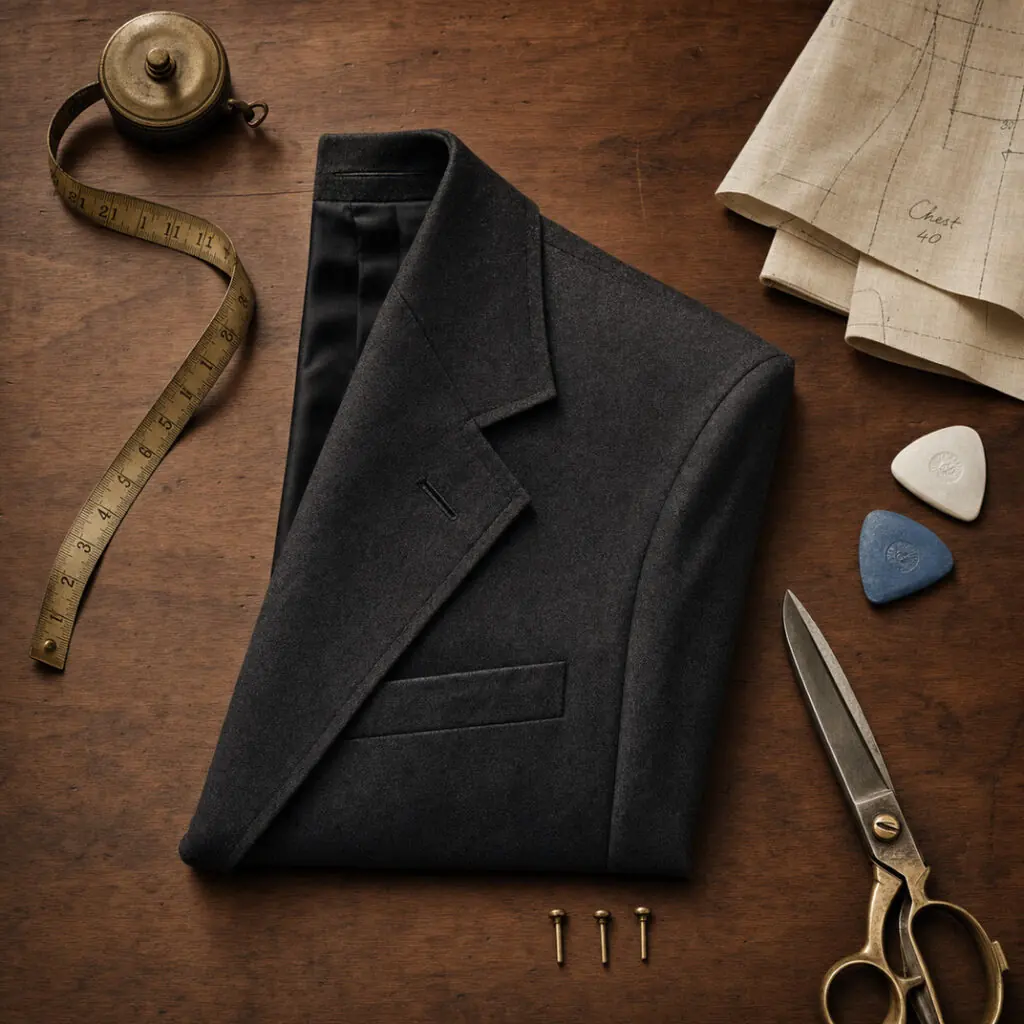
Canvas construction uses an internal layer of horsehair and linen canvas stitched (not glued) to the outer fabric. This layer gives the jacket its shape and, over time, molds to your body. In a double-breasted suit, the canvas is what keeps the wide front panel lying flat and the peak lapels holding their upward angle across a full day of wear.
A fused double-breasted jacket will look sharp in the fitting room. Within a year of regular wear, the glue bond begins to separate and the front panel develops a bubbling, stiff appearance that no amount of pressing can fix. For a DB suit, canvas construction is a meaningful, long-term investment.
Real-World Scenario: Choosing DB Fabric for a Kansas City Setting
Consider two scenarios that illustrate how fabric choice plays out in practice.
Scenario A: A Kansas City attorney who wants a double-breasted suit for court appearances and client presentations. The right choice is a charcoal mid-weight worsted wool at 300 to 320 GSM with full-canvas construction. This gives him a suit that reads as authoritative and formal, holds its shape through a 10-hour day, and works comfortably in climate-controlled courthouse environments year-round except midsummer.
Scenario B: A groom who wants a double-breasted suit for a November wedding at a venue outside Lee’s Summit. The right choice is a charcoal or midnight navy wool flannel at 310 to 340 GSM. The flannel’s body holds the silhouette perfectly in the cooler outdoor and reception environments, photographs beautifully in fall light, and creates a richer, warmer visual impact than a standard worsted would in the same context.
In both cases, the fabric is doing specific, purposeful work. That is exactly what the best DB fabric choices do.
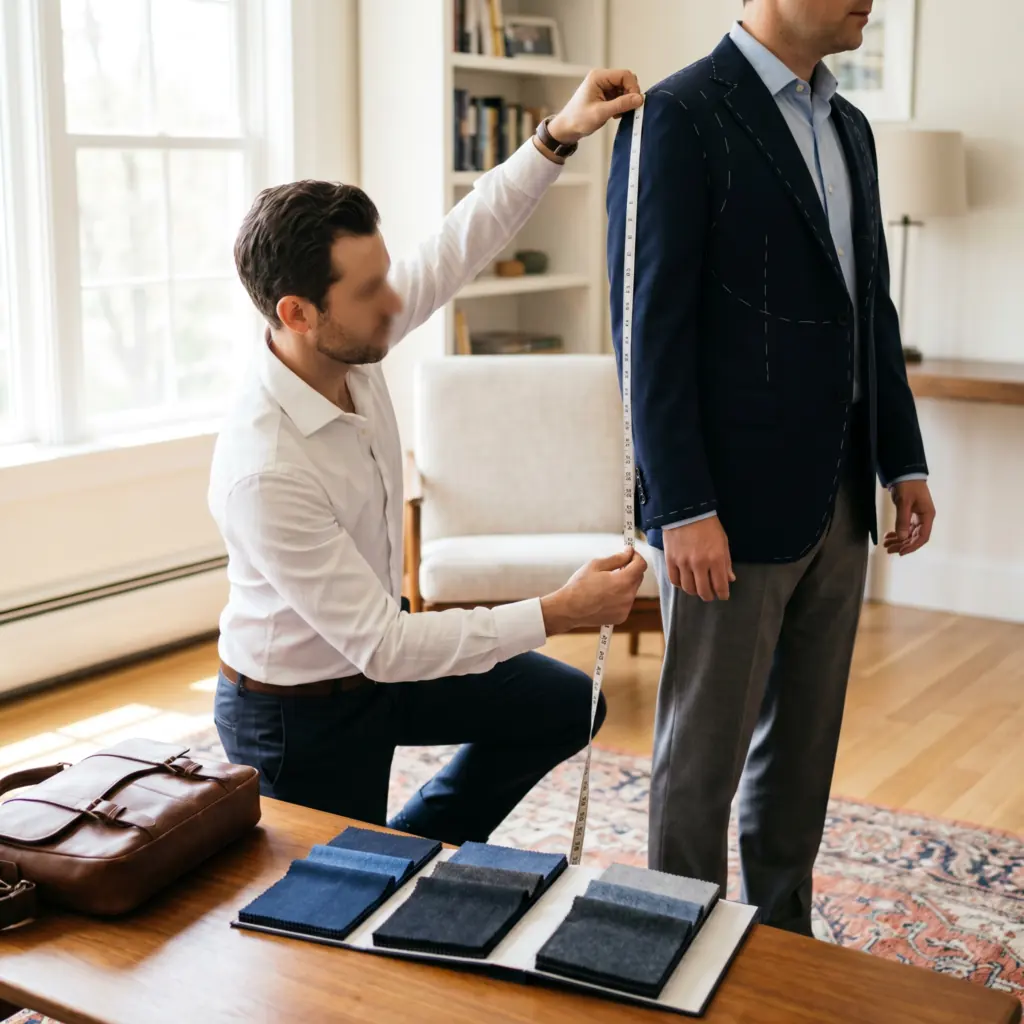
If you are considering a double-breasted suit and want to handle real fabric samples before committing, schedule a Kansas City custom suit consultation and we will walk through every option in person.
Frequently Asked Questions
Q: Is a double-breasted suit appropriate for a business setting?
When you're ready to put this into practice, you can book a mobile fitting at your home or office with Brandon and get measured in person.
Yes, absolutely. Double-breasted suits have a long history in executive offices, courtrooms, and formal professional settings. The key is choosing the right fabric (structured worsted wool in charcoal or navy) and having it fitted precisely. A well-fitted DB suit in the right fabric reads as confident and authoritative in almost any professional environment.
Q: Can I wear a double-breasted suit to a wedding?
Yes, with the right fabric and styling. A double-breasted suit in wool flannel or heavyweight worsted makes an excellent choice for a groom or a sharply dressed guest at a formal fall or winter wedding. For outdoor summer weddings, stick to single-breasted styles.
Q: What is the most versatile double-breasted suit fabric?
A mid-weight worsted wool at 300 to 320 GSM in midnight navy or charcoal gives you the widest range of wearing conditions. It handles fall, spring, and climate-controlled indoor environments in winter. It is also the most formally versatile choice.
Q: Does a double-breasted suit need to be fully lined?
Yes. A full lining is not optional for a double-breasted suit. It protects the canvas layer, helps the jacket glide on and off smoothly, and contributes to the structured, finished appearance the silhouette requires. Partial lining should be reserved for single-breasted casual jackets.
Q: Are there double-breasted suits for warmer weather?
In principle, a lightweight worsted at around 250 to 270 GSM could be worn in mild spring or fall weather. In practice, Kansas City’s summers are too warm and humid for any double-breasted suit to be comfortable outdoors. The extra fabric layer simply retains too much heat. For warm-weather events, single-breasted styles in tropical wool or open-weave fabrics are the correct choice.
Q: How does fabric choice affect the lapels on a double-breasted jacket?
Directly and visibly. The peak lapels on a double-breasted jacket hold their upward angle because the fabric and canvas behind them have enough body to resist gravity. A fabric that is too lightweight allows the lapels to droop or roll unevenly, which undermines the entire look. This is one of the core reasons heavyweight fabrics are recommended for DB suits.
Q: What Super number is best for a double-breasted suit?
For a double-breasted suit you plan to wear regularly, Super 100s to Super 110s worsted wool provides the best balance of durability, structure, and refined appearance. Super 120s and above are finer and softer but less durable and have slightly less body, which matters more in a DB cut than in a single-breasted one.
Key Takeaways
- DB suits require structured fabrics: Mid-weight to heavyweight wools with body and drape are essential. Lightweight fabrics undermine the silhouette.
- Wool flannel is the classic choice: 290 to 340 GSM flannel delivers the body, warmth, and visual weight that double-breasted suits are built for.
- Mid-weight worsted is the versatile option: 300 to 340 GSM worsted wool works across more seasons and is the correct choice for a year-round professional DB suit.
- Tweed is reserved for heritage and semi-formal settings: Powerful and distinctive, but not appropriate for formal business or black-tie contexts.
- Avoid lightweight fabrics entirely: Tropical wool, linen, and cotton blends lack the body a double-breasted silhouette requires.
- Canvas construction is non-negotiable: Full or half-canvas construction keeps the front panel flat and the lapels holding their angle across years of wear.
- DB suits are cool-weather garments: Fall and winter are the ideal seasons in Kansas City. Summer double-breasted suits are uncomfortable and rarely appropriate.
Ready to Build Your Double-Breasted Suit?
You now understand why fabric is the foundation of a great double-breasted suit and exactly which materials will deliver the silhouette, structure, and longevity you are investing in.
The Suit Doctor offers:
- Made-to-measure double-breasted suits in wool flannel, mid-weight and heavyweight worsted wool, and tweed
- Full-canvas and half-canvas construction options for lasting structure
- In-person fabric selection with real samples at your home or office
- Expert guidance on silhouette, lapel width, button configuration, and color coordination
- Mobile fitting appointments at your location across Kansas City and the broader metro
For more on The Suit Doctor’s custom suit process, visit our Kansas City custom suit page.
Ready to get started? Reach out to book your Kansas City double-breasted suit consultation and we will bring the fabric samples to you.
The Suit Doctor | Custom and Made-to-Measure Suits for Men Who Take Their Look Seriously.
Get measured for a suit built around how you actually live.
See every service, from full custom builds to mobile fittings.