A tailor works in millimeters. A slightly bulky sweatshirt, a sucked-in stomach, or a last-minute gym session can throw off measurements that define how your jacket drapes, where your trousers break, and whether the whole suit feels like it was built for you or for someone almost like you. This guide covers exactly how to prepare for a custom suit fitting so that every measurement your consultant takes reflects your real body, your real posture, and your real life.
TLDR: Preparation is the difference between a suit that fits and a suit that fits perfectly. Wear a fitted dress shirt and slim trousers, bring the dress shoes you will pair with the suit, and stand naturally throughout. Do not suck in, flex, or work out the morning of. Keep reading for the full checklist, posture tips, communication advice, and timing guidance.
The Complete Suit Fitting Preparation Checklist
This is the checklist you can reference the night before and the morning of your appointment.
Before the appointment:
- Know the purpose of the suit (daily business, wedding, special event, year-round versatile)
- Have a rough style direction in mind (classic, modern slim, relaxed)
- Save 3 to 5 reference photos on your phone to show your consultant
- Confirm and set aside the dress shoes you will wear with the suit
- Note what you do not like about suits you currently own
- For mobile fittings: clear a well-lit, open space for measurements
- Write down any questions you want to ask
The day of:
- Wear a lightweight, fitted dress shirt (ideally the one worn under the suit)
- Wear slim or fitted trousers sitting at your natural waist
- Wear dress shoes that match the heel height of your formal footwear
- Skip the gym that morning
- Eat normally
- Stand naturally throughout the appointment
During the appointment:
- Be specific about fit preferences
- Mention mobility needs (long hours sitting, travel, dancing, presenting)
- If something feels off, say so
- Confirm timeline and follow-up fitting date before the appointment ends
What to Wear to a Suit Fitting: The Complete Outfit Guide
This is the most searched question about suit fittings, and most guides answer it in one sentence. Here is the full picture.
Shirt: Wear a lightweight, fitted dress shirt. If you already know which shirt you will wear under the finished suit, wear that one. The fit of your shirt directly affects shoulder, sleeve, and chest measurements. A bulky hoodie or thick knit will artificially inflate those numbers.
Trousers: Wear slim or flat-front chinos sitting at your natural waist. Baggy jeans or cargo pants distort waist, hip, and rise measurements. Your consultant needs to see where your waistband naturally sits, not where it sits over bunched denim.
Shoes: Wear the dress shoes you plan to pair with the suit, or shoes with a similar heel height. Shoe height directly affects trouser length and break. Showing up in sneakers or sandals means your trouser hem is a guess, and that guess will be wrong.
Undergarments: Wear the undershirt or compression layer you normally wear daily. Undergarment thickness affects how the jacket and shirt sit across your chest and torso.
What not to wear: Hoodies or layered jackets (hide shoulder slope), thick sweaters (distort chest measurements), oversized T-shirts (cause overcompensation), workout gear (too stretchy or compressive), and belts with bulky buckles (distort waist measurements).
What to Bring to Your Fitting
- Dress shoes (if not already wearing them)
- Inspiration photos saved on your phone from Instagram, Pinterest, or anywhere else
- A jacket or shirt that currently fits you well so your consultant has a reference for what you already like
- Your calendar to schedule follow-up fittings on the spot
- For event-specific suits: bring the tie, pocket square, and shirt planned for that day
For Kansas City mobile fittings, you have the added advantage of your full wardrobe being right there. If you want a wardrobe audit as part of the consultation, set out items you are unsure about in advance so your consultant can evaluate them.
Posture and Suit Measurements: The Hidden Variable
This is where preparation goes from basic to genuinely important. Posture is the hidden variable in tailoring, and it is almost never addressed in fitting prep advice.
Two people can wear the same size 40R jacket and have completely different bodies. One may have a sloping shoulder and forward head posture while the other stands perfectly square. Even with identical chest measurements, one may carry more volume in the back and the other in the front, requiring completely different pattern construction.
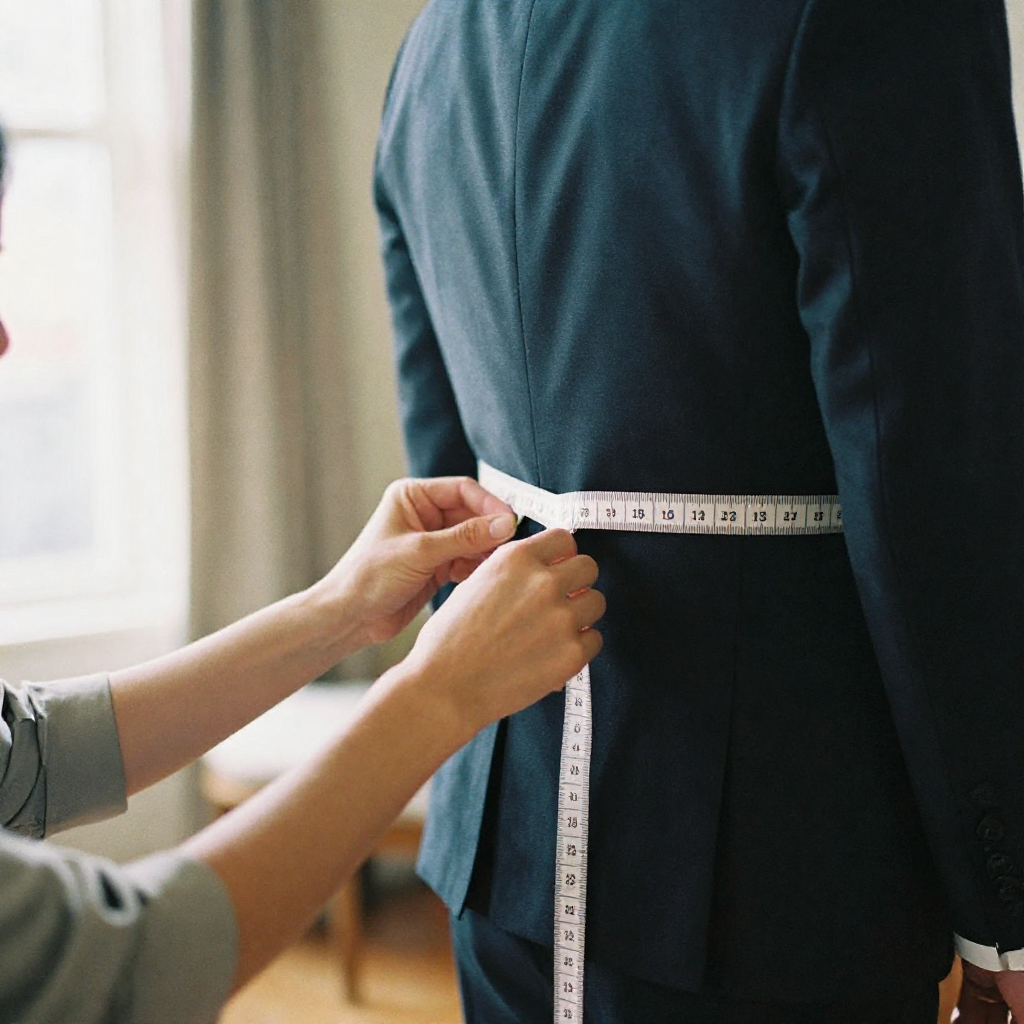
Leading bespoke tailors understand how different posture types change custom suit construction and take upward of 30 to 37 unique measurements at a first appointment, including posture slope, front-to-back torso balance, and natural arm hang. These are the details that ready-to-wear never captures. Custom tailoring exists specifically to account for them.
Here are the most common posture types and how a tailor corrects for each:
| Posture Type | What It Looks Like | How the Tailor Adjusts |
|---|---|---|
| Drop shoulder | One shoulder sits lower (very common) | Lowers angle on the drop side, pads up the shoulder |
| Sloping shoulders | Both shoulders slope steeply | Lowers the shoulder line angle in the pattern |
| Square/erect shoulders | Military-like stance, less slope | Raises shoulder line, adds front length |
| Round back | Slight curve in mid-back, back is longer | Extra length added to back of jacket |
| Full chest | Chest pushes forward (athletic builds) | Extra cloth added to front chest area |
| Prominent seat | Larger backside, creasing at seat | Seat widened horizontally and vertically |
| Flat seat | Posterior is flat, fabric gathers | Cloth reduced in both dimensions |
The rule for your fitting is simple: stand as you normally do. The suit should fit your posture, not the other way around. If you have to hold your breath to make it work, that is not a suit. That is a costume.
Critical day-of posture tips:
Do not suck in your stomach. Do not flex. Do not fake “good posture.” If you naturally slouch slightly, let your consultant see that and build for it. That is the entire point of custom.
Let your arms fall naturally rather than holding them stiffly at your sides. And avoid working out the morning of your fitting. The acute muscle pump peaks within 15 to 45 minutes after your last set and fades within 2 to 3 hours, but after an especially hard session, residual muscle swelling can linger up to 48 hours. If you have an intense workout scheduled the day before your fitting, consider a light session instead.
How to Talk to Your Tailor: Vocabulary and Communication Tips
Communication is where most first-time buyers fail without realizing it. Your consultant cannot read your mind, and silence during a fitting is often interpreted as agreement.
Be specific, not vague. “Just make it fit” gives your consultant nothing to work with. Instead, describe what you want in concrete terms: “I want the jacket to feel snug but not tight across the chest” or “I want the trousers to break just once at the shoe.” If you are not sure how to describe it, that is exactly what reference photos solve. A picture of the silhouette you want eliminates ambiguity.
Learn a handful of the language of custom suit fitting and why it matters before your appointment. You do not need to become an expert, but knowing the difference between a notch and peak lapel, understanding what “break” means for trousers, and being able to say “I want a half-canvas construction” puts you and your consultant on the same page immediately.
Here are the terms worth knowing:
Break is how the trouser leg meets the shoe: full, half, or no break. Lapel is the folded fabric on the front of the jacket: notch (versatile), peak (authority), or shawl (formal). Canvas is the internal structure layer: full canvas is the best, half canvas is strong, fused is glued and less durable. Rise is the distance from waistband to crotch in trousers. Pitch is the angle of the sleeve, which affects how the arm hangs naturally.
Ask questions. Good questions to prepare include: What does a good fit look like for my body type? How many fittings should I expect? What fabric construction do you recommend? What is the timeline? Can this detail be changed later if I change my mind?
If you are not sure about a decision, you do not have to commit on the spot. Walking away and emailing your choice the next day delays nothing.
Suit Fitting Timeline: When to Book and Why Body Stability Matters
For a standard custom suit, schedule your first fitting 4 to 6 weeks before you need the finished garment. For weddings and formal events, 6 to 8 weeks minimum. For a wedding with a full party, 3 to 4 months gives enough time for everyone to be measured and for production to run smoothly.
The question almost every client has but few guides address: what if my body is changing?
The principle is straightforward. The goal is not perfection. It is stability. The best time to get measured is when your body has plateaued for at least 3 to 4 weeks. If you are planning a major transformation (more than 15% of your body weight), wait until your weight has been stable for 60 to 90 days. For modest changes of 5 to 10 pounds, proceed with the fitting and tell your consultant the plan upfront. Quality custom suits include seam allowances that accommodate future adjustments.
Derek is training hard for his June wedding, aiming to drop 20 pounds. With six months to go, he has time to reach his goal, stabilize, and then book his fitting. His consultant at The Suit Doctor helps him choose a fabric and style built for Kansas City summer weather while accounting for his goal weight.
Real-World Scenarios: What Preparation Looks Like in Practice
Marcus (the first-timer) shows up to his mobile fitting in a thick hoodie, joggers, and sneakers. His consultant has to estimate shoulder slope through a heavy layer and cannot accurately assess trouser length. A 20-minute outfit change would have produced a completely different and more accurate set of measurements. He learns for next time.
Ryan (the promotion suit) wants a suit for “business stuff” but has not thought further than that. He does not know whether he needs something for daily wear or presentations only. Once his consultant walks him through purpose, lifestyle, and fabric weight, the decisions start making sense. Knowing these answers before the appointment would have saved 30 minutes and made the whole experience smoother.
For more on what correct suit fit looks like from shoulder to hem, visual references are one of the most powerful tools you can bring to a fitting.
Common Mistakes That Cost Time and Money
These are the errors that experienced consultants see most often:
Wearing bulky clothing that inflates shoulder and chest measurements. Wearing sneakers when the suit is for dress shoes, resulting in the wrong trouser length. Sucking in or flexing during measurement, building a suit for a body that does not exist in normal life. Not mentioning planned weight changes, leading to costly re-alterations later. Working out the morning of the fitting, when muscles are temporarily swollen. Being too vague about style preferences, giving the consultant no target to hit. Booking too late before an event, leaving inadequate time for fittings and adjustments.
Every one of these mistakes is preventable with 20 minutes of preparation the night before.
Frequently Asked Questions
Q: Do I need to know anything about suits before my fitting? No. Your consultant guides every decision. But spending 10 minutes learning basic terms like “break,” “lapel,” and “canvas” makes the conversation smoother and helps you articulate what you want.
Q: How long does a fitting appointment take? Expect 60 to 90 minutes for a complete first custom consultation. That includes a style discussion, fabric selection, and all measurements. Simple alteration appointments are shorter, but a full custom fitting covers every decision in one session.
Q: What if I have an unusual body type? That is exactly why custom exists. Posture asymmetry, shoulder slope differences, forward lean, and weight distribution are all observed and built into the pattern from the start.
Q: What if my body changes after I order? Quality custom suits include seam allowances for future adjustments. If your weight shifts within a reasonable range, a skilled tailor can let out or take in the suit.
Q: Should I bring someone with me? If their opinion matters to you, yes. A trusted friend or partner can offer a second perspective on style choices. But the final decisions should reflect your preferences, not theirs.
Q: When is the ideal time to book for a wedding? Three to four months before the wedding date for an individual suit. For a full wedding party, four months gives enough time for all members to be measured.
Q: Can I change my mind about details after the fitting? Many decisions can be adjusted before construction begins. Ask your consultant which choices are locked in and which can be revised.
Key Takeaways
What you wear to the fitting directly affects measurement accuracy. A fitted dress shirt, slim trousers, and proper dress shoes give your consultant the most honest starting point.
Posture is the hidden variable. Stand naturally. Do not flex, suck in, or fake good posture. Your suit should fit the body you actually live in.
Communication prevents regret. Be specific about preferences, bring visual references, and ask questions. Silence is interpreted as agreement.
Timing matters. Book 4 to 6 weeks out for standard suits, 6 to 8 weeks for events, and 3 to 4 months for wedding parties. Get measured when your body is stable, not mid-transformation.
Preparation takes 20 minutes. The results last for years.
Ready to Book Your Fitting?
You now know exactly how to walk into your custom suit fitting prepared, confident, and ready to get the best possible result. The next step is booking the appointment.
The Suit Doctor brings the complete custom tailoring experience to clients across Kansas City. Every consultation is guided, no-pressure, and built around your body, your lifestyle, and your schedule.
The Suit Doctor offers:
- Mobile fittings at your home, office, or event venue
- Made-to-measure suits for business, weddings, prom, and special events
- Premium fabric from top Italian mills
- A guided process from first measurement to final delivery
Ready to get started? Visit thesuitdoctor.com or schedule your Kansas City custom suit fitting today.
The Suit Doctor | Custom and Made-to-Measure Suits for Anyone Who Takes Their Look Seriously.