Most men buying their first custom suit ask the same question before they walk into a consultation: how much should this actually cost, and what does more money actually buy?
The honest answer is that price in custom suiting is not arbitrary. Every dollar above a baseline reflects a specific, verifiable decision in fabric, construction, or the number of hours a skilled person spends on the garment. Understanding what drives those differences transforms the pricing conversation from sticker shock into an informed choice.
This guide breaks down three real-world price tiers, explains exactly what changes at each level, and tells you how to match the right tier to your actual situation.
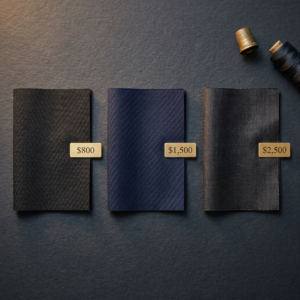
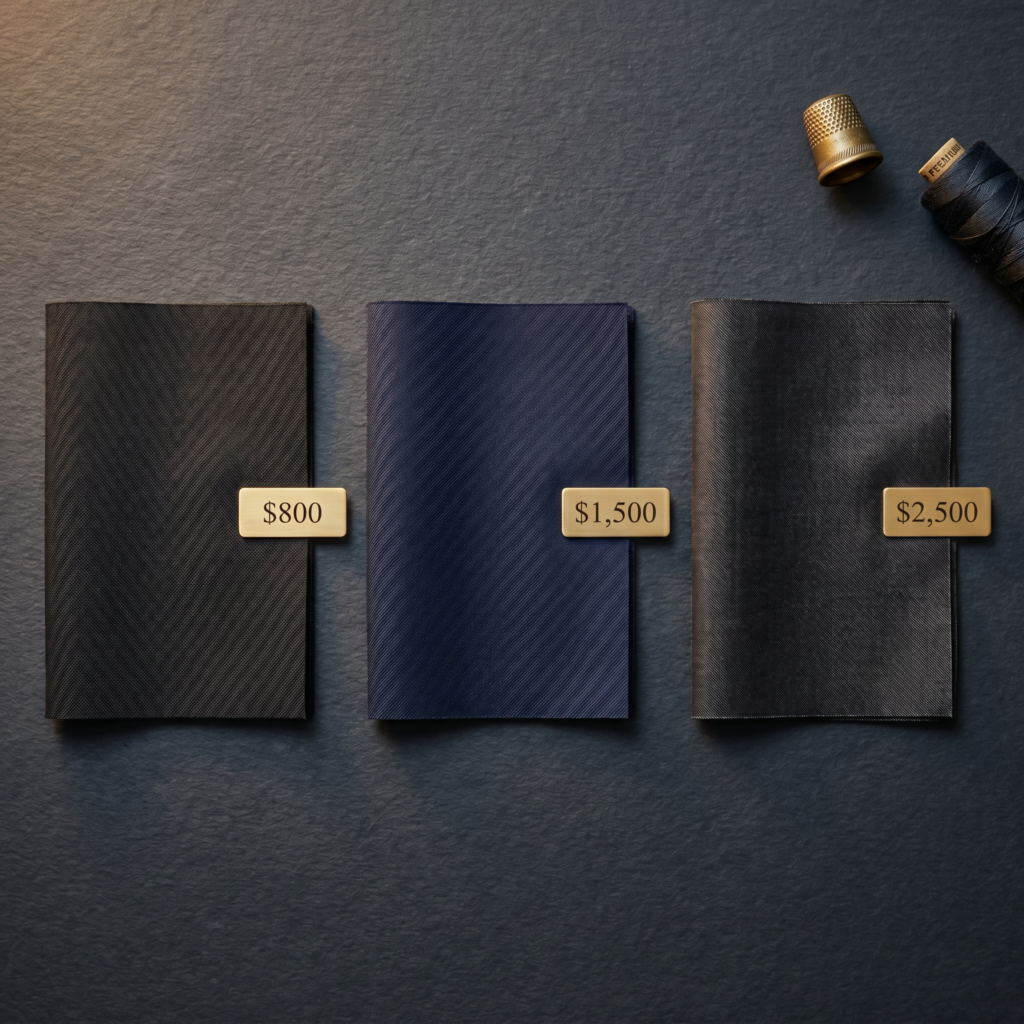
TLDR: At around $800, you get a made-to-measure suit with your measurements applied to an existing pattern, basic wool, and typically fused or light half-canvas construction. At $1,500, you get better wool from named mills, genuine half-canvas construction, more fittings, and a garment that will last considerably longer. At $2,500, you get full-canvas construction, fabric from premium Italian or British mills, meaningful handwork in the jacket, and a suit that improves with wear over years. Knowing which tier fits your situation prevents both overspending and underspending.
The Three Variables That Drive Every Price
Before examining each tier, it helps to understand the three factors that account for almost every pricing difference across the custom suit market.
1. Construction: The Most Important Factor Most People Do Not Think About
The canvas is the internal structural layer inside the front of a suit jacket. It sits between the outer fabric and the lining and acts as the skeleton that gives the jacket its shape, drape, and long-term structure. There are three approaches, and they drive more of the quality difference between price tiers than almost anything else.
Fused construction uses heat-activated adhesive to bond a synthetic interlining directly to the outer fabric. It is machine-made, fast, and inexpensive to produce. The result looks clean initially but does not breathe well, does not mold to the body over time, and has a known failure mode: the glue breaks down with wear and dry cleaning, causing the fabric to separate from the interlining and bubble, typically within 1 to 3 years of regular wear. Once a suit bubbles, it cannot be repaired. Fused construction is the standard at most retail price points and at entry-level made-to-measure brands.
Half-canvas construction stitches a layer of horsehair and cotton canvas into the chest and lapel area of the jacket (the upper half) while the lower portion remains fused. This is a meaningful improvement. The canvassed area molds to the wearer’s chest over time, the lapels develop a more natural roll, and the jacket retains structure longer than a fully fused garment. Half-canvas is the standard at the mid-range tier.
Full-canvas construction runs a continuous layer of horsehair canvas from the shoulders to the hem of the jacket, stitched (not glued) throughout. The result is a jacket that breathes, drapes more naturally, and over time molds to the exact shape of the wearer’s body. A full-canvas suit does not have an expiration date the way a fused suit does. With proper care, it can last five to ten years or more of regular wear. Full canvas requires significantly more skilled labor to construct, which is why it correlates with higher price tiers.
2. Fabric: What You Are Wearing Against Your Body
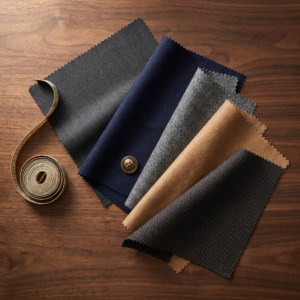
Fabric origin and quality affect how a suit looks, feels, moves, and holds up. At the entry level, fabrics typically come from less-recognized mills using wool blends or basic worsted wool. At mid-range, named Italian mills like Vitale Barberis Canonico (VBC), the world’s oldest continuously operating wool mill, established in 1663, supply Super 110s to Super 130s worsted that offers noticeably better drape and hand feel. At the premium tier, mills like Loro Piana, Scabal, Holland and Sherry, and Dormeuil produce fabrics in Super 120s to Super 150s and above with exceptional softness and refinement.
A critical note on Super numbers: they measure the fineness of the wool fiber in microns, not overall quality. A Super 120s fabric from a reputable mill like VBC will outperform a Super 150s from an unnamed importer every time. Fineness improves softness and drape; mill reputation and weave quality determine durability and performance. The two are different conversations entirely, and any retailer who pushes Super numbers without naming the mill is selling a story, not a fabric.
3. Fit Process: How Many Measurements, How Many Fittings
At the entry level, your measurements are applied to an existing base pattern that is then adjusted. At the mid-range and above, the process includes more measurements (often 20 to 30 or more), a fitting in an intermediate garment to assess construction in progress, and a final fitting to confirm all adjustments. More fittings mean more opportunities to refine the fit before the suit is finished. The number of fittings is not just a luxury. It is how the garment is calibrated to your specific proportions rather than a standard template.
Tier One: Around $800
What the Market Typically Delivers
At this price point, the custom suit market typically provides entry-level made-to-measure construction. Your measurements are taken and applied to a pre-existing pattern. The customization options (lapel style, lining, buttons) are real, and the fit will be meaningfully better than off-the-rack.
Construction: Most suits in this range use fused or very light half-canvas construction. The front of the jacket has a synthetic interlining bonded with adhesive. The suit looks sharp on day one and for the first year or so of wear. The long-term outlook is limited: fusing begins to break down with regular dry cleaning, and the jacket will not mold to the body the way a canvassed garment does.
Fabric: Wool blends or basic worsted wool are the standard at this price. The fabric is serviceable and looks fine under typical office lighting. It lacks the refinement of a named mill fabric but is a genuine step up from polyester and synthetic-heavy options.
Fit process: Usually a single consultation with measurements taken, followed by one fitting at delivery. If adjustments are needed, they are made then.
Turnaround: Typically two to four weeks.
Who This Tier Is Right For
- First-time suit buyers who need a business suit and are not yet certain how often they will wear it
- Professionals who need a presentable option without a significant investment
- Situations where the suit will be worn occasionally (a few times per month) rather than regularly
- Grooms who want a custom look for the wedding day without building a long-term wardrobe piece
The Honest Trade-Off
A suit in this range is a quality garment for the price. The fit advantage over off-the-rack is real. The limitation is longevity: fused construction has a known lifespan, and within two to three years of regular wear the suit will begin to show its construction limits. For occasional wear, this is a reasonable trade. For a suit worn three or more days per week, the economics shift toward the next tier.
Tier Two: Around $1,500
What the Market Typically Delivers
This is the range where construction genuinely changes. At $1,500, well-executed half-canvas construction is standard, and some makers in this range offer light full-canvas construction. The fabric sourcing also shifts meaningfully.
Construction: Half-canvas is the baseline at this price. The chest and lapel area of the jacket is canvassed, which allows the jacket to mold to the wearer’s chest over time and the lapel to develop a natural roll rather than lying flat. The lower jacket may still be fused, but the upper jacket behaves significantly better over time than a fully fused garment. The lifespan of a well-made half-canvas suit with proper care is considerably longer than a fused suit worn at the same frequency.
Fabric: Named Italian mill fabric becomes accessible at this tier. Vitale Barberis Canonico Super 110s to Super 130s is the typical range, and it represents a noticeable step up in hand feel and drape. The fabric is smoother against the skin, drapes more elegantly from the shoulder, and develops a subtle refinement as it is worn and pressed.
The pricing premium at this tier reflects two things primarily: better cloth, and more hours of skilled hand labor in the jacket compared to a fully machine-made entry-level garment. Both contribute to a suit that looks more refined and lasts substantially longer.
Fit process: Multiple fittings are standard at this tier. A proper mid-range consultation typically involves an initial consultation for measurements and fabric selection, followed by at least one intermediate fitting in the partially constructed garment, and a final fitting at delivery. This is where the fit becomes genuinely tailored rather than adjusted.
Turnaround: Typically four to six weeks, depending on the maker.
Who This Tier Is Right For
- Professionals wearing a suit three to five days per week who need a garment that holds up
- Anyone building a deliberate professional wardrobe where each suit is expected to serve for years
- Grooms who want the wedding suit to become the best suit in the rotation rather than a one-time garment
- Professionals in client-facing roles where appearance is part of the job
The Honest Trade-Off
The $1,500 range is where the investment case for custom suiting becomes clear. The half-canvas construction outlasts entry-level fused construction significantly, the named mill fabric performs better through regular wear, and the multiple-fitting process produces a more precisely calibrated fit. The total cost-per-wear over three to five years of regular use is often lower than re-purchasing at the $800 tier when the fused construction fails. This is the range where most everyday professionals find the best balance of quality and value.
Tier Three: Around $2,500
What the Market Typically Delivers
At $2,500, full-canvas construction is the expectation, premium mill fabric is the standard, and the handwork in the jacket is meaningful. This is the tier where a custom suit becomes a long-term possession rather than a periodic replacement.
Construction: Full-canvas construction runs a continuous layer of horsehair canvas from the shoulder to the hem, stitched throughout. The jacket breathes, moves naturally with the body, and over months and years of wear, the canvas molds to the wearer’s exact chest and shoulder contours. This is not a metaphor. The jacket physically takes on the shape of the person wearing it, which is why bespoke and high-quality made-to-measure suits look progressively better with age rather than worse. The expected lifespan with proper care is five to ten years of regular wear, and longer with rotation.
Fabric: Premium Italian and British mill fabric is the standard at this price. Loro Piana, Scabal, Holland and Sherry, Dormeuil, and similar mills produce fabrics at Super 120s to Super 150s and above that represent the best commercially available cloths for professional suiting. The visual difference between this fabric and mid-range mill fabric is subtle at first glance and becomes more apparent up close, in photographs, and under event lighting.
Handwork: At this tier, the jacket begins to include meaningful hand-stitched details: pad-stitched lapels that roll naturally rather than lying flat, hand-finished buttonholes, and hand-sewn pick stitching along the lapel edge. Each of these details is visible to someone who knows what to look for and invisible to those who do not, but they collectively produce a jacket that reads as refined rather than merely well-made.
Fit process: A full measurement session capturing 20 to 30 or more body measurements, an intermediate fitting in a basted (loosely constructed) shell garment, and a final fitting before delivery. At this level, the pattern is refined specifically for the wearer rather than being an adjusted template.
Turnaround: Typically six to ten weeks, including multiple fitting appointments.
Who This Tier Is Right For
- Senior professionals and executives for whom a suit is daily attire and part of how they present in high-stakes situations
- Anyone building a lasting wardrobe rather than replacing suits on a cycle
- Grooms for whom the wedding suit is also the finest professional suit they will own and wear for years afterward
- Professionals who travel frequently, where full-canvas construction and premium wool recover better from packing and wear
The Honest Trade-Off
The $2,500 tier is not for everyone. The return on investment is strongest for professionals who will wear the suit regularly over many years. For someone who wears a suit twice a month, the durability advantage of full-canvas over half-canvas is partially offset by the lower wear frequency. The half-canvas suit at $1,500 may serve them just as well over their actual usage pattern. For someone in a suit most business days, the economics favor the higher tier. The fabric, construction, and fit process at $2,500 produce a garment that ages better and performs better every year it is worn.
The Full Tier Comparison
| Feature | Around $800 | Around $1,500 | Around $2,500 |
|---|---|---|---|
| Construction | Fused or light half-canvas | Half-canvas | Full canvas |
| Fabric source | Basic worsted, lesser-known mills | Named Italian mill, Super 110s to 130s | Premium Italian or British mill, Super 120s to 150s |
| Fit process | Measurements plus one fitting | Multiple fittings including intermediate | Full measurement session plus multiple fittings |
| Handwork | Minimal | Some hand finishing | Pad-stitched lapels, hand buttonholes |
| Expected lifespan | 1 to 3 years regular wear | 3 to 6 years regular wear | 5 to 10 plus years regular wear |
| Best for | Occasional wear, first suit | Frequent professional wear | Daily executive wear, long-term wardrobe |
What The Suit Doctor Builds
The Suit Doctor builds custom and made-to-measure suits at price points that reflect genuine construction and fabric choices, starting at around $1,200 for a made-to-measure suit and moving up based on fabric selection and construction details. Pricing is transparent and presented at the consultation so every choice is made with full information.
The process is built around your lifestyle and how often you will actually wear the suit. For a professional who wears a suit three to five days per week, the team typically recommends moving toward half-canvas construction, named-mill fabric in the Super 110s to Super 130s range, and a fitting process with multiple appointments to calibrate the garment precisely.
For the broader picture of what goes into fabric selection, The Suit Doctor’s complete guide to custom suit fabrics covers fiber, weave, Super numbers, and mill quality in detail.
For professionals building a primary business wardrobe, the Kansas City custom business suits page outlines the service, the process, and what to expect at your first consultation.
FAQ: Custom Suit Pricing
Q: Is a $1,500 custom suit worth it compared to a $500 off-the-rack suit?
Yes, under two conditions: first, that the custom suit fits you properly, which requires the fitting process to be done correctly; second, that it is made with at least half-canvas construction. A well-fitted half-canvas suit in named-mill wool will look better and last significantly longer than a fused off-the-rack suit at any price. The cost-per-wear math favors the custom suit over three or more years of regular use.
Q: Is full-canvas construction worth the extra cost at $2,500?
For professionals who wear a suit frequently, yes. The construction advantage is real: the jacket molds to the body, breathes better, and lasts significantly longer than a half-canvas suit at the same wear frequency. For someone who wears a suit occasionally, the half-canvas tier delivers most of the benefit at lower cost.
Q: Why do some custom suits cost less than $800?
Online made-to-measure services starting at $300 to $500 exist and deliver a garment made to your measurements. The trade-off is construction (typically fully fused), fabric quality (often basic blends), and fit process (measurements submitted online without a live fitting). These services produce a garment that fits better than off-the-rack for many body types but do not deliver the construction quality or longevity of a properly made custom suit.
Q: Does a higher Super number mean a better suit?
Not automatically. Super numbers measure the fineness of the wool fiber in microns. A Super 120s from a reputable mill like Vitale Barberis Canonico will outperform a Super 150s from an unnamed source in durability, drape, and overall performance. For suits worn frequently, Super 100s to Super 130s is the practical range. Higher Super numbers offer softer hand and more refined drape but are more delicate under daily wear.
Q: What is the best price tier for a wedding suit?
That depends on what you want the suit to do after the wedding. If the goal is purely the wedding day, the $800 tier may serve the occasion adequately. If the goal is for the wedding suit to become the best professional suit in your rotation and serve you for years, the $1,500 tier and above delivers that return. The Suit Doctor helps grooms think through this decision at the consultation.
Q: What construction does The Suit Doctor use?
The Suit Doctor builds suits using construction appropriate to the price point and fabric choice. The consultation conversation covers construction options transparently so you choose based on how often you will wear the suit and what longevity you need from it.
Q: Can I see and feel the fabric before committing?
Yes. Every Suit Doctor consultation includes time with in-person swatches from each fabric option. No fabric selection should be made from a photo or a description. The hand feel, drape, and weight of a cloth under Kansas City summer conditions or winter office light are only apparent when you hold the swatch.
Key Takeaways
- Construction is the most important quality variable, not price alone. Fused, half-canvas, and full-canvas construction produce fundamentally different garments with different lifespans. This is the question to ask at any price point.
- At around $800, you get made-to-measure fit and customization with entry-level construction. Right for occasional wear, first suits, and budget-conscious buyers.
- At around $1,500, you get half-canvas construction, named Italian mill fabric, and multiple fittings. This is where the long-term value case for custom suiting becomes clear for frequent wearers.
- At around $2,500, you get full-canvas construction, premium mill fabric, meaningful handwork, and a suit that improves with wear. Right for daily professional wear and long-term wardrobe building.
- Super numbers indicate fiber fineness, not overall quality. Mill reputation matters more than the number on the label.
- Cost-per-wear is the right metric. A $1,500 half-canvas suit worn regularly for five years costs less per wearing than an $800 fused suit replaced after two years of the same use.
Ready to Build the Right Suit for Your Situation?
The Suit Doctor works with Kansas City professionals to match construction, fabric, and fit process to wear frequency, budget, and long-term goals. Every consultation includes honest guidance on which tier makes sense for your actual situation. Not the most expensive option, but the right one.
The Suit Doctor offers:
- Custom and made-to-measure suits built to your exact measurements
- Transparent pricing with construction and fabric choices explained at the consultation
- Half-canvas and full-canvas construction options depending on your needs
- In-person fabric swatch selection before any commitment
- Full professional wardrobe guidance for Kansas City professionals
Ready to build the right suit at the right price? Schedule your Kansas City custom suit consultation with The Suit Doctor.
The Suit Doctor | Custom and Made-to-Measure Suits for Kansas City Professionals Who Take Their Wardrobe Seriously.