When you see a custom suit priced at $1,500 or $3,000, the first question is usually whether it is too much. The better question is what the price actually buys. A tailor-made suit price is not arbitrary, and it is not mostly profit. It is a stack of real, traceable costs. Understanding them makes you a sharper buyer and helps you spend where it counts.
TLDR: A custom suit price breaks into roughly six areas: cloth, trimmings, cutting, jacket making, trouser making, and overhead. The two decisions that move the price most are the cloth and the construction method (fused versus canvas). Consultations and fittings are part of what you pay for, not extras bolted on top. Read on for the full line-by-line breakdown and how to spend deliberately.
Why the Price Is Not Mostly Markup
The instinct is to assume a $2,000 suit holds a few hundred dollars of material and a huge margin. That is not how good tailoring works.
A custom suit carries far more real production cost than almost any off-the-rack garment at a similar price. The money goes into cloth, the interior structure, and many hours of skilled labor, plus the genuine costs of running a fitting-based business: space, trained staff, your pattern, fitting time, and finishing.
Put simply, a quality custom suit is an expensive product with a moderate margin, not a cheap product with a fat one. Once you see the parts, the price stops looking mysterious. Let us walk through them.
The Six Cost Lines of a Custom Suit
Line 1: The Cloth
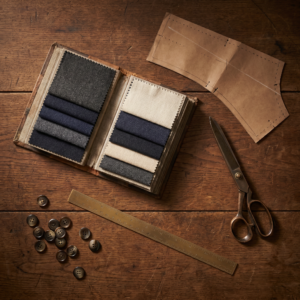
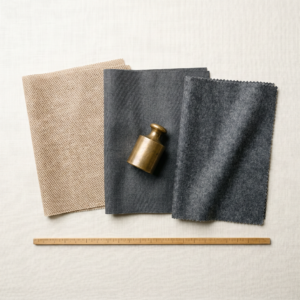
Cloth is usually the most variable cost in a custom suit, and the one you control most directly.
A standard two-piece suit takes roughly 3.5 to 4.5 meters of cloth, depending on your build, with patterned cloth requiring a little extra to match the pattern across the seams. A bigger or taller frame needs more, and adding a waistcoat for a three-piecesuit pushes the requirement higher still.
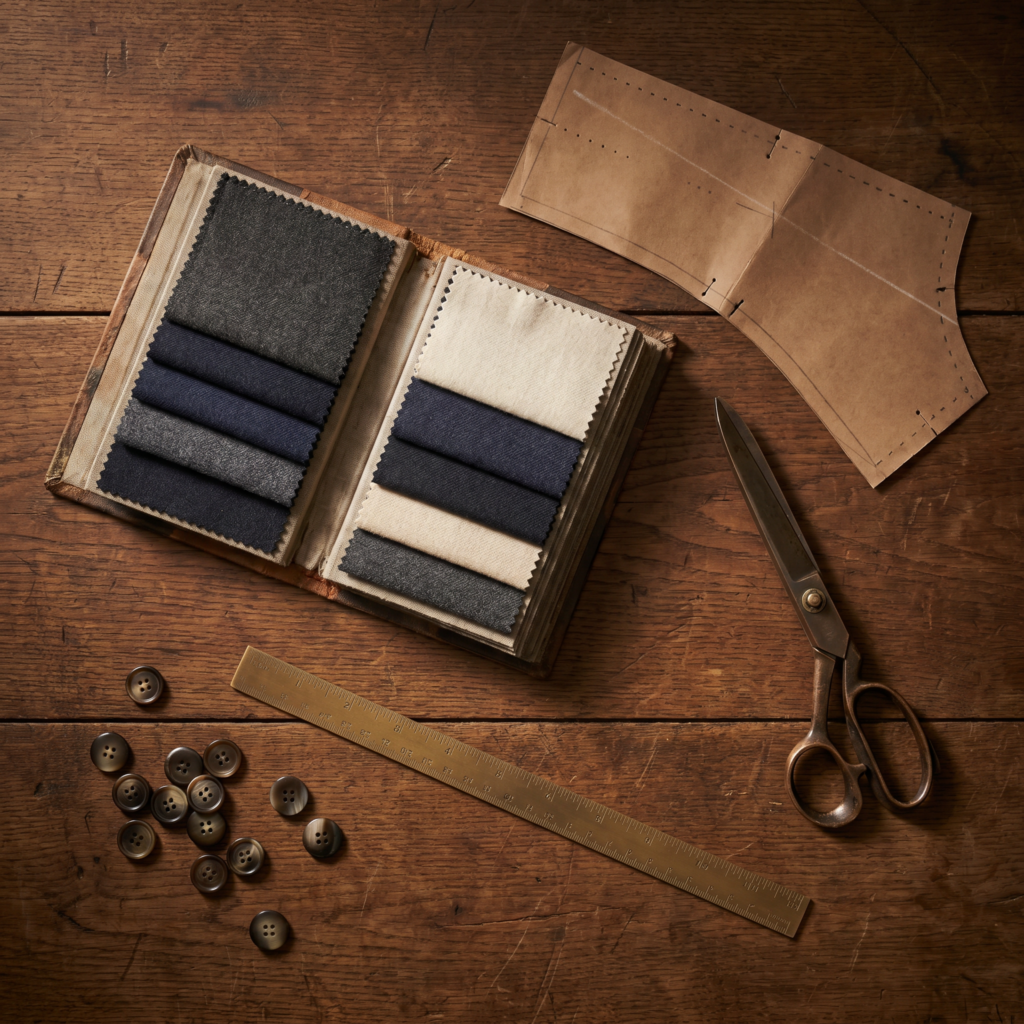
The price per meter ranges widely by mill, fiber, and weight. Entry-level suiting cloth sits at the low end. Mid-range English and Italian worsteds cost more. Top-tier cloths from the most famous mills can run a few hundred dollars per meter on their own. Because a suit uses several meters, a jump in cloth grade can swing the finished price by a few hundred dollars before any labor is counted.
This is why two suits built the same way can carry very different prices. The cloth is doing most of the talking. If you want to learn how weight and weave affect comfort and cost, our complete guide to business suit fabrics for Kansas City breaks it down.
Line 2: Trimmings (Canvas, Lining, Buttons, and Thread)
Trimmings are the interior structure of the suit, and the line most buyers overlook. They include:
- Canvas: an inner layer, traditionally made with horsehair and cotton, that gives the jacket its chest shape and lapel roll. More on this below, because it is the single most important construction decision.
- Lining: the inner fabric against your shirt. A quality Bemberg cupro lining, a breathable, silk-like fiber made from a natural cotton byproduct, is the standard choice and often the better functional one. Silk lining costs more and has a luxurious feel, but cupro is more durable and more breathable in daily wear.
- Shoulder pads and pocketing: the light structural pieces that shape the shoulder and finish the pockets.
- Buttons: natural horn or mother-of-pearl buttons cost more than composite plastic, and they look and wear better.
- Thread: a small but real cost, especially where buttonholes and edges are hand-finished.
None of these is a luxury frill. They are structural necessities, and cutting corners on them changes the suit you receive.
Why construction is the most important decision you will make:
Here is where Canvas earns its own spotlight. There are three ways to build the front of a jacket.
Fused construction glues the inner layer to the cloth with adhesive. It is fast and cheap and dominates mass production. The problem is that glue does not breathe and cannot mold to your body, and over time, it can bubble or separate across the chest, the telltale look of a worn-out fused jacket.
Half-canvas construction stitches a canvas layer through the chest and lapel, then uses fusing lower down. The chest breathes and rolls naturally. This is the sensible quality baseline.
Full-canvas construction stitches the floating canvas layer through the entire front of the jacket. It breathes, moves with you, and shapes itself to your body over months of wear. It takes several extra hours of skilled handwork, which is why it costs more, and it is the reason a canvassed suit can last many years while a fused one tires quickly.
The practical move: ask every tailor what construction method you get at each price point. The answer should shape your decision more than almost anything else.
Line 3: Cutting and Pattern Labor
The cutter is the person who takes your measurements, reads your posture, and creates your pattern. In made-to-measure, the cutter adapts an existing base pattern, called a block, to your measurements. In full bespoke, the cutter drafts a brand-new pattern for your body alone.
This is skilled, time-intensive work, and it is where mistakes are hardest to fix later. A well-cut pattern flatters almost any body. A poorly cut one creates problems that no amount of careful sewing can fully correct. You are paying for judgment here, not just time.
Line 4: Jacket (Coat) Making Labor
Coatmaking is the largest single block of labor in a suit. It covers assembling the jacket: joining the panels, setting the sleeves, stitching in the canvas, shaping the lapels, finishing the buttonholes, and pressing.
The hours rise sharply with the level of handwork. A mostly machine-finished jacket takes far fewer hours than a heavily hand-built one. A fully handmade coat, with a hand-padded lapel, hand-set sleeves, and hand-stitched buttonholes, can take many times the labor of a fused factory jacket. That labor gap, more than anything, is why serious tailoring costs what it does. Skilled hands working for many hours simply cost more than a machine working for a few minutes.
Line 5: Trouser Making Labor
Trousers get treated as an afterthought, but they carry real labor too. They take their own block of skilled hours to cut and assemble.
For a man who is hard to fit through the seat and thigh, which is exactly where off-the-rack fails most visibly, a well-cut pair of trousers is often where a custom suit pays off first and most obviously.
Line 6: Overhead, Consultation, Fittings, and Finishing
This is the category that confuses buyers, because it is rarely printed as its own line. It covers:
- The consultation, where the suit is designed, and you are measured.
- Fittings, where the suit is checked and adjusted on your body.
- Post-delivery alterations, which a reputable tailor includes within a defined window.
- Pattern storage, so your next suit starts from a better foundation.
- Pressing and finishing are the final steps that turn assembled cloth into a sharp garment.
- Business overhead, including space, trained staff, and insurance.
These are real costs, not margin. A shop that charges less by skipping fittings or charging for every adjustment is not giving you a deal. It is handing you a hidden cost in the form of a suit that fits imperfectly.
How a Custom Suit Price Stacks Up
The table below shows, in general terms, how the cost of a custom suit tends to distribute across the six lines. These are approximate market ranges to illustrate proportions, not a quote. At The Suit Doctor, made-to-measure runs roughly $800 to $2,500, and your actual price depends on the cloth and construction you choose. For the full picture, see our transparent custom suit cost breakdown.
| Cost line | Share of a typical custom suit | What moves it |
|---|---|---|
| Cloth | Often the largest single material cost | Mill, fiber, weight, pattern matching |
| Trimmings | Modest but structural | Canvas type, lining, buttons |
| Cutting and pattern | Meaningful skilled labor | Bespoke pattern vs adapted block |
| Jacket making | The largest labor block | Amount of handwork, canvas type |
| Trouser making | Smaller labor block | Handwork, fit complexity |
| Overhead and fittings | Built into the price | Number of fittings, finishing, alterations |
The proportions shift with every commission, but the pattern holds: cloth and labor dominate, and construction choices drive both.
The Few Decisions That Move the Price Most
Three choices account for most of the price variation. Understand them, and you can spend on purpose.
First, cloth choice. Moving up a grade or two in cloth is the most direct way to raise or lower the price, and it is the first thing an experienced eye notices. If you want the suit to look and feel special, this is the place to invest.
Second, canvas construction. Moving from fused to half or full canvas adds labor cost but extends the life of the suit by years. Over a decade of regular wear, the better construction is usually the cheaper choice per wear.
Third, the level of handwork. Each hand-finished detail, from a hand-padded lapel to hand-stitched buttonholes, adds skilled time. Those hours are real money, and they are also what make a fine suit look different up close and feel better through a long day.
What Off-the-Rack Leaves Out
For perspective, a typical off-the-rack suit contains a small amount of cloth, fused construction, and standard trimmings, assembled quickly in a factory. Much of its price goes to brand, retail space, logistics, and margin rather than to the garment itself.
A budget off-the-rack suit and a quality made-to-measure suit are not the same product at two prices. They hold materially different amounts of cloth, labor, and construction. An off-the-rack suit also usually needs alterations to fit well, often a few hundred dollars’ worth, and even then, alterations cannot fix structural problems at the shoulder or chest. A made-to-measure suit is built to your body from the start.
The Cost-Per-Wear Way to Think About It
Cost per wear is the honest way to judge a suit. Divide the price by the number of times you will wear it.
Picture a $1,500 made-to-measure suit worn twice a month. Over eight years, that is around 190 wears, which works out to roughly $8 perwearg. Now picture a cheaper fused suit worn at the same rate but replaced every few years as it tires. Its cost per wear often lands in the same range or higher, and that is before you count buying the replacement.
A well-built canvassed suit can outlast the cheaper one several times over while looking better at year ten than the fused suit did at year one. Spread across all those wearings, quality is frequently the less expensive path, not the more expensive one.
Consultation Versus Fitting: What Each One Is
These are two different appointments, and knowing the difference helps you use your time well.
The consultation is where the suit is designed. A good tailor asks what the suit is for, where and how often you will wear it, your climate, and your preferences on shoulder, lapel, pockets, trouser break, and lining. Measurements capture not just size but posture, since most bodies carry small asymmetries that a good pattern accounts for.
The fitting is where the suit is checked on your body. In made-to-measure, the first fitting happens after the suit is built, and the tailor reviews how it sits at the shoulder, drapes across the chest, and balances front to back. Adjustments are marked and made. A shop that offers only one fitting and charges for changes is shifting its production risk onto you.
The pattern is what you are really building over time. Once your measurements and posture notes are on file, every future suit starts from a better, faster, more accurate foundation. To get the most from your first appointment, our guide on how to prepare for your custom suit fitting in Kansas City covers what to bring and what to expect.
Frequently Asked Questions
Are consultations and fittings included in the price, or charged separately?
At a full-service custom tailor, they are included. They are real costs absorbed into the commission, not a courtesy and not an upsell. Some lower-cost providers do charge for extra fittings or for alterations after delivery, so confirm what is included before you commit.
Why do two suits at the same price from different tailors feel so different?
Because the same price can be split very differently across the six cost lines. One shop might use a basic cloth with fused construction and minimal fitting time. Another might use a better cloth with half-canvas construction and two fittings. Same price tag, genuinely different garments. Ask about the construction method and cloth, and the difference becomes clear.
Is there a price below which a custom suit is not really custom?
Roughly speaking, at the lowest end, you are often buying a factory-cut garment made to your measurements, frequently fused, with limited fitting. That is a real step up from off-the-rack for someone who knows his measurements, but it is not the same as a canvassed, properly fitted suit. Quality made-to-measure generally begins higher, and genuine bespoke with an original hand-cut pattern higher still.
What should I spend more on, clothes or construction?
Neither always wins. A fine cloth in fused construction will look tired sooner than a standard cloth in full canvas. A superbly cut and canvassed suit in an average cloth will still outperform a premium cloth that was poorly cut. The tiebreaker is how often you will wear it. For a once-in-a-while suit, lean toward cloth. For a suit you will wear weekly for years, lean toward construction.
Why does a three-piece suit cost more than a two-piece in the same cloth?
A waistcoat adds both cloth and several hours of skilled labor. There is no shortcut to making one well, so the extra cost is real, though it is smaller in made-to-measure than in full bespoke.
How does lining choice affect the price?
Lining is one of the most visible personal touches and one of the more affordable upgrades. Moving from a standard lining to silk adds a modest amount. A custom-printed lining, perhaps a color from a wedding palette or a personal pattern, is widely available and is one of the best-value ways to make a suit feel like yours.
Does it matter where the suit is actually made?
Yes. Labor priced for a skilled local or regional tailor is very different from labor in an offshore factory, and so is the oversight and consistency. Both can produce a wearable suit, but the hours invested and the quality control differ. When two tailors quote similar prices, asking where the suit is actually made is a useful diagnostic question.
Key Takeaways
Six real cost lines. A custom suit price splits across cloth, trimmings, cutting, jacket making, trouser making, and overhead. None of it is padding.
Cloth and construction lead. These two choices move both the price and the long-term value of the suit more than anything else.
Canvas beats fused for the long run. Full or half canvas costs more up front but breathes, shapes to you, and lasts far longer than fused construction.
Fittings are included in the value, not extras. A tailor who limits fittings or charges for post-delivery adjustments is lowering the value, not the price.
Cost per wear favors quality. A well-built suit worn for years often costs less per wear than a cheap suit replaced again and again.
Ready to Understand Your Own Commission Line by Line?
You now know what a tailor-made suit price actually contains, which decisions move it, and which trade-offs are worth making. The Suit Doctor builds custom and made-to-measure suits for Kansas City and is transparent about every cost line, from cloth to construction.
For the full picture on what drives the price, see our transparent custom suit cost breakdown, and for help choosing materials, our complete guide to business suit fabrics covers every option.
When you are ready to build, schedule your Kansas City consultation, and we will walk through every cost line with you before a single measurement is taken.
The Suit Doctor | Custom and Made-to-Measure Suits for Kansas City. Transparent pricing. Built to last.