It is one of the first questions grooms face after picking a suit: should everyone in the wedding party wear the same thing? Should you match your groomsmen exactly, or find a way to stand out? And if you do stand out, how do you keep the whole group looking cohesive instead of mismatched?
There is no single correct answer, and that is actually good news. The right approach depends on your wedding’s formality, your personal style, and how much visual distinction you want in your photos. This guide walks you through every option, from fully matched looks to completely individual styling, so you can make a deliberate decision instead of defaulting to whatever your rental shop recommends.
TLDR: Most Kansas City grooms in 2026 are choosing coordinated, not identical. The groom should be immediately recognizable in any photograph, but the distinction does not have to be dramatic. The strongest approach is usually a shared foundation (same color family, same formality level) with one or two deliberate details that set the groom apart. Read on for every strategy, ranked by how noticeable the difference is.
Why This Decision Matters More Than Most Grooms Realize
The groom-groomsmen coordination question is not just about personal preference. It directly affects how your wedding photographs read for the rest of your life.
When everyone in the wedding party wears identical attire, the eye struggles to identify the groom without context. The bride’s look provides the strongest visual anchor in most wedding photography, and if the groom blends into his wedding party, the photographs lose the natural focal point that should exist. A slight, deliberate distinction in the groom’s look draws the eye to where it belongs: the person standing at the altar.
The goal is not to outshine the wedding party. It is to be clearly identifiable in any frame, from wide ceremony shots to tight candid moments during the reception, without creating a visual break in the group’s overall cohesion.
2026 is accelerating this conversation. Grooms are moving away from fully uniform group looks and toward intentional personalization, with the group appearing coordinated rather than costumed.
The Three Approaches: Which One Fits Your Wedding?
Before getting into specific strategies, it helps to understand the three broad approaches and when each one works best.
Approach 1: Fully Matched
Everyone in the wedding party wears the same garment in the same color. The groom is distinguished only by small accessories like a boutonniere, a slightly fuller pocket square fold, or a different tie knot.
When it works:
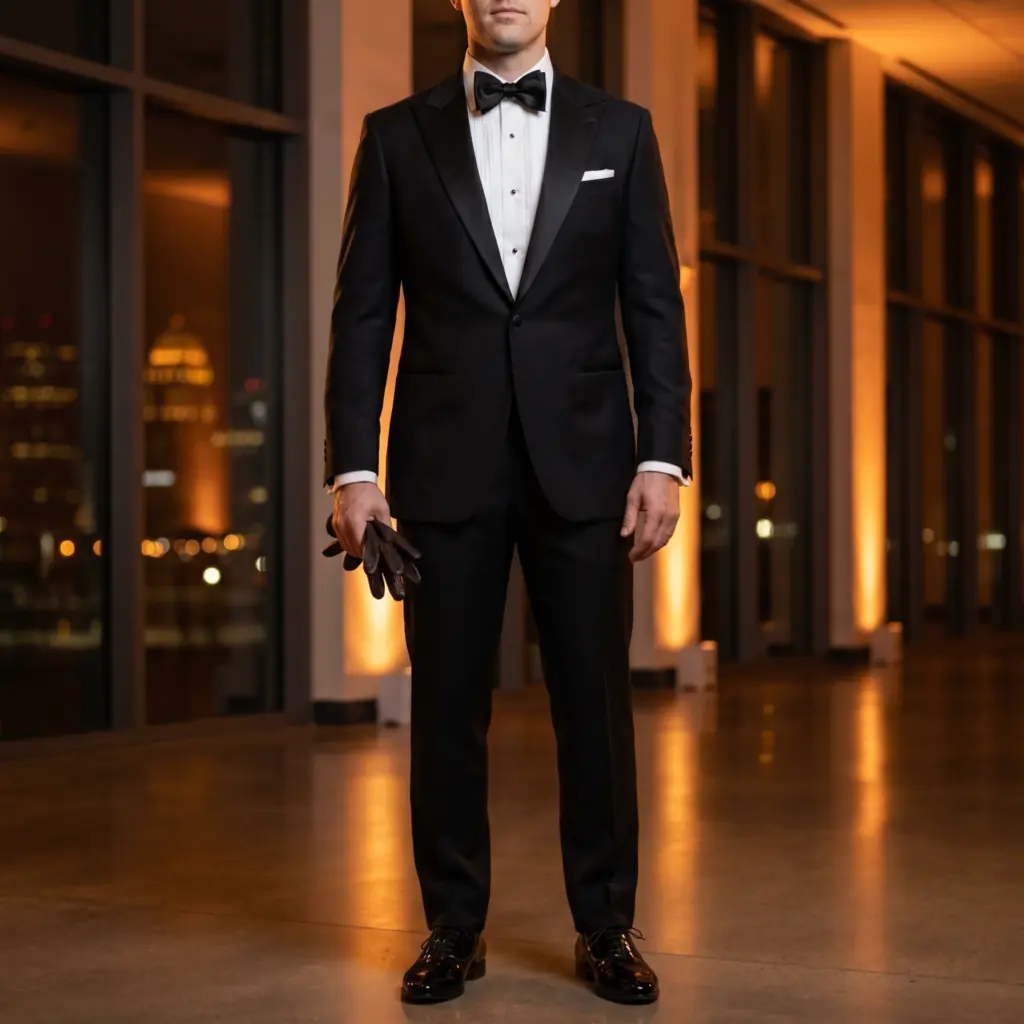
- Very formal weddings (black tie) where visual uniformity signals intentional formality
- Large wedding parties where coordination complexity is a genuine challenge
- When the groom genuinely prefers not to stand out sartorially and is comfortable letting the bride’s look provide the primary visual distinction
The risk: In candid shots and wider photos, the groom can blend into the group. If the only distinguishing element is a boutonniere, make sure it is visually substantial.
Approach 2: Coordinated but Distinct (Recommended for Most Grooms)
The groom and groomsmen share a common foundation (same color family, same formality level, same or similar fabric) but the groom has one or two deliberate differences that clearly establish visual hierarchy.
When it works:
- The majority of weddings across all formality levels
- When you want a cohesive group look without the groom disappearing into it
- When the wedding party has varying body types and you want everyone looking unified
The advantage: This is the approach that photographs best across the widest range of wedding styles. It gives the group a polished, intentional appearance while ensuring the groom is always recognizable.
Approach 3: Fully Individual
The groom’s look is completely separate from the groomsmen’s attire. Different garment, different color, different silhouette. The groomsmen’s looks may also vary from each other (the mix-and-match approach).
When it works:
- Smaller wedding parties where individual styling is logistically manageable
- Casual or destination weddings with a relaxed, personal aesthetic
- When the groom has a specific style vision that does not coordinate with group attire
The risk: Without a shared visual thread, the group can look assembled rather than coordinated. If you go this route, make sure there is a unifying element even if it is just color family or accessory coordination.
Strategies for Standing Out: From Subtle to Dramatic
Within the coordinated-but-distinct approach, there is a wide spectrum of how much the groom’s look diverges from the groomsmen’s. Here are the strategies ranked from least to most noticeable, with guidance on when each one works.
Level 1: Accessory Distinction (Most Subtle)
Same suit. Same color. Different accessories.
The most common and lowest-risk way to differentiate the groom is through accessories that only he wears or wears differently.
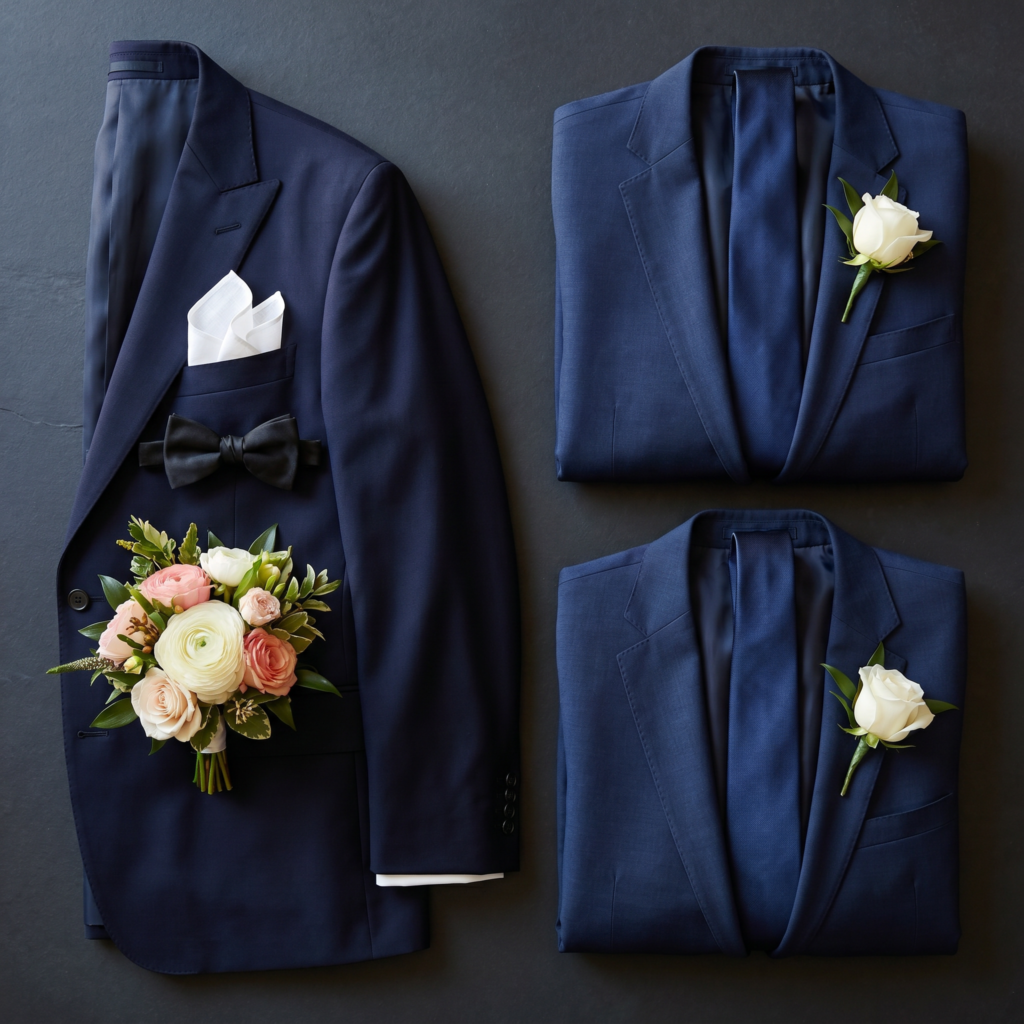
Boutonniere: The groom’s boutonniere should be slightly fuller or more elaborate than the groomsmen’s. If the groomsmen wear a single stem, the groom wears a small cluster. If the groomsmen wear a simple white accent, the groom incorporates a bloom from the bridal bouquet. This creates a visual connection between the groom and the bride that reads clearly in photographs.
Neckwear: Groom in a bow tie, groomsmen in long ties. Or groom in a patterned silk tie, groomsmen in solid ties. A different tie style or color is one of the simplest ways to mark the groom without changing a single piece of tailoring.
Pocket square fold: Groomsmen wear a flat presidential fold, groom wears a more elaborate fold that adds visual texture to his chest pocket.
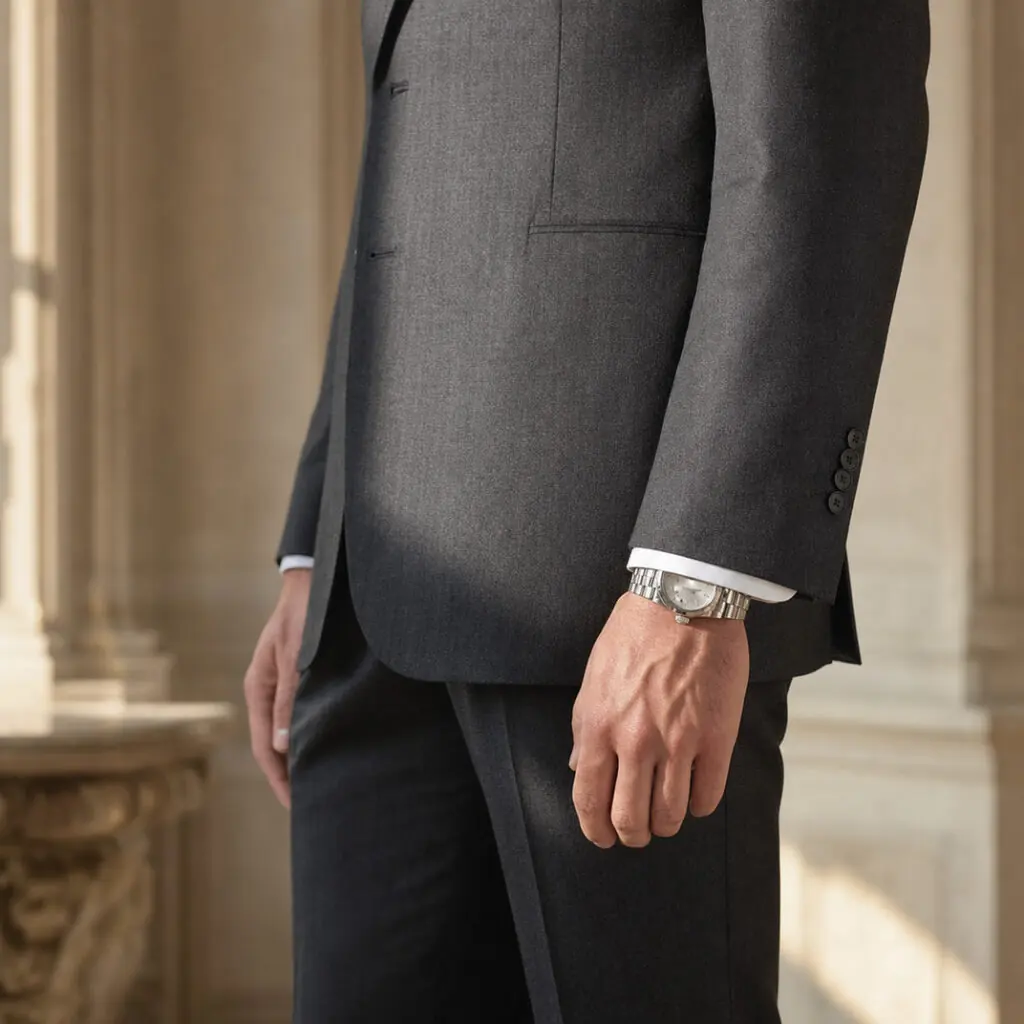
Lapel pin or accessories: Vintage cufflinks, a custom lapel pin, or a collar bar visible at the tie knot are small details that read as intentional and personal without requiring a different garment.
Best for: Black-tie and very formal weddings where garment uniformity is expected, or grooms who want a subtle distinction without a dramatic departure from the group look.
Level 2: Vest or Three-Piece Distinction
Want to see how this plays out in a real build? Explore our custom wedding suits page - it walks through fabrics, construction, and what to expect at your first appointment.
Same suit or tuxedo. Different layering.
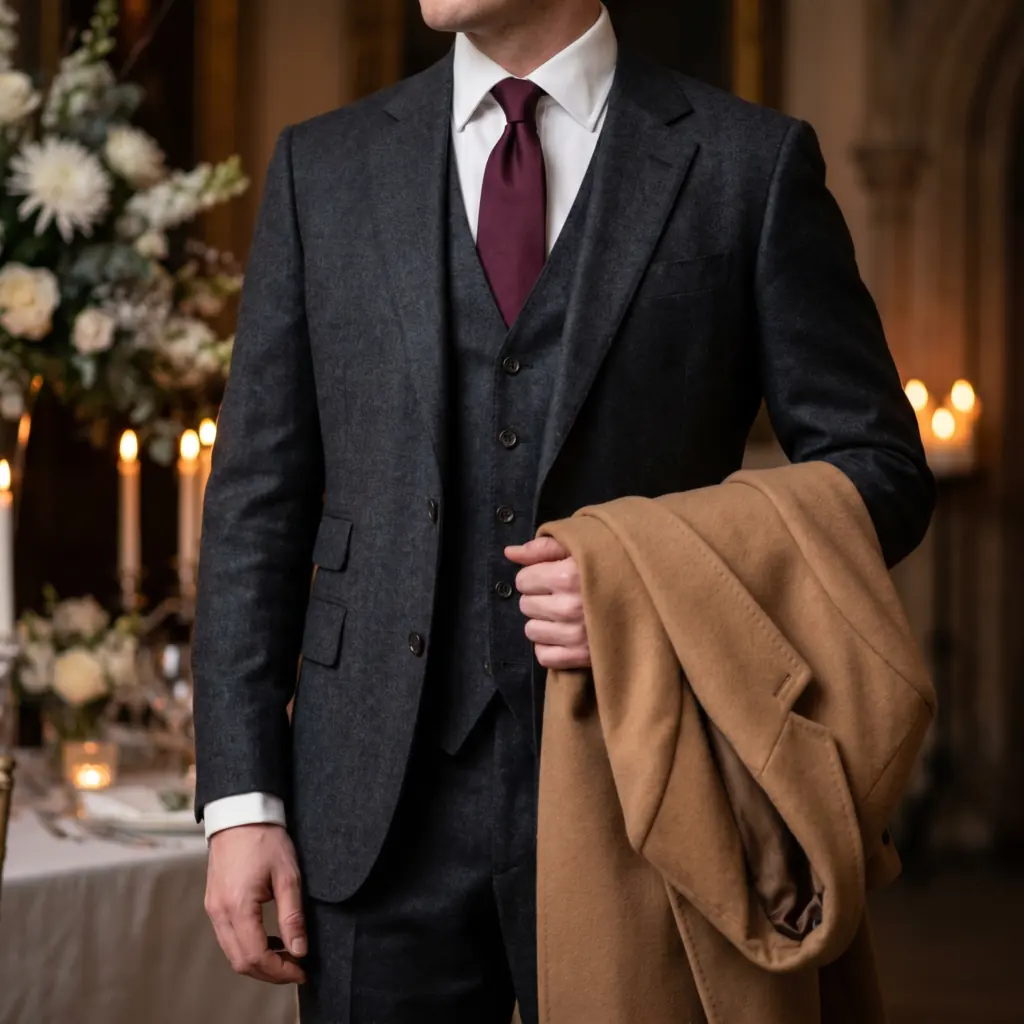
Adding a vest only for the groom is one of the cleanest visual differentiators available because it changes the chest silhouette significantly without requiring a different jacket or trouser. In jacket-off moments during the reception, the groom in a vest reads immediately as the principal figure while the groomsmen in shirts or two-piece suits look coordinated but distinct.
Execution tip: Match the vest fabric or color to the groomsmen’s suit to maintain a visual thread. A charcoal vest on a navy suit groomsman creates visual continuity, while the groom’s full three-piece look establishes hierarchy.
Best for: Semi-formal to formal weddings, grooms who want a meaningful distinction without a full garment change, receptions where jackets will come off.
Level 3: Tie or Neckwear Contrast
Same suit, different neckwear color or style.
Going beyond a subtle tie variation to a fully different color or neckwear style creates a more visible distinction that reads clearly even in wide group shots. The groom in a burgundy tie standing among groomsmen in coordinating navy ties is immediately recognizable without the group looking mismatched.
Coordination rule: The groom’s neckwear color should connect to the wedding’s overall palette. If the bridesmaids are in dusty rose, a groom in a dusty rose or deep mauve tie creates a visual bridge between the two sides of the wedding party that photographs intentionally.
Level 4: Lapel Distinction
Same color and fabric. Different lapel style or facing.
Upgrading the groom to a peak lapel jacket while the groomsmen wear notch lapels is a clean, structured way to create visual hierarchy without changing the garment’s color or weight. Peak lapels add breadth and authority to the silhouette. The distinction reads clearly in close-up shots and full-length photographs.
A related approach: tuxedo lapels faced in satin for the groom while the groomsmen wear the same jacket in a matte version of the same fabric. The difference is subtle in person and dramatic in photographs under event lighting.
Best for: Grooms who want a meaningful garment distinction without a full color change, formal and semi-formal weddings.
Level 5: Color Shift
Same fabric, same silhouette. Different shade or color.
This is the approach with the strongest photographic impact while maintaining visual cohesion. A shade shift, like midnight navy for the groom against standard navy for the groomsmen, creates natural depth in photographs without anything looking forced. The groom’s slightly deeper or richer tone makes him the focal point without creating a visual break.
Strong combinations for 2026:
- Groom in midnight navy, groomsmen in medium navy
- Groom in charcoal, groomsmen in medium gray
- Groom in black, groomsmen in charcoal
- Groom in deep burgundy, groomsmen in gray or navy
- Groom in deep forest green, groomsmen in soft sage or olive
The rule of thumb: The groom should be in a slightly deeper or richer version of the groomsmen’s color, never lighter. A lighter color reads as less formal and can inadvertently reverse the visual hierarchy.
Level 6: Different Garment Category
Groom in a tuxedo, groomsmen in suits. Or groom in a three-piece suit, groomsmen in two-piece suits in a coordinating color.
This is the most visible distinction and requires the most intentional coordination to execute cleanly. When the groom is in a tuxedo and the groomsmen are in dark suits, the color and fabric connection between the two looks is what holds the group together. A black tuxedo groom with charcoal-suit groomsmen reads as elegantly tiered. A navy tuxedo groom with light gray suit groomsmen can look like two different weddings.
Coordination principle: Maintain a shared color thread even when the garment categories differ. Groom in a black tuxedo works best with groomsmen in black or deep charcoal suits. Groom in a navy tuxedo works with navy or dark gray suit groomsmen.
Working through every coordination decision in person is faster than guessing on your own. The Suit Doctor’s Kansas City custom wedding suit consultation walks you through every level with real fabric swatches in hand.
2026 Specific: What Kansas City Grooms Are Choosing This Year
Several clear patterns are emerging from 2026 wedding consultations that are worth knowing before you settle on an approach.
Earthy tones are replacing navy as the default: Sage, olive, warm stone, terracotta, and camel are showing up frequently as primary colors for both groom and groomsmen looks, particularly for outdoor and garden weddings. These palettes create beautiful layered distinctions because the earthy tone family contains enough natural variation to differentiate the groom from the party without a dramatic color change.
Mix-and-match groomsmen with a unified groom: Some 2026 couples are allowing groomsmen to wear suits in the same color family but with individual variations in shade or accessory, while the groom wears a completely unified, custom-fitted look that stands clearly apart from the group’s intentional variety.
The double-breasted groom: Double-breasted jackets are having a significant 2026 moment. For grooms who want a dramatic garment-level distinction without changing color, a double-breasted jacket for the groom with single-breasted suits for the groomsmen creates an unmistakable silhouette difference that reads clearly from any distance.
Tonal dressing: Grooms are increasingly building head-to-toe tonal looks (shirt, tie, suit, and accessories all within one color family) while the groomsmen wear a coordinating but contrasting palette. This creates a visual separation through styling sophistication rather than color contrast.
Coordinating with the Bridal Party
The groom-groomsmen conversation does not exist in isolation. The men’s attire needs to coordinate with the bridal party’s look, and the visual relationship between the two sides sets the overall tone of the wedding’s aesthetic.
The formality rule: The men’s attire should match the formality level of the bridesmaids’ dresses. If the bridesmaids are in floor-length formal gowns, the men should be in dark suits or tuxedos. If the bridesmaids are in shorter cocktail dresses, the men have flexibility to choose lighter colors and more relaxed suit styles.
The color relationship: The men’s suits do not need to match the bridesmaids’ colors, but they should complement them. A useful approach: the groomsmen’s tie or pocket square color echoes the bridesmaids’ dress color, creating a visual thread across both sides of the wedding party without requiring exact matching.
Coordinate with your partner early. Your partner likely has a vision for how the full wedding party looks together, and getting that alignment before you commit to a garment color or style avoids surprises that are expensive to fix.
Practical Coordination: Managing the Wedding Party Process
Getting five or six people measured, ordered, and fitted on the same timeline requires planning. Here is what consistently works.
When you're ready to put this into practice, you can book a mobile fitting at your home or office with Brandon and get measured in person.
Start early. Six months before the wedding is the right window to begin. By three to four months out, everyone should have placed their order. Starting late means limited fabric availability, rush fees, and the stress of chasing down groomsmen the week before the wedding.
Designate one point of contact. Choose your best man or a detail-oriented groomsman to manage communication with the rest of the party. Group text threads with clear deadlines and explicit instructions significantly reduce the number of stragglers.
Decide who pays for what upfront. Some grooms cover the full cost for groomsmen. Others ask groomsmen to cover their own. Some split accessories. Whatever the arrangement, communicate it clearly before anyone places an order to avoid awkward conversations later.
Out-of-town groomsmen: Mobile fitting services can schedule a group session at a central location, like your home or the best man’s place, to get everyone measured in one visit. For groomsmen who cannot travel in before the wedding, remote measurement coordination handles the logistics without requiring an in-person visit.
For a deeper breakdown of coordination decisions for the full party, see The Suit Doctor’s guide to coordinating groomsmen suits in Kansas City.
FAQ: Groom and Groomsmen Coordination
Q: Should the groom always look different from the groomsmen?
Not always, but usually yes. At a minimum, the groom should have one distinguishing element, whether a boutonniere, a different tie, or a vest, that makes him identifiable in group photographs. Fully uniform looks can work at black-tie events where formality is the priority, but even then a boutonniere is standard practice for identification.
Q: Is it okay for the groomsmen to look better dressed than the groom?
No. The groom should always be at least as formally dressed as his groomsmen, and typically slightly more so. A deeper color, a more structured garment, or an additional layer like a vest establishes the visual hierarchy. If the groomsmen are in tuxedos, the groom should not be in a suit.
Q: What is the easiest way to stand out without a different suit?
Neckwear is the fastest answer. A bow tie on the groom while groomsmen wear long ties, or a distinctly patterned silk tie for the groom while the groomsmen wear solids, creates a clear, immediate distinction that requires no changes to the garment itself.
Q: What if groomsmen have very different body types?
Custom and made-to-measure suits solve this problem directly. Each groomsman is measured and fitted individually, so the same garment design looks correct on very different body types. Off-the-rack suits in different sizes create visual inconsistencies in photographs because the fit varies from person to person.
Q: How coordinated do the groomsmen need to be with each other?
Fully matching is most common and cleanest for photographs, but mix-and-match approaches are increasingly popular in 2026. If you go mix-and-match, establish a shared element, whether a color family, a specific tie, or a pocket square, that unifies the group.
Q: Should the groom’s outfit coordinate with the bridesmaids’ dresses?
It should complement them in formality and color family without necessarily matching. The most common connection point is the neckwear: a groomsmen tie or pocket square that echoes the bridesmaids’ color creates a visual thread without requiring full coordination.
Q: What does The Suit Doctor recommend for most Kansas City grooms?
A coordinated-but-distinct approach using a shared color and formality foundation, with the groom differentiated through a lapel distinction, vest, or subtle color shift. During your consultation, the team works through your wedding’s specific aesthetic to find the level of distinction that photographs best for your particular combination of venue, formality, and party size.
Q: Can I have groomsmen in different colors from each other?
Yes, and this is a genuine 2026 trend. Mix-and-match approaches where each groomsman wears a slightly different shade or texture within a coordinated color family can look visually interesting and modern in photographs. The key is establishing a shared thread, whether a specific tie, a unified pocket square, or a consistent color family, so the group reads as intentional rather than accidental.
Key Takeaways
- Coordinated, not identical is the dominant 2026 approach. The group should look like a cohesive party, not a uniform.
- The groom should always be visually identifiable. At minimum, a boutonniere provides distinction. A vest, lapel change, or color shift is stronger.
- Deeper color for the groom, not lighter. The groom should wear a slightly deeper or richer version of the groomsmen’s color to establish visual hierarchy naturally.
- Accessories are the easiest lever. Neckwear style, boutonniere scale, and pocket square fold are quick, low-cost ways to distinguish the groom without changing the garment.
- Start six months out. Coordination across multiple people requires time. Everyone should be ordered and measured by three to four months before the wedding.
- Coordinate with both sides. The men’s attire needs to work with the bridesmaids’ look, not just internally. Establish that coordination early before anyone commits to a color.
- Custom fit matters for the whole party. Off-the-rack suits in different sizes look inconsistent in photographs. Made-to-measure suits for each groomsman ensure the group looks cohesive regardless of body type.
Build the Full Look in Kansas City
You now have a complete framework for deciding whether to match, coordinate, or fully individualize the groom and groomsmen looks. The right answer is the one that serves your wedding’s aesthetic, photographs well across all moments of the day, and makes every person in the party look like they belong there.
The Suit Doctor handles the full wedding party process for Kansas City grooms, from the groom’s custom build through groomsmen coordination, fittings, and timeline management.
The Suit Doctor offers:
- Custom and made-to-measure garments for the groom and every groomsman
- In-person fabric and style consultations to work through the full coordination strategy
- Mobile fitting services for out-of-town groomsmen or group sessions at a central location
- Timeline management so every order is placed, produced, and fitted before the wedding
- Accessories and styling guidance to complete each look
Ready to start? Schedule your Kansas City wedding party consultation with The Suit Doctor.
The Suit Doctor | Custom and Made-to-Measure Suits for Kansas City Grooms and Groomsmen Who Take Their Wedding Day Seriously.
Get measured for a suit built around how you actually live.
Fittings for grooms, groomsmen, and the whole wedding party.