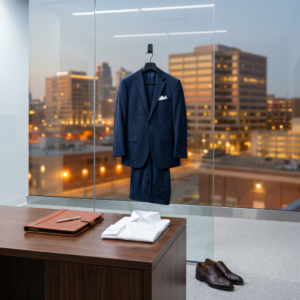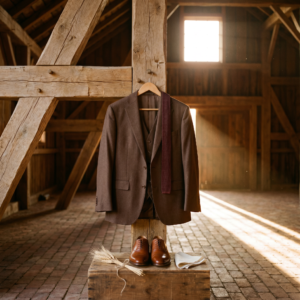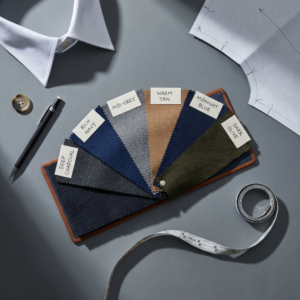
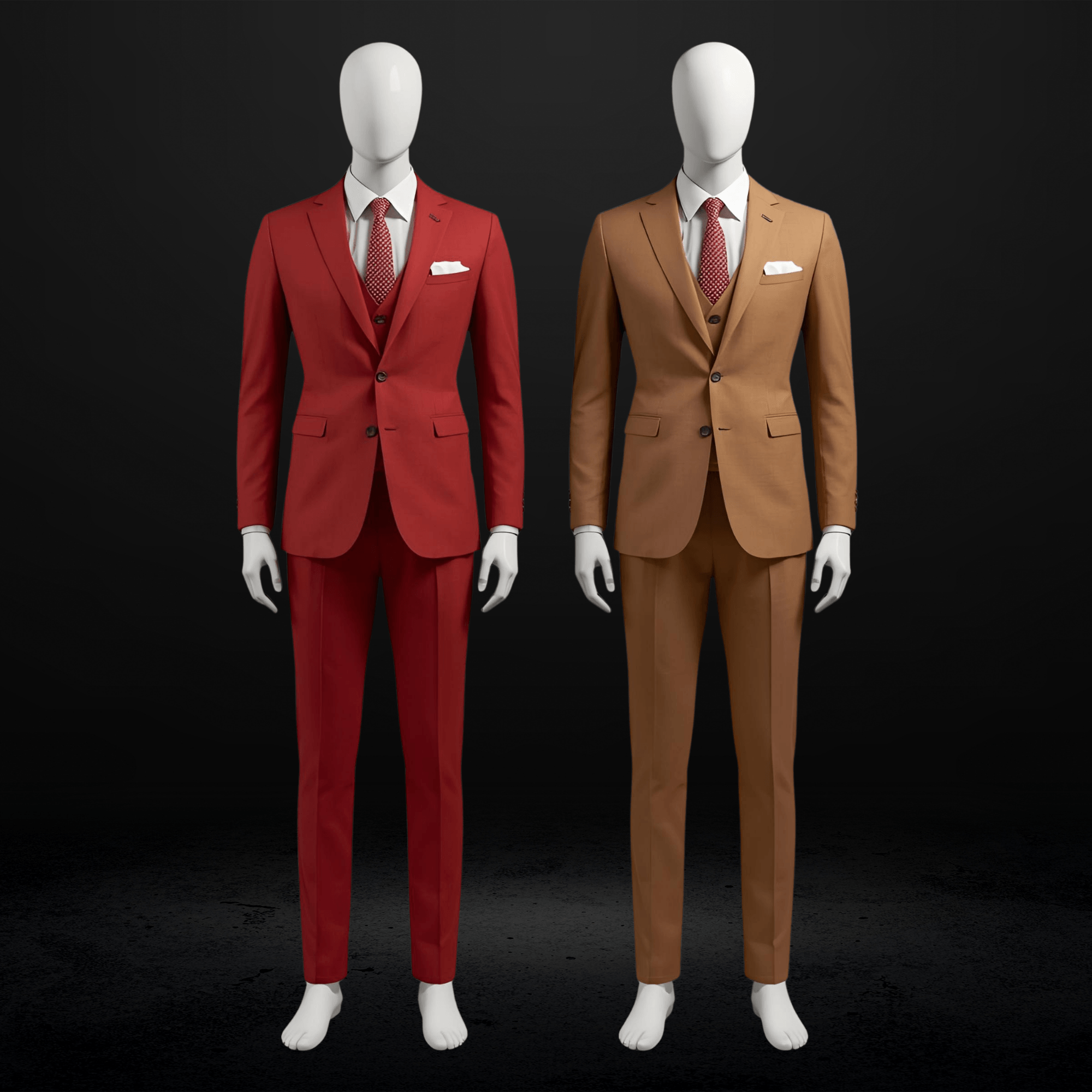



A refined farmhouse wedding at Mildale Farm or another Kansas City barn calls for a look that sits between a casual open collar and a stark black tuxedo. This guide breaks down the venue facts you can trust, the colors and fabrics that photograph best in natural light, how to coordinate with your groomsmen, and why a suit cut to your body matters when the camera never stops.
TLDR: For a rustic Kansas City wedding, choose a textured suit in an earthy tone like tan, brown, olive, or warm grey, and build it as a three-piece so your vest sets you apart from the groomsmen. Match the fabric to the season, lean lighter for hot months, and lace up brown leather. Read on for the venue details, a groom versus groomsmen table, and a timeline that keeps you stress free.
Why the Farmhouse Groom Is Its Own Style
You picked a barn for a reason. The wood, the brick, the open fields, and the long golden light at sunset all say something warmer than a downtown ballroom. Your clothes should say the same thing.
The farmhouse groom is not the black-tie groom, and he is not the guy in chinos and an open collar either. He lands in the middle. He wears a well-made suit with real texture and an earthy color that belongs in a field at six in the evening. He looks pulled together without looking like he wandered in from a corporate gala.
That middle ground is where most grooms get stuck. Go too formal, and you fight the venue. Go too casual, and you disappear into the guest list. The rest of this guide shows you how to hit the target, starting with the place that defines the look for many Kansas City couples.
Mildale Farm: What Makes It Distinct
Mildale Farm sits at 35250 W. 199th Street in Edgerton, Kansas, just southwest of Kansas City. It is owned and managed by the Johnson County Park and Recreation District, which makes it a public rental property rather than a full-service private estate.
The grounds cover 22 rolling acres and adjoin more than 600 acres of parkland, so the views stay open and green in every direction. Johnson County Park and Recreation lines the property with approximately five miles of striking three-rail white fencing, and you enter on a 20-foot-wide primary driveway that meanders through the property, featuring roughly 2,500 linear feet of antique brick paving stones. The property also includes nine man-made fishing ponds, including two that are between five and seven acres, which give you water and reflected light for photos.
The centerpiece is the barn. It runs 8,672 square feet, and it is built with peg construction that uses very few mechanical fasteners, topped with soaring beams, a center cupola, and dormer windows. The floor is hand-laid brick. That mix of timber and brick is exactly the backdrop that rewards a textured, earthy suit and punishes a flat, shiny one. Receptions are held in the barn, and the space can be partitioned for smaller gatherings.
Worth knowing for your comfort planning: the barn’s own equipment list from Johnson County Park and Recreation includes central heating and air-conditioning. That is a real advantage in a Kansas City summer, and it changes your fabric math, which we cover below.
Two on-site homes round out the property. The Estate House is a 3,354-square-foot Williamsburg-style brick home that accommodates up to 8 overnight guests, which makes a great groom’s getting-ready base. The Cottage House is a 1,249-square-foot home that accommodates up to 4. A full-property rental package runs Thursday through Monday, which is why so many couples turn the wedding into a long weekend.
A few planning notes. Mildale’s official facility listing puts maximum occupancy at 300, so plan your guest list with that ceiling in mind. (Some third-party listings cite up to 350, so confirm the current number directly.) The barn comes stocked with hundreds of padded chairs and a range of tables, but it is a rental property, so you bring in your own caterer and most vendors. Ceremonies can happen outdoors on the grounds or inside the barn if the weather turns. For the current rate sheet and your date, you book directly through Johnson County Park and Recreation.
The Wider Kansas City Rustic Venue Landscape
Mildale is not your only option. Kansas City has a deep bench of barns and farm estates, and your fabric and color choices shift a little depending on where you land. Here is an honest look at a few well-known names, described as venues rather than style authorities.
White Iron Ridge, Smithville, Missouri. This is the upscale, modern end of the barn spectrum. The venue’s own marketing describes a gambrel barn design that blends elegant lines with urban iron features, expansive windows, soaring arched ceilings, and iron chandeliers. It offers indoor and outdoor ceremony options plus on-site lodging, including a honeymoon suite and overnight guest suites. The venue accommodates large weddings, though it does not publish a single fixed guest count on its own website, so confirm capacity directly. The polished, light-filled interior leans your look slightly dressier. Zola
The Pearl at Crawford Farm, Hamilton, Missouri. About an hour north of Kansas City, The Pearl is a handcrafted barn modeled on a mid-1800s family barn, built with rough-sawn oak timbers and wooden pegs. It features a tall vaulted ceiling, a wrap-around loft, a timber staircase, and iron chandeliers. The family runs it as an all-inclusive, relaxed weekend venue. The dark oak interior is warm and cozy, which makes earthy and mid-tone colors sing.
Thompson Barn, Lenexa, Kansas. Operated by the City of Lenexa on the historic Lackman-Thompson Estate, this is a renovated barn with a main hall, meeting rooms, a glass foyer, and a brick patio, plus a historic farmhouse and garden on the grounds. It suits intimate to mid-size weddings and is known as an affordable, flexible, bring-your-own-vendor space. The Knot
Alexander Majors Barn, Kansas City, Missouri. This historic barn shares grounds with the 1856 Alexander Majors House and is run by a nonprofit museum. The indoor rental space is 2,592 square feet and holds up to 175 guests, with temperature control available and a do-it-yourself rental model. It gives you genuine history and a central city location.
Serendipity Farm and Vine, Stilwell, Kansas. A vineyard, tasting room, and event space just east of the Overland Park Arboretum, Serendipity offers a brown barn, a large white reception tent, vineyard and tree-line backdrops, and a She Shed for getting ready. Vineyard settings reward soft, natural tones. Serendipityfarmandvine
Eighteen Ninety, Platte City, Missouri. Set on a historic 16-acre estate dating to 1872, this venue pairs a restored Victorian house with a modern climate-controlled reception hall and a cocktail barn, plus indoor and outdoor ceremony options. The Hall seats up to 300 and glows under a dozen chandeliers, and there is a dedicated groom’s quarters. It can run modern, elegant, or rustic depending on how you style it.
Across all of these, the same style logic applies. Read the room, then dress to it.
The Refined Farmhouse Look, Defined
Here is the core of your decision: color first, fabric second, layering third.
Color That Photographs Well
Natural light in a barn or a field is warm and uneven. Earthy colors live in that light. Stark black does not, and it tends to read as a void in outdoor photos.
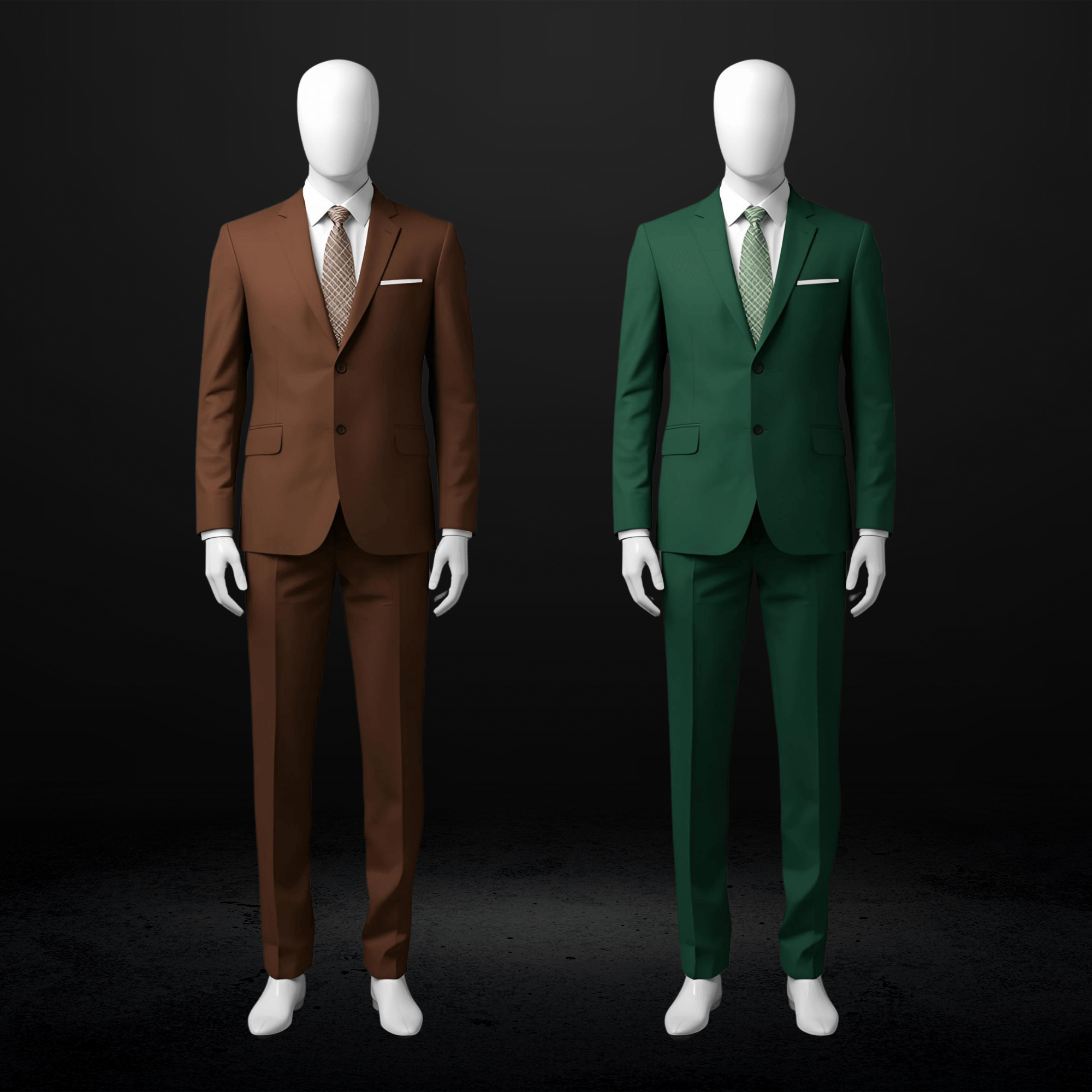
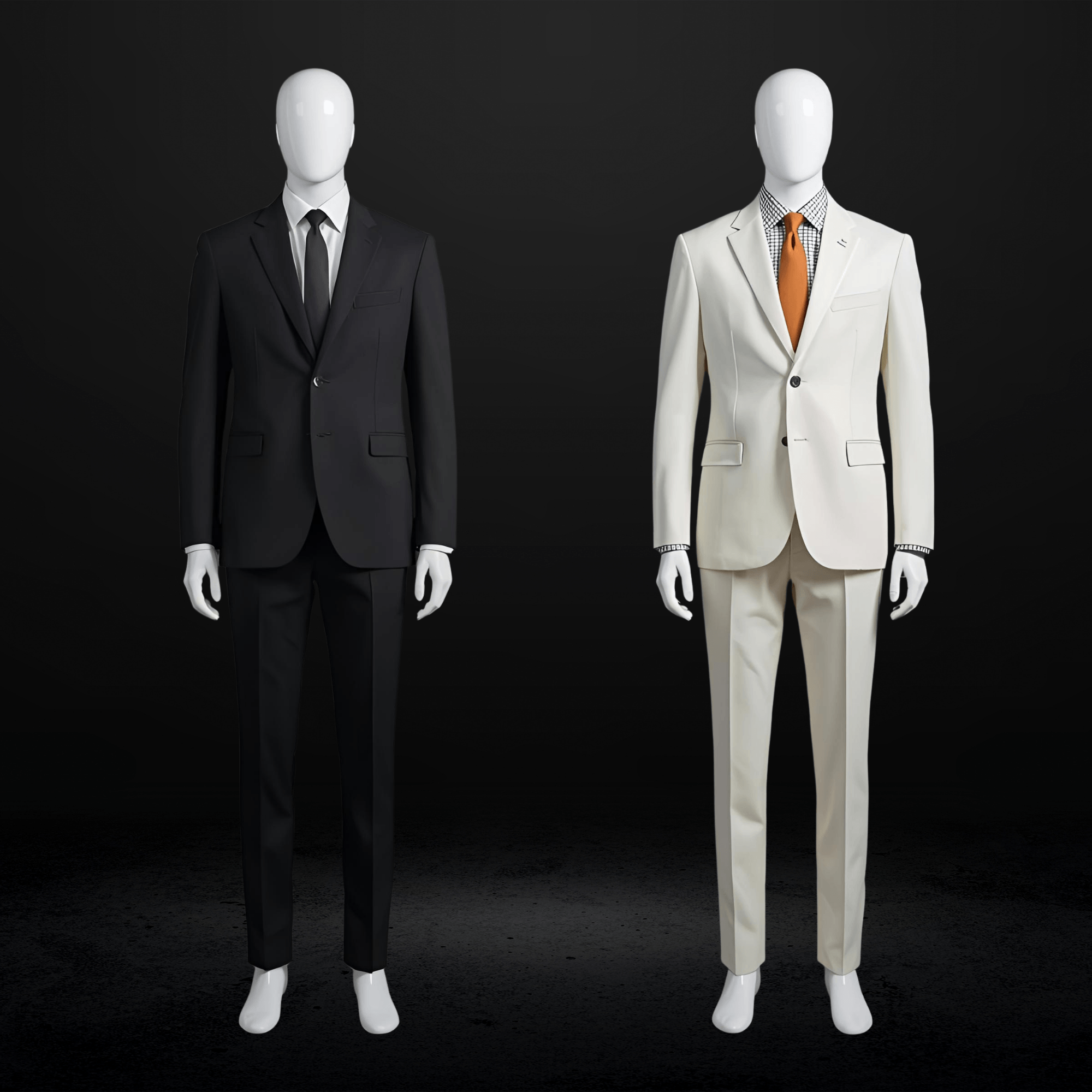
Your strongest groom colors for a rustic Kansas City wedding are tan and camel, chocolate and medium brown, olive, and a warm or heather mid-grey. Navy is your more formal option and a safe pick if you want something a touch dressier that still photographs cleanly. Save true black for an evening black-tie event, not a sunny field.
If you are choosing between a groom suit and a tuxedo for the day, our guide on how to choose between a groom suit and a tuxedo walks through when each one fits the venue and the formality.
Fabric That Belongs in a Barn
Fabric is where the farmhouse look really comes alive, because texture is the whole point. A few terms are explained the first time you meet them.
Worsted wool is the smooth, tightly finished cloth used in most city business suits. It reads sharp and urban, which is exactly why a fully smooth worsted can feel a little out of place in a barn.
Tweed is a rugged, textured wool that came from the British and Irish countryside. It is woven from thick, carded yarns and often shows a pattern. Herringbone is a pattern of slanted lines that form rows of small V shapes, like a fish skeleton. Houndstooth is a broken check with jagged points. Both patterns are classic tweed looks. Tweed is heavier and warmer, so it is best for fall, winter, or a climate-controlled space in spring.
Flannel is wool that has been brushed to raise a soft, slightly fuzzy surface called a nap. It feels cozy, drapes well, and comes in great earthy tones. Like tweed, it is a cooler-weather fabric.
Hopsack is a loosely woven wool with a slightly open, basket-like surface that breathes well and adds subtle texture without much weight. Tropical wool is a lightweight, high-twist worsted woven with an open structure so air passes through it. It is the workhorse for hot-weather tailoring.
For warm months, look at tropical wool in roughly a 9 to 10 ounce weight, or a wool-linen or wool-cotton blend. These breathe, hold a little texture, and resist looking flat. For cool months, tweed and flannel are your friends. Avoid heavy tweed or thick flannel in a hot, non-air-conditioned barn, because you will overheat and your photos will show it.
If you want to go deeper on weaves and what they mean for comfort, see our complete guide to business suit fabrics explained, and if fabric labels confuse you, here is what the numbers on your suit actually mean.
Layering: The Three-Piece Silhouette
A waistcoat, also called a vest, is the third piece in a three-piece suit. It is the single most useful tool the farmhouse groom has. A three-piece suit is the signature rustic silhouette. It looks complete even when you take your jacket off for the reception, and it gives you a way to stand apart from your groomsmen. XSuit
You can match the vest to the suit, choose a contrast vest in a complementary tone, or pick a knitted wool vest for extra texture. Any of those reads intentionally and a little dressed up, which is exactly the tone you want.
If you have never been measured for custom tailoring, our short guide on how to prepare for your custom suit fitting tells you what to bring and how to get the most from the appointment.
Coordinating With Your Groomsmen
The goal is a wedding party that looks like a team, with you clearly out front. Two rules make that easy.
First, pick one anchor color for the groomsmen and keep them in it. Second, set yourself apart with a different element, not a different planet. You can differentiate by adding a vest that your groomsmen do not wear, by shifting your shade slightly within the same color family, or by choosing a more textured cloth for your own suit.
Avoid putting two suit colors too close in value next to each other, because the camera will blend them into a muddy match that looks like a mistake rather than a choice. Create contrast through tone, texture, or a small detail instead.
Here is a simple set of combinations that work for a rustic Kansas City wedding.
| Groom wears | Groomsmen wear | How the groom stands out |
|---|---|---|
| Tan three-piece, knitted vest | Tan two-piece, no vest | Vest plus added texture |
| Chocolate brown three-piece | Tan or camel two-piece | Deeper shade, same family |
| Olive suit, contrast vest | Olive suit, matching vest | Contrast waistcoat only |
| Heather mid-grey, herringbone | Solid mid-grey | Pattern versus solid |
| Navy three-piece | Mid-grey two-piece | Richer color plus the vest |
Order your own suit first, so you lock in the look you love, then bring the groomsmen in to echo it.
Accessories That Finish the Look
Small choices carry a lot of weight in close-up photos.
Shoes. Lace up leather in cognac, tan, chocolate, or brown. A leather Chelsea boot is a great rustic option and handles uneven ground well. Skip black dress shoes outdoors and skip casual suede loafers. Remember,r you will be walking on grass and gravel, so break the shoes in first.
Neckwear. A knitted wool tie or a slim silk tie in an earthy shade looks right at home. Think burgundy, rust, burnt orange, forest green, or a tonal brown. A wool or cotton bow tie also works if that is your style.
Pocket square. Keep it simple with linen or cotton in ivory or ecru. If you are wearing a boutonniere, a plain square lets the flower lead.
Boutonniere. Go natural. Wildflowers, dried grasses, or eucalyptus suit the setting far better than a glossy hothouse rose.
Watch. A leather-strap watch finishes the outfit and photographs well on a raised toast.
Kansas City Weather and Season
Kansas City summers run hot. The National Weather Service office in Kansas City and Pleasant Hill lists July normal maximum temperatures, based on the 1991 to 2020 period, at 87 degrees early in the month, rising to 89 degrees by mid-to-late July, and humidity makes the air feel warmer than the thermometer reads. That is the single biggest factor in your fabric choice for a June, July, or August wedding.
If your reception space is air-conditioned, like the barn at Mildale Farm, you gain flexibility, because you can wear a touch more weight indoors. If your ceremony is outdoors at midday in July, lean into a breathable tropical wool or a wool-linen blend and skip the heavy layers. For spring and fall, you have the widest range, and that is when tweed and flannel really shine. Winter weddings welcome the warmest, most textured fabrics you can find. When in doubt about a specific venue’s climate control, confirm it with the venue before you commit to heavy cloth.
Why Made-to-Measure Matters for Wedding Photos
Wedding photographers shoot in bright, even, natural light, and they shoot a lot. That light is honest. It shows every fit problem an off-the-rack suit hides under store fluorescents: a sleeve that runs long, a collar that gaps off the neck, a shoulder that buckles.
Made-to-measure suits are cut to your body and your posture, so those problems mostly disappear before they reach the camera. For a day that lives forever in photos, that difference is worth real attention. The Suit Doctor builds expert-guided made-to-measure suits, and its made-to-measure pricing generally frames between roughly $800 and $2,500, depending on fabric and construction. For the full picture of what drives the number, read our transparent breakdownof thee custom suit cost.
On timing, start about four to five months before the wedding. That gives you room for two unhurried fittings without panic. Collect every groomsman’s measurements before production begins so the whole party stays on one timeline. Kansas City made-to-measure production typically runs a few weeks once your order is placed, depending on the maker, so the early start protects you from any surprises.
Frequently Asked Questions
What color suit is best for a rustic Kansas City wedding? Earthy tones win in barn and field light. Tan, camel, chocolate, medium brown, olive, and warm or heather mid-grey all photograph beautifully. Navy is your dressier option. Avoid stark black outdoors, because it tends to read as a flat shape rather than a color in natural light.
Can I wear a tuxedo to a barn wedding? You can, but it usually fights the setting. A barn or farm reads relaxed and warm, and a black tux reads formal and urban. A three-piece suit in a textured, earthy fabric almost always suits the venue better. If you want help deciding, our groom suit versus tuxedo guide lays out the trade-offs.
Is tweed too hot for a summer wedding? Usually, yes. Tweed and heavy flannel are cool-weather fabrics. For a hot Kansas City summer, especially outdoors, choose a lighter tropical wool around 9 to 10 ounces or a wool-linen blend. Save tweed for fall, winter, or a climate-controlled space in spring.
How do I stand out from my groomsmen without clashing? Keep everyone in one anchor color, then set yourself apart with a single clear move. Add a vest the groomsmen do not wear, shift to a slightly deeper shade in the same family, or choose a more textured cloth for your own suit. Avoid two suit colors that sit too close in value side by side.
Is the barn at Mildale Farm air-conditioned? According to the Johnson County Park and Recreation District’s facility information, the barn includes central heating and air-conditioning. That gives you more fabric flexibility indoors. Always confirm current details with the venue when you book.
What shoes should a farmhouse groom wear? Brown leather in cognac, tan, or chocolate, or a leather Chelsea boot. These handle grass and gravel and match an earthy suit. Skip black dress shoes and casual suede loafers, and break your pair in before the day.
How many guests does Mildale Farm hold? Mildale’s official facility listing shows a maximum occupancy of 300, and the barn comes stocked with hundreds of chairs. Some third-party listings cite up to 350, so plan your guest list with that ceiling in mind and confirm the latest number with Johnson County Park and Recreation.
When should I start my suit so it is ready in time? Begin about four to five months out. That allows two relaxed fittings and a comfortable production window. Gather your groomsmen’s measurements early so everyone is produced on the same schedule.
Key Takeaways
Venue sets the tone. Mildale Farm is a 22-acre Johnson County Park and Recreation property in Edgerton, Kansas, built around an 8,672-square-foot peg-constructed barn with a hand-laid brick floor and central climate control. Read your specific venue and dress according to its formality.
Color comes first. Earthy tones photograph best in natural light. Tan, camel, brown, olive, and warm grey lead; navy is the dressier pick, and stark black stays home.
Fabric follows the season. Tropical wool and wool-linen blends for heat, tweed and flannel for cool months. Texture is the whole farmhouse point.
The three-piece is your silhouette. A vest completes the look and separates you from the groomsmen.
Coordinate, do not match exactly. One anchor color for the party, one clear point of difference for you.
Fit shows in photos. Made-to-measure is cut to your body, so the camera catches a clean line instead of a gap or a buckle.
Ready to Build Your Farmhouse Groom Look?
You know the venue, the colors, the fabrics, and the timeline. The next step is a suit built for your body, your wedding, and the Kansas City light you will be standing in. Start about four to five months out, bring your groomsmen’s measurements, and let an expert guide you through fabric and fit. Book your Kansas City suit consultation with The Suit Doctor and get started.
The Suit Doctor. Custom and made-to-measure suits for men who take their look seriously.