Kansas City winters are no joke. With average daily highs hovering around 45 degrees Fahrenheit and overnight lows dipping into the upper 20s, a wedding day in December, January, or February demands more than a standard suit. This guide walks you through the fabrics, layering strategies, and outerwear choices that will keep you sharp, warm, and photo-ready from the ceremony to the last dance.
TLDR: Kansas City winter weddings require thoughtful fabric selection and smart layering. Wool flannel and heavyweight worsted wool are your best options for suits. A three-piece suit adds warmth without bulk. And a well-fitted wool overcoat is the one piece you should never skip. Read on to get the full strategy.
Why Kansas City Winters Demand a Different Approach
You cannot treat a winter wedding like a summer event with a heavier suit thrown on. Kansas City winters are genuinely cold. Temperatures average around 28 degrees overnight and rarely get above 45 degrees during the day in peak winter months. Snow is common, wind is real, and most venues involve at least some outdoor exposure, whether that is a parking lot, a courtyard, or a venue entrance.
That means your fabric choice and layering strategy have to work together. A suit that looks incredible in the showroom can feel completely inadequate when you step outside for photos in January. The good news is that winter opens up some of the richest, most luxurious fabrics in menswear. Used correctly, they will make you look better in cold weather than any summer suit could.
Choosing the Right Fabric for a Kansas City Winter Wedding
The most important decision you will make for a winter wedding suit is fabric. Get this right and everything else falls into place.
Wool Flannel: The Gold Standard for Winter
Flannel is the first fabric most tailors recommend for cold-weather weddings, and for good reason. It is made by brushing the surface of the wool fabric to raise the fibers, which creates a softer texture and traps more air against your body for natural insulation. The result is a suit that feels warm without being stiff or bulky.
Flannel has a slightly matte, textured finish that photographs beautifully in the softer light of winter. It also drapes exceptionally well. Look for a mid-weight flannel in the 280 to 320 grams per square meter (GSM) range, which gives you real warmth without making you feel overdressed for an indoor reception.
Best colors in flannel: Charcoal, mid-grey, and navy all work beautifully. Flannel also takes well to subtle patterns like herringbone and fine windowpane checks, which can add depth without being distracting in photos.
Heavyweight Worsted Wool: Structure and Warmth Together
If you want a cleaner, more refined look than flannel provides, a heavyweight worsted wool is your answer. Worsted wool has a tighter, smoother weave than flannel, which means it holds its shape exceptionally well throughout a long day. Look for fabrics in the 300 to 350 GSM range for genuine winter warmth.
The “Super” number on a worsted wool fabric refers to the fineness of the individual fibers, measured in microns. A Super 100s fabric uses wool at about 18.75 microns, which gives you a fabric that is durable and resilient for regular wear. A Super 120s moves up to about 17.75 microns, offering more softness and a finer appearance. For winter wedding suits, Super 100s and Super 110s are often better choices than higher Super numbers because they are more durable and have better insulating weight.
Pro tip: Avoid Super 150s and above for a wedding suit you plan to wear again. These ultra-fine wools feel incredible but are more delicate and do not hold up as well to repeated wear.
Tweed: Reserved but Distinctive
Tweed is a tightly woven, heavily textured fabric traditionally made from rough, unprocessed wool. It is extraordinarily warm and durable, and it has a distinctive character that suits rural or non-traditional winter weddings particularly well. If the event is held at a farm venue, a lodge, or a historical estate, tweed fits the setting in a way that other fabrics simply cannot.
For formal winter weddings in Kansas City’s more traditional ballrooms or churches, tweed can read as slightly too casual depending on the dress code. Use it thoughtfully.
- Wool Flannel: Warmth Rating: High; Formality Level: Formal to Semi-Formal; Best For: Most KC winter weddings
- Heavyweight Worsted: Warmth Rating: Medium-High; Formality Level: Formal; Best For: Black-tie adjacent events
- Tweed: Warmth Rating: Very High; Formality Level: Semi-Formal to Casual; Best For: Lodge, farm, or outdoor venues
- Linen or Lightweight Wool: Warmth Rating: Low; Formality Level: Formal; Best For: Avoid in winter
A lightweight wool or linen suit will leave you genuinely cold outdoors and uncomfortable all day. Save those for spring and summer events.
Layering Strategies That Actually Work
Layering for a winter wedding is not about piling on clothes until you feel warm enough. It is about adding pieces that look intentional, create visual structure, and can be removed gracefully as the evening moves from ceremony to reception.
Start with the Right Shirt
Your dress shirt is your first layer. A well-fitted white or pale blue poplin shirt is the standard choice, and it works perfectly here. If you are especially sensitive to cold, a lightweight merino wool base layer worn under your shirt can make a significant difference, especially during outdoor photos. Just ensure it fits close to the body so it does not add any visible bulk.
Add a Waistcoat for Warmth and Style
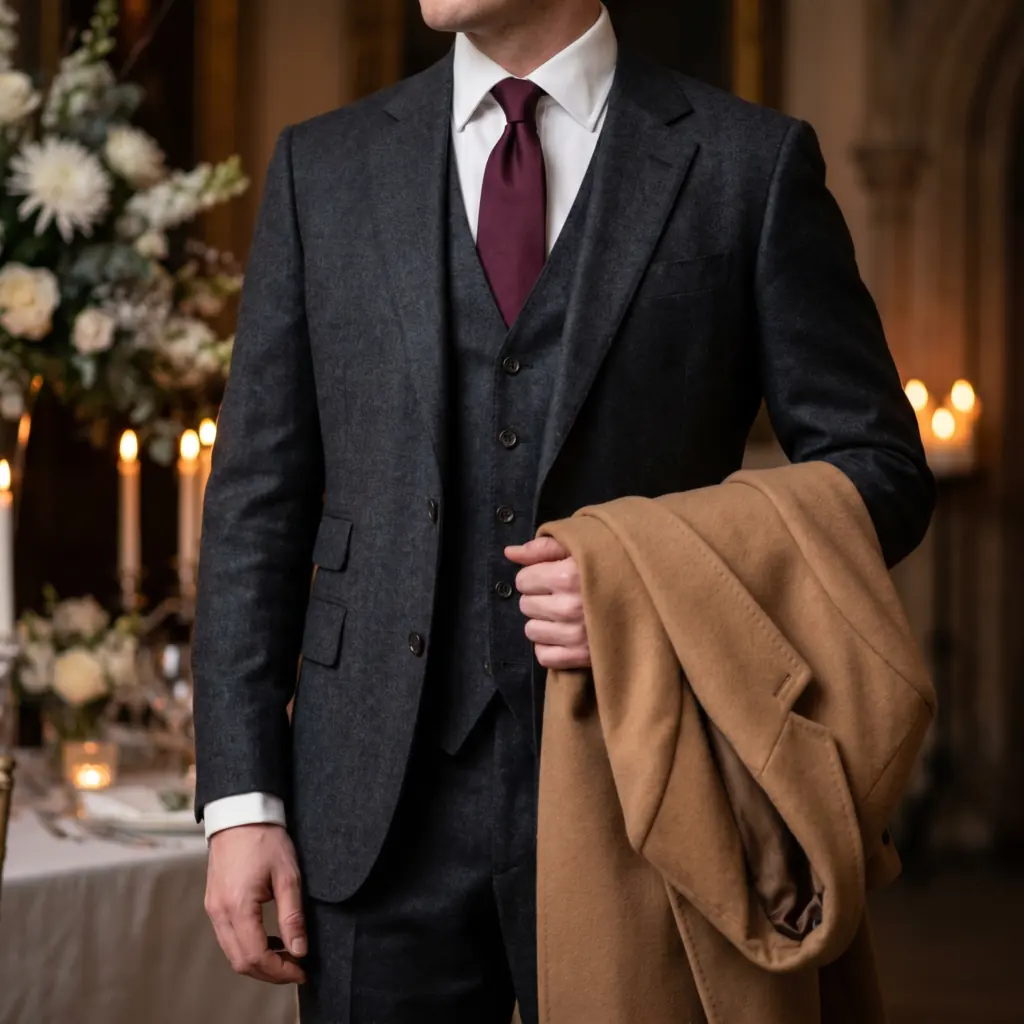
The three-piece suit is the single best layering choice for a winter wedding. A well-fitted waistcoat adds a layer of insulation across your core, which is where warmth matters most. It also looks polished, structured, and intentional in photos.
There are a few rules to get right:
- Leave the bottom button undone. This is standard waistcoat etiquette, and it creates a cleaner, more comfortable silhouette.
- Make sure it fits closely to your body. A waistcoat that gaps or pulls at the buttons does the opposite of what you want.
- Match or contrast thoughtfully. A matching waistcoat from the same suit creates a unified formal look. A contrasting waistcoat in a complementary shade adds personality without looking mismatched.
- Roll your sleeves when you lose the jacket. If you pull off your jacket on the dance floor but keep the waistcoat on, roll your shirt sleeves to avoid looking like a waiter.
If you already own a two-piece suit you love, adding a coordinating waistcoat from a fabric-matched or complementary source can effectively convert it into a three-piece look for the day.
Layering for the Ceremony vs. the Reception
Winter weddings typically involve a temperature shift. The ceremony may take place in a cold church or an outdoor setting. The reception hall is almost always climate-controlled and warm, sometimes uncomfortably so when a crowd fills the room.
Want to see how this plays out in a real build? Explore our custom wedding suits page - it walks through fabrics, construction, and what to expect at your first appointment.
The smart approach is to plan for both. Your suit and waistcoat should handle the reception comfortably. The additional warmth for the ceremony and outdoor portions of the day comes from your overcoat, scarf, and gloves, all of which can come off cleanly at the door.
Pro tip: For outdoor photo sessions in January or February, have a plan with your photographer to work quickly and efficiently. A high-quality flannel or heavyweight wool suit handles brief cold exposure well, but no fabric keeps you warm indefinitely in 25-degree wind chill.
The Overcoat: Your Most Important Outerwear Decision
If there is one piece that most men get wrong for winter weddings, it is the overcoat. They either skip it entirely and spend the outdoor portions of the day hunched and shivering, or they throw a casual puffer jacket over a sharp suit and undermine the entire look.
Neither option is acceptable. You need a proper overcoat.
What Makes a Good Winter Wedding Overcoat
A wedding-appropriate overcoat should be made from wool or a wool blend, tailored close to the body, and long enough to cover the bottom of your suit jacket. It should feel like a deliberate part of your outfit, not something you grabbed from a hook by the door.
The best options:
Wool Topcoat: A single-breasted or double-breasted wool topcoat in camel, navy, charcoal, or dark grey is the most versatile and formal choice. It layers cleanly over any suit silhouette and looks appropriate at every level of dress code. Camel is a particularly strong choice in winter because it contrasts beautifully with dark suits in photos.
Cashmere or Cashmere Blend Overcoat: If you want to invest in a piece that will serve you for years, a cashmere or cashmere-wool blend overcoat provides extraordinary warmth at a lighter weight. The drape is exceptional.
Herringbone or Houndstooth Coats: A subtle pattern in your overcoat adds visual interest while still reading as formal. Keep the pattern small and the color palette restrained.
What to Avoid
- Puffer jackets or quilted vests over a suit. They look casual, add bulk in all the wrong places, and undermine the formality of the occasion.
- Short bomber-style coats. A coat that ends at the waist or hips cuts the visual line of your suit and does not provide the coverage you need.
- Unlined overcoats. Look for a coat with a full lining, which will slide on and off over your suit jacket easily and feel significantly warmer.
Overcoat Colors That Work with Winter Wedding Suits
- Camel / Tan: Pairs Well With: Navy, charcoal, grey suits; Overall Effect: Warm, classic, standout in photos
- Charcoal Grey: Pairs Well With: Navy or mid-grey suits; Overall Effect: Sharp, coordinated, formal
- Navy: Pairs Well With: Charcoal, grey suits; Overall Effect: Clean, modern, versatile
- Dark Burgundy: Pairs Well With: Charcoal, grey suits; Overall Effect: Rich, distinctive, seasonal
- Black: Pairs Well With: Any dark suit; Overall Effect: Formal, clean, safe choice
Color Strategy for Kansas City Winter Weddings
Winter gives you permission to lean into the season’s palette. Deep, rich tones work with the lower light levels and the warmth of candlelit or indoor reception venues.
The most versatile winter wedding suit colors are:
- Charcoal grey: Inherently formal, works with almost any tie and shirt combination, and photographs beautifully.
- Midnight navy: The most reliable suit color in any season. A deep midnight navy reads more formal and serious than a medium blue.
- Slate or steel blue: A shade between classic navy and mid-blue that has a modern, distinctive quality.
- Forest green: An increasingly popular choice that feels seasonal and distinctive without being costume-like.
- Burgundy or deep plum: Bold choices that pair beautifully with winter light and candlelit ceremony settings.
If you are coordinating with groomsmen, keep the palette restrained and complementary. A groom in charcoal flannel and groomsmen in a slightly lighter grey creates strong visual cohesion without everyone looking identical.
Getting the Fit Right for Winter Layers
Here is the detail most men miss: when you plan to wear a waistcoat and a heavier shirt under your suit, your jacket needs to be sized accordingly. A jacket measured only over a dress shirt will feel uncomfortably tight once you add a vest underneath it.
When you come in for your fitting at The Suit Doctor, wear exactly what you plan to wear on the day: the shirt, any undershirt or base layer, and the style of waistcoat you are considering. This ensures that your jacket fits correctly in the final layered configuration, not just over a bare shirt.
This is one of the core advantages of a custom wedding suit fitting in Kansas City: every measurement accounts for how you will actually be dressed on the day, including seasonal layering.
Not sure what fabric or weight is right for your venue and ceremony? Schedule a consultation and we will walk you through every option with fabric samples in hand. Book your Kansas City winter wedding suit consultation here.
Frequently Asked Questions
When you're ready to put this into practice, you can book a mobile fitting at your home or office with Brandon and get measured in person.
Q: Can I wear a linen suit to a winter wedding in Kansas City?
No. Linen is a warm-weather fabric designed to breathe and wick moisture in heat. In Kansas City’s winter temperatures, a linen suit will not keep you warm and will wrinkle heavily in the cold. Switch to a wool flannel or heavyweight worsted wool for winter events.
Q: Do I need to buy a three-piece suit, or can I get away with just a two-piece?
A two-piece suit is absolutely appropriate for a winter wedding. The three-piece option gives you more warmth and more visual options. If you are a guest rather than in the wedding party, a well-fitted two-piece with a heavy overcoat is completely appropriate. If you are the groom, a three-piece gives you a more formal and polished look in photos.
Q: What weight of wool should I look for in a winter suit?
For Kansas City winter events, target a fabric weight of 280 to 350 GSM. Below 250 GSM, you are getting into year-round or warm-weather territory. Above 400 GSM starts to feel heavy and restrictive for formal wear.
Q: How long before a winter wedding should I get fitted?
Plan for at least 8 to 10 weeks before the event. Custom and made-to-measure suits require production time, and you should have at least one adjustment fitting before the final delivery. If you are coordinating with groomsmen, start the process even earlier to ensure everyone is on the same timeline.
Q: Is a dark navy suit appropriate for a formal winter wedding?
Absolutely. A deep midnight navy in a heavyweight wool or flannel is one of the most formal and versatile choices you can make for a winter wedding. It reads as sophisticated and intentional, and it photographs extremely well in the low-light and candlelit environments common at winter venues.
Q: Can I wear a patterned suit to a winter wedding?
Yes, with some restraint. Subtle patterns like herringbone, fine glen plaid, and windowpane checks are genuinely appropriate for winter weddings, especially in semi-formal or non-traditional settings. Keep the pattern small-scale and the color palette within winter tones. Bold or large-scale patterns can read as too casual.
Q: My venue has both an outdoor ceremony and an indoor reception. How do I dress for both?
Plan your suit for the reception environment (climate-controlled, warm). Use your overcoat, scarf, and gloves to handle the outdoor ceremony and transition. A three-piece suit with a waistcoat gives you the most flexibility to regulate your temperature throughout the day.
Q: What type of overcoat fits best over a suit?
Look for a single-breasted wool topcoat that is cut slightly fuller in the body to accommodate your suit jacket without pulling. Fully lined is essential. The coat should fall below your suit jacket hem, ideally hitting around the knee, for the cleanest silhouette.
Key Takeaways
- Fabric is your foundation: Wool flannel (280 to 320 GSM) and heavyweight worsted wool (300 to 350 GSM) are the correct choices for Kansas City winters. Avoid linen and lightweight tropical wool.
- Super numbers matter: Super 100s and Super 110s wool provides better warmth and durability for a wedding suit than ultra-fine Super 150s+ fabrics.
- Three-piece suits work best: A waistcoat adds a meaningful layer of warmth across your core while looking sharp and structured in photos.
- Layering has a sequence: Base layer (if needed) > dress shirt > waistcoat > suit jacket > overcoat. Each layer should fit cleanly over the last.
- The overcoat is non-negotiable: A tailored wool topcoat in camel, charcoal, or navy is the correct outerwear for a formal winter event. Puffer jackets and casual coats undermine the entire look.
- Color goes darker in winter: Charcoal, midnight navy, slate, forest green, and burgundy all work well. Leave bright colors and light earth tones for other seasons.
- Get fitted in layers: Wear your intended base layer, shirt, and vest style to your fitting so your jacket measurement accounts for everything you will actually have on.
Ready to Build Your Winter Wedding Suit?
You now understand exactly how fabric, layering, and outerwear work together for a Kansas City winter wedding. The next step is a fitting with someone who can put quality fabric samples in your hands, take precise measurements with your full layering plan in mind, and guide you toward a suit that looks exactly right on the day.
The Suit Doctor offers:
- Made-to-measure suits in premium wool flannels and heavyweight worsted wools
- Three-piece options with coordinated waistcoats
- Mobile fitting appointments at your home or office, on your schedule
- Expert guidance on fabric weight, color coordination, and groomsmen styling
- Overcoat styling consultation included with every wedding suit fitting
Ready to get started?
Reach out to schedule your Kansas City wedding suit consultation and we will take it from there.
For more on choosing the right palette for the season, see our guide to Kansas City wedding suit colors and styles.
The Suit Doctor | Custom and Made-to-Measure Suits for Men Who Take Their Look Seriously.
Get measured for a suit built around how you actually live.
Fittings for grooms, groomsmen, and the whole wedding party.