Most men walk into their first suit fitting appointment with good intentions and nothing else. They leave with measurements taken over whatever they happened to wear that day, no idea what the suit will actually look like, and results that disappoint when the finished garment arrives. A small amount of preparation eliminates that problem entirely.
This guide walks through exactly what to bring to a suit fitting, what to wear when you arrive, what information your tailor needs from you, and how to make sure the measurements taken that day produce a suit that works perfectly in real life.
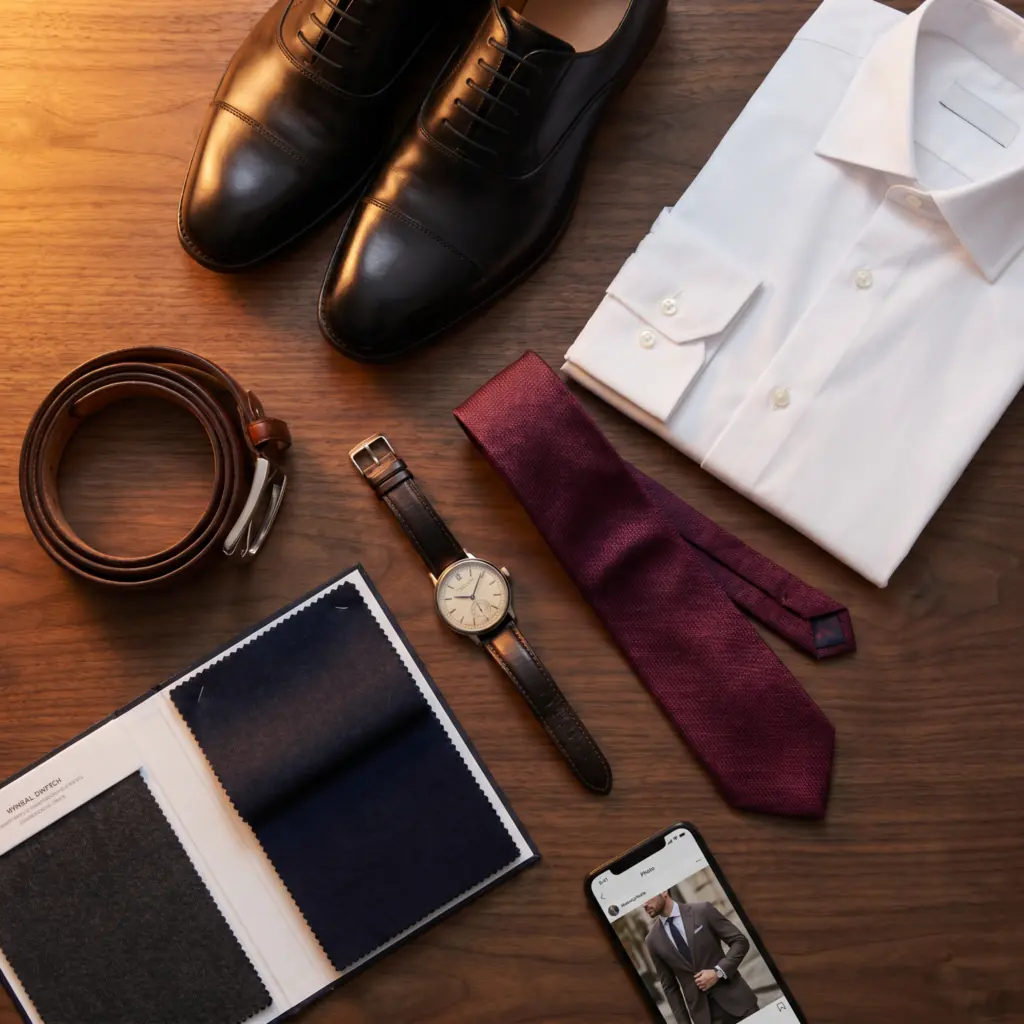
TLDR: Bring your dress shoes, a fitted dress shirt, and any accessories you plan to wear with the suit. Know the occasion, your timeline, and any fit preferences before you arrive. These simple steps are the difference between a suit that fits precisely and one that has to be sent back for adjustments. Read on for the complete checklist.
Why Preparation Changes Everything
A suit fitting is not passive. Your tailor is capturing precise information about your body, but only as it exists in the moment of the appointment. If you arrive in a thick college sweatshirt, your chest and shoulder measurements will be wrong. If you have no dress shoes, your trouser hem will be set for the wrong shoe height. If you cannot explain where you are wearing the suit, your tailor has no context for making the hundreds of small decisions that go into a well-built garment.
The measurements taken at your fitting are the blueprint for your suit. Every error in that blueprint becomes an error in the finished garment. The good news is that preparation for a fitting appointment is genuinely simple. It takes about five minutes of thought and the willingness to arrive with the right things.
Here is everything you need.
What to Wear to Your Fitting
A Fitted Dress Shirt
This is the single most important item. The shirt you wear to your fitting sets the baseline for how your jacket measurements are taken. The shoulder seam needs to sit at your natural shoulder edge. The chest needs to be measured over a fabric layer that matches what you will wear when the suit is in actual use.
Wear a shirt that fits you well. Not one that is too loose or too tight. If you plan to wear a specific shirt with the finished suit, that is the ideal shirt to wear to the fitting. A well-fitted white or pale blue dress shirt is appropriate if you do not have a specific one in mind.
Avoid:
- Oversized or baggy shirts
- Heavy flannel shirts or thick layers
- T-shirts unless your tailor specifically tells you otherwise
- Anything wrinkled, since fabric folds can skew visual assessments
Dress Trousers or Well-Fitted Flat-Front Pants
Your tailor needs to see how fabric sits on your waist and hips without distortion. Flat-front dress trousers or well-fitted chinos that sit naturally at your waist are ideal. Jeans with a thick waistband, gym shorts, or heavily pocketed cargo pants all create measurement complications you want to avoid.
Avoid:
- Jeans with bulky waistbands or multiple layers at the hip
- Belts with large, thick buckles (they distort waist measurements)
- Sweatpants or athletic wear
Appropriate Socks
Bring dress socks that match what you will wear with the suit. This may seem trivial, but the thickness of your sock can affect how your shoe fits, which in turn affects how your trouser hem should break. Wear socks that match your typical professional wear.
What to Bring
Your Dress Shoes (This One Is Non-Negotiable)
Your shoes affect two critical measurements: trouser hem length and break, and overall posture assessment. The heel height of a dress shoe lifts your foot off the ground differently than sneakers or bare feet. A hem set for sneakers will leave you with trousers that are visibly too long in dress shoes, or vice versa.
Bring the actual shoes you plan to wear with the suit. If you do not own dress shoes yet, wear something as close to the same heel height as the formal shoes you intend to purchase. Classic leather oxfords or derbies are the most common choice, and any clean, leather-soled dress shoe will work.
If you are having a wedding suit fitted and have specific wedding shoes in mind, bring those or something equivalent in heel height.
A Belt (If You Plan to Wear One)
If you wear a belt with your suits, bring it to your fitting. The belt affects where the waistband sits on your body and how the trousers drape from the hip. Your tailor should see this in the context it will actually be worn. If you are considering suspenders instead, let your tailor know at the start of the appointment, since suspenders require slightly different trouser construction.
Your Watch (If You Wear One Regularly)
A wristwatch sits under the jacket sleeve. If your watch has a significant case thickness, it affects how the jacket sleeve should be fitted and how much shirt cuff should show at the wrist. Bring the watch you typically wear to work or to formal events so your tailor can account for it.
Any Waistcoat, Tie, or Pocket Square You Plan to Wear
If you are ordering a three-piece suit or plan to wear a specific tie and pocket square combination, bring those items or photos of them. Accessories affect how fabric needs to sit at the collar and chest. A thick silk tie changes how the jacket lapels interact with the collar compared to a lightweight knit tie.
If you are having a wedding suit fitted, bring the specific shirt and tie you plan to wear on the day. The complete picture matters more than individual pieces.
Inspiration Photos
If you have a specific look in mind, photos help your tailor understand your intent faster and more accurately than words alone. Save a few reference images to your phone or print them. They might be photos of a suit you saw in a magazine, a celebrity’s look you admire, or photos of yourself in a suit that felt right.
You do not need to have an exhaustive visual brief prepared. Two or three clear reference photos are enough to orient a good tailor toward your preferences.
A Base Layer, If You Wear One
If you typically wear an undershirt or base layer under your dress shirts, wear that same type to your fitting. The thickness of your typical daily layers affects chest and torso measurements. A man who wears a fitted crew-neck undershirt every day should be measured while wearing that undershirt, not without it.
If you are building a winter suit and plan to wear a waistcoat, let your tailor know at the start of the appointment so measurements can account for that additional layer under the jacket.
What Information to Have Ready
Want to see how this plays out in a real build? Explore our mobile fitting services page - it walks through fabrics, construction, and what to expect at your first appointment.
Bringing the right physical items gets your measurements right. Bringing the right information gets the suit right.
The Occasion and Setting
Tell your tailor exactly where you are wearing the suit. A suit for daily client meetings in a downtown KC law firm needs different fabric weight, construction, and lapel style than a suit for a November wedding at an outdoor venue. A suit for prom photo sessions needs different trouser break and jacket length considerations than one for client presentations.
If you have multiple occasions in mind, say so. A well-made business suit often doubles as wedding guest attire. A tailor who knows this upfront can make choices that serve both occasions rather than optimizing for just one.
Your Timeline
When does the suit need to be ready? A made-to-measure suit at The Suit Doctor takes approximately 4 to 8 weeks from fitting to final delivery, with a fitting appointment at the end of that period before final delivery. If you have a hard deadline, such as a wedding, a job interview on a specific date, or a business trip, share that date at the start of the appointment. Your tailor needs to know whether you are working within a comfortable timeline or whether expedited production needs to be considered.
For Kansas City weddings, starting the groom and groomsmen fitting process at least 8 to 10 weeks before the date gives you comfortable margin for production and any final adjustments.
Your Fit Preferences
Tailors make dozens of small decisions during a fitting. A few clear preferences from you help them make those decisions correctly from the start.
Tell your tailor:
- Silhouette preference: Do you prefer a slim, close-to-the-body cut, a classic fit with more room through the chest and waist, or something in between?
- Trouser break: Do you want a full break (fabric resting heavily on the shoe), a half break (slight fold at the shoe), or no break (trousers ending cleanly just above the shoe)?
- Jacket length: Do you have a preference for longer or shorter? Most tailors default to standard proportions but will accommodate preferences.
- Lapel style: Do you have a preference between notch, peak, or shawl lapels? If not, your tailor will recommend based on the suit’s purpose and your body type.
You do not need definitive answers to all of these before you arrive. Your tailor will guide the conversation. But if you have strong preferences, sharing them early saves time.
Any Fit Challenges from Previous Suits
If you have owned suits before that did not fit correctly in specific ways, mention those problems at the start of the fitting. Common issues include:
- Jacket shoulders that sit too wide or too narrow
- Collar gapping at the back of the neck
- Trousers that pull across the seat or thigh
- Jacket sleeves that are consistently too long or too short for your arm length
- Chest feeling tight when buttoning
Each of these has a specific pattern adjustment that addresses it. Mentioning past problems helps your tailor anticipate and correct them in the initial measurements rather than discovering them during a fitting later.
A Quick Reference: What to Bring
- Fitted dress shirt: Why It Matters: Sets baseline for shoulder and chest measurements
- Dress shoes you will wear: Why It Matters: Determines correct trouser hem length
- Belt (if you wear one): Why It Matters: Affects waist positioning and drape
- Wristwatch (if you wear one): Why It Matters: Affects sleeve length and cuff show
- Tie and accessories: Why It Matters: Helps tailor visualize complete outfit
- Inspiration photos: Why It Matters: Aligns tailor on preferred silhouette and style
- Base layer or undershirt: Why It Matters: Ensures measurements match daily wearing conditions
- Occasion details and timeline: Why It Matters: Informs fabric, construction, and fit choices
What to Expect During the Appointment
A mobile fitting appointment with The Suit Doctor runs approximately two hours. Here is what happens during that time.
Style consultation first. The appointment begins with a conversation about where you are wearing the suit, your style preferences, and your budget. This is the context-setting phase. Share everything you know and ask any questions you have. No preparation is required for this portion, but the items and information described above give you much stronger input.
Fabric selection with real samples. Your tailor brings physical fabric swatches. You handle them, see them in the light of your actual environment, and feel the difference between a Super 100s worsted and a wool flannel. This decision is easier and more accurate with real samples than it could ever be through a website.
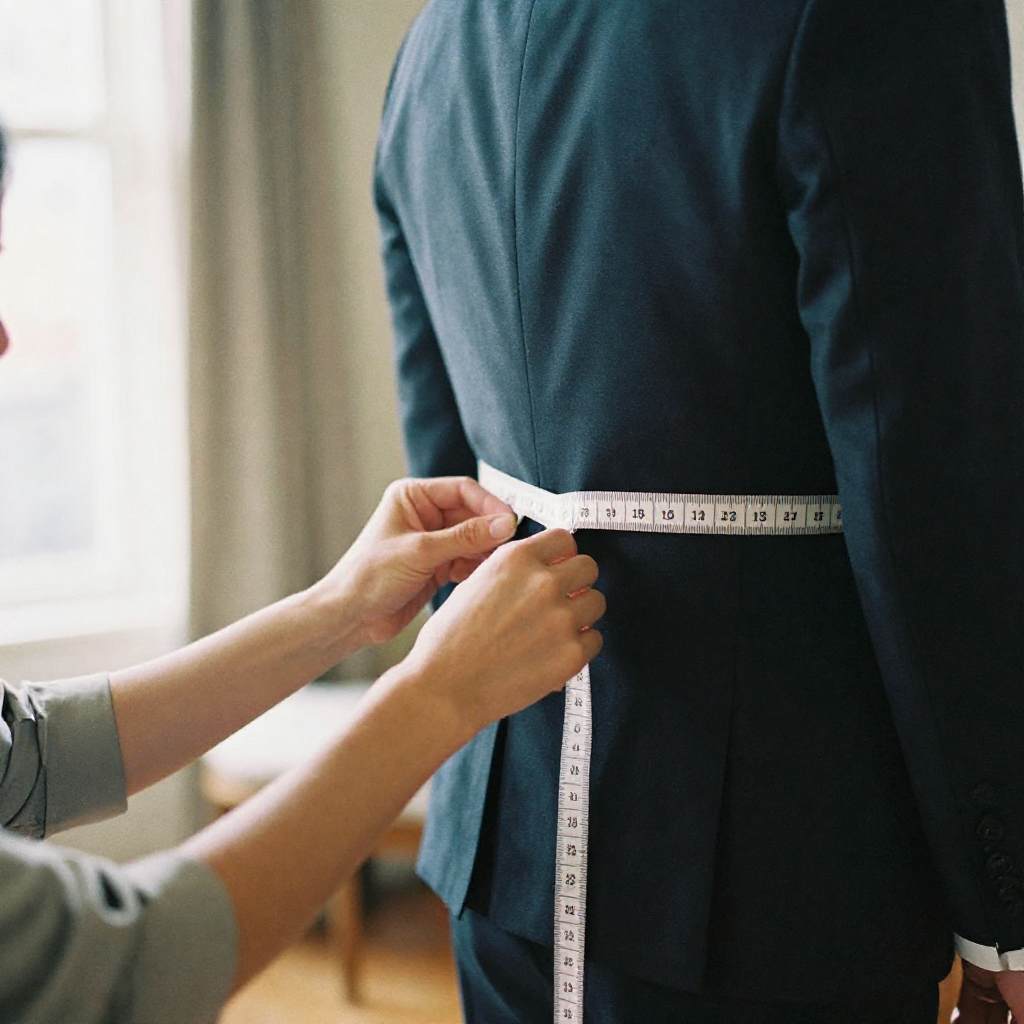
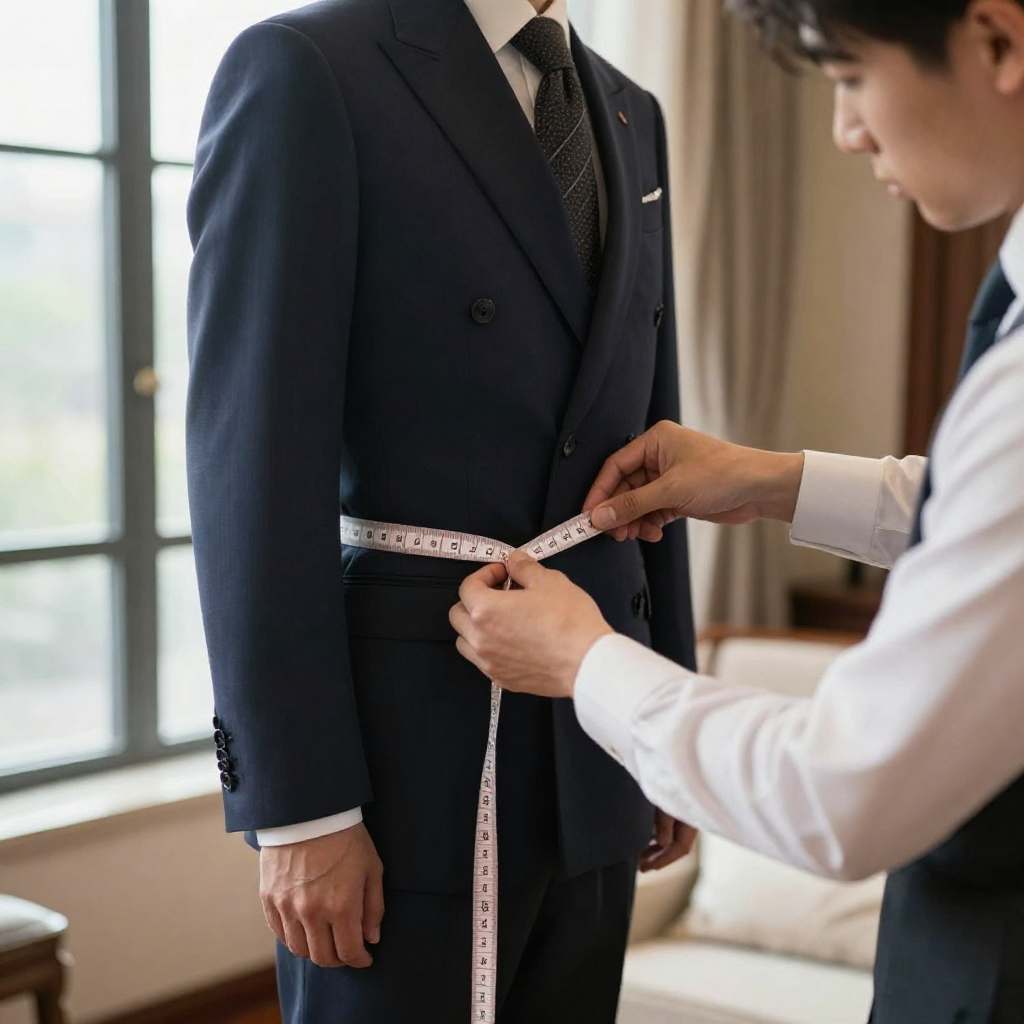
Precise measurements taken. Your tailor measures every relevant dimension, including shoulder width, chest, waist, seat, inseam, sleeve length, and torso. Posture and body characteristics, such as shoulder slope, a slightly forward posture, or an asymmetry between sides, are noted and built into the pattern.
Style choices finalized. Lapel style, button configuration, lining, pocket placement, trouser pleats or flat front, and other details are discussed and decided.
Timeline confirmed. Your tailor confirms production timing and the date of your final fitting appointment.
This is not a stressful process. If you have never been professionally measured, every step is explained. You leave knowing exactly what was ordered, when to expect it, and what the final fitting will involve. For a complete walkthrough of what happens after your fitting, see our Kansas City custom suit process guide.
Not sure what questions to ask during your consultation? Reach out to schedule your Kansas City suit fitting and we will walk you through the process before you even arrive.
Fitting for Specific Occasions
When you're ready to put this into practice, you can book a private fitting in Kansas City with Brandon and get measured in person.
Fitting for a Business Suit
For a professional wardrobe suit, the most critical items to bring are your dress shoes and a shirt that represents your typical workday attire. If you wear a watch every day, bring it. Have a clear sense of which industry and office environment you dress for, since this affects fabric weight, lapel formality, and color choices.
For more on building a professional wardrobe that covers every situation you face, see our Kansas City executive suit wardrobe guide.
Fitting for a Wedding Suit
For a wedding suit, bring the specific shirt, tie, and shoes you plan to wear on the day. If you have not chosen these yet, bring photos of the style direction you are moving toward. Share the wedding date at the start of the appointment so your tailor can confirm the production timeline works. Mention the venue type and season so fabric recommendations are appropriate.
If you are coordinating with groomsmen, all fittings should ideally happen within the same week so fabric and production batches can be aligned.
Fitting for Prom
For a prom suit, bring shoes that are similar to what you plan to wear. Bring photos of the look you want if you have a reference. Be honest about style preferences, whether classic and conservative or modern and distinctive, so your tailor can guide you toward choices that will photograph well and feel comfortable for a full evening.
Frequently Asked Questions
Q: Can I just wear whatever I have on when I come to a fitting?
Technically yes, but your results will be affected. If you arrive in a heavy hoodie, your chest measurements will be inaccurate. If you have sneakers, your trouser hem will be wrong. Five minutes of preparation protects an investment that costs many times more than five minutes of your time.
Q: What if I do not own dress shoes yet?
Bring the closest thing you have to formal footwear. Leather loafers, dress boots, or anything with a heel height similar to what you intend to wear. Even an approximation is significantly better than bare feet or sneakers for setting the trouser break correctly.
Q: Should I bring my old suit to the fitting?
Yes, if it is helpful for reference. An existing suit you love the cut of gives your tailor an immediate sense of your proportions and preferences. An existing suit that did not fit correctly is equally valuable as a reference for problems to avoid. Either way, bring it.
Q: How long does the fitting appointment take?
A full mobile fitting appointment with The Suit Doctor runs approximately two hours. This includes the style consultation, fabric selection, precise measurements, and finalizing all style choices. Plan your schedule accordingly.
Q: What if my body changes between the fitting and the final delivery?
Minor changes are handled at the final fitting appointment. Your tailor will make any needed adjustments before final delivery. If you are anticipating significant changes, such as an ongoing fitness program or a dietary change, mention this at the initial fitting so your tailor can account for it in the pattern.
Q: Do I need to know what fabric or style I want before I arrive?
No. The consultation phase of your appointment is specifically designed to surface your preferences through conversation and guided choices. You benefit from having a general sense of the occasion and your style direction, but you do not need to arrive as a menswear expert. That expertise comes with your tailor.
Q: Can I fit multiple suits in one appointment?
Yes, and it is often efficient to do so. If you are building two or three suits as a coordinated wardrobe, handling all fittings in one appointment saves time and allows your tailor to plan the fabric and color combinations as a cohesive system.
Key Takeaways
- Wear a fitted dress shirt: This is the single most important preparation step for accurate shoulder and chest measurements.
- Bring your dress shoes: Trouser hem length depends on the heel height of your actual footwear. No other item has more direct impact on trouser fit.
- Bring accessories you plan to wear: Belt, watch, and tie all affect how specific measurements are taken.
- Bring inspiration photos: Two or three clear references align your tailor on preferred silhouette and style faster than words alone.
- Know your occasion and timeline: These two pieces of information shape fabric selection, construction choices, and the entire fitting process.
- Share past fit problems: Previous issues with suits are valuable input. Your tailor uses this information to correct problems in the pattern before production.
- The appointment is guided: You do not need to arrive with all the answers. A good tailor surfaces your preferences through conversation. Your preparation creates the conditions for accurate measurements.
Ready for a Fitting That Gets It Right the First Time?
You now have a complete picture of what a well-prepared suit fitting looks like and why each item on the list matters. The next step is scheduling an appointment with a tailor who will guide the entire process and bring everything else needed to your door.
The Suit Doctor offers:
- Mobile fitting appointments at your home or office across Kansas City
- Expert style consultation included with every fitting
- Fabric selection from premium wool, flannel, and seasonal options with real samples in hand
- Precise measurement process built to account for your actual daily wearing conditions
- Production timelines for business suits, wedding suits, prom suits, and every occasion that matters
Ready to get started?
Reach out to request your Kansas City suit fitting appointment and we will handle everything else.
The Suit Doctor | Custom and Made-to-Measure Suits for Men Who Take Their Look Seriously.
Get measured for a suit built around how you actually live.
We bring the fitting room to your home or office in Kansas City.