A made-to-measure suit appointment is part fitting, part conversation. The fitting itself takes about twenty to thirty minutes, but the result lives in your closet for the next decade. Coming prepared makes the entire process smoother, faster, and more accurate. This guide walks you through exactly what to bring, what to wear, what measurements your tailor will take, and the style questions to answer in advance so you walk out with a suit that genuinely fits the way you live and work.
TLDR: Wear or bring fitted clothing, dress shoes, and the same style of dress shirt you plan to wear with the suit. Expect fifteen or more measurements covering jacket, trousers, and posture. Know your event date, budget range, and intended use before you arrive. Read on for the full prep checklist that gets you a better fit the first time.
Why Preparation Matters
A made-to-measure suit is built around your body, your posture, and your life. The fitting is where all of that information gets captured. The more accurate that information is, the better your suit fits the first time around.
Most men who walk in unprepared do one of three things. They forget which shoes they will wear with the suit, so the trouser break is off. They wear the wrong shirt, so the sleeve length is wrong. Or they have not thought about what the suit is actually for, so they make styling choices they regret two months later.
None of those are dealbreakers. We work around them constantly. But coming prepared means fewer revisions, faster turnaround, and a better final product. Here is everything you need to know.
What to Wear to the Appointment
Your tailor needs to see and measure your body as it will actually wear the suit.
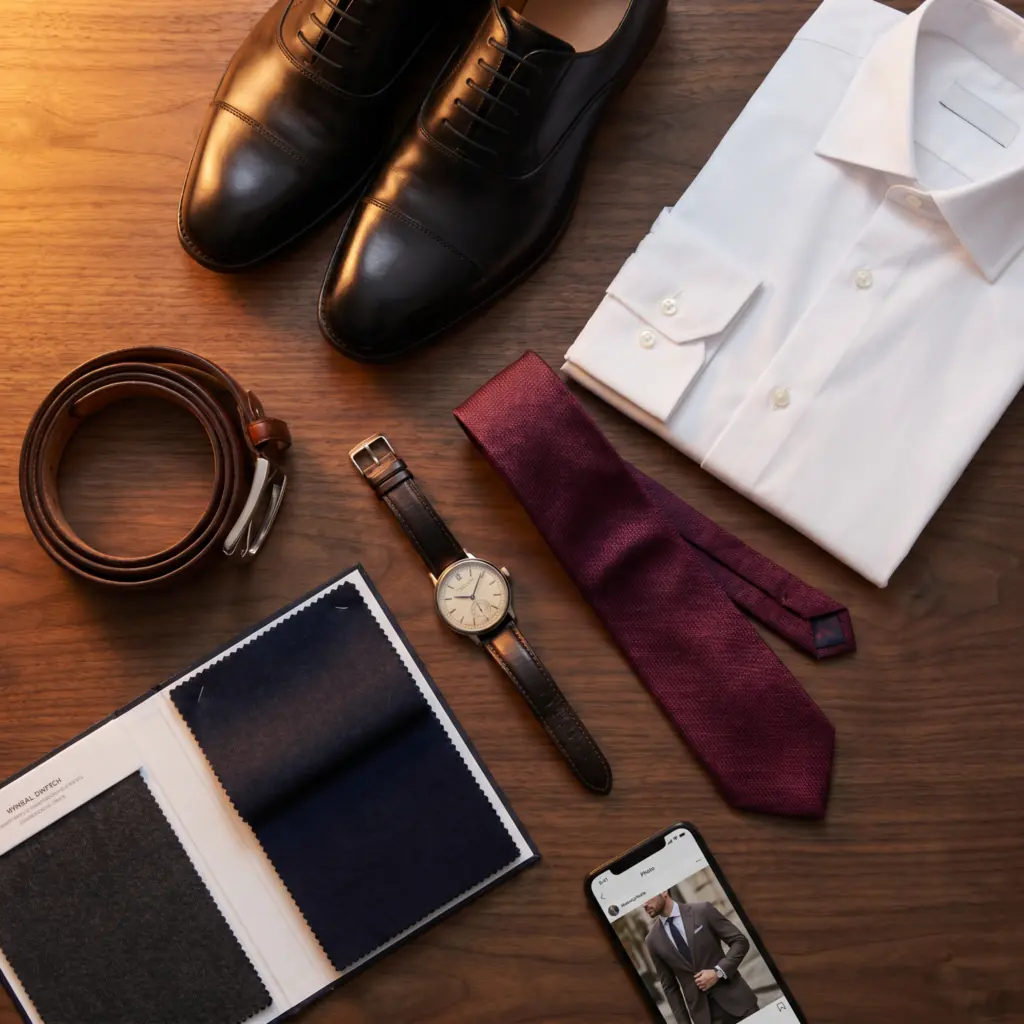
A fitted dress shirt. Wear the same style of dress shirt you plan to pair with the suit. If you wear French cuffs, wear French cuffs. If you wear button-downs, wear a button-down. Jacket sleeve length is measured to show about a half-inch of shirt cuff, so the cuff style and size matter.
Dress shoes you actually wear. Trouser length is measured to your shoe. A pair of sneakers throws off the break by two inches or more. If you have a specific pair of dress shoes you will wear with this suit, bring them. If not, wear a representative dress shoe.
A belt if you wear one. Trousers are measured at the natural waist, but if you wear them at the hip with a belt, your tailor needs to know.
Fitted, not loose, base layers. Skip the heavy sweater or the oversized t-shirt. A close-fitting undershirt or just the dress shirt gives the most accurate measurements.
Your normal posture. Stand the way you stand at work. Do not suck in, do not puff out, do not hold your shoulders back in a way you would not on a Tuesday afternoon. The suit needs to fit the real you.
What to Bring
A few things make the appointment dramatically more productive.
Photos of suits you like. Lapel width, jacket length, color, and styling are easier to discuss with reference images than with words.
A current suit that fits well, if you have one. Your tailor can measure it directly and use it as a reference point.
Your event date. If you are getting married, attending a wedding, or starting a new job on a specific date, your tailor needs to know to plan production.
A rough budget range. This is not awkward to share. It helps your tailor steer you toward fabrics and construction options that fit your situation.
Any fit-affecting injuries or quirks. A bad back, a knee replacement, a shoulder that sits lower than the other. All of this affects how a suit hangs on you. Tell your tailor up front.
The Fifteen-Plus Measurements You Will Take
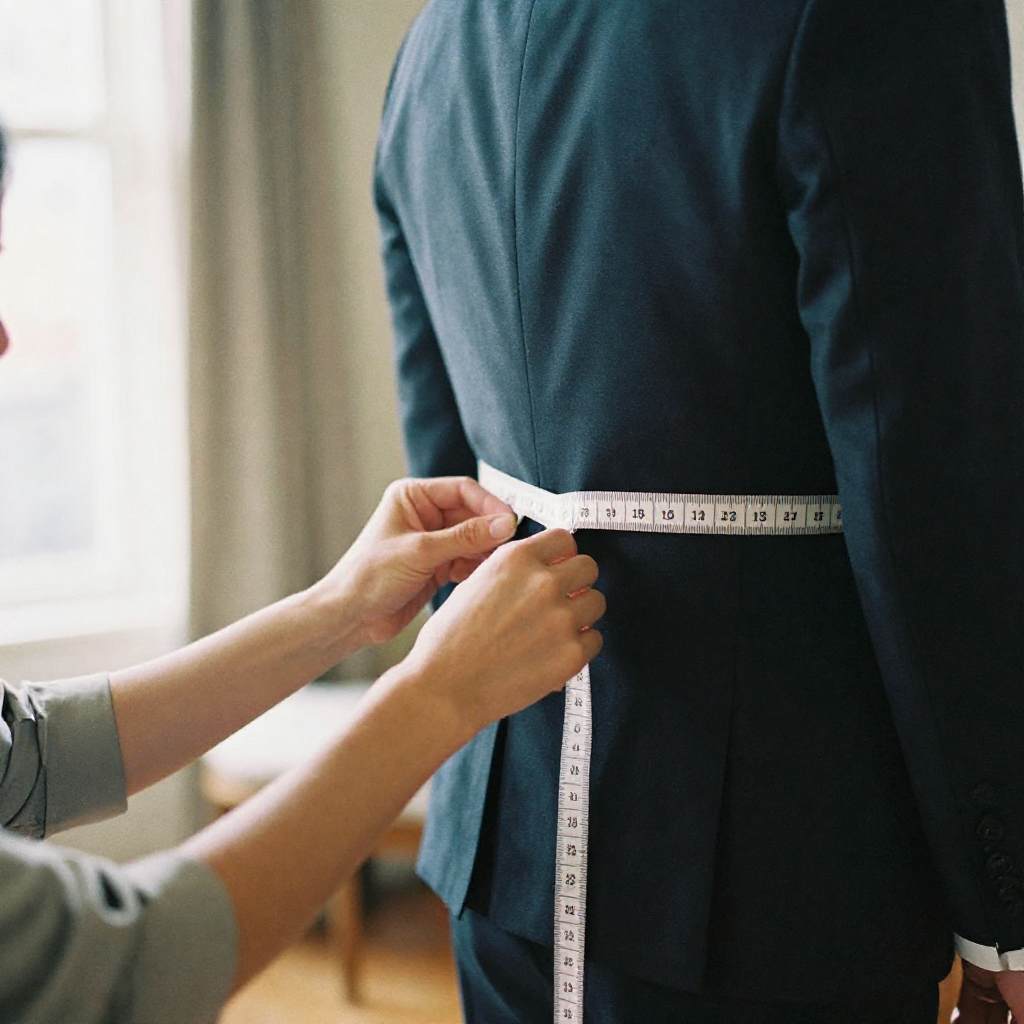
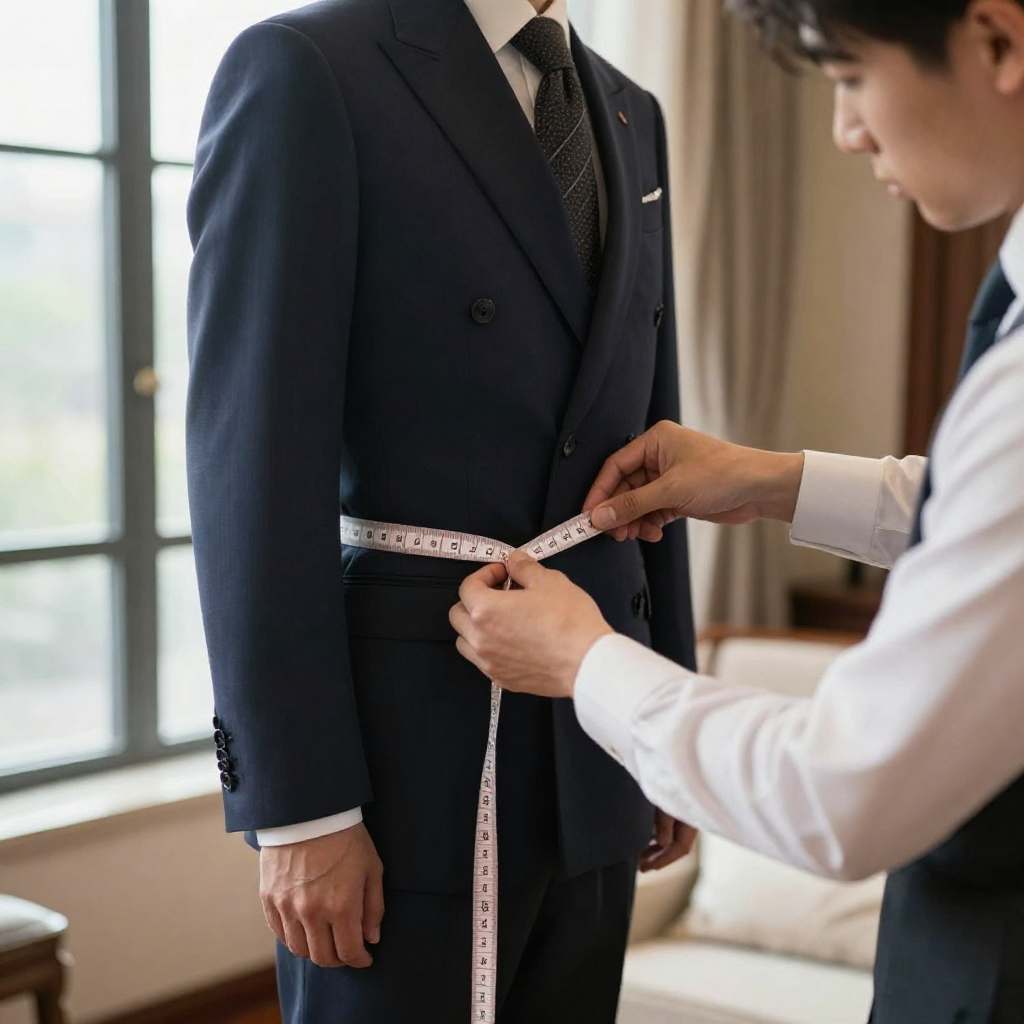
A good made-to-measure program takes more measurements than most men realize. Here is the full list, broken into three groups.
Jacket Measurements
- Chest: What it captures: Fullest part of the chest with arms at sides
- Stomach: What it captures: Natural waist at the belly button area
- Seat: What it captures: Fullest part of the hips and seat
- Shoulder width: What it captures: Across the back, shoulder seam to shoulder seam
- Sleeve length: What it captures: From shoulder point to wrist bone
- Jacket length: What it captures: From the base of the collar to where the jacket should end
- Back length: What it captures: From the base of the neck to the natural waist
- Bicep: What it captures: Around the fullest part of the upper arm
- Wrist: What it captures: Around the wrist bone where the cuff will sit
Want to see how this plays out in a real build? Explore our mobile fitting services page - it walks through fabrics, construction, and what to expect at your first appointment.
Trouser Measurements
- Waist: What it captures: At the natural waist or where the trouser will sit
- Hip: What it captures: Around the fullest part of the hips
- Thigh: What it captures: Around the fullest part of the upper leg
- Knee: What it captures: Around the knee
- Bottom opening: What it captures: Width of the trouser hem at the shoe
- Inseam: What it captures: From the crotch seam to the desired break
- Outseam: What it captures: From the waistband to the desired break
- Rise: What it captures: From the crotch seam to the top of the waistband
Posture and Body Notes
These separate a basic program from a serious one. Your tailor should be observing and noting your posture (forward-leaning, upright, or back-leaning), shoulder slope (square or sloped, and whether one shoulder sits lower), hip position, stance, and where your body carries weight. These observations get translated into pattern adjustments that off-the-rack and basic programs simply cannot do.
The Style Questions to Answer in Advance
The measurements are only half the appointment. The other half is making the styling decisions that turn a suit pattern into your suit. Think about these before you arrive.
What is the suit for? Daily office wear, a wedding, your wedding, court appearances, prom, or a one-time event. Each use case points toward different fabric weights, colors, and details.
What season will you wear it in? Kansas City summers are humid and brutal. Winters are cold but mostly indoor for professionals. Year-round suits exist, but a fresco or high-twist tropical wool saves you from June to September. Our Kansas City summer suit fabric guide covers this in detail.
Two-piece or three-piece? A three-piece adds formality and versatility but costs more and runs warmer.
Notch or peak lapel? Notch lapels are the workhorse default, slightly more conservative. Peak lapels are more formal and more striking. Shawl lapels are for tuxedos and dinner jackets.
Two buttons or three? Two buttons is the standard. Three buttons reads slightly traditional. Avoid four-button jackets unless you have a very specific reason.
Pleats or flat-front trousers? Flat-front is the modern default. Pleats add room through the thigh and a more classic look, useful for athletic builds.
Cuffs or no cuffs on the trousers? Cuffs add weight and visual interest. No cuffs is sleeker. Cuffs pair beautifully with most business suits.
Working sleeve buttons? Also called surgeon’s cuffs, this lets you actually unbutton the sleeve. It is mostly a detail. The downside is that you cannot shorten the sleeve from the cuff afterward.
You do not need every answer before you arrive, but having opinions or questions speeds the appointment up significantly.
What Happens at Each Appointment
A typical made-to-measure timeline runs across two or three appointments.
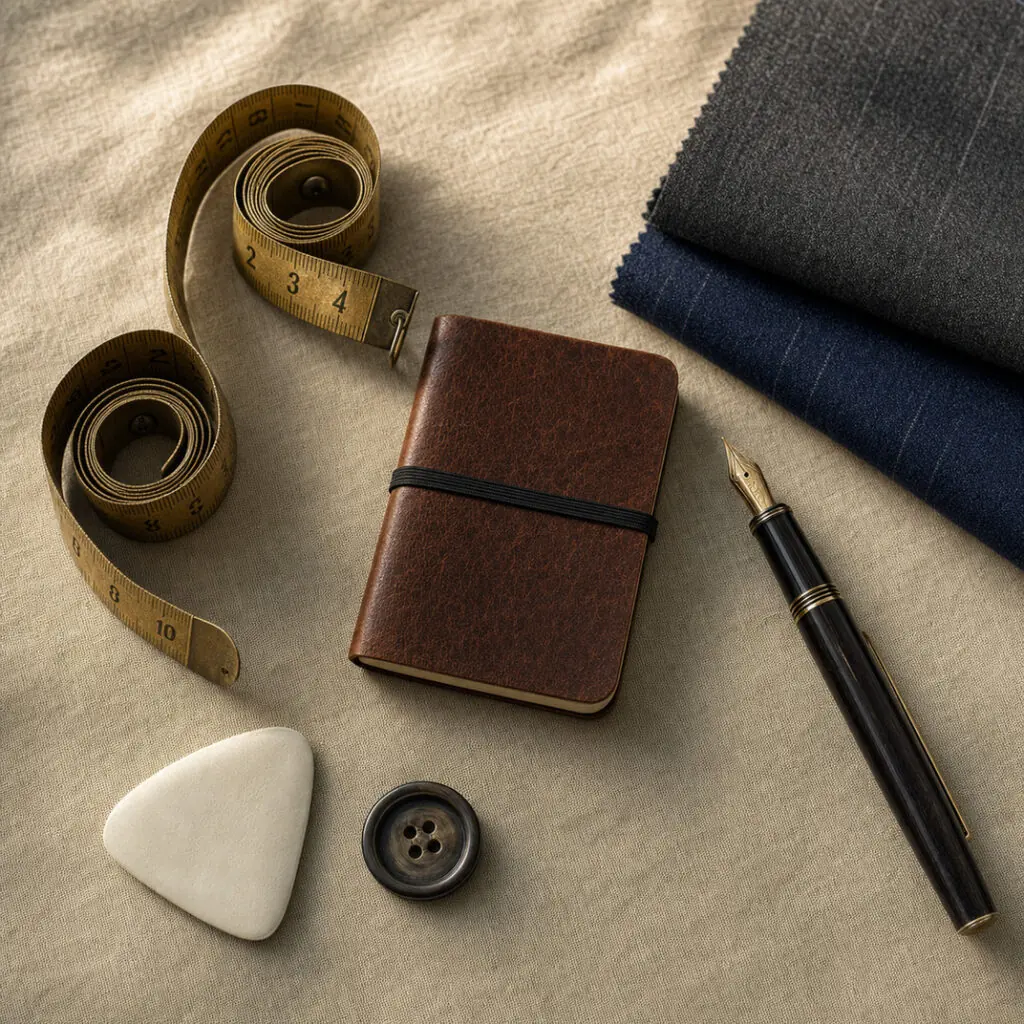
Appointment 1 (about 60 to 90 minutes). Measurements, style consultation, fabric selection, and any necessary deposit. You leave with a clear idea of what is coming. Production usually takes a few weeks from this point.
Appointment 2, the fitting (about 30 to 45 minutes). Your suit arrives in a near-final state. You try it on and your tailor pins any final adjustments. Common ones are sleeve length, trouser length, waist suppression, and a tweak to the jacket length.
Appointment 3, pickup (15 to 30 minutes). The final adjustments are made. You try the suit on one more time to confirm everything is right and walk out wearing it.
Some programs collapse this into two appointments. The best ones keep all three, because that second fitting is where small problems get caught before they become permanent. Our full walkthrough of how the custom suit process works in Kansas City lays out every step from first measurement to final fitting.
Pro Tip From The Suit Doctor
If you are getting a suit for a specific event, book your first appointment at least ten to twelve weeks before the event date. That gives you several weeks for production, two to three weeks for the fitting and final alterations, and a one to two week buffer for anything unexpected. We can move faster when needed, but the cleanest timelines start early. Wedding parties especially: start the groom and groomsmen process about four months out.
A Real-World Example
When you're ready to put this into practice, you can book a private fitting in Kansas City with Brandon and get measured in person.
A groom came to us in Kansas City last fall about eight weeks before his wedding. Tight but workable. We measured him on a Saturday morning. He had brought photos of suits he liked, a pair of brown dress shoes he planned to wear, and a fitted shirt he already owned that fit him well.
The whole first appointment took about an hour. We confirmed a half-canvas Super 110s navy wool, notch lapels, two buttons, flat-front trousers with a half-break to his shoes, and working sleeve buttons. The suit came in a few weeks later, we did the fitting, made a small adjustment to the jacket length and a quarter-inch off each trouser leg, and he picked it up the week before the wedding.
That clean timeline happened because he came prepared. Photos. Real shoes. A fitted shirt. A clear idea of what the suit was for. The opposite version, where someone shows up in sneakers with no reference photos, takes far longer and produces a worse first fit.
Frequently Asked Questions
How long does a made-to-measure appointment take? The initial appointment runs 60 to 90 minutes for measurements, fabric selection, and styling decisions. Follow-up fittings are 30 to 45 minutes. Plan to give yourself the full window so you are not rushing.
Do I need to lose weight before getting measured? No. Get measured at your current weight. If you are actively training for a wedding or event, get a final measurement two to three weeks before the suit goes into production, not three months out. Suits can be taken in but not let out beyond the fabric reserve, which is usually about an inch.
Can I just send in my measurements from another tailor? Some programs accept that, but it is risky. Different tailors measure slightly differently, and the patterns underneath each system have their own quirks. In-person measurement by the team that will build the suit produces the most reliable fit.
What is the difference between a tailor and an alterations tailor? A bespoke or made-to-measure tailor builds new suits from cloth. An alterations tailor adjusts existing suits. Both are skilled trades, but the work and the training are different.
Should I get measured for trousers separately? Some men have proportions where trouser and jacket sizes do not match the same off-the-rack number. With made-to-measure this is a non-issue. You get measured for the full suit and the trousers are cut to your trouser measurements regardless of jacket size.
How accurate do measurements need to be? Within about a quarter-inch on most measurements. A good tailor double-checks the key dimensions, like chest, waist, and sleeve length, before finalizing the pattern. The fitting appointment is the safety net for anything that drifted.
Will I be measured in my underwear? No. You will be measured in your dress shirt and trousers, possibly with the jacket removed for chest and shoulder measurements. Quality tailors maintain a professional, comfortable environment.
What if I gain or lose ten pounds after the suit is made? Most suits have about an inch of fabric reserve at the seat, waist, and side seams. A skilled alterations tailor can adjust for about ten pounds either direction. Beyond that, you may need a more significant rebuild, which is why getting measured at a stable weight matters.
Can I bring my partner to the appointment? Absolutely. Many men do, especially for wedding suits. Bring whoever helps you make confident decisions. Just understand that the measurements are about your body, not theirs.
How do I find a good made-to-measure tailor in Kansas City? Look for a tailor who takes fifteen or more measurements, offers a real fitting appointment between measurement and pickup, and has fabric swatches from named mills you can research. If a place takes five measurements and ships you a suit with no fitting, that is at the low end of made-to-measure and you will likely need extra alterations.
Key Takeaways
- Bring the shirt, shoes, and belt you plan to use with the suit.
- Expect fifteen or more measurements covering jacket, trousers, and posture.
- Know your event date, budget range, and intended use before arriving.
- Bring photo references and any current suit that fits well.
- Plan a few weeks of production plus two to three weeks for fittings.
- The second fitting is the safety net where small problems get caught.
Book Your Kansas City Fitting
You now know exactly how to prepare so your first fitting produces the cleanest possible result. The next step is getting on the calendar with a team that measures carefully and stands behind the fit.
The Suit Doctor builds suits around your body, not a size chart.
- Careful measurement and a real fitting between measurement and pickup
- Custom and made-to-measure suits for business, weddings, and prom
- Convenient mobile fittings that bring the appointment to your office, home, or venue
- A streamlined, expert-guided experience from first measurement to final pickup
Ready to get started? Book your made-to-measure fitting in Kansas City and let’s get you measured right.
The Suit Doctor | Custom and Made-to-Measure Suits for Men Who Take Their Look Seriously.
Get measured for a suit built around how you actually live.
We bring the fitting room to your home or office in Kansas City.