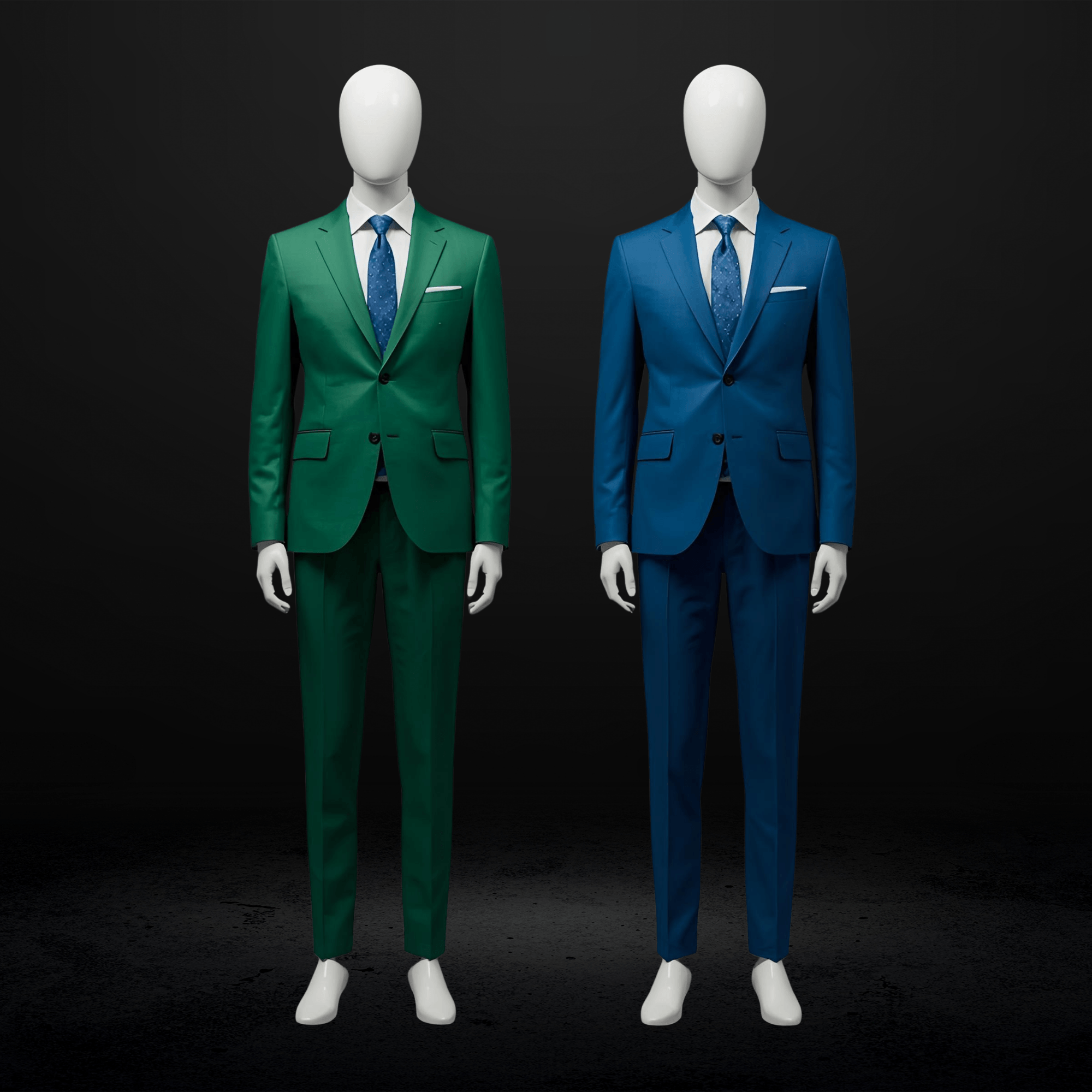
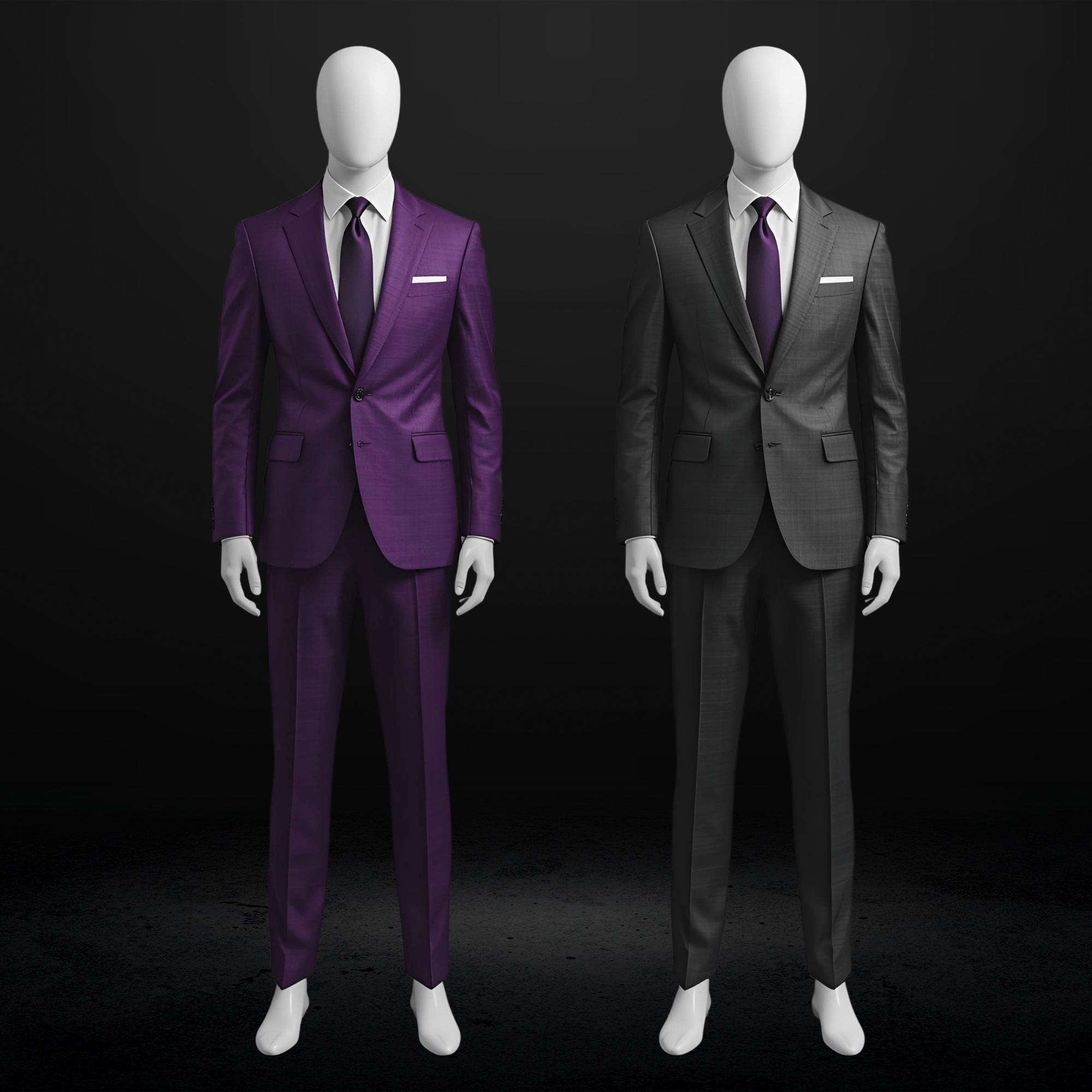
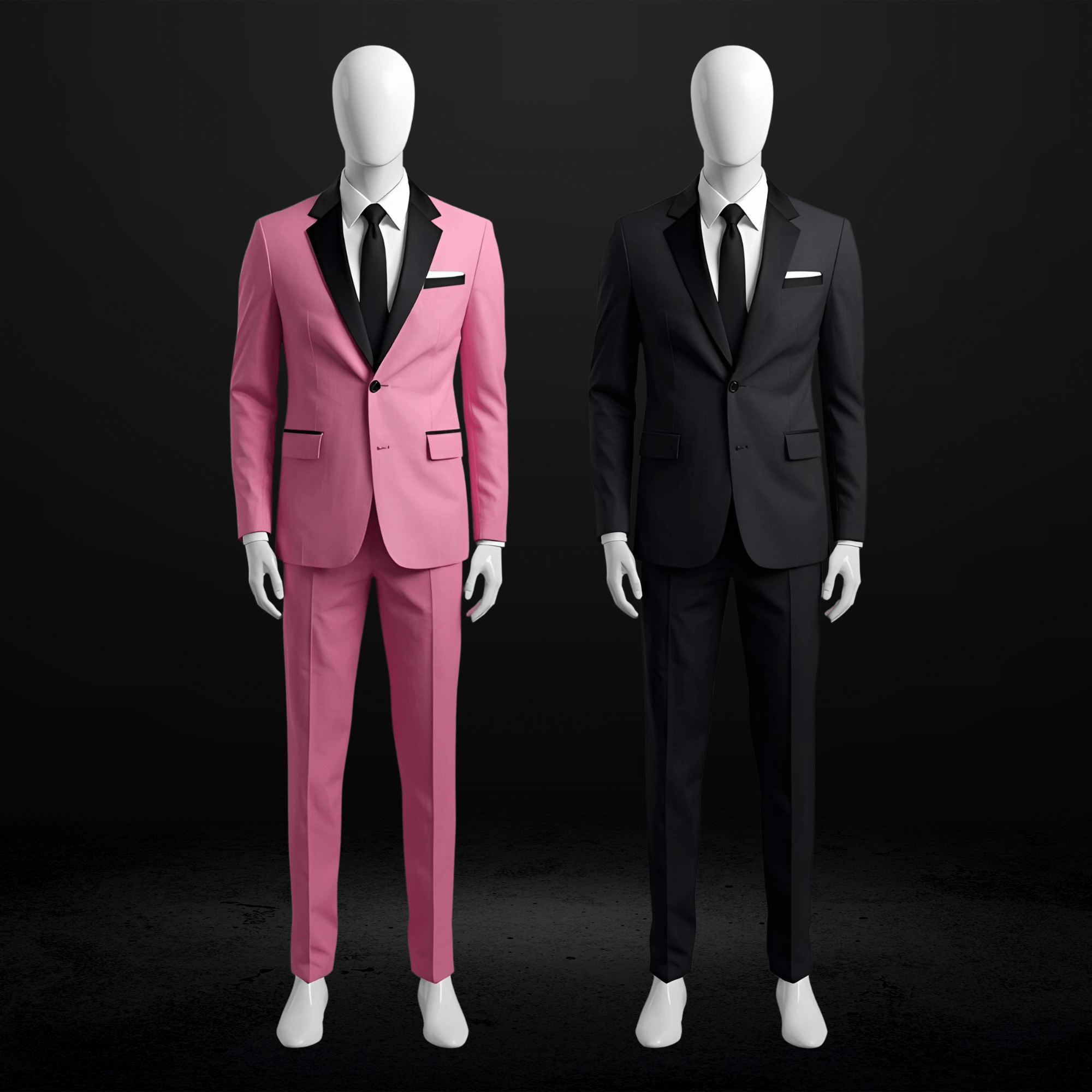
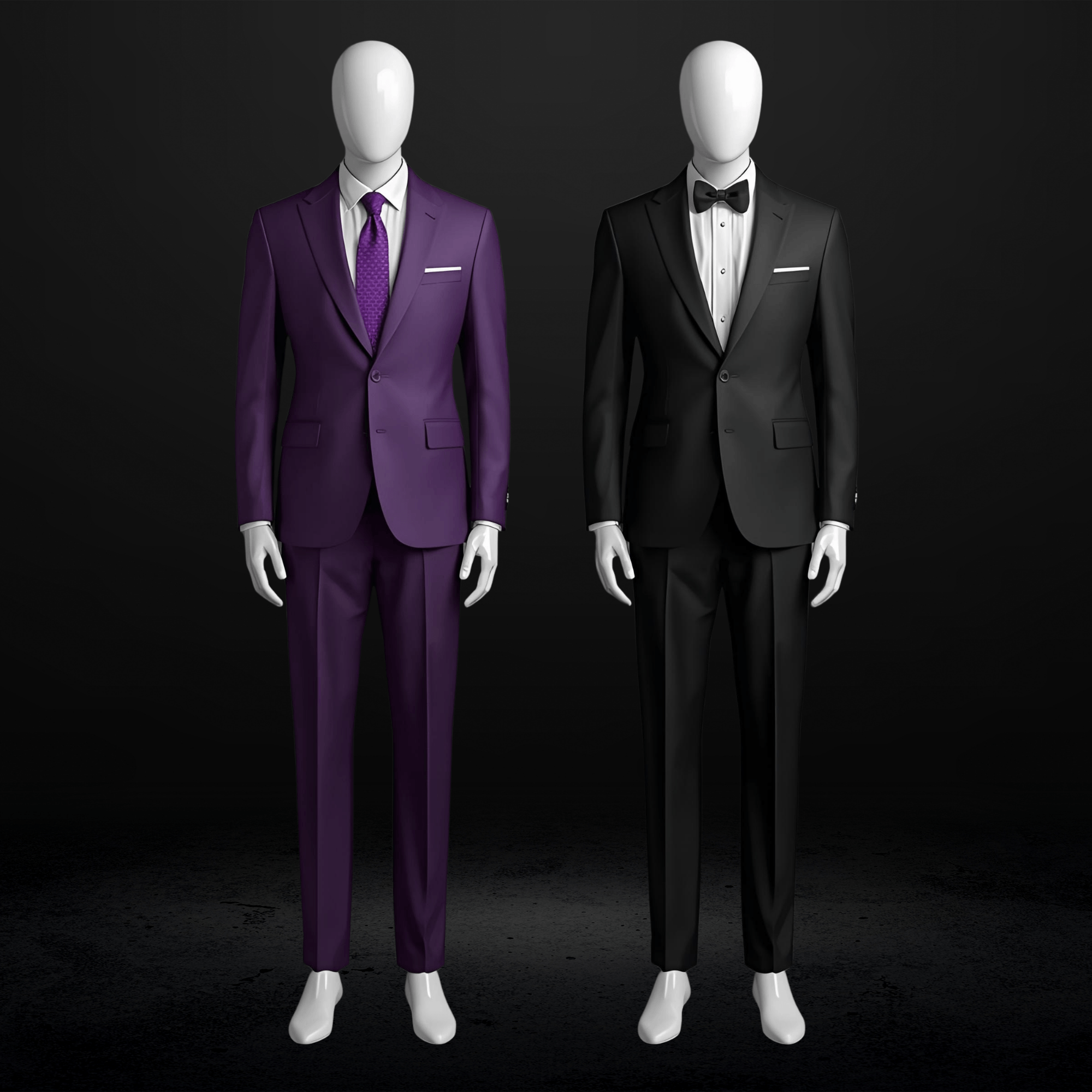
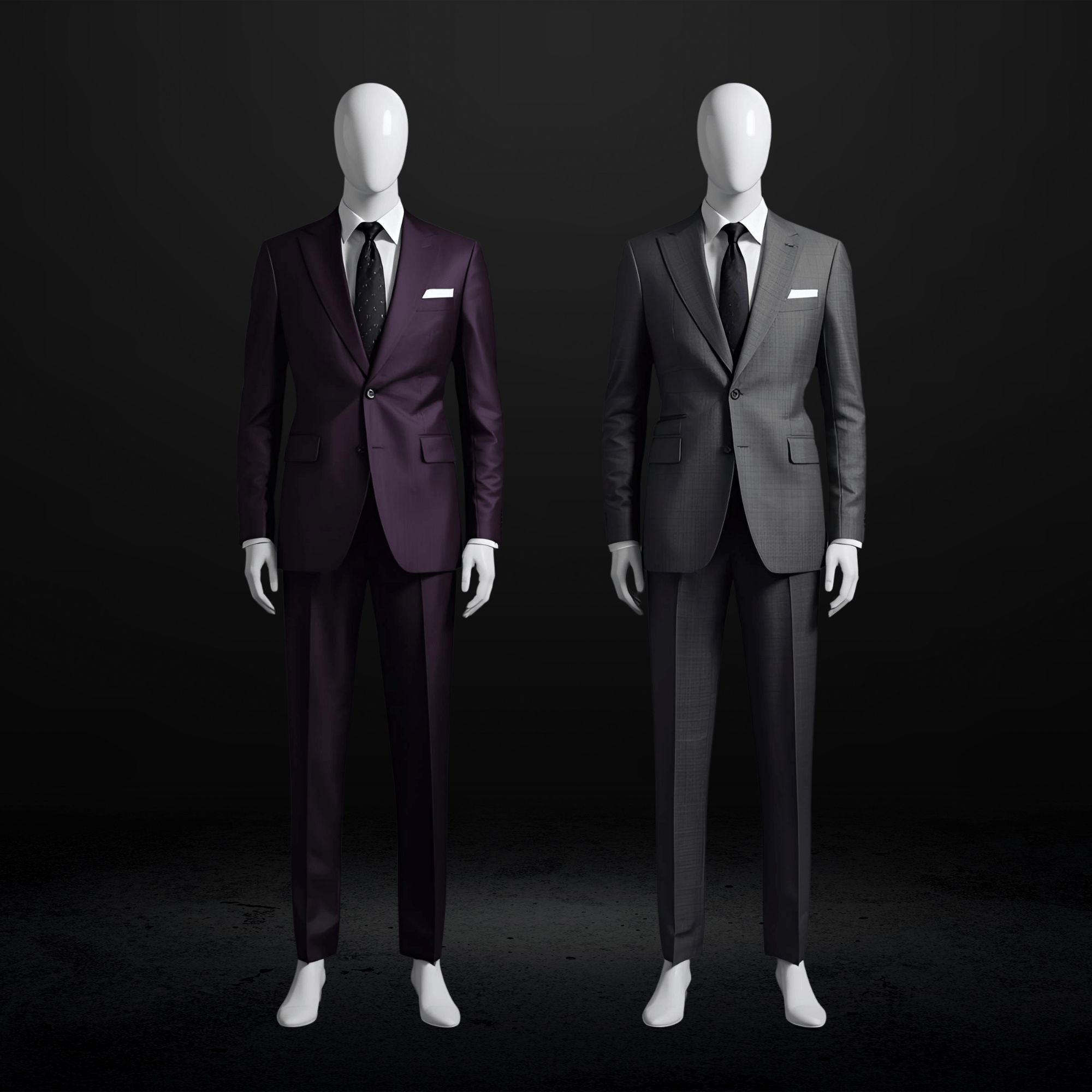
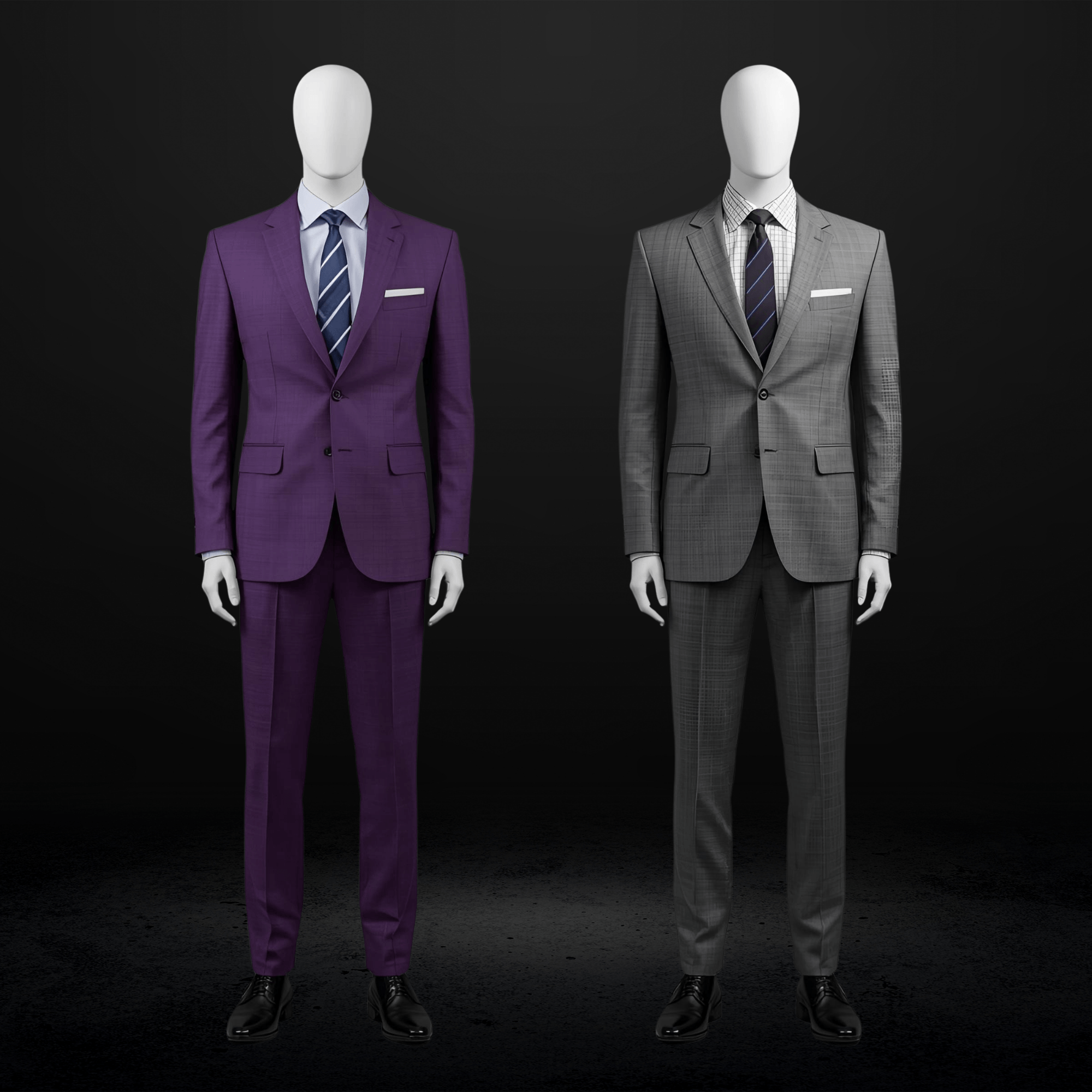
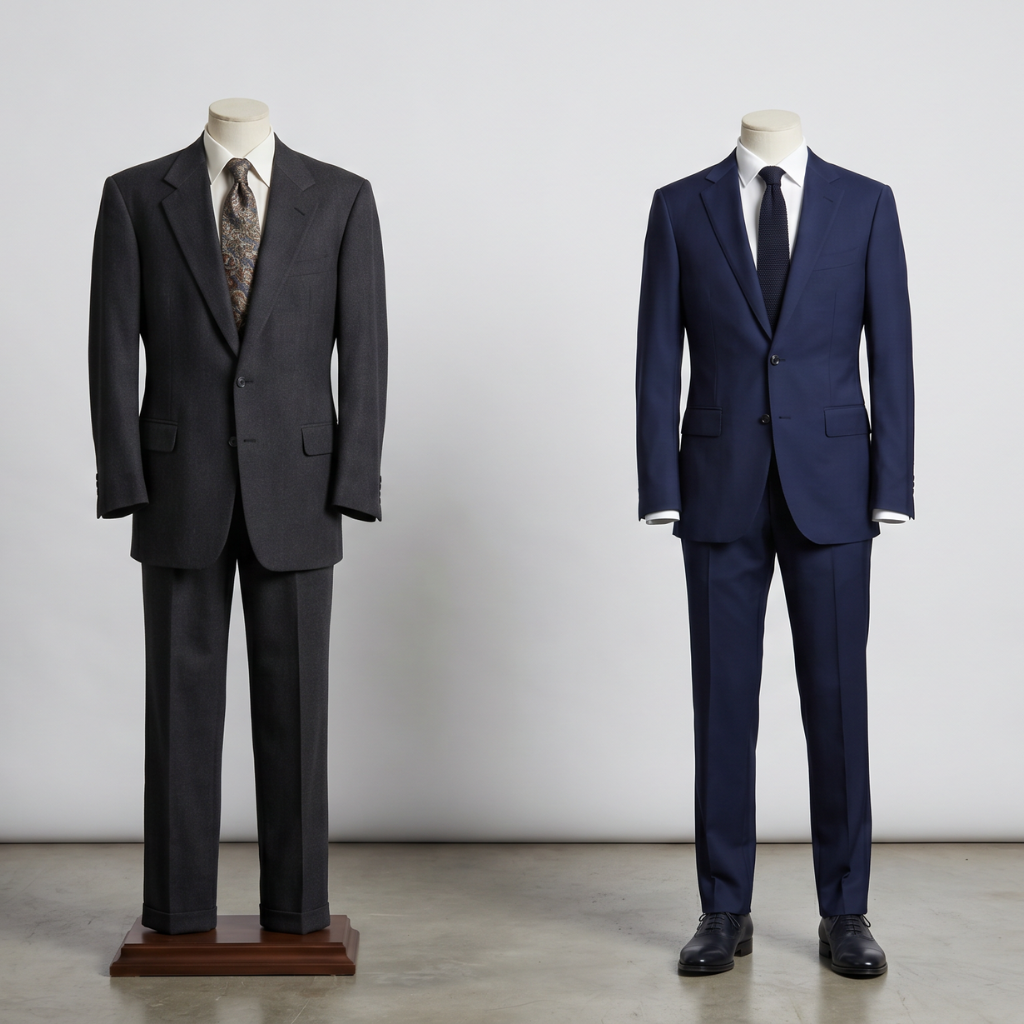
The modern suit looks nothing like the one your grandfather wore, and that is not an accident. Over the last century, the silhouette has moved from heavy, boxy, and uniform to lighter, sharper, and shaped to the individual. This guide walks you through the evolution of men’s suits, why modern fits took over, and what it all means for the suit you buy today.
TLDR: The men’s suit has evolved from rigid, oversized 20th-century silhouettes into today’s fit-first approach, where the cut follows the body instead of hiding it. Slim, classic, and tailored fits now coexist, but the common thread is precision. Read on to understand how we got here and why fit is the single biggest factor in how a modern suit actually looks on you.
You probably know the feeling. You pull on an old suit from a closet, look in the mirror, and something is off. The shoulders float, the jacket swallows your frame, and the trousers pile at the ankle. Then you try on a modern suit built for your body, and suddenly the same person looks sharper, taller, and more confident.
That difference is not magic. It is the result of a decades-long shift in how suits are designed, constructed, and fitted. Understanding that shift helps you make better decisions when you shop, whether you are buying your first business suit, a wedding suit for the biggest day of your life, or upgrading after years in ill-fitting off-the-rack jackets.
At The Suit Doctor, we have worked with every kind of customer since 2020, from first-time suit buyers to grooms coordinating eight groomsmen. The most common question we hear from Kansas City men investing in a custom suit is some version of: “Why does a modern suit look so different, and which one is right for me?” This guide answers that, then shows you how to apply it.
From Court Dress to Everyday Wear: The Early Roots of the Suit
The suit as we recognize it today did not appear overnight. Its earliest ancestors were the elaborate court suits of 17th and 18th century Europe, made of silk, velvet, and embroidered brocade. These were garments built to display wealth and rank, not to move in.
The shift toward a simpler, sculpted silhouette came in the late 1700s and early 1800s. Beau Brummell, the legendary English dandy, helped push menswear away from lace and color toward clean lines, dark colors, and precise tailoring. The body, not the decoration, became the focus. This was the first real step toward what we would now call a modern fit.
By the mid-1800s, a specific London street had become the global center of this new style. The history of bespoke tailoring tradition documented by the Savile Row Bespoke Association traces the craft’s roots in the Mayfair area back to the early 17th century, with houses like Gieves & Hawkes founded in 1771 and Henry Poole’s records commencing in 1806. By the early 1800s, Savile Row itself had become the recognized home of bespoke tailoring. This concentration of craftsmanship set the standard for what a well-cut suit should look like, and its influence still reaches every custom suit shop operating today, including ours in Kansas City.
The 19th century also gave us the three-piece suit and the first “lounge suits,” the direct ancestors of the modern business suit. These were far more practical than earlier court dress. They were designed for the rising middle class, for offices, for travel, and for daily life. For the first time in history, a well-made suit was something a working professional could actually wear to work.
How the Industrial Era Shaped the Modern Silhouette
The Industrial Revolution did two things to the suit that still affect the one hanging in your closet right now.
First, it made wool fabric consistent, available, and affordable at a scale that had never existed before. The International Wool Textile Organisation (IWTO) is the global authority for wool standards, and its members represent the entire supply chain from farm to retail. According to IWTO’s own history, the organization was born in 1924 out of an arbitration agreement between the British and French wool textile industries, and it has been setting wool standards for the global wool trade for roughly a century. The suit fabrics we use today, from fine Super 120s worsted wool to flannel, trace back to that industrial infrastructure.
Second, mass production gave birth to ready-to-wear suits. Factories could now cut and sew standardized sizes for thousands of men. This made the suit accessible, but it also introduced the problem we spend so much time solving today: the off-the-rack fit.
A factory suit is designed around an average body. If your shoulders are slightly narrow, your torso is longer than average, or you carry muscle in your legs, that average does not describe you. The gap between what a standard size offers and what your body actually needs is the core reason custom and made-to-measure suits in Kansas City became popular again in the last two decades. Men started realizing that a $400 off-the-rack suit with $200 of alterations still did not fit as well as a suit patterned specifically for them.
The 20th Century and the Rise of the Business Suit
The 20th century is where the suit became a uniform, and it is also where its most dramatic style swings happened.
The 1920s and 1930s gave us sharp lapels, structured shoulders, and the first real celebrity tailoring culture. Hollywood stars like Fred Astaire, Cary Grant, and Gary Cooper were dressed by Savile Row houses, and their on-screen style shaped what men around the world wanted in their own wardrobes.
The 1940s brought wartime restrictions on fabric, which actually forced suits to become trimmer and more practical. Pockets were simplified. Vests were often dropped. The silhouette slimmed out of necessity.
The 1950s and 1960s swung hard in the opposite direction. Shoulders grew wider. Jackets got longer. Trousers became fuller. This was the era of the boxy suit, and if you have ever seen a picture of your grandfather in his Sunday best, you know exactly what that looks like.
The 1970s went even further with wide lapels, flared trousers, and bold patterns. Some of it aged well. Most of it did not.
The 1980s and 1990s brought power suits, heavy shoulder padding, and an aggressive, oversized silhouette. Think pinstripes, double-breasted jackets, and trousers with deep pleats. The suit was a statement of status, and the statement was loud.
By the end of the century, something had shifted. A new generation of men began asking a simple question: why does my suit look so much bigger than I am? That question set up the modern fit revolution.
Slim, Tailored, or Classic: How to Choose a Suit Fit Today
The 2000s brought the biggest change in men’s suiting since Beau Brummell. Designers, tailors, and retailers began moving away from oversized silhouettes and toward cuts that followed the body. Italian tailoring, with its soft shoulder and lighter construction, heavily influenced this change. Modern Savile Row houses also modernized. The Savile Row Bespoke Association was formed in 2004 through an alliance of five like-minded houses to protect and champion the craft while also promoting its continued relevance as an international centre of modern men’s style.
This is where a practical suit fit guide for men becomes useful. Today, most quality suits fall into one of three fit categories. Here is how they compare at a glance.
| Fit Type | Jacket Cut | Trouser Cut | Best For |
|---|---|---|---|
| Slim Fit | Close to the chest, narrow shoulders, high armholes | Tapered leg, shorter break | Lean builds, fashion-forward looks, younger professionals |
| Tailored Fit | Shaped through the waist, balanced shoulder, natural armhole | Clean straight line, standard break | Most body types, business and wedding suits |
| Classic Fit | Roomier chest, fuller shoulder, relaxed armhole | Looser leg, fuller break | Stockier builds, traditional dress codes, older customers |
Takeaway for a modern buyer: Slim is not automatically better, and classic is not automatically dated. The right fit is the one that flatters your actual body and the situations you will wear it in. A groom with a muscular build may look far better in a tailored fit than a slim fit, even if the slim fit looks great on his best man. That is the entire point of the modern approach.
Tip: When you hear “modern fit” without more detail, ask questions. The term means different things at different companies. At The Suit Doctor, modern fit means the suit is measured and built for your body, then fine-tuned to sit the way you want it to look.
Why Fit Matters More Than Ever Today
Here is the part that surprises most new customers. The reason modern suits look so much better is not because the fabric got better, even though it often did. It is because the fit got better.
Research published on person perception and clothing in the National Library of Medicine confirms just how much clothing influences how you are perceived. A review of person perception found that clothing, hairstyle, makeup, and accessories influence first impressions, and that perceivers rely on target dress to infer social categories, cognitive states, status, and aesthetics. In plain terms, people judge you by what you wear before you say a word. A suit that fits properly sends a completely different signal than one that does not.
This is why our Kansas City mobile suit fitting service focuses so heavily on precise measurement. When we take your measurements, we are not just getting numbers. We are reading how your shoulders slope, where your natural waist sits, how your trousers should break over your shoes, and how much room you actually need to move comfortably. Those details are what separate a suit that looks expensive from one that does not.
Real example: A groom came to us last year wearing a slim-fit off-the-rack suit two sizes too small. He thought slim meant tight. After we remeasured him and built a tailored-fit wedding suit patterned to his body, his wife’s reaction at the first fitting told the whole story. Same man, same general style, completely different look. The difference was not the “trend.” The difference was the fit.
If you want to see what modern fit actually looks like before and after on a real person, our guide on 10 signs your suit doesn’t fit in Kansas City walks through the specific visual cues most men miss.
What Today’s Suit Buyer Should Understand
The evolution of men’s suits has given you more options than any generation before you. That is both good news and a trap.
Good news: you can have a suit built to fit your body, for almost any occasion, in a fabric that suits the season. Trap: more options mean more ways to get it wrong if you do not understand what you are choosing. Learning how to choose a suit fit that actually works on your body is the single most important skill a modern buyer can develop.
Here is what actually matters when you buy a suit today.
Fit comes first, always. A $600 suit that fits beautifully will always look better than a $2,000 suit that does not. This is why made-to-measure has made such a comeback. You start with a pattern drafted for your body, not someone else’s. If you want a full breakdown of this choice, we cover it in our guide to why made-to-measure suits beat off-the-rack in Kansas City.
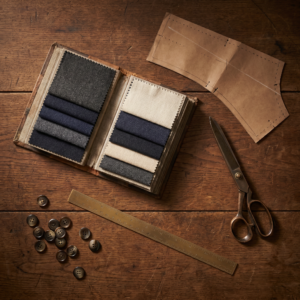
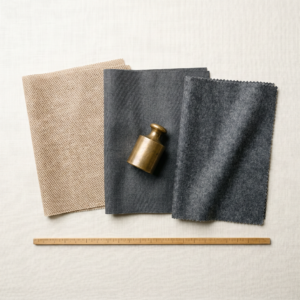
Fabric is a real decision, not a detail. Wool weight, weave, and finish affect how the suit drapes, how warm it is, and how long it lasts. A 260g worsted wool is a year-round business suit fabric. A 340g flannel is built for cold weather. A linen blend is for summer weddings. Choosing the wrong fabric for the situation is one of the most common mistakes we see new buyers make.
Construction matters, but not the way the internet tells you. You do not need to become an expert on every stitch. You do need to know that a suit built with hand-finished details will move with you better and last longer than one that is fully glued and pressed.
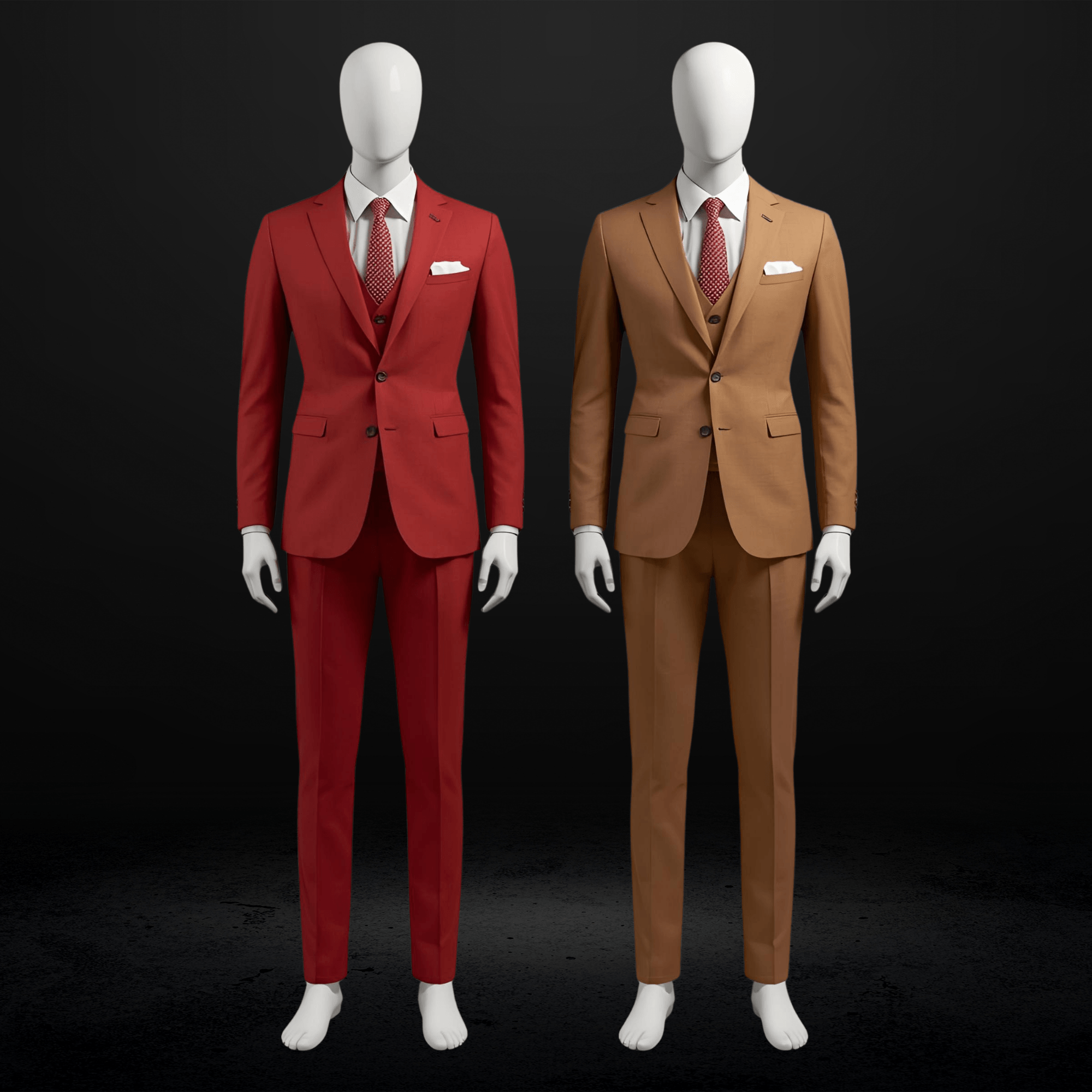
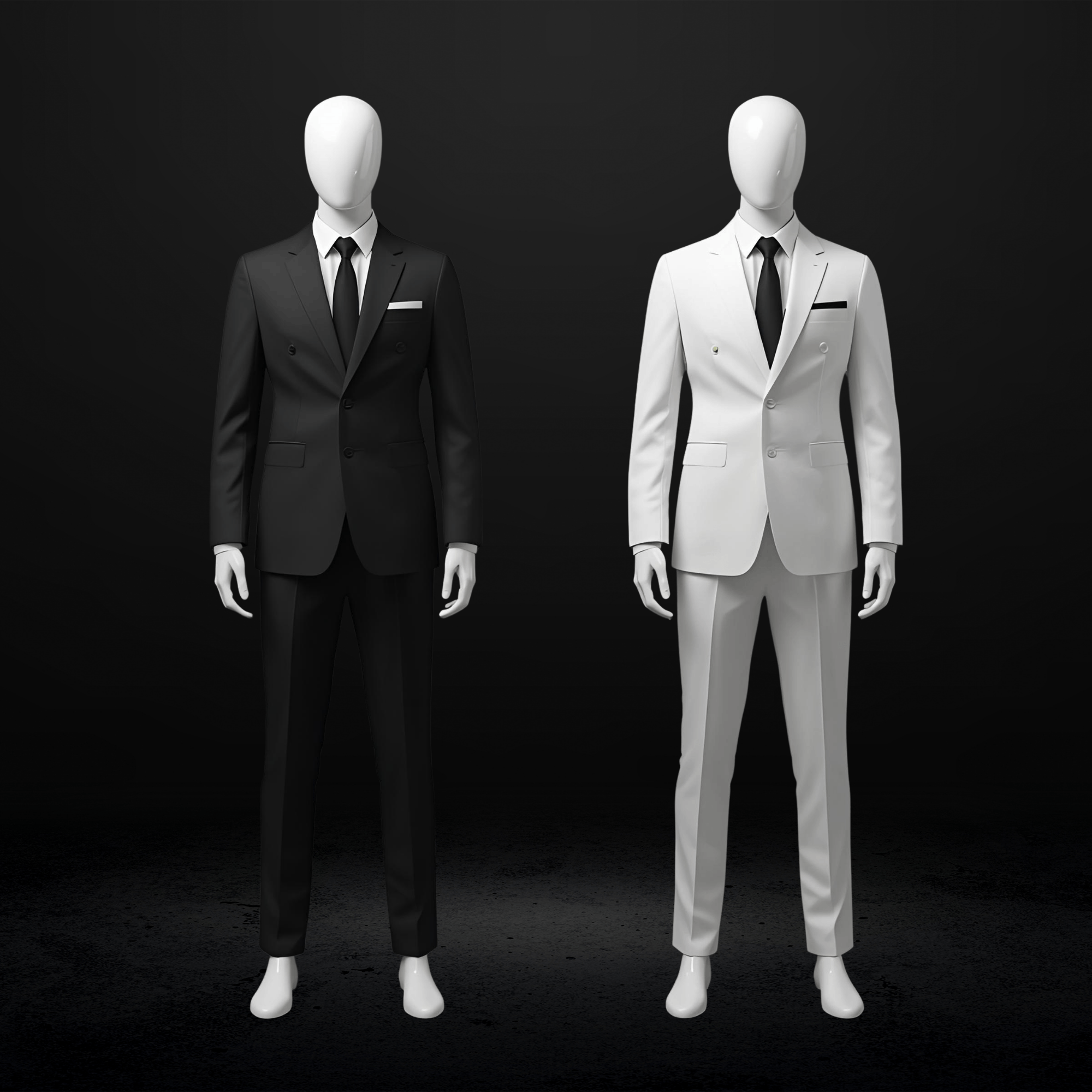
Color and pattern should match the job. A navy or charcoal suit is the most versatile first purchase for a business wardrobe. Bold patterns and statement colors have their place, but not as your first or second suit.
Pro tip: If you are buying your first serious suit, resist the urge to chase the latest trend. A well-fitted navy or charcoal tailored-fit suit will still look current ten years from now. A trendy cut will not. Our breakdown of how to choose between classic colors lives in our post on the best first business suit colors in Kansas City.
FAQs About Modern Suit Styles
Q: What is the difference between a modern suit and a traditional suit?
A modern suit is cut closer to the body, with higher armholes, narrower shoulders, and a cleaner line through the torso. A traditional suit uses a boxier silhouette, fuller shoulders, and a roomier fit in the chest and waist. Both still exist and both have their place, but most men today look better in a modern cut because it actually follows the shape of the wearer instead of adding volume.
Q: Is slim fit the same as modern fit?
No. Slim fit is an aggressive cut with very narrow shoulders, a close chest, and tapered trousers. Modern fit is a broader term that usually describes a tailored silhouette that is shaped without being tight. At The Suit Doctor, we help you figure out which of these actually works on your body rather than asking you to pick a label off a rack.
Q: Why do old suits always look too big?
Because they were designed around a different set of expectations. Older silhouettes prioritized formality and coverage over shaping. Shoulder padding was often heavy, armholes were cut low, and jackets were longer. On today’s eye, trained by modern cuts, those proportions read as oversized.
Q: Does a custom suit actually last longer than an off-the-rack suit?
Yes, for two reasons. First, a custom suit is built from a pattern made for your body, so it is not being stretched or strained to fit. Second, quality mills like Vitale Barberis Canonico, a Biellese woollen mill and symbol of Made in Italy excellence that has produced the best fabrics from fine wools since 1663, supply fabrics that are built to wear well for years. Combine a fabric like that with a pattern made for your body, and you get a suit that ages well instead of wearing out.
Q: How often do suit trends actually change?
Major silhouette shifts happen roughly every fifteen to twenty-five years. Small changes, like lapel width or button stance, shift more often but do not really date a suit the way a completely different cut does. A well-fitted suit in a classic color will stay relevant far longer than people expect.
Q: Should groomsmen all wear the same fit, or can they choose?
Most groomsmen should be in the same fit category for the photos to look clean. That does not mean identical suits. We regularly coordinate tailored-fit suits for groom parties where each man’s suit is measured and built for his own body while keeping the fabric, color, and styling consistent. If you want more detail on this, our guide to coordinating groomsmen suits in Kansas City covers the full process.
Q: Is it worth buying a custom suit for just one event?
For a wedding, absolutely. You are in photos that will exist forever, and the fit difference will be obvious in every single one of them. For a one-time business event, a well-altered off-the-rack suit can work, but most men find that once they have worn a properly fitted custom suit, they do not want to go back.
Q: What is the biggest mistake first-time suit buyers make?
Choosing size by the number on the tag instead of by how the jacket actually sits on their shoulders. If the shoulders are wrong, no tailor can fix the suit. Everything else, from the waist to the sleeves to the trouser length, can be adjusted. The shoulder is the non-negotiable starting point.
Key Takeaways
- The suit has evolved for a reason. The shift from boxy 20th-century silhouettes to today’s fit-first approach reflects what men actually want a suit to do: follow the body, not hide it.
- Three core fits dominate today’s market. Slim, tailored, and classic fits each serve different bodies and situations. The right one for you depends on your build, the occasion, and how you want the suit to read.
- Fit beats price every time. A well-fitted mid-range suit will always look better than an expensive poorly-fitted one. This is why made-to-measure has made such a strong comeback.
- Fabric choice is not a detail. Wool weight, weave, and season all affect how the suit drapes, wears, and lasts. Choose the fabric to match how and when you will actually wear the suit.
- First impressions are shaped by what you wear. Research confirms that clothing drives rapid social judgments, so a properly fitted modern suit gives you a measurable advantage in settings where first impressions matter.
- Classic colors and cuts outlast trends. Navy, charcoal, and a clean tailored-fit silhouette will still look sharp a decade from now. Trendy cuts will not.
- The shoulder is non-negotiable. Everything else can be adjusted, but if the shoulder does not sit right, no tailor can save the suit.
Ready to Wear a Suit Built for Today, Not the 1980s?
You now understand how the men’s suit evolved and why modern fit is the single biggest factor in how a suit looks on you. The next step is working with someone who can translate all of that into a suit made specifically for your body and your life.
The Suit Doctor has been serving Kansas City since 2020 with a focus on fit, fabric, and a streamlined process that respects your time. We offer:
- Custom and made-to-measure suits built from patterns drafted to your body
- Mobile fittings that come to your home, office, or event location
- Expert fit guidance for business suits, wedding suits, prom suits, and sport coats
- A wide range of premium fabrics, including Italian wools, flannels, linens, and performance blends
- Coordinated group services for weddings, corporate teams, and wedding parties
Ready to stop guessing and start wearing suits that actually fit? Book your Kansas City custom suit consultation today and let us show you what a modern, properly-built suit looks like on you.
The Suit Doctor | Custom and Made-to-Measure Suits for Men Who Take Their Look Seriously.