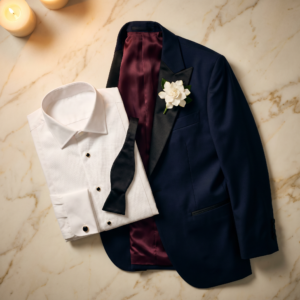
Hawthorne House in Parkville, Missouri, is one of the most loved wedding venues in the Kansas City area, and the suits your party wears should live up to the setting. This guide walks grooms and their wedding parties through exactly what to wear at Hawthorne House, from suit color and construction to groomsmen coordination and fit, so everyone looks as good as the venue the day deserves.
TLDR: Hawthorne House’s bright white chapel and private grounds reward classic, refined suit choices like navy, charcoal, and rich neutrals. A well-fitted suit in the right color is what makes the chapel photographs unforgettable. Read on for venue-specific color guidance, groomsmen coordination tips, and a timeline that keeps your whole party on track.
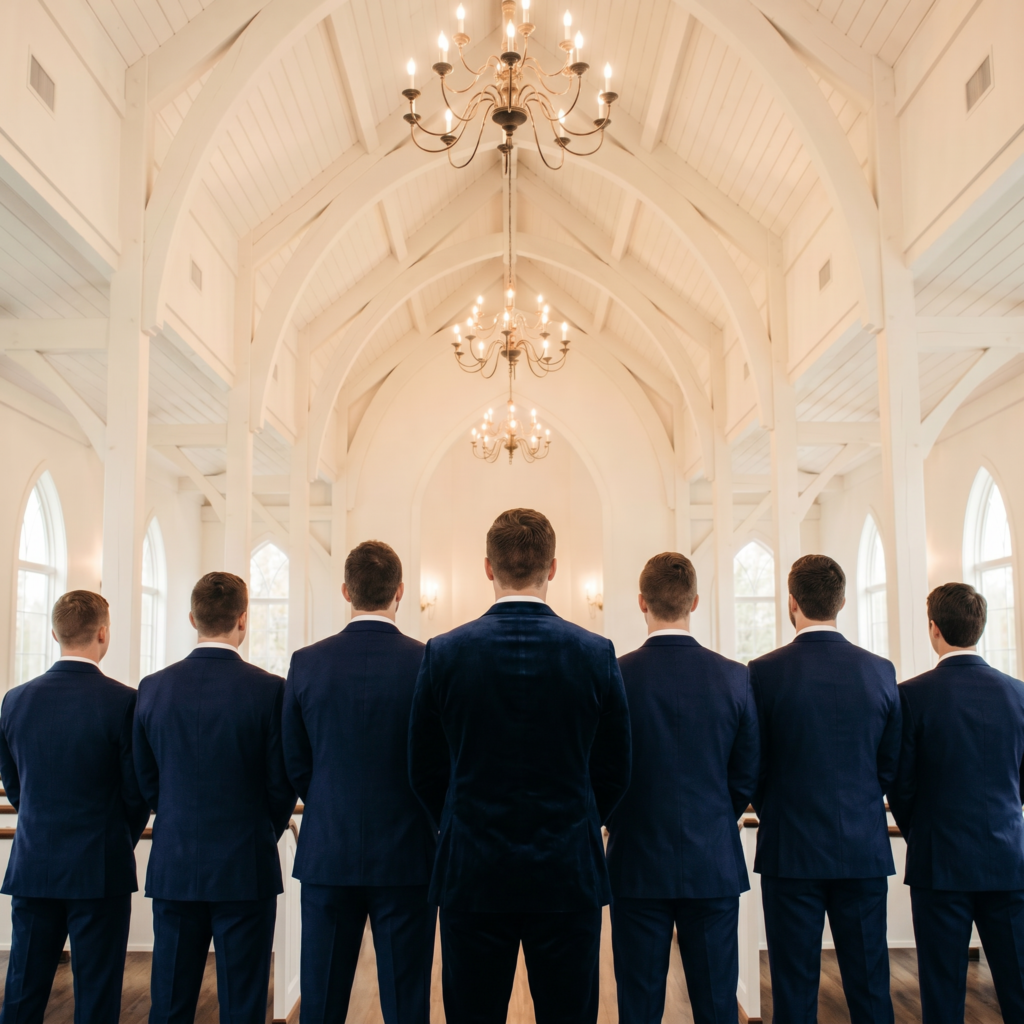
There is something about Hawthorne House that lands the moment you turn onto the property. Set on eleven private acres in Parkville, just minutes from downtown Kansas City and the airport, the estate has a quiet grandeur that feels a world away from the city. The chapel is the centerpiece for most couples: white walls, tall ceilings, chandeliers, and natural light pouring in across the pews. Photographs taken in that room have a soft, luminous quality that only a handful of venues nearby can match.
That environment sets a clear standard. A suit that photographs well, drapes cleanly, and carries the right level of formality for a chapel does not happen by accident. It starts with intentional choices made months in advance.
Here is what you need to know to get it right.
Why the Venue Should Shape Your Suit Choice
Most grooms think about a suit in isolation: a color they like, a style they saw online, a price they are comfortable with. Fewer think about the fact that the venue is the backdrop for every ceremony photograph. The suit has to work in that space, not just on a hanger.
Hawthorne House gives you a few distinct environments, each with its own photographic character.
- The chapel is bright, white, and formal. Light pours in, the chandeliers add warmth, and the architecture reads classically elegant. Dark, rich suit colors photograph beautifully here because they contrast cleanly against the white walls and pews.
- The outdoor ceremony space sits against green grounds and open sky. Colors that feel a little lighter or more seasonal work nicely there without fighting the natural backdrop.
- The Emerson Room, the reception hall, seats up to 300 guests under tall ceilings and gold chandeliers. Its warm, celebratory light works with nearly any suit palette.
The chapel is where most ceremony photography happens, so design your suit choices for that room first and let everything else follow.
The Best Suit Colors for Hawthorne House
Choosing a color for a chapel wedding comes down to two things: formality and how the color photographs.
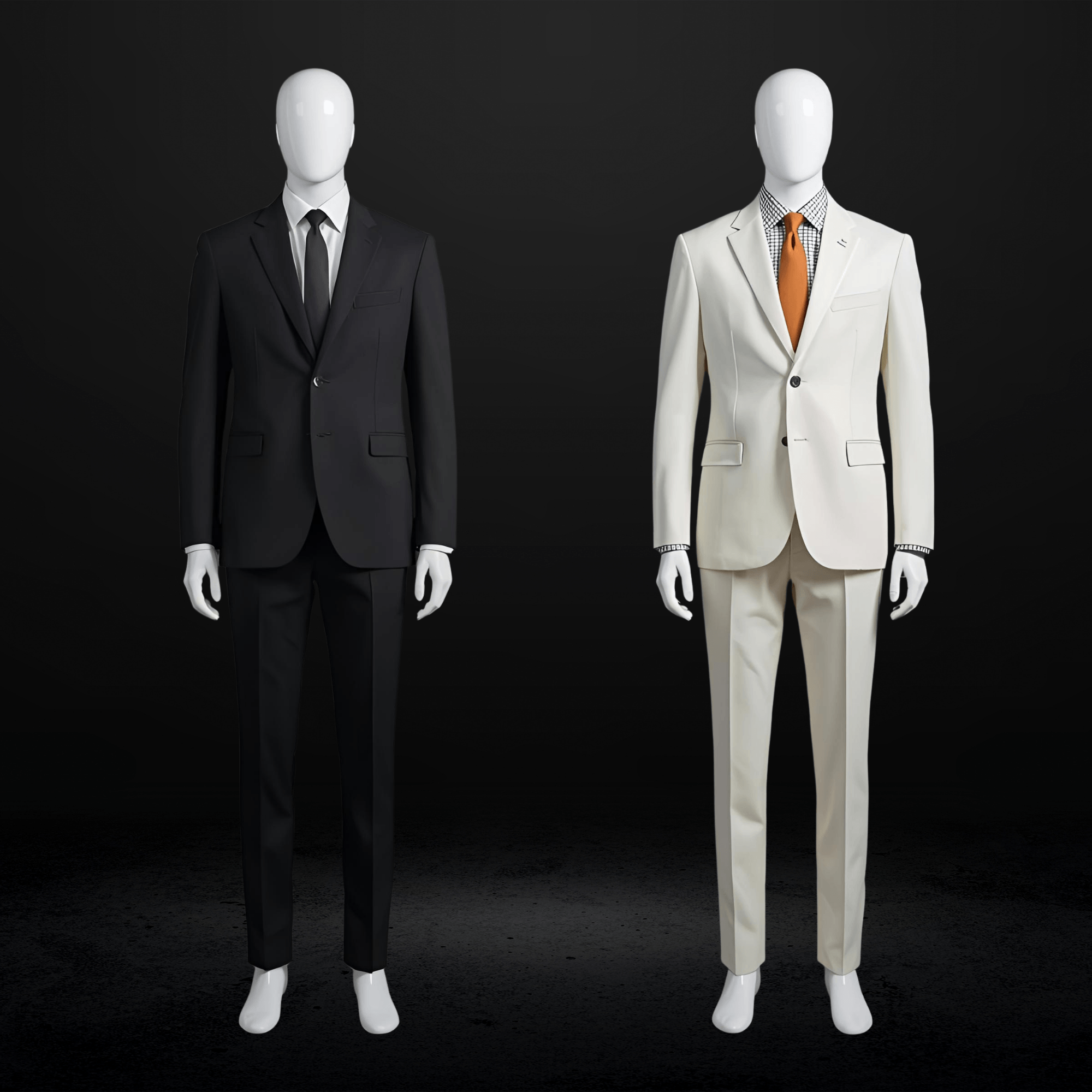
Navy: The Most Versatile Choice
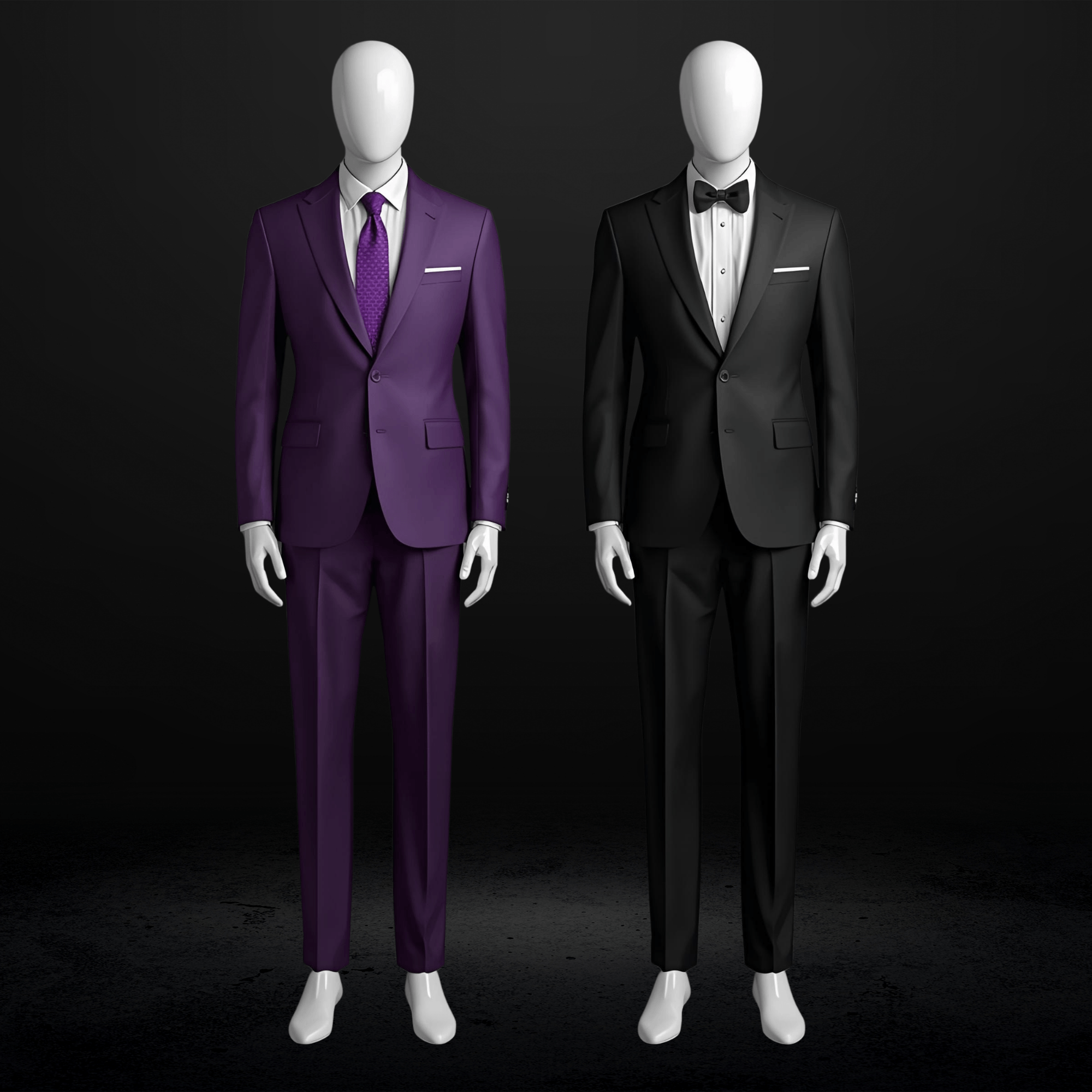
Navy is the single most flexible wedding suit color for a chapel, and it shines at Hawthorne House. Against white walls, navy gives you clean, high-contrast photos that hold their detail in both bright and softer light. It flatters nearly every skin tone, works in every season, and pairs with a wide range of accessories.
For the groom, a deep navy in a quality wool or wool-blend fabric reads as elegant without tipping into black-tie. For groomsmen, the navy offers the same visual strength while allowing the groom to set himself apart through fabric, construction, or accessories.
Pro tip: To separate the groom from the party while keeping everyone in navy, put the groom in a midnight navy and the groomsmen in a slightly lighter shade. The distinction shows clearly in photos without breaking the group’s cohesion.
Charcoal: Refined and Modern
Charcoal is the next-strongest choice for the chapel. It reads a touch less formal than navy but photographs just as well, with a softer, more contemporary feel that still suits a traditional ceremony.
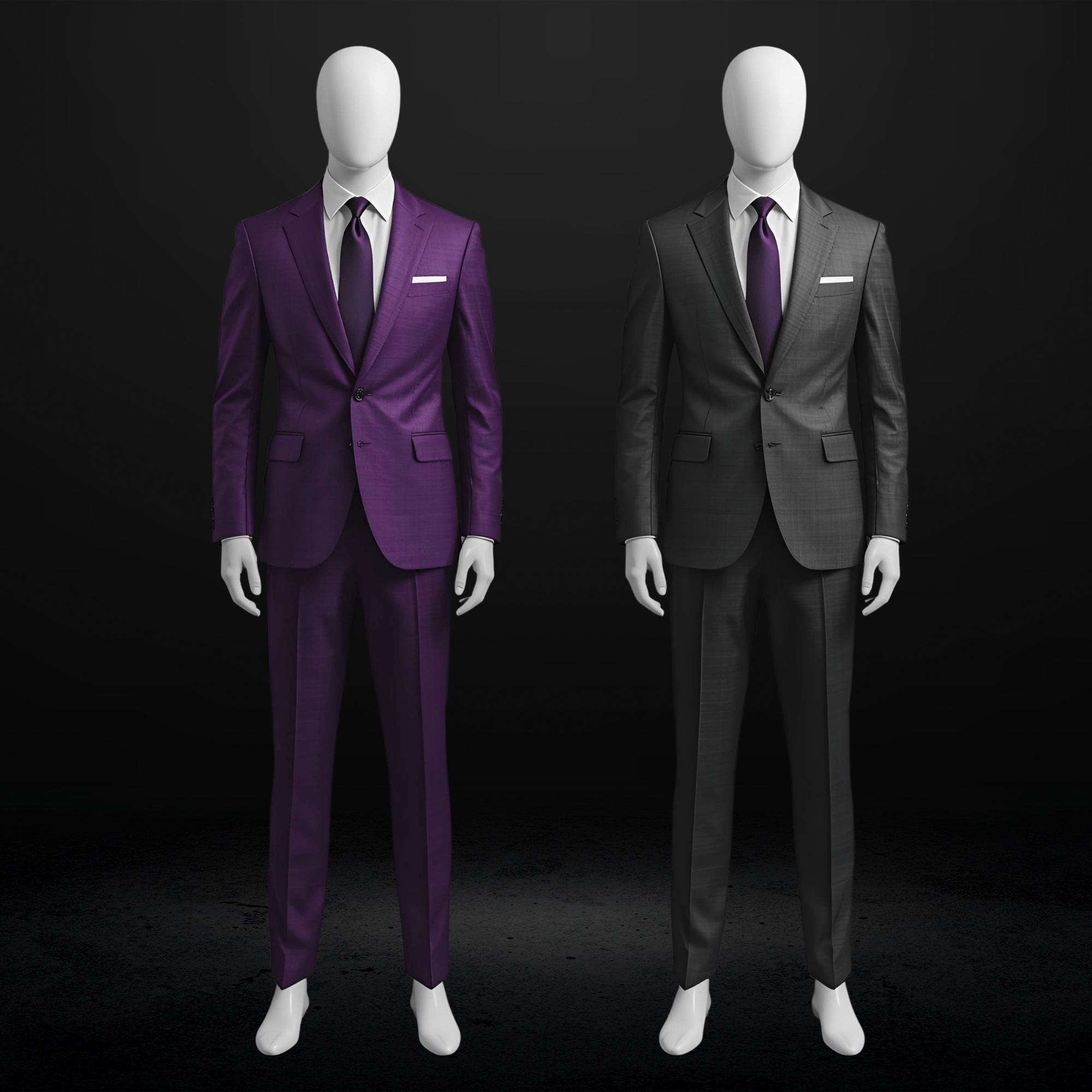
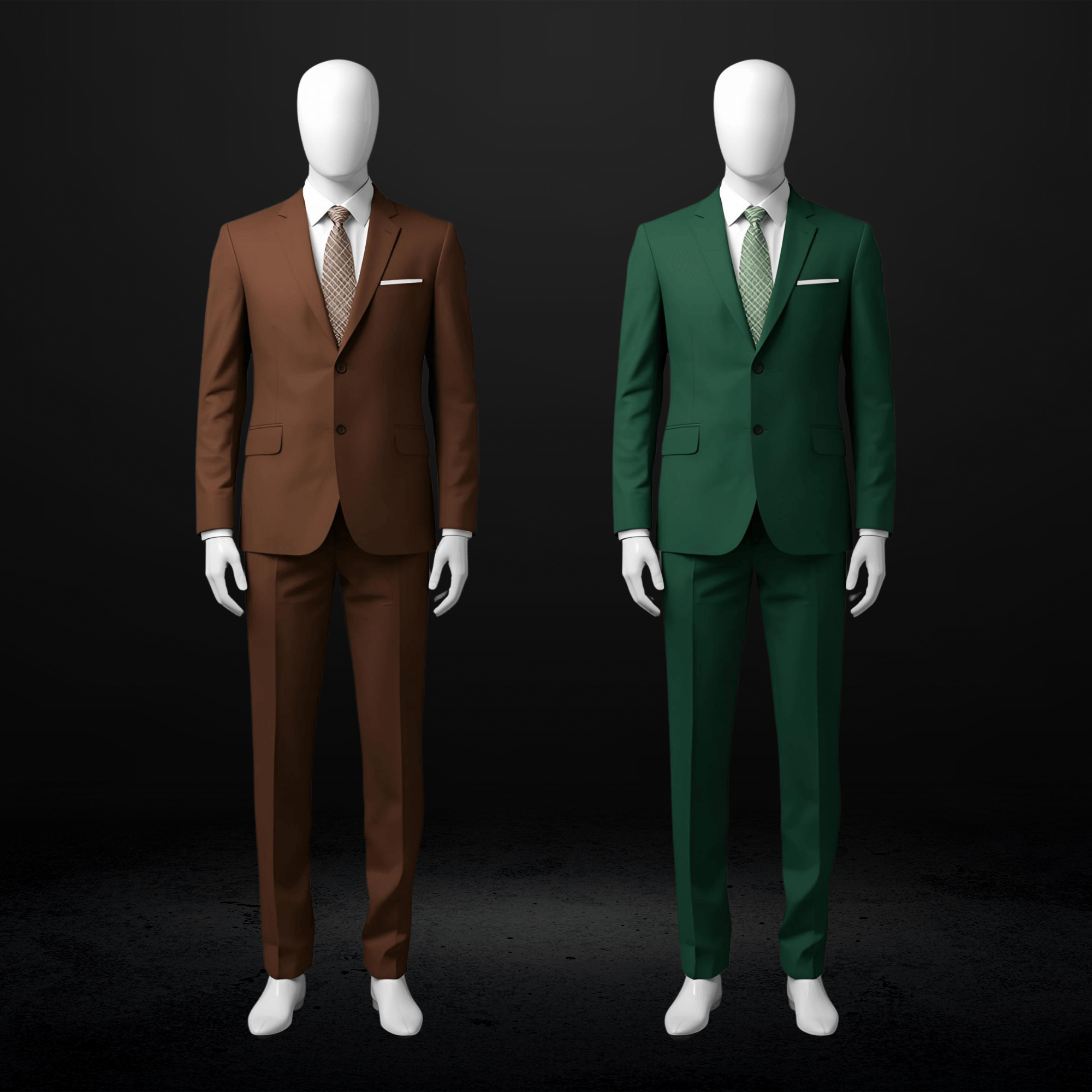
Charcoal works especially well for fall and winter weddings, where the muted gray sits comfortably alongside the season’s palette. Pair it with a white dress shirt and a silk tie in a warm accent such as burgundy, forest green, or deep gold for a look that feels current and timeless at once.
Black: Evening Formality, Done Carefully
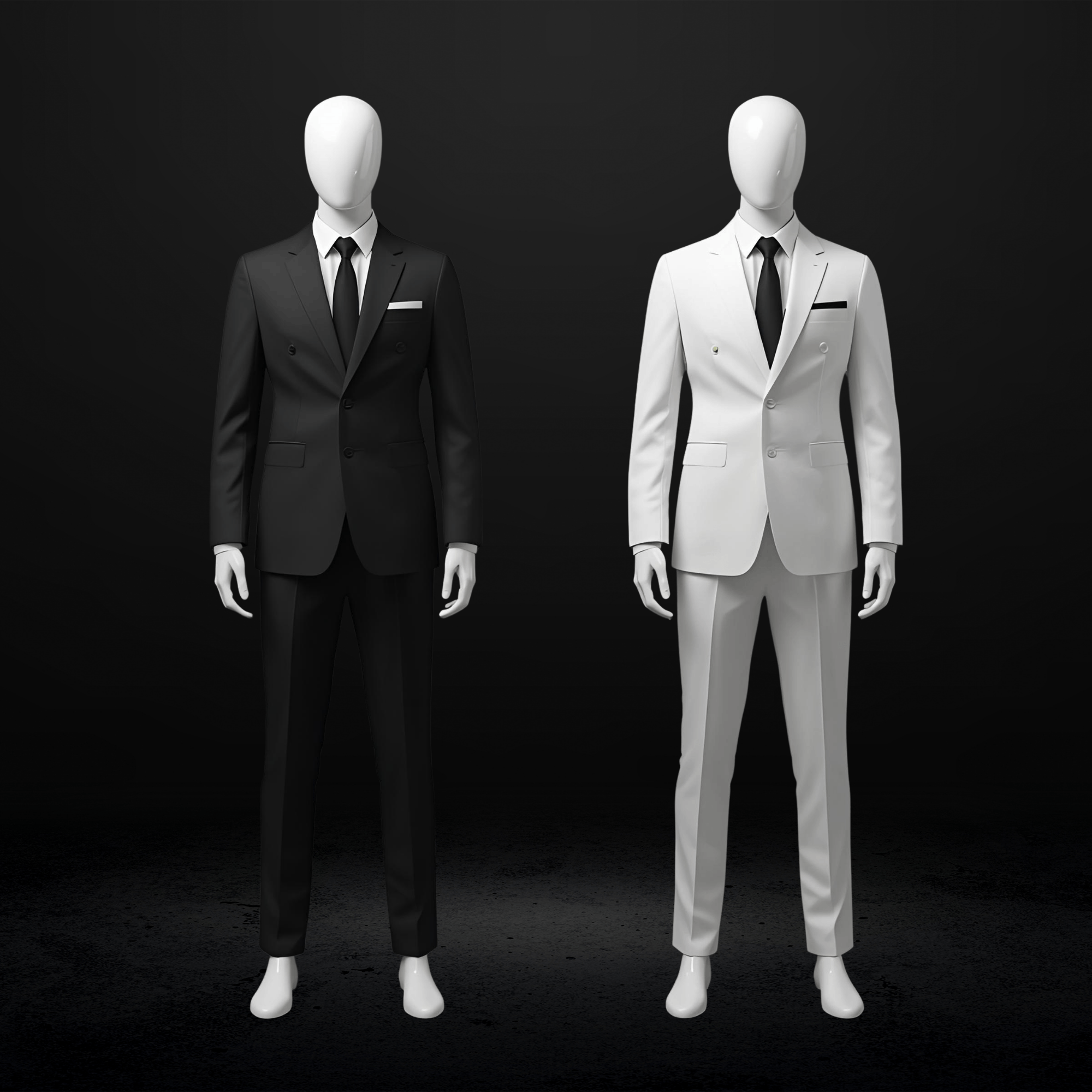
Black is the right call when the reception runs late, and the couple wants the highest level of formality. The Emerson Room handles black beautifully, with warm light that keeps the color from going flat in photos. In the white chapel, black creates a striking contrast, too.
The trade-off is flexibility. Black is more visually commanding than navy or charcoal, so every element of the outfit has to be precise. A black suit with an ill-fitting jacket or an off-white shirt loses its impact fast if you choose black; fit and construction matter even more than usual.
Lighter Colors for the Outdoor Ceremony
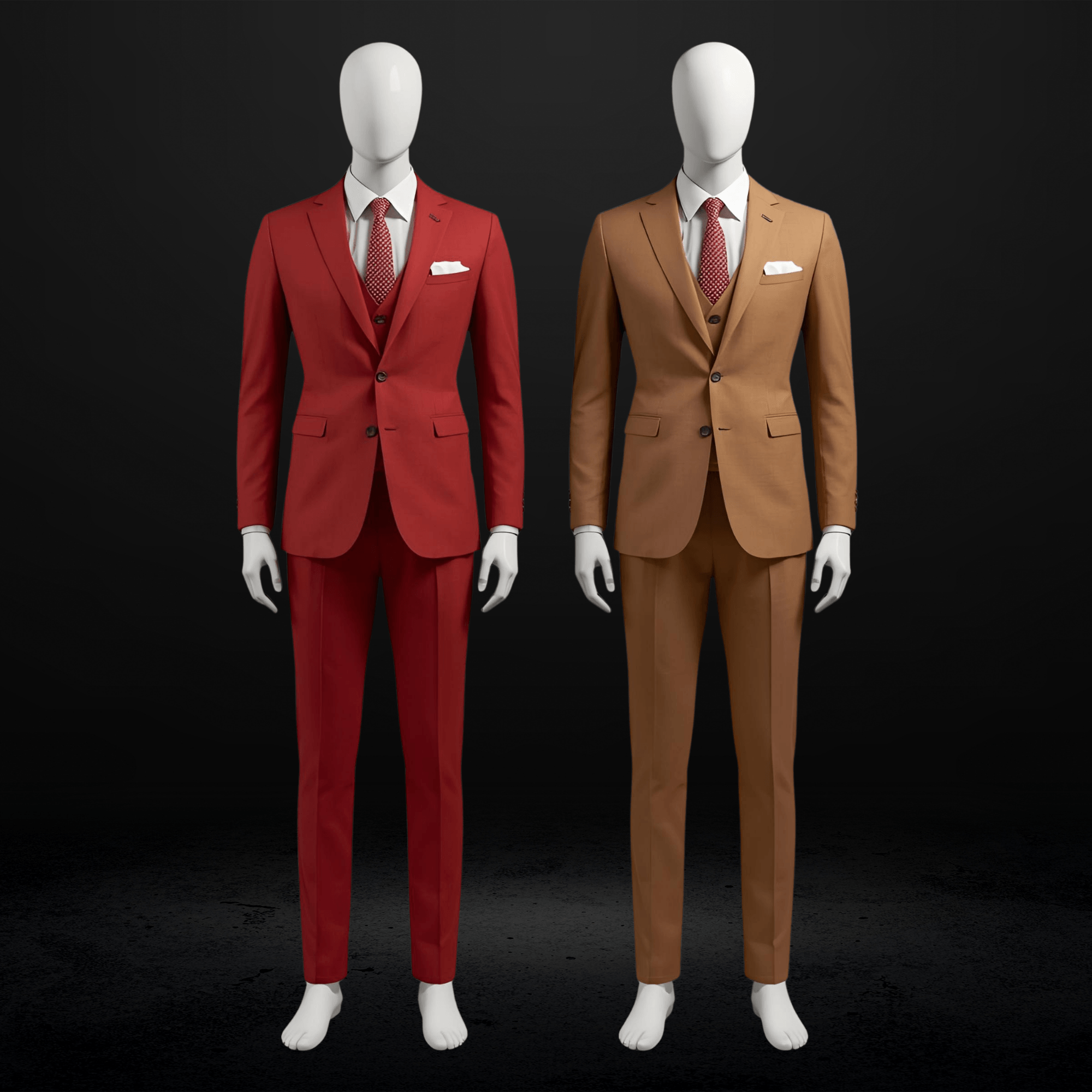
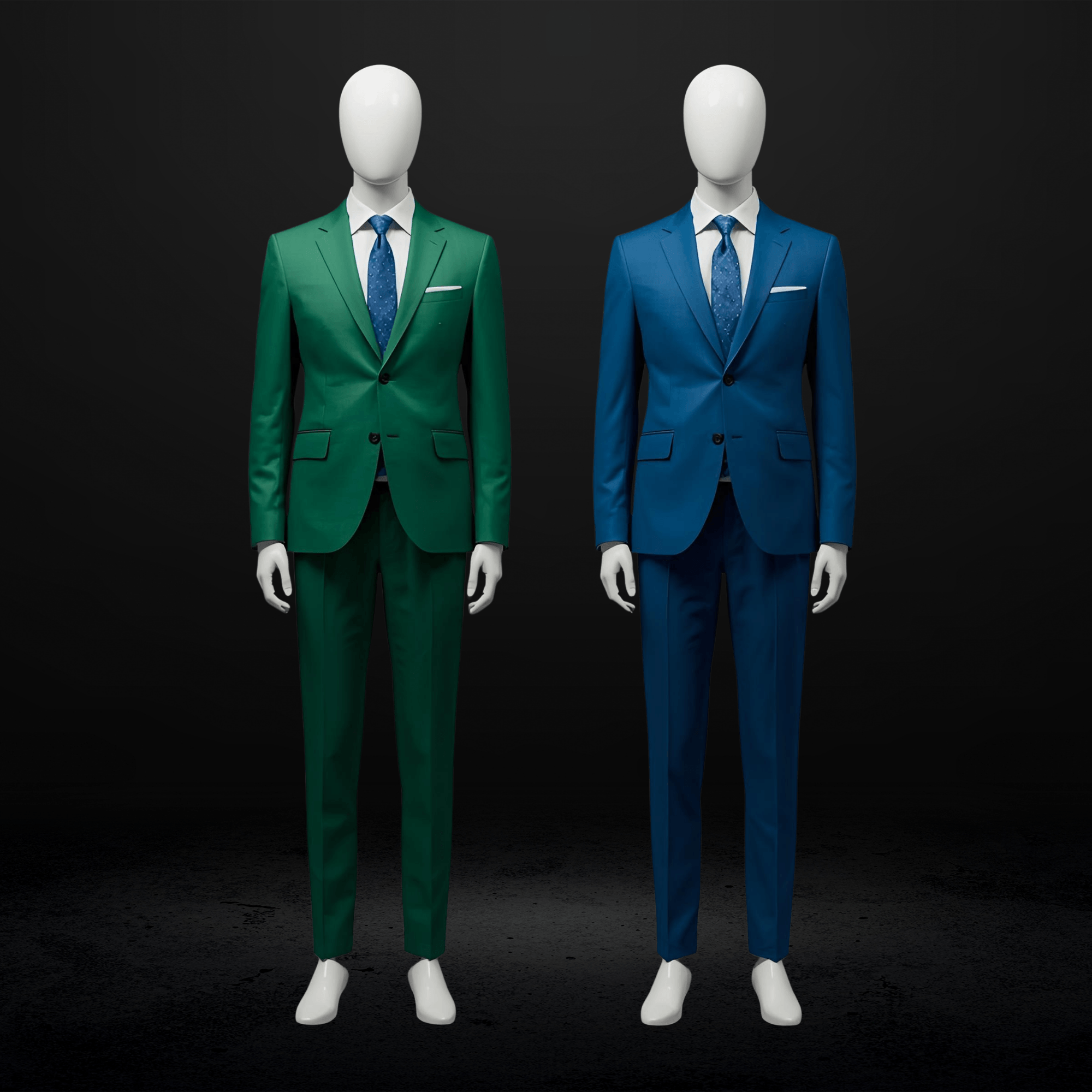
If your ceremony is outdoors on the grounds rather than in the chapel, a lighter palette is more appropriate. Light gray, soft blue, or warm tan can look excellent against the green and the open light. These also suit late-spring and summer weddings, when the property is at its most lush.
For a ceremony held outside that moves indoors for the reception, pick a color that reads well in both settings. Navy and charcoal handle that transition best.
How to Coordinate Your Wedding Party at Hawthorne House
Groomsmen coordination is one of the most common sources of wedding-day stress, and most of it is avoidable with a clear plan and enough lead time. Here is how to approach it at a venue that rewards a polished, cohesive look. If you want a deeper playbook, our guide to coordinating groomsmen suits in Kansas City breaks down sizing, sourcing, and timing for the whole party.
The Groom Should Stand Apart, Clearly
There is a visual hierarchy to a wedding party in photographs. The couple is the center. The groom should be clearly distinguishable from the groomsmen. The groomsmen should look sharp and unified, without competing with each other.
The simplest way to get there is through fabric and construction. The groom wears a made-to-measure or custom suit in a premium fabric and higher construction. The groomsmen wear coordinating suits in a similar or complementary color at a standard tier. The difference shows in photos without the groom needing a completely different color or style.
Accessories are another effective lever. Groomsmen in matching suits and ties create a clean, unified line. The groom in the same base color with a different tie, a pocket square in the wedding palette, and a boutonniere stands out immediately.
Matching Versus Coordinating the Party
For a chapel setting, a fully matched groomsmen look in one color and fabric is a strong, traditional choice that photographs beautifully. It creates a clean backdrop that supports the ceremony rather than distracting from it.
A coordinated-but-not-identical approach, where groomsmen share a base suit but vary the tie or accessories, adds personality without losing cohesion. That works especially well for larger parties where different body types may need the same suit sourced in different fit options.
Getting Everyone Measured
The hardest logistical piece is collecting accurate measurements from everyone, especially when the party is spread across cities. Out-of-town groomsmen need a clear, simple process, or they will put it off until the last minute.
The best approach is to work with a local tailor who offers mobile or guided remote measurement, so every member of the party goes through a structured process instead of guessing with a tape at home.
Pro tip: Do not let groomsmen measure themselves for wedding suits. The margin for error is high, and the window to fix a poor fit is always tighter than it looks. Assign one person in each city to coordinate local measurements, then work backward from the wedding date to set the order deadline.
The Fit Details That Show Most in Chapel Photos
The chapel is a visually intimate space. The scale of the pews, the height of the ceiling, and the brightness of the light mean that details read clearly in photographs in a way they might not at a larger, darker venue. Here is where to focus.
Shoulders Are Non-Negotiable
The shoulder seam must sit right at the edge of your natural shoulder. If it slides down the arm, the whole jacket hangs wrong, and no amount of pressing or alteration fully fixes it. This is the one fit element you have to get right from the start, which is exactly why professional measurement matters so much for a wedding suit.
Chest and Lapels Should Roll, Not Lie Flat
Your lapels will be in hundreds of chapel photographs. They should roll gently away from the chest in a soft, three-dimensional curve, not lie pressed flat against the jacket. That quality comes from real canvas construction and pad stitching rather than from an iron. A glued, fused jacket tends to show flat, lifeless lapels in close-up shots during ceremonies.
Sleeve Length Signals Everything
A quarter inch of shirt cuff showing past the jacket sleeve is the classic mark of a well-fitted suit. In ceremony photos, where the groom’s hands are visible during the vows and the ring exchange, this detail is evident. Plan for sleeve length as a specific alteration point, not an afterthought.
Trouser Break for the Ceremony
For a chapel, a half break or a clean break on the trousers photographs best. A full break, where the fabric folds once on the shoe, reads traditional but can look heavy in bright light. A half break gives a clean, modern line that suits the chapel’s conditions well. Confirm the break on your final try-on while wearing the exact shoes you plan to wear at the ceremony, since heel height affects how the trousers sit.
The Timeline Every Hawthorne House Groom Should Follow
Most grooms underestimate the lead time a wedding suit program requires, especially when coordinating a full party. Here is a working timeline.
Six months out: Lock in your direction. Choose color, fabric range, and construction tier. Commit to a color that works in your actual ceremony space before you fall for something from a beach-venue photo.
Four months out: Place your own order and start coordinating groomsmen. For a made-to-measure program, every member should have an order placed by this point at the latest. Collect measurements through a structured process, not self-reported numbers.
Six weeks out: First fitting or delivery review. Identify and schedule alterations. This is where most fit corrections happen before final delivery, so plan for it explicitly.
Two weeks out: Final suits complete and in hand for the whole party. Confirm accessories: ties, pocket squares, boutonnieres, dress shoes.
The week of: One final press or steam for every jacket and trousers. Avoid steaming a fused suit the week of the wedding, since heat and moisture break down the glue and can cause visible bubbling in the chest. A canvassed suit takes gentle steaming well and looks fresh without that risk.
Pro tip: Reserve a dry-run morning three or four days before the wedding. Every member puts on the complete outfit, head to toe, and you photograph it. A problem found on a Tuesday is fixable—a problem found twenty minutes before the ceremony is not.
Real Scenario: A Classic Chapel Wedding
Picture a groom planning a late-September wedding at Hawthorne House, with the ceremony in the chapel and the reception in the Emerson Room. He has six groomsmen spread across three cities.
He chooses a deep navy in a fine wool, made to measure, with full canvas construction that will mold to his frame over a ten-plus-hour day. His groomsmen wear coordinating navy in a slightly lighter shade, with matching burgundy ties and white pocket squares. He sets himself apart with a richer silk tie, his own pocket square, and a boutonniere that ties into the bridal florals.
The chapel photographs come out exactly as he hoped. The navy pops against the white walls. The lapels roll naturally. The sleeve length is right in every ring-exchange close-up. The party looks unified without looking like identical mannequins.
That outcome is not luck. It comes from intentional choices, a tailor who knows the environment, and enough time to get everything right. When you are ready to build that look, our Kansas City custom wedding suit service covers the groom and the entire party from the first measurement to the final fitting.
Frequently Asked Questions
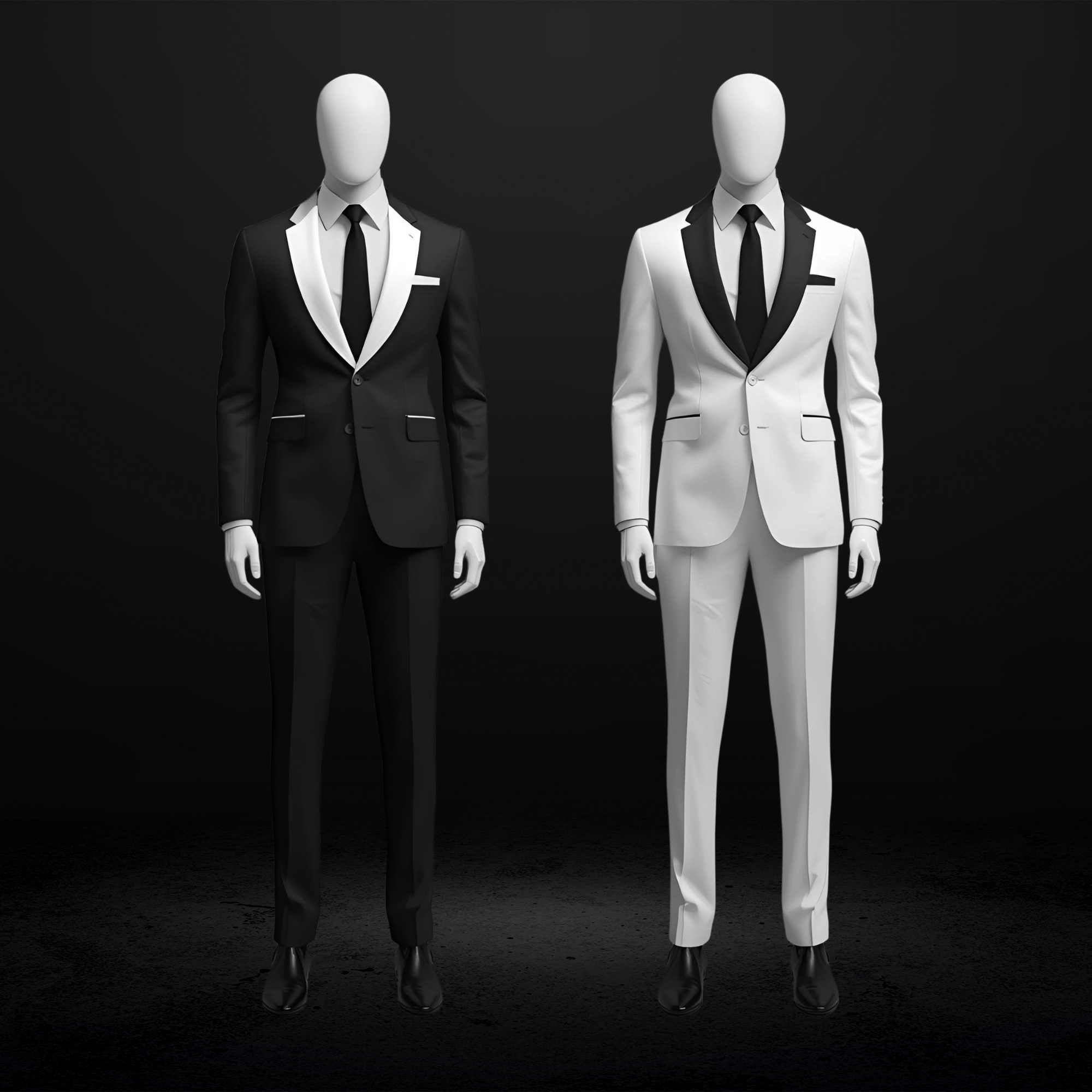
Should I wear a suit or a tuxedo for a Hawthorne House chapel ceremony? Either works, depending on how formal you want the day to feel. The chapel is elegant enough to carry black-tie formalwear, and a classic tuxedo in midnight black or navy with satin lapels looks extraordinary in that light. That said, most weddings here lean toward refined suits rather than tuxedos, since the venue’s feel is more timeless elegance than formal grandeur. If the reception runs late and the dress code is dressier, a tuxedo is a strong choice. If the celebration is more relaxed, a beautifully made suit is the right call.
How far in advance should I book my suit for a Hawthorne House wedding? For a made-to-measure or custom program, book at least four months out, and six months is better if you are coordinating a full party. That gives you room for fittings, alterations, and adjustments without pressure. If you are inside four months, contact a local tailor right away. Many programs can still accommodate you, but the cushion for changes narrows quickly.
What colors work best against the white chapel? Navy, charcoal, and black all contrast strongly against the white walls and photograph well in the chapel’s bright, natural light. Lighter colors like gray or tan work better outdoors on the grounds. If you are using both spaces, navy makes the transition most gracefully.
How do I keep my groomsmen coordinated when they are in different cities? Work with a tailor who has a process for remote or mobile measurement, whether that is guided video sessions or in-person appointments in each groomsman’s city. The key is that no one self-measures without guidance. Set a hard deadline for all orders, four months before the wedding, and share it with the party as soon as you book the venue.
Can one suit work for both the ceremony and the reception? Yes, and with the chapel-to-Emerson-Room flow here, that is the standard expectation. The trick is choosing a color and construction that performs in both the bright chapel and the warmer reception light. Navy and charcoal do this better than any other color, and a well-constructed suit with real canvas will breathe and move through a long day without losing its shape, which matters after hour eight.
What is the biggest fit mistake grooms make on the wedding day? Sleeve length, consistently. Most men do not notice it until they see the photos. Every ring-exchange close-up, every moment at the altar, every handshake shows the sleeve. If there is no quarter inch of cuff showing, the suit looks borrowed. Plan for sleeve length as an explicit alteration point and confirm it on the final try-on.
Does construction type really matter for a one-day wedding? More than most grooms expect. A fused suit worn for ten or more hours, through dancing and summer heat, can start to feel stiff and uncomfortable in ways a canvassed suit does not. Canvas lets the jacket breathe and move with you. For a day you will photograph and remember for decades, construction earns its place.
Key Takeaways
- The chapel is a bright, white, formal space. Dark, rich colors like navy, charcoal, and black photograph beautifully and contrast cleanly against the architecture.The
- Navy is the most versatile choice. It works in the chapel, outdoors, and through the reception with equal strength.
- Distinguish the groom through fabric and accessories, not necessarily a completely different color from the party.
- Professional measurement is non-negotiable for a wedding party. Out-of-town groomsmen need a guided process, not a tape measure and a video.
- Shoulder fit, lapel roll, and sleeve length are the three details that show most in chapel photography.
- Start six months out. Four months is the minimum for a coordinated made-to-measure program, and every week inside that window shrinks your margin for adjustments.
Ready to Build the Look for Your Hawthorne House Wedding?
You now understand how the venue, and the chapel in particular, should shape every suit decision you make. The right color, the right construction, the right fit, and a clear coordination plan add up to a wedding party that honors the setting and looks as good in the photographs as it does in person.
When you work with our team, you get:
- Guidance matched to your venue’s formality and aesthetic
- Made-to-measure suits for the groom and full wedding-party coordination
- Professional measurements that account for each person’s build and posture
- A fitting appointment, so every suit is confirmed before the wedding day
The chapel at Hawthorne House will be in your photographs for the rest of your life. Make sure the suit is worthy of it. Book your Kansas City wedding suit consultation, and we will help you build the look from the first appointment to the final fitting.
The Suit Doctor | Custom and Made-to-Measure Suits for Men Who Take Their Look Seriously.