A custom suit is one of the smartest investments a man can make in his wardrobe, but the number you discuss at the consultation is rarely the total cost of ownership. This guide covers the expenses that catch first-time buyers off guard, from the upgrade decisions you face during the order to the care costs you carry for the life of the garment. Know them, plan for them, and your suit becomes a better deal, not a worse one.
TLDR: The base price of a custom suit is the starting point, not the finish line. Construction and detail upgrades can add a few hundred dollars before the suit is even cut, and ongoing care, including dry cleaning, proper storage, and occasional re-tailoring,g adds more over a decade of wear. None of this is a reason to avoid going custom. It is a reason to walk in informed. Keep reading for the full breakdown and a real ten-year cost-of-ownership table.
The Cost You See and the Costs You Do Not
There is a quiet moment in many first custom suit consultations when the price in a client’s head and the price on the table turn out to be two different numbers. It is not a trick. A custom suit is built from choices: fabric, construction, lining, buttons, finishing, and personalization. Each one is legitimate, and each one carries a cost.
The good news is that none of these costs is hidden on purpose. They are only hidden in the sense that nobody tells first-time buyers they are coming. Once you can see the whole picture, the value of a custom suit becomes easier to defend, not harder.
This guide walks through every cost in the order you will meet it: the upgrade decisions at the order stage, the fabric question, the care costs over time, and the re-tailoring costs as your body changes. We close with an honest ten-year total, so you know what you are really signing up for.
The Upgrade Decisions You Face at the Order Stage
These costs appear at the consultation table, before the suit is cut. They are the ones first-time buyers least expect.
Canvas Construction Is the Big One
Canvas is the internal layer that gives a jacket its shape and structure. How that layer is built decides how the suit fits, how it moves, and how long it lasts. There are three approaches.
Fused construction glues the outer fabric to a stiff inner layer with heat and adhesive. It is the cheapest method and the most common in off-the-rack suits. The downside is that the glue can break down over time, which causes the chest to bubble or ripple. Fused jackets also breathe less and never quite mold to your body.
Half-canvas construction replaces the glue with a stitched canvas layer through the chest and shoulders. The canvas floats between the layers and moves with you, slowly shaping to your body with wear. This is the sensible baseline for a quality-made-to-measure suit.
Full-canvas construction extends that stitched layer through the entire front of the jacket, from shoulder to hem. You get the best drape, the most natural movement, and a jacket that can last well over a decade. The trade-off is labor: the canvas has to be stitched in by hand, so it costs more.
The upgrade from half to full canvas commonly adds a few hundred dollars to a made-to-measure suit, often in the range of $200 to $500, depending on the maker. For a suit you will wear weekly, that is usually money well spent. For a piece you wear a few times a year, half canvas is the smarter use of budget.
What to ask at the consultation: startwith at half canvas as your floor. If this will be a workhorse suit, ask what full canvas adds and decide with that number in front of you, not after.
Premium Lining
The lining is what you feel every time you put the jacket on. A standard lining usually comes with the base price. Upgrades like fine silk, a contrast color, or a custom-printed pattern cost more, commonly $50 to $200, depending on material and design.
Lining is not only decorative. It protects the outer fabric from sweat and friction, which extends the life of the shell. A better lining earns part of its keep.
Working Buttonholes on the Sleeves
On most off-the-rack jackets,s the sleeve buttons are decorative, and the buttonholes are sewn shut. On a proper custom jacket, working cuffs are a mark of real tailoring because they have to be cut and finished before the sleeve is set. You cannot add them later.
Some makers include working buttonholes in the base price, and some treat them as an add-on, often around $100 to $175 per jacket. Worth confirming up front, because it is not a change you can make after delivery.
Monogram and Personal Details
A monogram on the inner pocket or sleeve, contrast pick-stitching, horn buttons, a custom label: each is a small cost on its own, often $25 to $75 for a monogram, with the others priced individually. The trap is that they add up fast when you are excited and saying yes to everything.
Tip: decide before the consultation which details actually matter to you. A monogram you see every time you put the jacket on has real value. A contrast thread you will never consciously notice probably does not.
Want to talk through which upgrades are worth it for how you will actually wear the suit? That conversation is exactly what a consultation for custom business suits in Kansas City is for.
The Fabric Question
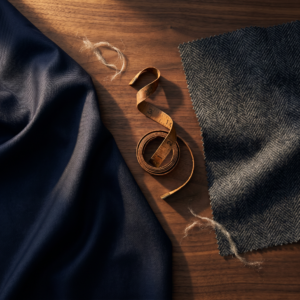
Fabric is the single largest variable in what you pay. The same suit, built the same way, can swing by more than a thousand dollars on cloth alone.
Super number grade, mill and origin (Italian versus English), and specialty blends like wool-cashmere or wool-silk all carry premiums. A Super 100s worsted is a durable, smart,t everyday choice. A high Super number cashmere blend is extraordinary, and it is priced to match.
The useful thing to know is that fabric is doing most of the work on price. Two suits from the same maker, cut and finished identically, can land far apart purely on cloth. That means fabric is also your main lever for fitting the suit to your budget. If you want to see how Super numbers and weights actually affect the decision, our guide to business suit fabrics for Kansas City breaks it down. For a full look at how fabric, construction, and labor set the overall price, the transparent breakdown of what a custom suit costs covers every tier.
The Care Costs Nobody Mentions
A custom suit is a long-term relationship. It needs consistent care to keep looking the way it did the day you picked it up. These costs are real, predictable, and easy to plan for once you know they exist.
Dry Cleaning: Less Often Than You Think
Wool suits should never go in a washing machine. Dry cleaning is the standard for a deep clean, and it comes with both a cost and a trade-off.
What it costs: a two-piece suit typically runs about $20 to $45 per clean, though prices vary by ci, ty and some cleaners price the jacket and trousers separately. Always ask before you drop off.
How often: most men err in both directions. Over-cleaning breaks down the fibers and shortens the life of the suit. Never cleaning lets oils and perspiration damage the cloth from within. For a suit in regular rotation, two to four cleans a year is the right cadence, plus spot treatment when a visible stain or heavy sweat calls for it.
The math: at three cleans a year, around $30 each, that is roughly $90 a year. Over a ten-year life, call it $900 or so on cleaning alone. Not a shock, but real, and worth building into your thinking.
Between cleanings, steam and air the suit after wear. A handheld garment steamer costs $40 to $200 and is one of the best tools you can own for a fine suit. Steaming relaxes wrinkles and refreshes the cloth without the chemical wear of dry cleaning.
Pressing and Steaming
Even between cleanings, suits wrinkle. A standalone press at a cleaner runs about $5 to $15 and is worth it before a big occasion. A good home steamer eliminates most of those trips for everyday upkeep.
Storage: The Cost of Doing It Right
This one surprises people because it feels trivial. It is not.
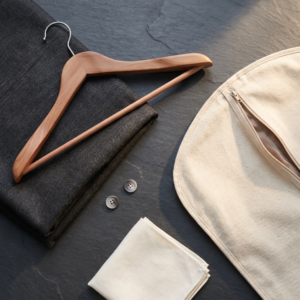
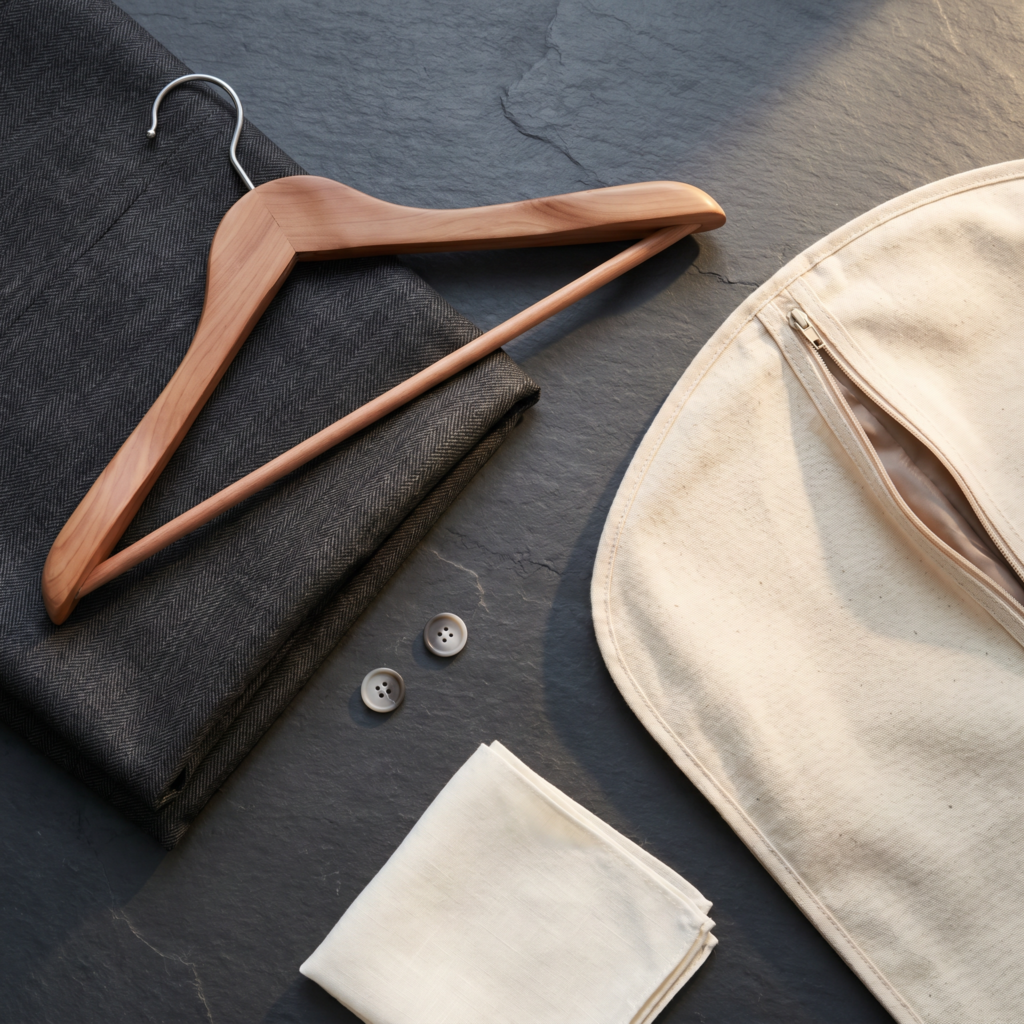
The hanger problem: wire hangers destroy jackets. They concentrate the garment’s weight on narrow points, collapse the shoulder, and set creases that cannot be pressed out. Contoured wooden or cedar hangers are the right tool, and they run about $15 to $40 each. A small cost, but a real one, and almost nobody thinks about it until after they have hung a fine suit on the wire hanger from the cleaner.
The garment bag question: a breathable bag protects against dust, light, and the single most destructive force in a wool wardrobe, clothes moths. Moth larvae feed on wool, cashmere, and silk, and a dark, undisturbed closet is exactly what they like. By the time you spot the damage, it is usually too late. A breathable bag runs $20 to $60, and cedar blocks add cheap, long-lasting natural protection.
The rule: never store a suit in a plastic bag long-term. Plastic traps humidity and invites mildew. Breathable cotton or non-woven bags are the correct choice.
When Your Body Changes: The Re-Tailoring Cost
Bodies change. Weight shifts, posture changes, and the suit that fit two years ago may not sit right today. This is one of the most overlooked long-term costs of going custom, and also one of custom’s quiet advantages.
Minor Adjustments
Even a good made-to-measure process can need small tweaks once you have worn the suit in real life. These are routine and usually inexpensive:
- Sleeve length: about $20 to $45
- Jacket waist: about $30 to $50
- Trouser hem: about $15 to $25
- Trouser taper: about $25 to $45
- Waist and seat: about $20 to $40
A quality custom suit is built with seam allowances precisely so a tailor can make these changes later. That is a real edge over off-the-rack, where the cloth to make adjustments often simply is not there.
Significant Weight Changes
A change of 10 to 15 pounds can usually be absorbed through alterations, assuming the suit was built with enough seam allowance. Beyond that, the math shifts. Reworking a jacket across the chest, waist, and back means dismantling and rebuilding major seams, and a full set of significant alterations can run $200 to $50,0 depending on the work.
At some point, an honest tailor will tell you a new suit makes more sense than extensive re-tailoring. The original, still in good shape, may suit a friend or family member or make a solid donation.
The practical move: if you know a major change is coming, a fitness goal or a medical recovery, talk timing with your tailor before ordering. A short wait can save you the cost of major rework later.
Lining Replacement
The lining is the first part to wear out, usually on the sleeves and pockets. Replacing a full jacket lining runs $75 to $200 or more, depending on the tailor and material. It is worth knowing because a well-worn suit in fine cloth is often worth re-lining rather than replacing. The shell may have years left, even when the interior is tired.
The Most Expensive Cost of All
This one is hard to put a number on, but it is the most important: the cost of a suit you do not wear.
A custom suit that misses, whether from a fit expectation that was never discussed, a fabric wrong for your climate, or an inexperienced maker, does not just cost what you paid. It costs the use you never got out of it. The most expensive suit is the one that hangs in the closet.
This is why the consultation matters as much as the fabric and construction. A consultant who understands your body, your calendar, your climate, and your occasions steers you toward a suit you will actually reach for. One focused on closing a sale may steer you toward something that looks great at pickup and wrong in your real life. If you are getting ready for a first appointment, our guide on how to prepare for your custom suit fitting in Kansas City covers what to bring, what to wear, and what to ask.
What a Custom Suit Actually Costs Over Ten Years
Here is an honest total cost of ownership for a quality-made-to-measure suit worn regularly for a decade. Ranges reflect normal market variation, not a Suit Doctor quote, since your actual suit price depends on the fabric and construction you choose.
| Cost item | Estimate over the suit’s life |
|---|---|
| Base suit price (made-to-measure) | $800 to $2,500 |
| Canvas upgrade (if chosen) | $0 to $500 |
| Premium lining (optional) | $0 to $200 |
| Working buttonholes (if an add-on) | $0 to $175 |
| Monogram and personal details (optional) | $0 to $100 |
| Contoured wooden hangers (2) | $30 to $80 |
| Breathable garment bag | $20 to $60 |
| Dry cleaning over 10 years (about 3x/year) | $600 to $1,200 |
| Minor alterations (lifetime) | $50 to $200 |
| Lining replacement (if needed) | $0 to $200 |
| Estimated total | about $1,530 to $5,215 |
Spread over ten years of regular wear, even the higher figure works out to roughly $520 a year. Wear the suit once a week, and that is about $10 per wearing for a garment built to your body. No off-the-rack suit at any price matches that mix of fit, durability, and cost per wear.
The point is not that custom suits are cheap. They are not. The point is that when you can see the whole picture, the value holds up.
Frequently Asked Questions
Does a made-to-measure suit include alterations after delivery?
It depends on the maker. Some include a round of complimentary adjustments after delivery, others charge for any post-delivery work. Ask at the consultation before you order. The Suit Doctor’s process is built to get the fit right through a thorough consultation and fitting, which minimizes the need for extensive rework later.
Isa full canvas always worth the upgrade?
For a suit you wear regularly, usually yes. The canvas molds to your body over time, improves with wear, and makes the jacket more durable and easier to alter later. For a suit worn once or twice a year, half canvas is a perfectly good choice and a smarter use of budget.
How do I know whether to dry clean or just steam?
If you wore the suit in heat or humidity and perspired heavily, dry clean it. If it just looks a little wrinkled or carries a light odor from short wear, a home steam usually handles it. The rule of thumb is two to four cleans a year for a regularly worn suit, with steaming in between.
Can major weight changes be fixed with alterations?
Minor changes of around ten pounds can usually be absorbed if the suit was built with standard seam allowances. Larger changes may need reconstruction that approaches the cost of a new suit. A good tailor will tell you honestly which situation you are in.
Are monograms and personalization worth it?
That is personal, but here is a useful test: personalization adds cost, not function. It does not make the suit fit better or last longer. What it does is make the suit unmistakably yours, which has genuine value if that matters to you. If it does not, put the money toward better fabric or construction.
What is the single most overlooked ongoing cost?
Proper hangers. Almost every ruined jacket was ruined gradually on wire hangers, not in one dramatic event. A set of contoured wooden hangers is a small investment that protects a garment worth many times more.
Should I budget extra for a wedding suit specifically?
Yes. A wedding suit often means coordinating with groomsmen, which can add consultations and fittings, and it tends to involve more personal details like custom linings and specialty buttons. Budgeting a comfortable buffer above the base price, often 20 to 30 percent, keeps those extras from becoming a surprise.
Key Takeaways
- Canvas construction matters most. Fused is the cheapest and least durable, half canvas is the quality baseline, and full canvas is the long-term investment. The upgrade often runs $200 to $500 and earns its keep on suits you wear often.
- Linings, working buttonholes, and monograms are real add-ons. Each is legitimate; none are free. Decide before the consultation which ones you actually want.
- Fabric is the biggest price variable. Cloth can swing the price by more than a thousand dollars on an otherwise identical suit. It is also your main lever for hitting a budget.
- Dry clean two to four times a year. Over-cleaning damages the cloth, and under-cleaning damages the fiber. Steam in between.
- Wire hangers are suit killers. Contoured wooden hangers are a small fix that protects a large investment.
- A breathable bag and cedar guard against moths, which can quietly destroy fine wool in a still, dark closet.
- Minor body changes can be tailored; major ones may mean a new suit. Knowing this changes how you time a big order.
- The most expensive suit is one you do not wear. A thorough consultation is not a soft benefit. It is a financial one.
Ready to Have the Full Conversation?
You now understand what a custom suit actually costs, start to finish. The investment is real, and it holds up once you know what you are getting.
The Suit Doctor’s consultation is built around complete transparency: fabric, construction, timeline, and total cost of ownership. No surprises at pickup, and no decisions you did not understand when you made them.
When you are ready, schedule your Kansas City fitting consultation and let our team walk you through every detail, including the ones nobody else warns you about.
The Suit Doctor brings custom and made-to-measure tailoring to Kansas City, with honest guidance on every fabric, fit, finish, and cost.