Kansas City summers are not just hot. They are humid. That distinction matters more than most people realize when choosing a suit, and it is the reason fabric recommendations from tailors in dry-heat climates like Phoenix or Los Angeles do not fully apply here.
From June through August, Kansas City averages high temperatures in the mid- to upper-80s, with July as the hottest month at an average daily high of about 89°F. But the temperature alone is not what makes the city’s summer climate punishing for wool suits. It is the humidity. Warm, moist air masses from the Gulf of Mexico push steadily into Kansas City from early June onward, lifting morning relative humidity into the 80s and pushing dew points into the muggy range through July and August. Even on a day with a moderate high, the actual feel is significantly hotter than the thermometer reads.
A well-chosen summer suit fabric works with that environment. A poorly chosen one works against you all day.
TLDR: For Kansas City’s humid summer climate, tropical-weight worsted wool and fresco are the top choices for professional settings: breathable, wrinkle-resistant, and structured. Linen is the right call for outdoor events and casual occasions. Cotton and linen blends sit between the two. The single most important variable is fabric weight: stay at 180 to 230 GSM. Everything below breaks down by fabric and occasion.
Why Humidity Changes Everything
In dry heat, your body’s natural cooling system works efficiently. Sweat evaporates off the skin, pulling heat away and keeping you comfortable. In humidity, that evaporation slows dramatically. Moisture-saturated air cannot absorb additional moisture, so sweat stays on the skin and heat builds.
This is why the fabric question in Kansas City is not just “what feels lightweight?” It is “what actively moves moisture away from the body and allows airflow even when the air outside is already saturated?”
The answer comes down to two fabric properties working together:
Natural fiber content: Natural fibers (wool, linen, and cotton) have cellular structures that wick moisture and regulate temperature in ways synthetic fibers cannot replicate. Polyester and synthetic blends trap heat and moisture against the body. In dry climates, this is uncomfortable. In Kansas City July, it is genuinely unpleasant and will show on your collar and back by midday.
Weave openness: An open weave creates physical pathways for air to circulate through the fabric. This is the structural difference between a dense standard wool and a fresco or hopsack weave in the same fiber. The fiber may be identical; the weave determines airflow.
Both variables need to be right. A natural fiber in a dense, closed weave still performs poorly in humidity. An open weave in a synthetic fiber still traps heat. The summer suit fabrics that work are the ones where both properties align.
The Kansas City Summer Fabric Rankings
Fresco Wool: The Best All-Around Summer Suit Fabric
Fresco is a specific construction: a high-twist open-weave worsted wool. The combination of tightly twisted yarn and an open weave structure produces a fabric that is simultaneously breathable, crisp, and highly wrinkle-resistant.
Here is what makes fresco the top recommendation for Kansas City professionals who need to look sharp through a full humid summer workday:
Breathability: The open weave creates physical air channels through the fabric, allowing heat to escape and air to circulate even when humidity is high.
Wrinkle resistance: The high-twist yarn is under constant tension, which makes the fabric spring back from compression better than most lightweight cloths. A fresco suit that has been worn for four hours in July looks significantly more composed than a linen suit in the same conditions.
Structure: Fresco holds its shape through the jacket. It does not go limp or lose its drape in heat the way some lighter fabrics do. This is the property that makes it appropriate for formal business settings and client-facing occasions.
Durability: Despite being a lightweight open weave, fresco is a hard-wearing fabric. The high-twist construction is more durable than you would expect given how breathable it is.
The trade-off is texture. Fresco has a slightly dry, crisp hand compared to the smooth softness of a standard worsted. For some professionals this reads as exactly right: purposeful and crisp. For those who prioritize softness of hand, tropical wool may be preferable.
Best for: Business professional settings in Kansas City from late May through early September. Any situation where you need to look structured and polished and cannot change clothes between morning and evening.
Tropical-Weight Worsted Wool: The Versatile Standard
Tropical-weight worsted wool is standard worsted wool woven at a lighter weight, typically 180 to 230 GSM, with an open or semi-open weave structure that allows better airflow than year-round wool while maintaining the clean surface and drape of traditional worsted.
It does not have the same engineering specificity as fresco, but it delivers excellent performance in humidity by combining:
- Natural wool’s moisture-wicking properties
- A lighter construction that reduces heat retention
- A smooth surface appropriate for business and formal settings
- Better wrinkle resistance than linen or cotton
For Kansas City professionals who want a summer suit that transitions naturally between air-conditioned offices and humid outdoor conditions, tropical-weight worsted is the most versatile option. It does not feel aggressively casual the way linen can in structured business environments, and it does not look as deliberately engineered as fresco for clients who prefer a more traditional cloth appearance.
Best for: Daily business wear, client meetings, and any professional occasion from May through September where a structured, polished appearance is required throughout the day.
Looking at the broader business suit fabric picture, including weave, weight, and mill quality? The Suit Doctor’s Kansas City custom business suits page is the right starting point for a consultation.
Hopsack: The Best Choice for Blazers and Summer Events
Hopsack is an open basket-weave fabric that shares many properties with fresco: excellent breathability, a natural feel, and good wrinkle resistance. The key difference is structural. Hopsack uses a loose woven construction that creates a softer, more relaxed hand than fresco’s high-twist crispness.
This softness is a benefit for certain occasions and a limitation for others. Specifically, hopsack’s open weave makes it unsuitable for trousers. The loose construction does not hold up to the friction and stress of trouser wear over time. For a full suit, fresco or tropical wool is the better choice.
Where hopsack excels is in blazers, sport coats, and summer jackets worn with trousers in a different fabric. A navy hopsack blazer over linen or cotton trousers is a classic summer professional look that breathes beautifully and photographs well.
Best for: Summer blazers and sport coats, smart-casual professional occasions, Kansas City outdoor events and receptions from May through September. Not recommended for suit trousers.
Linen: The Outdoor Event Specialist
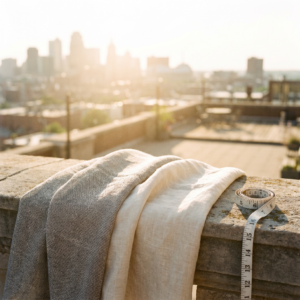
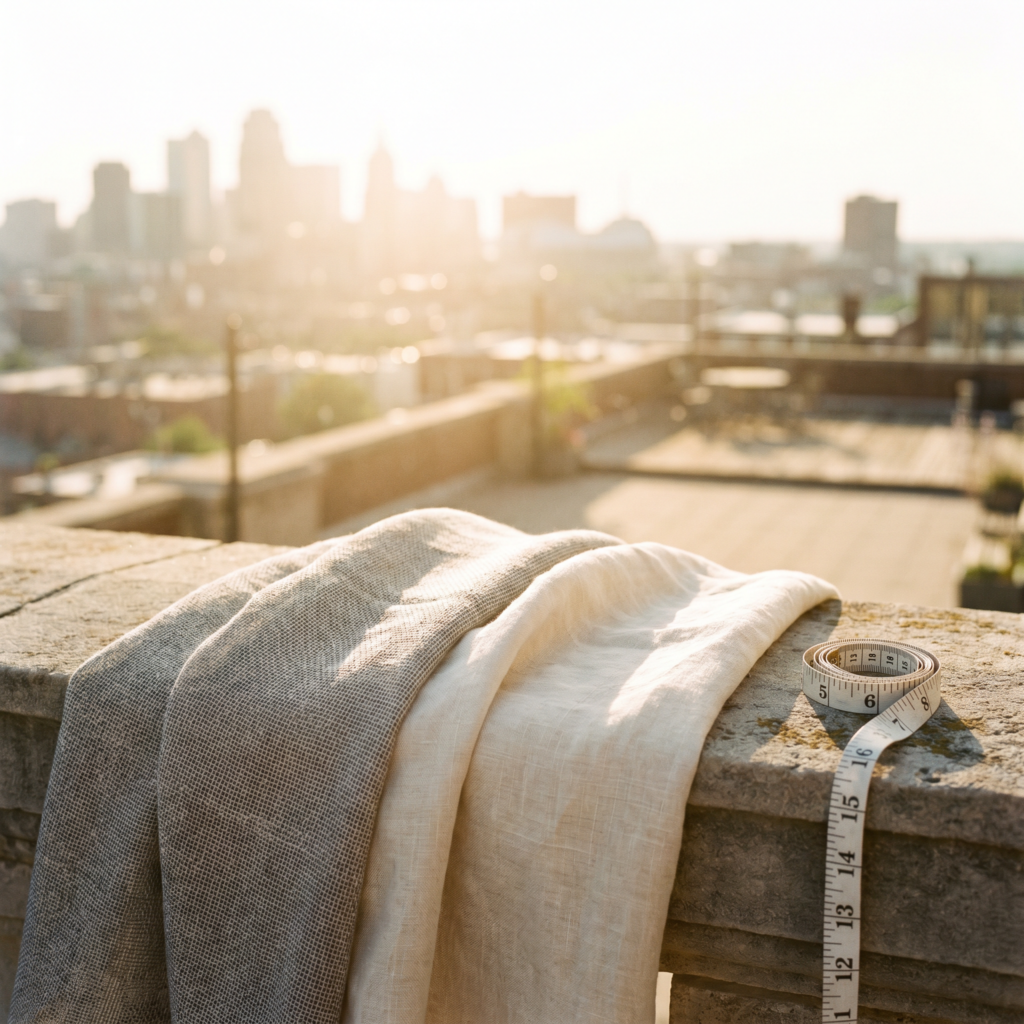
Linen is the most breathable suiting fabric available. Made from flax plant fibers, its open cellular structure wicks moisture from the skin and allows maximum airflow, which is why it has been the hot-climate choice for centuries.
For a Kansas City summer wedding, outdoor reception, charity event, or any occasion that takes place primarily outside, linen is the best available option for pure comfort. Nothing else comes close in extreme heat and humidity.
The trade-off is well-documented and should be understood before committing: linen wrinkles. Not occasionally and not in ways that disappear with care. A linen suit worn for four hours develops visible creases at every point of compression: behind the knees, at the elbows, across the back when seated. This is not a defect. It is the nature of the fiber. In casual summer settings, this lived-in quality is part of the fabric’s character. In formal business settings or high-stakes client presentations, it can undermine the polished appearance a professional situation requires.
The linen-silk blend addresses this meaningfully. Silk fibers improve wrinkle recovery while retaining linen’s breathability, and they add a subtle sheen that elevates the overall appearance for dressier occasions. If you want linen for a summer wedding or formal outdoor event, a linen-silk blend is the version that holds up best through a full day.
Best for: Outdoor summer events, weddings, receptions, casual Friday environments, and any Kansas City occasion from June through August where comfort takes priority over crease-resistance throughout the day.
Not ideal for: Full business days requiring a consistently polished appearance through multiple settings or extended seated periods.
Cotton and Cotton-Linen Blends: The Accessible Middle Ground
Cotton suits breathe reasonably well, wrinkle less than linen, and deliver a crisp, structured appearance that works in business-casual settings. For Kansas City professionals in relaxed dress environments, cotton is a practical and accessible summer choice.
In extreme heat and humidity, cotton does not match linen’s breathability or wool’s natural temperature regulation. It absorbs moisture effectively, but in high humidity it can feel damp against the skin once that moisture saturation is reached. For outdoor events lasting several hours in Kansas City July heat, cotton will feel warmer and less comfortable than linen or tropical wool.
A cotton-linen blend captures a useful middle ground: more structured and less wrinkle-prone than pure linen, more breathable than pure cotton. It is a strong option for professionals who want a summer suit at a lower price point than custom wool while maintaining acceptable performance in the Kansas City climate.
Best for: Business-casual environments, spring and early fall transitions, moderate Kansas City heat (late May, early June, September), professionals who want accessible summer suit options at a lower price point.
Fabric Construction: The Details That Amplify Performance
Choosing the right fiber and weave is the foundation. Two construction details can amplify or undermine the fabric’s performance significantly:
Lining
A fully lined jacket traps heat against the body. In standard suiting, full lining provides structure and a clean interior finish. In summer Kansas City, it is a meaningful disadvantage. The lining blocks air circulation between the jacket and the shirt, eliminating much of the benefit of a breathable outer fabric.
For summer suits, a half lining (lined in the shoulder and upper back only) or a quarter lining (shoulder panel only) maintains the jacket’s structure while allowing the lower jacket to breathe. An unlined jacket is the most breathable option of all, though it requires a more careful construction to maintain shape.
When building a summer suit in Kansas City, specify half lining or quarter lining. The difference in comfort on a 90-degree humid afternoon is noticeable.
Jacket Construction: Single vs. Double Breasted
Double-breasted jackets have more fabric layered across the chest and abdomen. In winter, this adds warmth. In Kansas City summer, it adds heat. A single-breasted jacket with a ventilated back (either a single center vent or side vents) provides significantly better airflow. For summer suits specifically, single-breasted construction is the practical recommendation.
The Kansas City Summer Fabric Decision Table
| Occasion | Best Fabric | Why |
|---|---|---|
| Business meetings, client settings | Fresco or tropical-weight wool | Structured, breathable, wrinkle-resistant |
| Daily office wear, May through September | Tropical-weight worsted wool | Versatile, polished, handles AC-to-outdoor transitions |
| Outdoor weddings and summer receptions | Linen or linen-silk blend | Maximum breathability, casual elegance |
| Smart-casual events and outdoor occasions | Hopsack blazer with cotton or linen trousers | Breathable, relaxed, visually cohesive |
| Business-casual environments | Cotton or cotton-linen blend | Accessible, structured, suitable for mild humidity |
| Travel days in summer | Fresco or high-twist tropical wool | Wrinkle recovery, durability, breathability combined |
Fabric Weight for Kansas City Summer: The One Number That Matters Most
If you take one technical piece of information from this guide, make it this: for Kansas City summer, stay at 180 to 230 GSM.
Fabric weight (grams per square meter) determines how much material is between you and the outside air. A 350 GSM fabric worn in 90-degree humidity is a thermal barrier. A 200 GSM fabric in the same conditions is a second skin that breathes.
All of the fabrics recommended in this guide (fresco, tropical-weight wool, linen, hopsack, and lightweight cotton) are available in summer-appropriate weights. The fiber and weave get you most of the way there. The weight finishes the job.
A quick reference:
| Weight | GSM | Kansas City Appropriateness |
|---|---|---|
| Lightweight | 180 to 210 GSM | Ideal for June through August, outdoor events |
| Mid-light | 220 to 250 GSM | Good for late May, early September, indoor office with AC |
| Mid-weight | 260 to 290 GSM | Year-round in climate control; heavy for outdoor summer |
| Full weight | 300 GSM and above | Fall and winter only |
Caring for a Summer Suit in Kansas City’s Climate
A summer suit worn in high humidity requires slightly more attentive care than a standard wool suit worn in a temperate environment.
Air it out after every wear. Do not return the suit to the closet immediately after a humid day. Hang it on a wide, padded wooden hanger in open air or near a fan to allow moisture to fully evaporate from the fibers before storing. This is particularly important for wool and linen, where trapped moisture accelerates fiber breakdown.
Brush after airing. A soft garment brush removes surface dust and debris that accumulates during wear. Brushing also lifts the fibers slightly, which helps the jacket recover its shape.
Dry clean sparingly. High-humidity environments tempt more frequent cleanings, but dry cleaning breaks down natural fibers over time. Reserve dry cleaning for genuine staining or odor and rely on airing and brushing between wears.
Steam, do not iron. A garment steamer refreshes summer fabrics without the pressure and heat of a direct iron. Fresco and tropical wool respond exceptionally well to steaming and recover their appearance quickly.
Rotate with at least one other suit. Wearing the same summer suit every day accelerates wear on the fabric, regardless of how well it performs. A two-suit rotation in summer-weight fabrics extends the life of both garments significantly.
For the full care routine across the year, The Suit Doctor’s guide to caring for your custom suit walks through daily habits, cleaning frequency, storage, and travel.
FAQ: Summer Suit Fabrics in Kansas City
Q: What is the single best suit fabric for Kansas City summer?
For professional settings where you need structure and wrinkle resistance through a full day, fresco wool is the top recommendation. Its high-twist open weave is specifically engineered for hot, humid conditions. For outdoor or casual occasions where maximum breathability is the priority, linen is the right choice.
Q: Does linen work for a business suit in Kansas City?
Linen is appropriate for casual business environments and outdoor events. For formal boardroom settings, client presentations, or any occasion where you need to maintain a consistently polished appearance through multiple situations, linen’s wrinkle behavior makes it a difficult choice. Fresco or tropical-weight worsted wool holds up better through a structured business day.
Q: What is the difference between fresco and tropical-weight wool?
Fresco is a specific construction: a high-twist open weave that produces a crisp, dry, particularly wrinkle-resistant fabric. Tropical-weight wool is a broader category of lighter-weight worsted wool typically woven with a more open structure than standard worsted. Both are appropriate for summer professional wear. Fresco is more wrinkle-resistant and crisper in hand; tropical wool has a smoother, softer surface.
Q: Is it worth investing in a custom summer suit, or should I rent or buy off-the-rack?
A custom or made-to-measure summer suit built to your measurements performs significantly better than a rental or off-the-rack option in humid conditions. Fit directly affects comfort in heat: a jacket that pulls across the back or sits tight through the chest increases physical discomfort in humid weather. A garment built to your proportions moves with you and allows the fabric to do its job.
Q: What GSM should I look for in a Kansas City summer suit?
180 to 230 GSM for peak summer wear (June through August). A fabric in this weight range in fresco, tropical wool, or linen construction will keep you significantly more comfortable than a mid-weight fabric worn in the same conditions.
Q: Should I get a full lining in a summer suit?
No. A half lining or quarter lining is the right specification for a Kansas City summer suit. A full lining blocks air circulation between the jacket and your shirt, eliminating much of the breathability benefit from choosing a lightweight open-weave fabric. When building a summer suit at The Suit Doctor, the team will walk you through lining options as part of the construction conversation.
Q: Can I wear a wool suit in Kansas City summer without overheating?
Yes, provided the weight and weave are right. A tropical-weight worsted wool or fresco at 180 to 210 GSM is genuinely comfortable in Kansas City summer, particularly in climate-controlled environments. The natural properties of wool (temperature regulation and moisture wicking) work in your favor even in heat. The mistake is wearing a standard-weight worsted (280 to 320 GSM) in summer, not wearing wool at all.
Key Takeaways
- Kansas City summer is a humidity problem, not just a heat problem. Fabric that manages moisture is the priority, not just fabric that feels lightweight.
- Fresco is the top professional recommendation. High-twist open weave delivers breathability, structure, and wrinkle resistance in combination that no other fabric matches for business settings.
- Tropical-weight worsted wool is the versatile standard. Lighter construction and natural temperature regulation across business and semi-formal settings.
- Linen is for outdoor events, not daily business wear. It breathes better than anything else and wrinkles more than anything else. Use it where it belongs.
- Stay at 180 to 230 GSM for summer. Weight matters more than fiber choice alone. A heavier fabric in a breathable weave still performs poorly in Kansas City July.
- Half lining or less. Full lining in a summer suit cancels out the breathability of the outer fabric. Specify half or quarter lining for summer builds.
- Single-breasted, vented. Single-breasted with side or center vents provides better airflow than double-breasted construction in summer.
- Air out after every humid-day wear. Trapped moisture breaks down natural fibers. Let the suit breathe before returning it to the closet.
Build a Summer Suit That Actually Works in Kansas City
The right summer suit for Kansas City is not about wearing less. It is about wearing smarter. Fresco, tropical-weight wool, and linen each perform well in this climate when they are chosen for the right occasion and built with the right construction details.
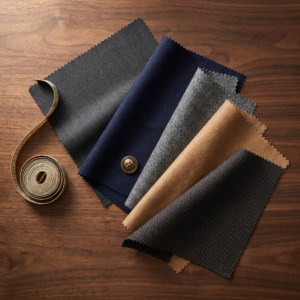
The Suit Doctor builds custom and made-to-measure summer suits for Kansas City professionals. Every consultation includes in-person fabric swatch selection so the choice is made by touch, not just description, with clear guidance on weight, weave, and construction for Kansas City’s specific climate.
The Suit Doctor offers:
- Custom and made-to-measure summer suits in fresco, tropical wool, linen, and seasonal blends
- Honest seasonal fabric guidance tailored to Kansas City’s humidity and temperature range
- Half-lining and quarter-lining construction options for summer performance
- In-person swatch consultations before any commitment
- Full professional wardrobe planning for year-round rotation
Ready to build a summer suit that works for Kansas City? Schedule your Kansas City custom suit consultation with The Suit Doctor.
The Suit Doctor | Custom and Made-to-Measure Suits for Kansas City Professionals Who Take Their Wardrobe Seriously.