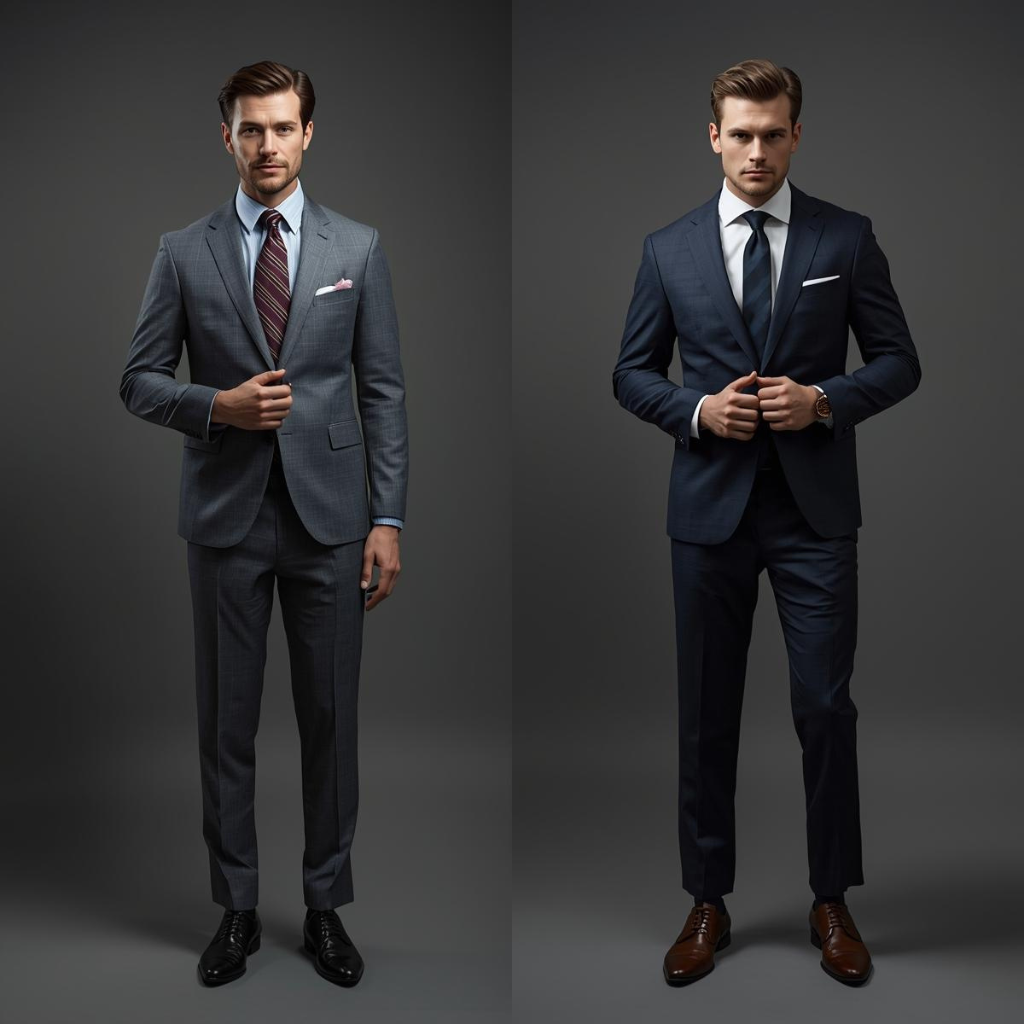
Every suit company calls themselves “custom.” Some say “bespoke.” Others promise “tailored to you.” But the prices range from $300 to $7,000, and nobody seems to agree on what these words actually mean. This guide breaks down what off-the-rack, made-to-measure, and bespoke really mean, what you get with each option, and which one makes the most sense for your budget, body, and lifestyle.
TLDR: Off-the-rack suits use standard sizes with no individual measurements. Made-to-measure starts with a base pattern adjusted to your body’s specific measurements. Bespoke creates an entirely new pattern from scratch for your body alone. For most men, made-to-measure delivers the biggest upgrade in fit for the investment. Keep reading for the honest breakdown of what each option actually includes, what it costs, and when each one makes sense.
You are standing in a store, looking at suits. Or maybe you are scrolling through websites at midnight, trying to figure out why one “custom” suit costs $400 and another costs $5,000. Three different companies all use the word “bespoke.” Two of them charge less than $1,000. Something does not add up.
Here is the problem: the suit industry uses these terms loosely. Sometimes on purpose. Words like “custom,” “bespoke,” and “tailored” get thrown around as marketing language, and most men have no way to tell what they are actually paying for.
This is not a sales pitch disguised as education. We are going to walk through exactly what each type of suit is, how it is made, what it costs, and where it falls short. By the end, you will know exactly what questions to ask and what to expect no matter which direction you go.
Why These Differences Actually Matter
This is not just about terminology. The type of suit you buy directly affects how it fits, how long it lasts, and how other people perceive you when you walk into a room.
Research backs this up. A University of Hertfordshire study showed over 300 people images of a man wearing either a custom-fitted suit or an off-the-rack suit of the same color and fabric. Participants only saw the images for three seconds. The man in the custom-fitted suit was rated significantly higher in confidence, success, estimated salary, and flexibility. Separate research from Columbia University found that formal clothing actually changes how the wearer thinks, enhancing abstract cognitive processing and increasing feelings of power. The differences held across participant demographics in both studies.
That is not opinion. That is peer-reviewed research showing that fit changes how people judge you before you even open your mouth. And the differences between off-the-rack, made-to-measure, and bespoke are largely about how well that fit can be dialed in to your specific body.
What Is an Off-the-Rack Suit?
An off-the-rack suit (sometimes called ready-to-wear) is a mass-produced garment made in standard sizes like 38R, 40L, or 42S. These suits are designed to approximate an “average” body type within each size range. You walk into a store, pick a size, try it on, and walk out the same day.
No individual measurements are taken. The suit was made before you ever walked through the door.
How Off-the-Rack Suits Are Constructed
Most off-the-rack suits use what is called fused construction. A synthetic interlining is glued to the outer fabric using heat and pressure. This gives the jacket its shape without the labor-intensive work of sewing in a canvas layer.
Fused construction keeps costs down, but it comes with trade-offs. The jacket feels stiffer. It does not mold to your body over time. And after repeated wear and dry cleaning, the glue can start to break down, causing the fabric to bubble and pucker along the lapels and chest.
Off-the-rack suits also tend to have low armholes designed for mass comfort. In theory, this gives more room. In practice, it creates excess fabric under the arms and restricts your range of motion.
What Alterations Can and Cannot Fix
Here is something most salespeople will not tell you: certain fit issues on an off-the-rack suit cannot be fixed by a tailor, no matter how skilled they are.
What alterations can handle:
- Sleeve length (shortened up to about 2 inches)
- Trouser length (hemming)
- Waist taken in or let out slightly
- Minor tapering of the body
What alterations cannot fix well:
- Shoulders. If the shoulder seam does not sit at the edge of your natural shoulder, walk away. Rebuilding shoulders is so expensive and unreliable that it is almost never worth doing.
- Jacket length. Shortening or lengthening the jacket body affects button placement, pocket position, and overall proportion. It is not a simple hem.
- Armholes. Low armholes cannot be raised without major reconstruction. This is the alteration that most men wish they could get but cannot.
Pro tip: If the shoulders do not fit off the rack, nothing else matters. Shoulder alterations cost more than most off-the-rack suits are worth. Make shoulders your first and most important checkpoint.
When Off-the-Rack Makes Sense
Off-the-rack is not inherently bad. It makes sense when you need a suit immediately, when your budget is genuinely tight, when you wear suits very rarely, or when your body proportions happen to align closely with standard sizing.
Pricing typically runs $200 to $500 at the entry level and $400 to $900 for mid-range options. But here is the catch most people miss: once you add $100 to $200 in alterations, your “budget” off-the-rack suit is approaching entry-level made-to-measure territory, and the fit still will not be as good.
What Is a Made-to-Measure Suit?
Made-to-measure (often shortened to MTM) is where things start getting personal. A made-to-measure suit begins with a pre-existing base pattern, which is a standardized template, that is then adjusted to match your specific body measurements before the fabric is cut.
The key distinction: the pattern already exists. It is not created from scratch. It is selected and then modified to improve how it fits you in the areas that matter most.
The Made-to-Measure Process Step by Step
The process typically works like this:
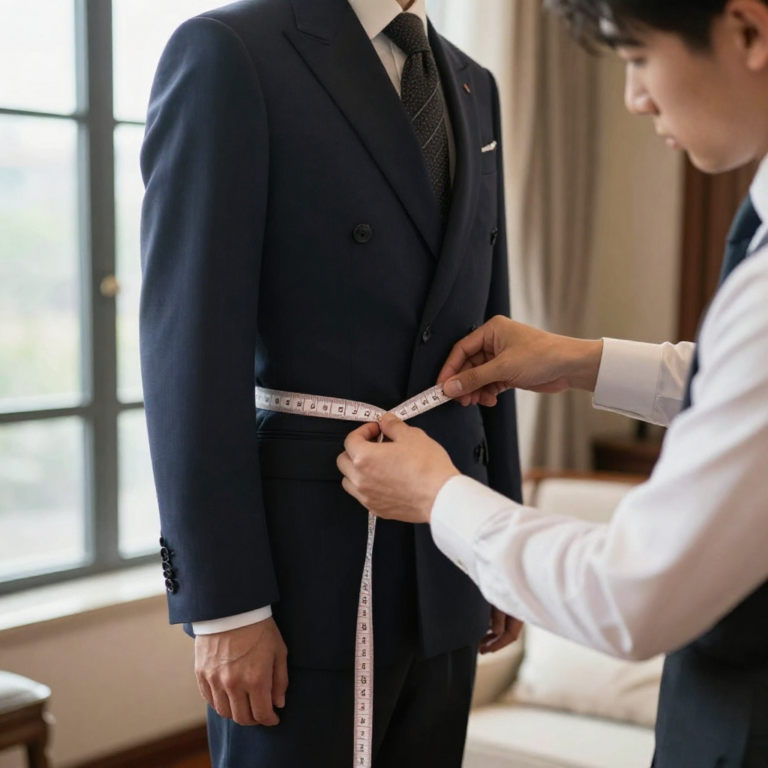
- Consultation and measurements. A trained fitter takes approximately 12 to 16 body measurements, noting details like your posture, shoulder slope, and natural stance.
- Pattern selection. A base pattern closest to your body type is selected from the house’s library of blocks.
- Pattern adjustment. That base pattern is modified using your measurements to improve fit in the chest, waist, shoulders, sleeve length, trouser rise, and other key areas.
- Design choices. You select fabric, lining, buttons, lapel style, pocket design, vent style, and other details.
- Production. The adjusted pattern is used to cut and sew your suit, typically combining machine and hand work.
- Fitting and delivery. Usually one or two fittings after the garment arrives, with minor adjustments made to dial in the fit.
Timeline is generally four to eight weeks from the initial consultation to the finished suit.
What You Can Customize
This is where made-to-measure pulls far ahead of off-the-rack. Beyond fit, you are making real design decisions:
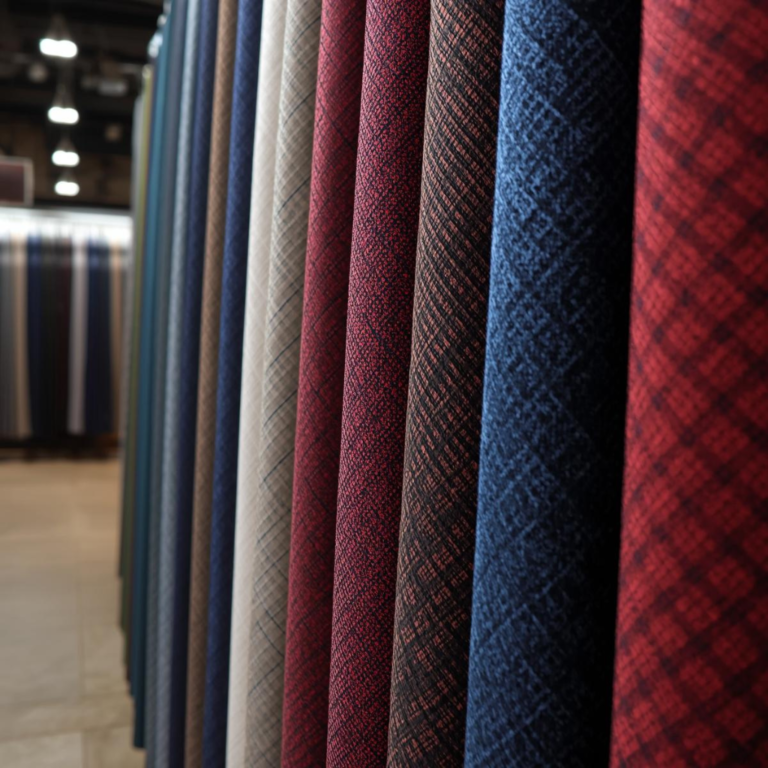
- Fabric from a curated selection of quality mills
- Lapel style (notch, peak, or shawl)
- Button count and style
- Pocket type (patch, flap, or jetted)
- Vent style (single, double, or no vent)
- Lining color and material
- Trouser details like pleats, cuffs, and rise
- Jacket silhouette and length adjustments
You are not just choosing a size. You are building a suit around your preferences and body.
What Made-to-Measure Cannot Do
Honesty builds trust, so here is what MTM does not deliver.
Made-to-measure adjustments are made to a pre-existing pattern. That means the underlying architecture of the suit, including how the shoulder is built and how the chest is structured, follows the base pattern’s design. If you have significant posture issues, severe body asymmetry, or highly unusual proportions, those modifications are limited by what the base pattern can accommodate.
The adjustments are essentially two-dimensional rather than three-dimensional. They change widths and lengths on a flat pattern rather than reshaping how the garment drapes around your body in motion.
For most men, this does not matter. The fit improvement over off-the-rack is dramatic. But for a small percentage of men with highly specific fit challenges, bespoke may be necessary.
Why Made-to-Measure Is the Sweet Spot for Most Men
Here is the honest math. Made-to-measure pricing generally runs from $800 to $2,800 depending on the level of service and fabric quality. For that investment, you get a suit that is adjusted to your body’s specific measurements, built with your choice of fabric and design details, and constructed with half-canvas or full-canvas interiors that mold to your chest over time.
Compare that to spending $500 on an off-the-rack suit plus $150 in alterations, only to end up with fused construction, low armholes that can never be raised, and shoulders that still are not quite right. After two or three rounds of that cycle, you have spent the same amount as quality MTM with significantly less to show for it.
For the vast majority of men, custom business suits in Kansas City through a made-to-measure process deliver the biggest fit upgrade per dollar spent.
Not sure which approach works best for your body and budget? A quick consultation can answer that in minutes and takes the guesswork out of the process.
What Is a Bespoke Suit?
The word “bespoke” has a specific origin. It comes from the old English verb “bespeak,” meaning to speak for something or to order it in advance. When a customer selected a piece of cloth at a tailor’s shop, it was said to have been “spoken for,” and the garment made from it became “bespoke.” The term was originally British. In American English, “custom” has historically served the same purpose.
In tailoring, bespoke means something very specific: a suit created entirely from scratch, with a unique paper pattern drafted for one individual customer. No pre-existing template. No adjustments to a base block. A brand-new pattern that accounts for every aspect of your body.
The Bespoke Process Explained
The bespoke process is longer and more involved than made-to-measure at every step:
- Extensive measurements. A master tailor takes 20 or more body measurements, with particular attention to posture, stance, spinal curvature, shoulder slope, and body asymmetry.
- Unique pattern drafting. A brand-new paper pattern is created from scratch. This is the fundamental difference. No pre-existing template is used.
- Basted fitting. A temporary version of the suit is assembled with loose stitches so the tailor can evaluate how the garment sits on your body in motion and at rest.
- Multiple fittings during construction. Unlike MTM, bespoke involves fittings while the suit is being built, including skeleton baste, forward fitting, and bar-tack or final fitting stages.
- Hand construction. A bespoke suit typically requires around 60 hours of skilled hand labor, a process that has remained largely unchanged for over a century.
- Iterative refinement. The tailor continuously adjusts the pattern and garment through multiple appointments until the fit is precise.
Timeline runs 8 to 16 weeks or more. Savile Row houses typically quote 9 to 12 weeks.
Why Bespoke Costs What It Costs
Bespoke pricing reflects the reality of what goes into the garment. Entry-level bespoke from non-Savile Row tailors starts around $3,000 to $5,000. Premium bespoke runs $5,000 to $7,500 or more. Savile Row houses typically charge upward of $6,000.
You are paying for a unique pattern drafted by a master cutter, direct access to the tailor throughout the process, fabric selections from 10 or more mills, full-canvas hand construction, and multiple fittings that refine the garment as it is being built.
Here is something worth knowing: first bespoke commissions rarely achieve perfect fit. The pattern gets refined over multiple suits with the same tailor. Bespoke is genuinely a long-term relationship, not a one-time purchase. That is part of why it works best for men who will have multiple suits made with the same house.
The “Bespoke” Label Problem
In 2008, the UK Advertising Standards Authority ruled that the term “bespoke” is not legally protected and can be applied to machine-sewn garments as long as they are made-to-measure. Savile Row tailors fought this ruling and lost. Unlike “haute couture” in France, which has legal protection, anyone can call anything “bespoke” in the UK or US, despite the strict standards Savile Row tailors set for genuine bespoke craftsmanship.
This is why you see companies charging $600 for a “bespoke” suit. They are not lying, technically. They are offering made-to-measure (or sometimes slightly upgraded off-the-rack) and calling it bespoke because there is no law preventing them from doing so.
Pro tip: Ask any company that calls themselves “bespoke” two questions. First, do they draft a unique pattern from scratch for each customer? Second, how many fittings happen during construction? If the answers are “no” and “one or two after delivery,” you are looking at made-to-measure, regardless of what the marketing says.
Made-to-Measure vs Bespoke vs Off-the-Rack: Side-by-Side Comparison
Here is the clearest way to see how these three options compare across the factors that actually matter:
| Feature | Off-the-Rack | Made-to-Measure | Bespoke |
|---|---|---|---|
| Pattern | Generic standardized sizes | Pre-existing pattern adjusted to your measurements | Unique pattern created from scratch |
| Measurements Taken | None (you pick a size) | 12-16 body measurements | 20+ detailed measurements |
| Fittings | Try on in store | 1-2 fittings after delivery | Multiple fittings during construction |
| Customization | Whatever is on the rack | Fabric, lapel, buttons, pockets, lining, vents | Virtually unlimited |
| Construction | Usually fused | Half canvas or full canvas | Full canvas, hand-constructed |
| Timeline | Same day | 4-8 weeks | 8-16+ weeks |
| Price Range | $200-$900 | $800-$2,800 | $3,000-$7,500+ |
| Best For | Occasional wear, tight budgets | Most men seeking great fit and value | Daily wearers needing maximum precision |
The jump from off-the-rack to made-to-measure is where most men see the biggest difference. The jump from made-to-measure to bespoke is meaningful but more incremental, primarily benefiting men with unusual body proportions or those who wear suits every single day.
The Hidden Difference: What Is Inside Your Suit Jacket
Most conversations about suit quality focus on fabric and fit. But the internal construction of the jacket, the part you never see, has just as much impact on how a suit looks, moves, and ages.
There are three main construction methods, and they align closely with the off-the-rack, made-to-measure, and bespoke tiers:
| Construction Type | How It Works | Pros | Cons |
|---|---|---|---|
| Fused | Synthetic interlining glued to the outer fabric | Cheapest to produce, widely available | Stiff feel, can bubble over time, does not mold to your body |
| Half Canvas | Canvas sewn into the chest and shoulder area; lower portion may be fused | Good balance of structure and flexibility, molds to chest over time | Less structure in the lower jacket panels |
| Full Canvas | Canvas runs through the entire front of the jacket | Best drape, molds completely to your body, most durable, improves with age | Most expensive, longest production time |
Canvas construction (whether half or full) uses a layer of horsehair and wool fabric that is actually sewn into the jacket rather than glued. This canvas layer gives the jacket its shape while allowing it to breathe and gradually conform to the contours of your chest. A well-made canvas suit looks better after 50 wears than it did on day one.
Fused construction cannot do this. The glued interlining holds its original shape until the adhesive starts breaking down, at which point you get the dreaded bubbling along the lapels and chest that no amount of pressing can fix.
Pro tip: Run your hand along the front of a jacket between the outer fabric and the lining. If it feels stiff and papery, it is fused. If it feels like there is a separate, flexible layer between the fabrics, it is canvassed. This quick check tells you more about a suit’s quality than the brand name on the label.
Which Option Is Right for You?
Rather than giving you a generic answer, here are three real-world scenarios that cover how most men actually think about this decision.
Scenario 1: The confused first-time buyer. You are 28, you need your first serious business suit, and you have no idea where to start. You searched “custom suit” and found prices ranging from $300 to $7,000. Three companies all call themselves “bespoke” but charge wildly different amounts. For you, a quality made-to-measure suit with expert guidance is almost certainly the right call. You get a dramatic fit improvement over off-the-rack at a price that makes sense, and you learn what good fit actually feels like. That education alone is worth the investment.
Scenario 2: The groom who got burned. You ordered “custom” suits online for your wedding party. They arrived, and half the groomsmen needed significant alterations. The “custom” turned out to be basic MTM with minimal measurements taken remotely by someone who did not know what they were doing. The quality of made-to-measure depends entirely on who takes your measurements and guides your choices. A local expert who can see your body, note your posture, and guide you through fabric and fit decisions in person delivers a completely different result than a tape measure and an online form.
Scenario 3: The executive who outgrew off-the-rack. You have been buying $600 off-the-rack suits and spending another $150 on alterations for years. After 10 or 15 suits, you realize you have spent more than you would have on quality-made-to-measure, and the fit still is not right because alterations cannot fix structural issues like low armholes and incorrect shoulder pitch. The cost-per-wear math on a well-fitted MTM suit almost always wins over repeated off-the-rack purchases.
What The Suit Doctor Offers (and Why We Are Transparent About It)
The Suit Doctor provides expert-guided made-to-measure suits. Not bespoke. We say that clearly because honesty is worth more than a marketing label.
Here is what that means in practice: when you work with The Suit Doctor, a trained fitter takes detailed measurements of your body, notes your posture and proportions, and guides you through fabric and design selections. Your suit is then built from a pattern adjusted specifically to your measurements and constructed with quality materials that hold up over time.
We believe that for the vast majority of men, made-to-measure with expert guidance delivers the best combination of fit, customization, and value. Bespoke is a wonderful option for a specific segment of buyers. But most men do not need a pattern drafted from scratch. They need someone who genuinely knows what they are doing to take the right measurements and guide them to the right choices.
That is exactly what we do, whether you need a business suit fitting in Kansas City, wedding suits for your entire groomsmen lineup, prom suits, or an ongoing professional wardrobe.
Want to see the difference expert-guided made-to-measure makes in person? Schedule your Kansas City suit consultation with The Suit Doctor. No pressure, no confusing jargon. Just honest answers and a suit that actually fits.
Frequently Asked Questions
Q: Is made-to-measure the same as custom? “Custom” is a broad term that covers everything from slightly modified off-the-rack garments to genuine bespoke. Made-to-measure is one specific type of custom suit. When a company says “custom” without being more specific, ask how many measurements they take and whether they use a base pattern or draft a new one. That tells you what you are actually getting.
Q: Is bespoke worth the extra cost? It depends on your situation. If you wear suits daily, have unusual body proportions, or have specific fit challenges that standard patterns cannot accommodate, bespoke may be worth the investment. For most men who wear suits regularly but not daily, made-to-measure delivers 90% of the fit improvement at a fraction of the price.
Q: Can I get a good suit off the rack? Yes, if your body aligns well with standard sizing and you are willing to invest in targeted alterations. The key is managing expectations. Off-the-rack can look sharp for occasional wear, but it will never match the precision of a suit built around your measurements.
Q: How many measurements are taken for made-to-measure vs bespoke? Made-to-measure typically involves 12 to 16 body measurements. Bespoke tailors take 20 or more, with extra attention to posture, body asymmetry, and how you carry your weight. More measurements mean more data points to work from, which translates to a more precise fit.
Q: How long does a made-to-measure suit take? Most made-to-measure suits are ready in four to eight weeks from the initial consultation. Plan accordingly if you have a specific event. Starting at least two months before your deadline gives comfortable room for fittings and any adjustments.
Q: What cannot be fixed with alterations on an off-the-rack suit? Shoulders, jacket length, and armhole height are the three biggest limitations. If any of these are wrong off the rack, alterations either cannot fix them or cost so much that the suit is not worth the investment. Always check shoulder fit first.
Q: Why do some companies call themselves bespoke when they are made-to-measure? Because there is no legal protection for the term “bespoke” in the US or UK. A 2008 ruling by the UK Advertising Standards Authority confirmed that the word can be applied to any made-to-measure garment. This means the label is essentially unregulated, so buyers need to ask the right questions rather than trusting the marketing.
Q: What should I look for in a made-to-measure provider? Three things: how many measurements they take (fewer than 10 is a red flag), whether they guide you through fit and style decisions in person, and the quality of their construction (half canvas or full canvas, not fused). The expertise of the person guiding your fitting matters as much as the suit itself.
Q: Is made-to-measure good enough for a wedding? Absolutely. Made-to-measure is the most popular choice for grooms and groomsmen who want a polished, coordinated look with great fit. The customization options (fabric, lapel style, lining, buttons) give you full control over the aesthetic, and the fit will look sharp in every photo for decades.
Q: How do I know if I need bespoke vs made-to-measure? Ask yourself two questions. First, do you have significant body asymmetry or posture issues that make standard clothing consistently problematic? Second, do you wear suits five or more days a week as a core part of your professional identity? If you answered yes to both, bespoke is worth exploring. If not, expert-guided made-to-measure is almost certainly the better investment.
Key Takeaways
- Off-the-rack is a starting point, not a destination. Standard sizes get you out the door fast and cheap, but structural limitations like fixed armholes and shoulder construction cap how good the fit can get, even with alterations.
- Made-to-measure is the sweet spot for most men. A base pattern adjusted to your specific measurements delivers a dramatic fit improvement over off-the-rack at a price point that makes long-term sense.
- Bespoke is exceptional but niche. A unique pattern drafted from scratch with around 60 hours of hand construction is the pinnacle of tailoring. It is also realistically designed for men who wear suits daily and are willing to build a long-term relationship with one tailor.
- The marketing language is deliberately confusing. “Custom,” “bespoke,” and “tailored” are used interchangeably by companies selling very different products at very different price points. Always ask about the actual process, not just the label.
- Construction matters as much as measurements. A suit with canvas construction (half or full) molds to your body over time and lasts years longer than fused alternatives. Check what is inside the jacket, not just how it looks on the outside.
- The person taking your measurements matters enormously. Made-to-measure quality varies wildly based on who guides the process. An expert who understands fit, posture, and proportion delivers a fundamentally different result than an online form.
- Do the real math on cost-per-wear. A $1,500 made-to-measure suit worn 50 times costs $30 per wear. Five $400 off-the-rack suits with alterations that never quite fit right cost more total and look worse every time.
Ready to Experience the Difference Fit Makes?
You now understand what separates off-the-rack, made-to-measure, and bespoke, and you know which one makes sense for your situation. The next step is working with someone who makes the process simple, transparent, and focused entirely on getting you the right fit.
The Suit Doctor offers:
- Expert-guided, made-to-measure suits built around your measurements
- Personalized fit and style consultation
- Business suits, groom and groomsmen suits, prom suits, and full wardrobe building
- Mobile tailoring and convenient fitting services across the Kansas City area
- Honest guidance with no confusing jargon or inflated labels
Ready to get started? Reach out today:
Visit: https://thesuitdoctor.com/
Go to the contact page to request your consultation.
The Suit Doctor | Custom and Made-to-Measure Suits for Men Who Take Their Look Seriously.