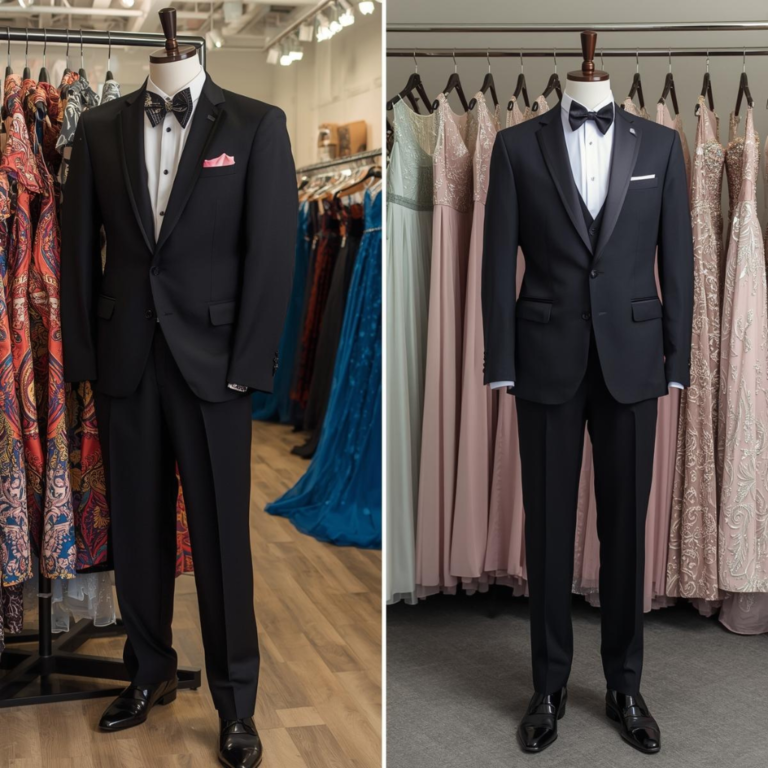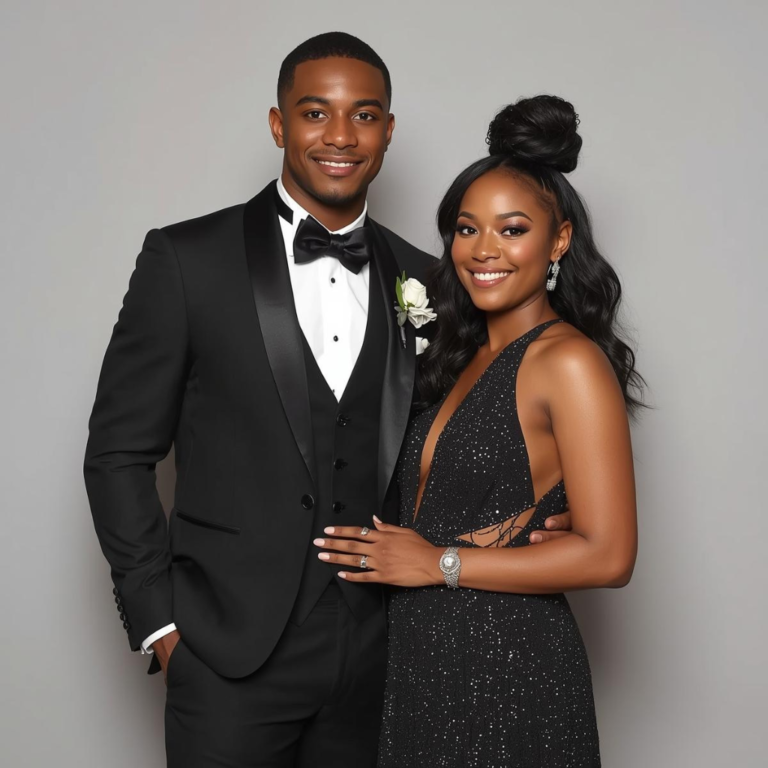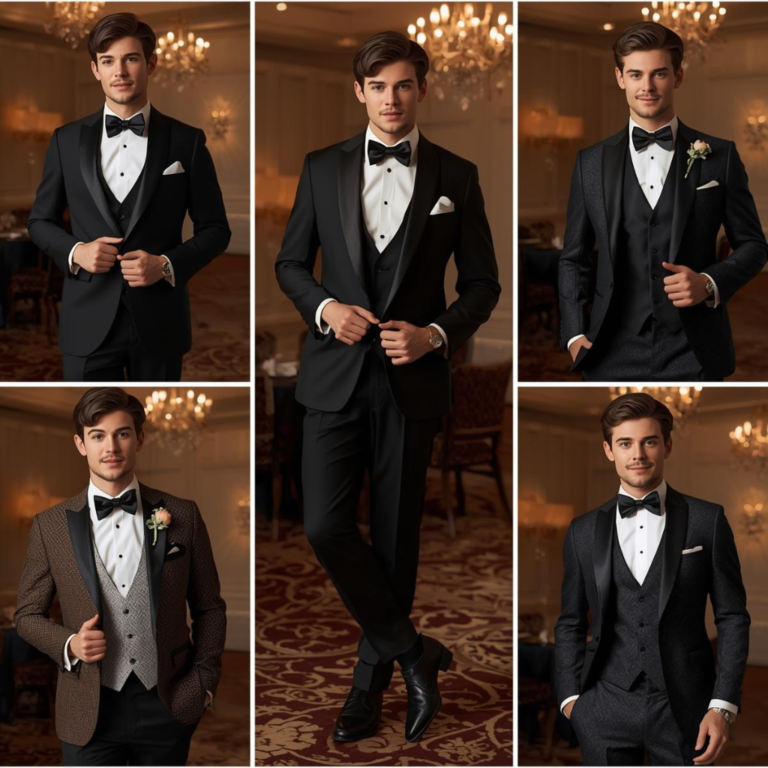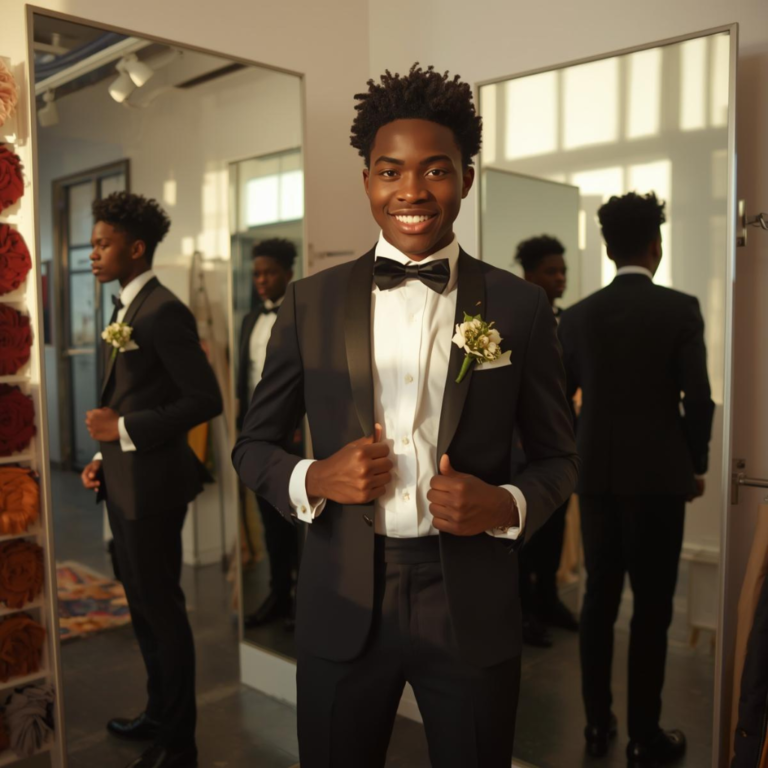
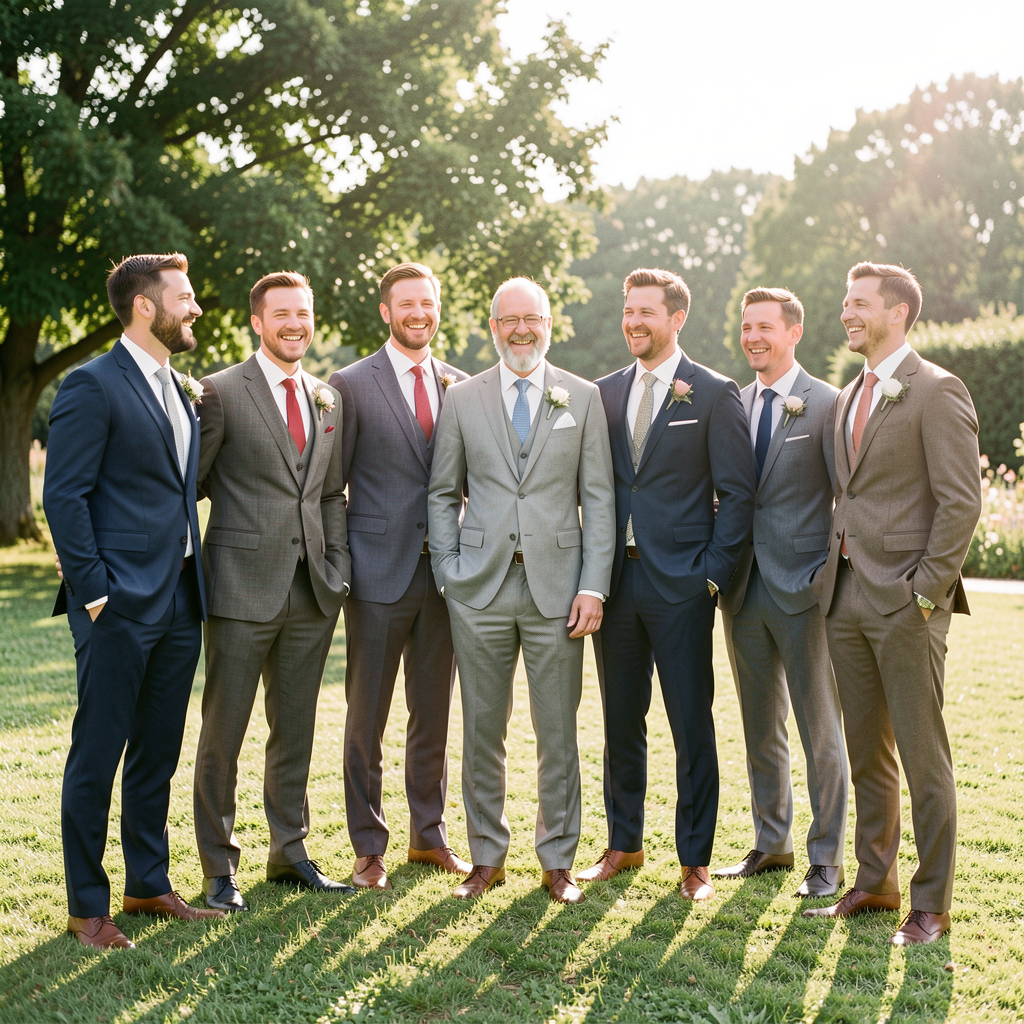
Your wedding party includes your college roommate who lives in the gym, your brother who hasn’t worn a suit since your cousin’s wedding five years ago, and your best friend from work who considers himself the office style guru. Somehow, you need all of them to look like they belong together in your wedding photos without forcing everyone into identical suits that make half the group look awkward.
TLDR: Coordinating groomsmen suits works best as a spectrum, not a binary match/mismatch choice. Pick a coordination level that fits your wedding style, use accessories and color variations for cohesion, and invest in made-to-measure suits so each groomsman wears something that actually flatters his body type.
The pressure to make everyone look identical comes from outdated wedding traditions. Modern couples have discovered something better: coordinated variety creates more interesting photos, accommodates different body types, and lets your groomsmen feel confident instead of uncomfortable. This guide walks you through the five levels of groomsmen coordination, shows you how to make the groom stand out appropriately, and explains why body type matters more than most couples realize.
The Five Levels of Groomsmen Coordination
Think of groomsmen coordination as a spectrum with five distinct levels. Each level offers different advantages depending on your wedding formality, venue, and how much individual expression you want to allow. Understanding this spectrum helps you make intentional choices rather than defaulting to “everyone wears the exact same thing.”
Level 1: Complete Match (Traditional)
Everyone wears identical suits, shoes, belts, ties, and boutonnieres. This approach delivers the most polished, uniform appearance and works exceptionally well for black-tie affairs, ultra-formal indoor ballroom weddings, and couples who prioritize a classic, timeless aesthetic.
The advantage here is simplicity. One decision applies to everyone, and the resulting photos show perfect visual consistency. The drawback is that identical suits highlight body type differences rather than minimizing them. When a 6’2″ athletic groomsman and a 5’8″ stocky groomsman wear the exact same cut, one of them inevitably looks better than the other.
Level 2: Same Suit, Different Accessories
This is currently the most popular approach for semi-formal weddings. Everyone wears the same suit, but each groomsman chooses his own tie, pocket square, or socks. Some couples provide all the ties in matching colors while allowing individual pocket square choices. Others let groomsmen pick accessories that complement rather than match.
According to wedding party coordination expert guidelines, matching ties and boutonnieres create visual unity even when other accessories vary. This level works well because it gives everyone a consistent foundation while preventing the “corporate uniform” look that can feel impersonal.
Level 3: Same Color Family, Different Details
The groom wears a three-piece suit while groomsmen wear two-piece versions in the same color. Or the groom chooses a patterned fabric like tweed while groomsmen wear solid versions of a coordinating color. This level creates natural visual hierarchy, making the groom stand out without looking disconnected from his wedding party.
Couples who want the groom to be clearly distinguishable without resorting to drastically different colors often find this level hits the sweet spot. The consistency in color family keeps everyone visually connected while the detail variations create appropriate distinction.
Level 4: Coordinated Different Suits
This approach uses the same color family but different shades. The groom might wear navy while groomsmen wear lighter blue. Or the groom wears charcoal while groomsmen wear medium gray. Complementary colors also work here, with a navy groom flanked by charcoal groomsmen creating sophisticated tonal contrast.
This level requires more careful planning because getting the balance right can be tricky. The visual effect is fashion-forward and photographs beautifully for outdoor, modern, and less traditional weddings. However, slight shade mismatches between different suit brands can look unintentional rather than coordinated in photos.
Level 5: Curated Mismatch
Different suits unified by one common element create an intentionally eclectic look. Everyone might wear different suits but share the same tie color, boutonniere style, or shoe color. Some couples let groomsmen wear their own suits with one coordinating accessory provided by the couple.
This level works best for creative couples, casual destination weddings, and small wedding parties where individual personality matters more than uniform appearance. The critical rule here is maintaining formality consistency. Never mix tuxedos and suits in the same party. That reads as mistake rather than intention.
How to Make the Groom Stand Out
The groom should be immediately recognizable in wedding photos, but the distinction should feel intentional rather than disconnected. Here are nine strategies that create appropriate separation without making the groom look like he wandered in from a different event.
Fabric Upgrade
The groom wears a velvet or silk-blend jacket while groomsmen wear standard wool. This creates subtle visual richness that photographs beautifully without changing the color palette. The texture difference is noticeable in person and adds dimension to group photos.
Color Differentiation
The groom wears a darker shade of the same color family. Navy groom with slate blue groomsmen. Charcoal groom with medium gray groomsmen. The 2026 trend features groomsmen in deep green or royal blue while the groom wears black or navy, creating clear visual hierarchy through deliberate shade contrast.
Three-Piece Versus Two-Piece
Adding a vest or waistcoat instantly elevates the groom’s look. This works particularly well when the vest matches the suit fabric, creating a more formal appearance without changing colors. Groomsmen in two-piece suits look coordinated but clearly less dressed up.
Lapel Style Variation
Peak lapels or shawl lapels for the groom with notch lapels for groomsmen creates subtle but meaningful distinction. This detail rewards close attention in photos while maintaining overall cohesion from a distance.
Tie Style Swap
The groom wears a bow tie while groomsmen wear neckties, or vice versa. This approach works well for formal weddings where everyone needs elevated neckwear but the groom deserves additional distinction.
Boutonniere Upgrade
The groom receives a larger, more intricate, or different-colored floral arrangement. This is the most traditional differentiation method and remains effective because it photographs clearly without requiring coordination with other styling choices.
Personalized Accessories
Monogrammed cufflinks, a custom pocket square, or an heirloom watch give the groom meaningful personal touches that don’t affect the overall visual coordination. These details often become favorite photo subjects.
Shoe Distinction
The groom wears leather brogues or polished monk straps while groomsmen wear standard oxfords. Shoe differences are minimal in most photos but add a layer of thoughtful distinction for detail shots.
Pattern Contrast
The groom wears a subtle pinstripe or pattern while groomsmen wear solid fabric. This works best when the pattern is understated enough to maintain visual harmony while still creating clear differentiation.
Why Body Type Makes or Breaks Coordinated Groomsmen
Here’s the uncomfortable truth most groomsmen coordination guides ignore: when everyone wears the exact same cut, half your wedding party will look awkward. The groomsman who fits the suit model’s build looks great. Everyone else looks like they’re wearing someone else’s clothes.
This is where custom and made-to-measure suits fundamentally change the equation. Each groomsman gets the right cut, fabric weight, and structural details for his body while everyone maintains the same color, fabric, and overall look. This is impossible with off-the-rack or rentals, where everyone receives identical cuts regardless of whether they’re 5’7″ and stocky or 6’3″ and lean.
Athletic Build
Single-breasted jackets with minimal shoulder padding work best because these builds don’t need artificial enhancement. A slight waist taper accentuates the natural V-shape. Peak lapels draw positive attention to shoulders. The key is avoiding too-tight fits that restrict movement and look forced.
Slim or Lean Build
Double-breasted jackets add visual dimension. Layering with vests creates additional bulk where it’s welcome. Lighter colors and subtle patterns like checks broaden the appearance. Soft padded shoulders add structure without looking obvious. Narrow lapels (no wider than 2.5 inches) stay proportional to a slimmer frame.
Stocky or Broad Build
Single-breasted jackets with low button stance draw the eye downward, away from the midsection. Vertical pinstripes create the same effect through pattern rather than construction. Avoid double-breasted styles because they accentuate the waist. Flat-front trousers prevent adding visual bulk that pleated styles create. A three-piece suit with matching or complementary vest creates low contrast across the torso, minimizing width.
Tall Build
Three-button jackets balance height by adding visual weight to the torso. Structured shoulders add proportional width. Avoid cropped jackets that make tall men look like they’ve outgrown their clothes. Double-breasted styles work well because they add the visual weight that balances height.
Short Build
Two-button jackets ending 4-5 inches below the hip create optimal proportions. No break or minimal break in trouser hems creates a longer leg line. Single color head-to-toe elongates the body visually. Narrow lapels create vertical lines that draw the eye upward.
A groomsmen suit fitting in Kansas City that accounts for these differences means your wedding photos show a coordinated group where everyone looks confident rather than a matching group where some people clearly look uncomfortable.
Accessory Coordination That Actually Works
Accessories offer the easiest path to groomsmen’s individuality, but there’s a crucial principle most couples miss: complement, don’t match. According to tie and pocket square coordination principles, matching your tie and pocket square in identical fabric or pattern is a definite style mistake. It draws the viewer’s eye horizontally across the chest and takes attention away from the face.
The Golden Rule
Pick a secondary color from the tie for the pocket square. If the tie features navy with burgundy accents, the pocket square might feature burgundy as its primary color. Complementary colors from the color wheel add sophistication. The pocket square should enhance the tie, not echo it.
Tie Coordination Strategies
The safest approach has all groomsmen wear the same tie color for instant cohesion. A more modern option uses the same tie style in different colors, creating coordinated individuality. For groom differentiation, the groom might wear a bow tie while groomsmen wear neckties. Fabric choice affects formality: silk for formal occasions, cotton or wool for casual settings, velvet for a modern twist.
Pocket Square Guidelines
A white linen pocket square is always safe and eternally classic. It works with any tie color and reads as sophisticated rather than boring. When using colored pocket squares, they can serve as the unifying accent element for the entire party. Different folds add subtle personality without creating visual chaos.
Shoe Considerations
Specify a color family (brown spectrum or black) rather than requiring identical brands and styles. The difference between brown oxfords and brown brogues is minimal in photos unless the styles are wildly mismatched. Consider what your groomsmen already own. Asking everyone to buy identical shoes when they already have appropriate options wastes money and adds unnecessary complexity.
The Sock Opportunity
Socks represent a fun, low-stakes personalization element that photographers love capturing. They can coordinate with wedding colors or serve as a surprise element revealed in specific photo moments. This is one of the easiest ways to let each groomsman express personality without affecting the overall visual coordination.
Color Combinations That Work
Color coordination becomes much simpler when you work within proven combinations rather than inventing from scratch.
Season-Specific Palettes
| Season | Groom Suit | Groomsmen Suits | Recommended Accents |
|---|---|---|---|
| Spring | Navy, Stone, Sage | Lighter blue, Beige, Light gray | Pastels, blush, soft pink |
| Summer | Navy, Sand, Tan | Lighter neutrals, Cream | Bright colors, tropical tones |
| Autumn | Charcoal, Olive, Burgundy | Gray, Navy | Rust, burnt orange, wine |
| Winter | Black, Navy, Dark Charcoal | Charcoal, Dark gray | Jewel tones, deep red, emerald |
Proven Combinations
Navy groom with charcoal groomsmen creates a classic, universally flattering combination that works across seasons. Navy groom with lighter blue groomsmen keeps everyone in the same color family at different depths. Charcoal groom with light gray groomsmen produces a sophisticated tonal gradient. Black groom with charcoal groomsmen works for formal evening weddings with dramatic effect. Brown or tan groom with lighter tan groomsmen suits outdoor, rustic, and destination settings perfectly.
Coordinating with Bridesmaids
The most common strategy matches groomsmen tie color to bridesmaid dress color. However, avoid exact matching between suits and dresses because that creates an unintentionally dated 90s prom effect. Tan or lighter groomsmen suits pair naturally with pastel bridesmaid dresses. Navy, charcoal, and black suits work with jewel-tone bridesmaid dresses. Complementary colors from the color wheel create visual interest without requiring matching.
2025-2026 Color Trends
Stone, sage, and deep green have emerged as core trending colors. Earthy tones dominate current palettes: sand, olive, camel, and terracotta. Tonal palettes that feel layered and refined are replacing single-color uniformity. Bold groom statements in burgundy, deep green, or velvet distinguish the groom while remaining wedding-appropriate. Navy and charcoal remain timeless defaults for couples who prefer classic over trendy.
Solving the Out-of-Town Groomsmen Problem in Kansas City
Coordinating groomsmen who live in different cities creates real logistical challenges. According to wedding party style coordination trends, this is one of the top frustrations couples face during wedding planning.
Common Solutions
Choose one store or tailor as the benchmark for measurement consistency. This ensures everyone gets measured using the same methodology, preventing the inconsistencies that arise when different providers take measurements differently.
Virtual and remote sizing tools have improved significantly. Many services now offer digital measurement options that produce reliable results without requiring in-person visits.
Ship all suits to one central location for quality control before distribution. This allows you to verify color consistency, check fit against measurements, and catch any issues before the wedding day when fixing problems becomes difficult or impossible.
The Mobile Fitting Advantage
For wedding parties with scattered groomsmen, mobile group fitting in Kansas City delivers the complete custom tailoring experience wherever you need it. Whether that’s your office, home, or a central location where multiple groomsmen can meet during a pre-wedding gathering, mobile fitting eliminates the biggest pain point: getting everyone measured consistently without requiring multiple trips to different locations.
Communication Framework
Create a single group chat or email thread dedicated to suit coordination. Include all groomsmen, the groom, and whoever is coordinating logistics. Set clear deadlines for measurements, photo approvals, and any required purchases.
Require photos of planned looks before the wedding day. There should be no surprises when everyone shows up. This is especially important for Level 4 and Level 5 coordination where individual choices need approval to ensure they fit within the overall vision.
Timeline for Group Coordination
| Timeframe | Action |
|---|---|
| 6-8 months before | Choose style, color, and coordination level |
| 4-6 months before | Begin consultations and initial measurements |
| 3-4 months before | Place orders, confirm all measurements |
| 6 weeks before | Final fittings and alterations |
| 2-3 weeks before | Final pickup or delivery, try everything on together |
| Wedding week | Emergency kit ready (sewing kit, lint roller, steamer) |
For detailed month-by-month planning, our wedding suit ordering timeline breaks down exactly when to handle each step.
Buy Versus Rent for Groomsmen
The buy-versus-rent decision affects both budget and long-term value.
The Math
Renting typically costs $138 to $250 per person for jacket and pants. Multiply by six groomsmen and you’re looking at $900 to $1,500 for suits nobody keeps. Quality purchased suits start around the same price point but remain in each groomsman’s wardrobe for future events.
Renting Advantages
Rental services often include a shirt, a tie, and a pocket square as a convenient bundle. The per-person cost is lower upfront. Rentals work well for one-time-only styles that groomsmen won’t wear again.
Renting Disadvantages
Limited customization and fit options mean settling for “close enough.” Nobody keeps the suit, so the investment has zero long-term value. Return deadlines and potential late fees add stress during an already busy time. Specific colors and styles may sell out or be discontinued between when you choose them and when you need them.
Buying Advantages
Better fit, especially with made-to-measure options, means better photos. Everyone keeps their suit for future weddings, job interviews, and professional events. Full control over fabric, color, and construction details. More flexibility for alterations since you’re not racing a rental return deadline.
Buying Disadvantages
Higher upfront cost per person requires groomsmen to make a larger initial investment. Custom orders require more lead time. Each groomsman needs closet space for storage.
The Custom Advantage
Made-to-measure beats rental on fit every time, and when you factor in long-term value, the total cost often compares favorably. Each groomsman ends up with a versatile wardrobe piece they’ll actually wear again rather than a rental they return the day after your wedding.
How Coordination Affects Your Photos
The choices you make about groomsmen coordination directly impact how your wedding photos look for decades.
Why Coordinated Variety Photographs Better
Coordinated (not identical) group photographs with greater visual depth and interest. Slight color or texture variations add dimension compared to flat matching. Consistent accessories like same-color ties create clean group shots without the monotony of total uniformity.
Proper fit is the single most important factor in good photos. Ill-fitting rental suits look terrible regardless of how well the colors coordinate. When every suit actually fits its wearer, the overall visual impact improves dramatically.
Popular Groomsmen Photo Moments
The classic lineup with the groom centered works best when each groomsman’s suit flatters his build. “Flying V” formations with the groom stepping forward create natural visual hierarchy. Detail shots featuring socks, cufflinks, watches, and shoes reward thoughtful accessory choices.
Getting-ready photos capture collars being adjusted and ties being tied. These candid moments look better when the suits actually fit properly. Walking shots where the group approaches the camera work well when each person moves naturally in clothes that don’t restrict them.
Common Mistakes to Avoid
Mixing Formality Levels
Never put tuxedos and suits in the same wedding party. This reads as mistake rather than style choice, regardless of how intentionally you planned it.
Buying “Matching” Suits from Different Brands
Colors that look identical online or in store lighting can appear noticeably different in wedding photos. Even “navy” varies significantly between manufacturers.
No Photo Approval Before the Wedding
Require groomsmen to send photos of their planned looks for approval, especially at higher coordination levels where individual choices need verification.
Matching Tie and Pocket Square Identically
Identical fabric and pattern between tie and pocket square looks dated. Complement rather than match.
Ignoring Body Type Differences
Forcing everyone into the same cut makes some groomsmen look great and others awkward. Account for body type when selecting suits.
Mixing Fabric Types
Linen jacket next to wool jacket in the same party looks disjointed even when colors match. Keep fabric types consistent.
Providing Vague Guidelines
Instructions like “wear something navy” lead to wildly different interpretations. Be specific about acceptable shades, styles, and accessories.
Waiting Too Long to Decide
Late decisions limit fabric and style availability while creating rush alterations that may not achieve optimal fit.
Frequently Asked Questions
Q: Can groomsmen wear different suit colors at a wedding?
Yes, but with intention. Coordinated different colors work when they share a color family (navy and charcoal) or follow a deliberate gradient (dark to light). Random colors without visual connection look accidental. The key is maintaining consistency in formality and style while varying colors strategically.
Q: How do you make the groom stand out from the groomsmen?
Nine effective strategies include fabric upgrade (velvet versus wool), color differentiation (darker shade), three-piece versus two-piece, lapel style variation, tie style swap (bow tie versus necktie), boutonniere upgrade, personalized accessories, shoe distinction, and pattern contrast. Choose one or two methods rather than combining too many.
Q: Should groomsmen suits match the bridesmaids’ dresses?
Not exactly. The most effective approach coordinates groomsmen tie color with bridesmaid dress color. Exact matching between suits and dresses creates an unintentionally dated appearance. Let complementary colors create visual harmony without requiring identical shades.
Q: What color suits look best for groomsmen?
Navy and charcoal remain universally flattering and versatile. For 2025-2026, trending colors include stone, sage, deep green, olive, and burgundy. Season matters: lighter neutrals for spring and summer, deeper tones for autumn and winter.
Q: How far in advance should groomsmen order their suits?
For made-to-measure or custom suits, begin consultations 4-6 months before the wedding. This allows time for production, fitting adjustments, and any necessary alterations. Rush timelines of 6-8 weeks are possible but create unnecessary stress.
Q: Can groomsmen wear their own suits to a wedding?
Yes, at coordination Level 5, but provide specific guidelines. Specify acceptable colors, style parameters, and required accessories. Require photo approval before the wedding to prevent surprises.
Q: How do you coordinate groomsmen who live in different cities?
Use mobile fitting services in Kansas City that can travel to central locations, implement virtual measurement tools, designate one tailor as the measurement standard, and ship all suits to one location for quality control. Communication through a dedicated group chat with clear deadlines keeps everyone aligned.
Q: Should groomsmen ties match or coordinate?
Matching creates the cleanest look. Coordinating (same style, different colors) creates modern individuality. Either approach works depending on your desired aesthetic. Avoid random tie choices without any connecting element.
Q: What’s the best suit style for groomsmen with different body types?
Made-to-measure suits that adjust cut and construction for each person’s build. Athletic builds need minimal padding and tapered waists. Slim builds benefit from double-breasted styles and layering. Stocky builds need single-breasted with low button stance and flat-front trousers. Standard rental suits force everyone into identical cuts that inevitably favor some body types over others.
Q: Is it better for groomsmen to rent or buy their suits?
Buying (especially made-to-measure) provides better fit, long-term value, and full customization. Each groomsman keeps a versatile suit for future events. Renting offers lower upfront cost and convenience but results in “close enough” fit and zero lasting value.
Key Takeaways
- Groomsmen Coordination Levels: Choose from five levels ranging from complete matching to curated mismatch. Level 2 (same suit, different accessories) is currently most popular for semi-formal weddings.
- Groom Differentiation: Make the groom stand out through fabric upgrade, darker color shade, three-piece versus two-piece, or lapel style change. Use one or two methods, not all at once.
- Body Type Fit: Made-to-measure suits let each groomsman wear the same fabric and color in a cut that flatters his specific build. Rentals force identical cuts that make some groomsmen look awkward.
- Accessory Coordination: Complement rather than match. Ties and pocket squares should coordinate (not be identical), and socks offer low-stakes personalization that photographs well.
- Color Combinations: Navy groom with charcoal groomsmen is the most versatile combination. Work within proven palettes: tonal gradients, same color family at different depths, or complementary colors.
- Out-of-Town Groomsmen: Solve scattered wedding parties with mobile fittings, one designated tailor for measurement consistency, and shipping all suits to one location for quality control before the wedding.
Ready to Coordinate Your Wedding Party?
You now understand that successful groomsmen coordination isn’t about forcing everyone into identical suits. It’s about making intentional choices that create visual cohesion while respecting individual body types and allowing appropriate personalization.
The Suit Doctor specializes in groomsmen suit coordination that delivers exactly what wedding parties need: consistent fabric and color across the group, with cuts tailored to each groomsman’s build. Our mobile fitting services bring the complete consultation experience to wherever your group can gather, solving the scattered-groomsmen problem that derails so many wedding timelines.
Whether you’re planning complete coordination at Level 1 or curated variety at Level 5, professional guidance ensures your vision translates into wedding photos where everyone looks confident and the group looks intentionally coordinated rather than accidentally mismatched.
Schedule your groomsmen consultation in Kansas City and let’s build a coordination plan that works for your wedding party, your timeline, and your vision.
The Suit Doctor | Custom and Made-to-Measure Suits for Men Who Take Their Look Seriously