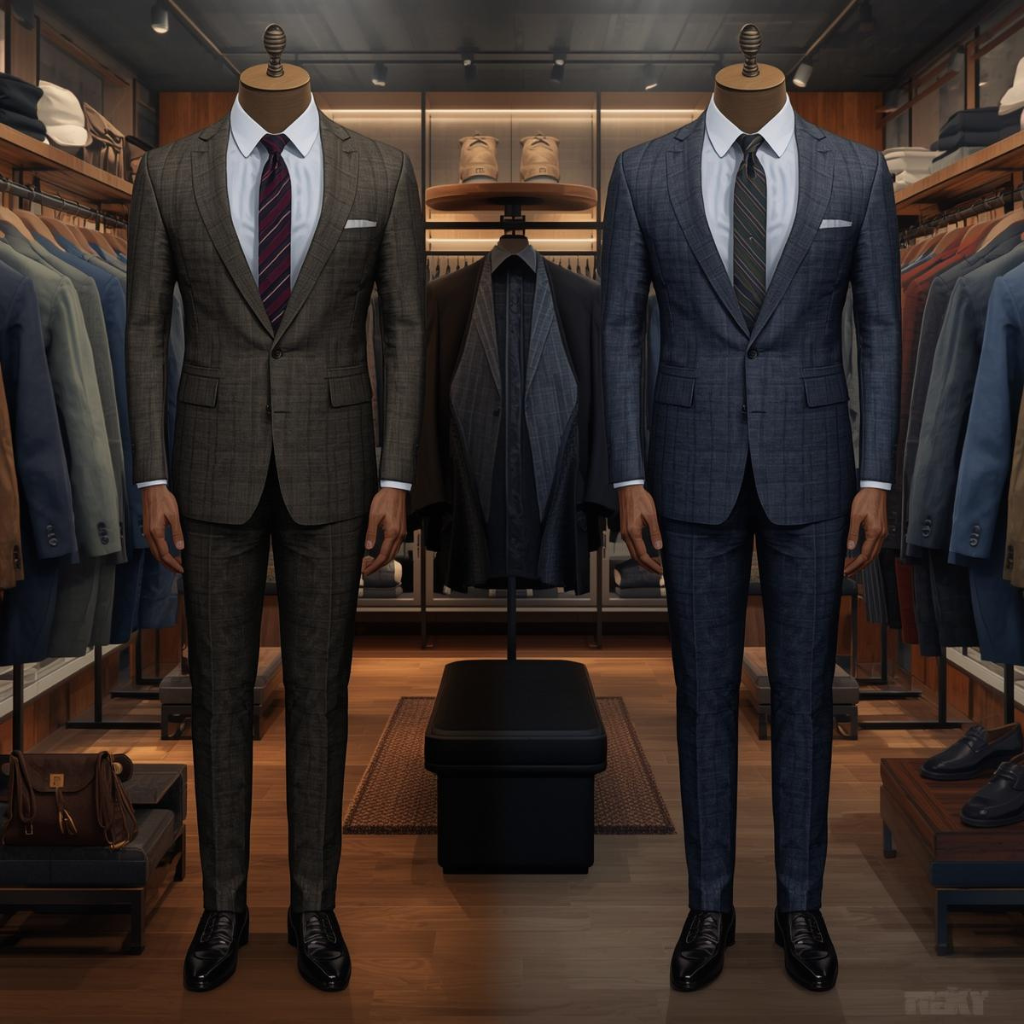
Most men who have never ordered a custom suit picture something intimidating. A stuffy shop with mirrors on every wall. A stranger circling you with a tape measure while you stand in your socks. Complicated jargon you are supposed to already understand. The reality is nothing like that. This guide walks you through every step of the made-to-measure suit process so you know exactly what to expect, how long it takes, and what happens at each stage.
TLDR: The custom suit process takes seven steps over four to eight weeks. You start with a consultation where an expert guides your fabric and style choices, then detailed measurements are taken. The suit is built from an adjusted pattern and refined through one or two fittings. With The Suit Doctor’s mobile fitting service, the entire process happens wherever is most convenient for you. No guesswork, no jargon, no surprises.
You have probably thought about getting a custom suit for a while now. Maybe you have a wedding coming up. Maybe you are tired of off-the-rack suits that almost fit but never quite get there. Maybe you just got a promotion and want to show up looking like you belong in the room.
Whatever brought you here, the same question is holding you back: what actually happens when you order a custom suit? If you have never done it before, the process can feel like a black box. You know the end result looks great, but you have no idea what the middle looks like.
That changes right now. Here is every step, explained in plain English, with honest timelines and practical tips.
Why the Process Behind Your Suit Actually Matters
This is not just about looking sharp. Research from Princeton University found that people form judgments about trustworthiness, competence, and likeability in just one-tenth of a second after seeing someone. That is faster than a blink. While that study focused on faces, the principle extends to your entire appearance. How your suit fits communicates status, intentionality, and confidence before you say a single word.
Separate research confirmed the effect goes both ways. A study published by Columbia University found that wearing formal clothing actually enhances abstract thinking and increases feelings of power. In other words, a well-fitted suit does not just change how others see you. It changes how you think.
The seven steps below are what create that result. Each one builds on the last, and together they produce something an off-the-rack suit simply cannot deliver. If you are still weighing whether made-to-measure is right for you, our guide to the differences between off-the-rack, made-to-measure, and bespoke suits in Kansas City breaks down when each option makes sense.
Step 1: Booking Your Consultation
The process starts with a phone call, a text, or a form submission. That is it. No preparation needed, no homework required.
For most providers, you can get an appointment within one to seven days depending on the season. Spring wedding season and fall business cycles are the busiest periods, so booking early helps during those windows.
Here is where The Suit Doctor’s mobile fitting model changes the game. Instead of you traveling to a shop, the fitter comes to you, whether that is your home, your office, or wherever works best. That eliminates the friction of finding time in your schedule, navigating to an unfamiliar location, and trying to explain what you want while standing in a retail environment you have never been in.
Pro tip: When you schedule a mobile fitting, you are already in the best possible environment. Your dress shoes are in the closet. Your dress shirts are hanging right there. You are standing and moving the way you naturally do in your own space. All of that matters more than most people realize during the fitting process.
Step 2: The Style Consultation
Before anyone picks up a tape measure, the first appointment starts with a conversation. This is not a test. There is no wrong answer. It is a design brief, and the fitter’s job is to guide it.
A skilled fitter needs to understand a few things about you:
What is the suit for? A daily business suit needs different fabric weight and construction than a wedding suit or a suit for occasional client dinners. Each purpose influences the silhouette, the fabric, and the details.
How often will you wear it? Daily suits need tougher, more resilient fabrics. Occasional suits can use finer, more luxurious weaves that would not hold up to five days a week.
What do you like? Modern slim fit, classic structured, or something relaxed and natural. If you have no strong opinion here, that is completely normal. That is exactly what the fitter’s expertise is for.
Do you have any references? A photo from a magazine, a screenshot from your phone, or even “I liked what that guy on TV was wearing” gives the fitter useful information. You do not need to arrive with a finished vision.
The consultation typically runs 15 to 30 minutes. You are not making permanent decisions at this stage. You are having a conversation with someone whose job is to translate your needs into a suit that works.
Not sure where to start? A consultation with The Suit Doctor takes the guesswork out entirely. You bring the occasion, they bring the expertise.
Step 3: Measurements and Posture Assessment
This is where the physical fitting begins, and it is also where the real expertise shows up.
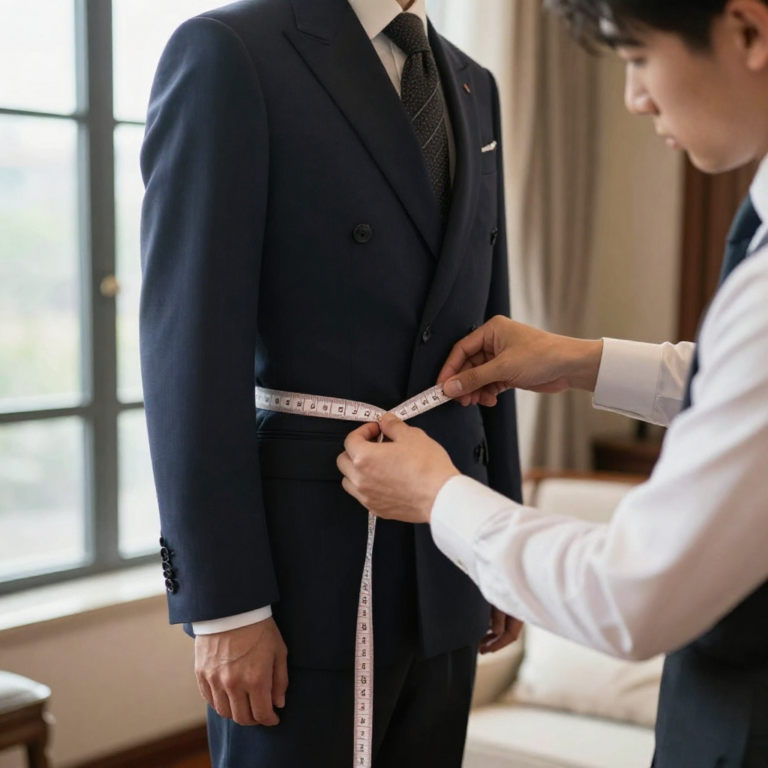
A trained fitter takes 12 to 16 body measurements for a standard made-to-measure suit. These include chest, waist, and seat circumference. Shoulder width and slope. Sleeve length and pitch. Back length and jacket length. Trouser inseam, outseam, rise, and thigh.
But measurements are only half the picture. What separates a good fitting from a great one is what happens next: the fitter observes your posture.
Why Posture Matters More Than Most Men Realize
Here is something most people have never thought about. Two men can have identical shoulder width measurements but completely different shoulder angles. If you put them in the same jacket, it would fit one of them and look wrong on the other. Shoulder angle is observed, not measured, and it is one of the reasons an in-person expert produces fundamentally different results than a tape measure and an online form.
Your fitter is watching for three primary posture types that require different pattern adjustments:
Balanced posture is relatively straightforward. The front and back of the jacket need roughly equal adjustments, and standard pattern modifications handle the fit well.
Forward posture (head forward, shoulders rounded) causes the back of the jacket to ride up, vents to swing open, and excess fabric to gather at the seat. The pattern must be lengthened through the back to compensate. These posture adjustments are virtually impossible to make on an already-cut garment, which is exactly why off-the-rack suits never quite look right on many men.
Erect posture (chest forward, shoulders back) creates the opposite problem. The back of the jacket hangs too long, causing fabric to pool at the lower back and the jacket hem to angle down at the back instead of sitting level. The pattern must be shortened through the back and the front lengthened to compensate.
A skilled fitter also watches how you naturally stand, whether you favor one hip, how your arms hang at rest. These observations directly affect sleeve pitch, back length, and jacket balance. None of this can be captured by an online form or a self-measurement video.
What to Wear to Your Fitting
This part is simple. Wear or bring a fitted dress shirt, because it affects shoulder and sleeve measurement accuracy. Bring the dress shoes you plan to pair with the suit, because they affect how the trouser break is measured. Avoid bulky sweaters, thick belts, or padded jackets that would distort your natural shape.
Pro tip: If you are getting a mobile fitting at home, lay out the shirt and shoes you plan to wear with the suit before the fitter arrives. Having everything ready makes the process smoother and ensures the measurements reflect how you will actually wear the suit in real life.
Step 4: Fabric and Design Selection
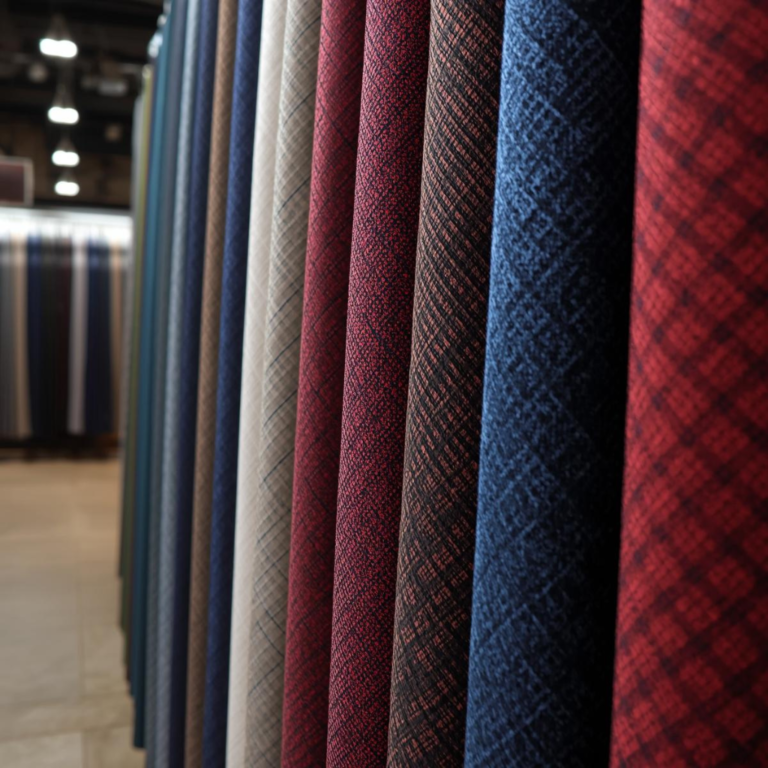
Fabric and design choices happen in the same appointment as measurements. No additional visit needed. This is one of the most enjoyable parts of the process, because you are making real decisions about how your suit will look and feel.
Understanding Fabric: The Super Number System
Wool suit fabrics carry a “Super” designation that describes the fineness of the fiber, measured in microns. Here is what the numbers actually mean in practical terms:
| Super Number | What It Means | Best For |
|---|---|---|
| Super 100s | Durable, excellent crease resistance | Everyday business wear, suits worn 3-5 days per week |
| Super 120s | Good all-rounder, slightly finer hand | Premium daily professional use |
| Super 130s-150s | Refined drape, softer feel | Important meetings, events, suits worn weekly |
| Super 160s+ | Extraordinarily luxurious, delicate | Formal occasions, less frequent wear |
Here is the key insight most people miss: a higher Super number is not always better. Super 100s to Super 120s are the sweet spot for suits worn regularly. They resist wrinkles better, hold up longer, and maintain their shape through years of wear. The finest fabrics feel incredible but are best reserved for suits that come out of the closet a few times a month, not every day. The Super number system is worth understanding before you choose, and your fitter will walk you through the options based on how you plan to wear the suit.
Design Choices
Beyond fabric, you are selecting the details that make the suit yours:
Lapel style. Notch lapels are versatile and work for everything from the office to a weekend event. Peak lapels carry more authority and formality. Shawl lapels are reserved for tuxedos and eveningwear.
Button count. Two-button is the modern standard and works on almost every body type. Three-button is a classic option. Single-button is formal only.
Pocket style. Jetted pockets (no flap) are the cleanest and most formal. Flap pockets are classic business. Patch pockets are casual and best on sport coats.
Vent style. Double vents allow the most movement and sit cleanly when you put your hands in your pockets. Single vent is a classic American choice. No vent is Italian-inspired and sleek but restrictive.
Trouser details. Flat front versus pleated. Cuffed versus uncuffed hem. Rise adjustment for comfort. Your fitter will explain the trade-offs for each choice based on your body type and the suit’s purpose.
Step 5: Production
Once your measurements and design choices are locked in, production begins. This stage takes the most time but requires nothing from you. Here is what is happening while you wait.
Pattern adjustment. Your fitter’s base pattern is modified using your specific measurements and posture notes. This is the core of made-to-measure. The pattern already exists, but it is reshaped to fit your body.
Fabric cutting. The adjusted pattern is used to cut all fabric pieces: jacket front and back panels, sleeves, collar, lapels, pockets, and trousers.
Canvas construction. In a quality suit, a layer of horsehair and wool canvas is stitched (not glued) to the jacket’s front panels. This internal structure gives the jacket its shape and allows it to mold to your chest over time. This is the difference between a suit that looks better after 50 wears and one that starts falling apart.
Assembly and finishing. Panels are joined, sleeves are set, the collar is attached, pockets are built, lining is set in, and buttons and buttonholes are sewn. Final finishing stitching is completed.
Production typically takes two to four weeks within the overall four-to-eight-week timeline.
Step 6: The First Fitting
When the suit arrives, the first fitting is where you see the garment on your body for the first time. This is not the finished product. It is a structured evaluation, and your fitter knows exactly what to look for during a fitting.
The Seven Fit Checkpoints
1. Shoulders. The shoulder seam should sit exactly at the edge of your natural shoulder bone. This is the single most important fit point. If the shoulders are wrong, no other alteration can rescue the jacket. Everything else can be adjusted. The shoulder cannot.
2. Chest and lapels. Lapels should lie flat against your chest without flaring or gapping. When the jacket is buttoned, you should be able to slip a flat hand between your chest and the fabric, but not a fist.
3. Sleeve length. Sleeves should show a quarter to half inch of shirt cuff at the wrist. This is not just an aesthetic choice. Exposing a sliver of shirt cuff protects the jacket sleeve from skin oils and dirt.
4. Sleeve pitch. The angle at which the sleeve hangs should allow your arms to rest naturally without the fabric pulling forward or backward.
5. Jacket length. The bottom of the jacket should cover the seat of your trousers while your arms hang naturally at your sides. A common test: when your arms hang relaxed at your sides, the bottom of the jacket should fall roughly where your fingers curl naturally.
6. Trouser drape. Fabric should flow smoothly from hip to floor with a gentle break over the top of the shoe. The seat should be smooth without pulling or bunching.
7. Overall balance. The fitter checks whether the posture adjustments made in the pattern are working as intended. The jacket should hang level, vents should sit flat, and the collar should rest cleanly against your shirt collar.
During the fitting, you should walk, sit, and raise your arms. A well-fitted suit allows all natural movements without the back riding up or the shoulders pulling.
Step 7: Final Adjustments and Delivery
After the first fitting, your fitter notes any refinements needed. These are typically minor:
- Waist or chest suppression tweaks
- Sleeve length fine-tuning
- Trouser hem finalization (usually left long at first fitting and cut to exact length with your actual shoes)
- Collar roll refinement
- Any posture-related balance corrections
A second fitting confirms the changes were made correctly. For most clients, this takes one to two weeks after the first fitting.
When the suit is delivered, it arrives fully pressed and steamed, with all buttons confirmed secure, every stitch inspected, and the collar, sleeves, and hem checked one final time. There is no “break-in period” needed. A properly fitted made-to-measure suit is ready to wear immediately.
Why Where You Get Fitted Matters
Traditional tailoring requires you to travel to a shop, sometimes multiple times across a six-to-eight-week process. The Suit Doctor’s mobile model inverts this. The fitter comes to you for every stage: consultation, measurements, and fittings alike.
This is not just a convenience feature. It is a quality advantage.
When you are fitted in your own environment, you have access to the shoes you will actually wear with the suit, the dress shirts that complete the look, and the natural way you stand and move at home or at work. You are not standing in an unfamiliar fitting room with slightly different posture than you carry in real life.
For executives, business owners, and anyone whose schedule does not leave much room for errands, the ability to have every appointment without leaving the office or home removes the primary barrier to custom tailoring.
| Traditional Shop Fitting | Mobile Fitting (The Suit Doctor) | |
|---|---|---|
| Travel required | Yes, multiple visits | None |
| Environment | Retail fitting room | Your home or office |
| Your accessories | Must remember to bring | Already in place |
| Comfort level | Unfamiliar setting | Natural and relaxed |
| Real-life conditions | Approximated | Actual |
Your Complete Timeline at a Glance
This is the single most-asked question from first-time custom suit buyers:
| Stage | Timeline |
|---|---|
| Book consultation | 1-7 days to schedule |
| Consultation + measurements + fabric selection | Same day, 1-2 hours total |
| Production | 2-4 weeks |
| First fitting + adjustments | 1-2 weeks after delivery |
| Final delivery | 4-8 weeks total from consultation |
Planning by occasion:
- Weddings: Start 8 to 10 weeks before the event
- Major business events: Start 6 to 8 weeks ahead
- Standard business wardrobe: 6 weeks is comfortable
What The Suit Doctor Offers
The Suit Doctor provides expert-guided made-to-measure suits with a mobile fitting model built around your schedule and your environment. Here is what that looks like in practice:
A trained fitter comes to you, takes detailed measurements while observing your posture and proportions, guides you through fabric and design selections, and manages every step through final delivery. No shop visits required. No confusing jargon. No pressure.
Whether you need custom business suits in Kansas City, wedding suits for your entire groomsmen lineup, prom suits, or an ongoing professional wardrobe, the process is the same: expert guidance, honest answers, and a suit that actually fits.
Frequently Asked Questions
Q: What should I wear to my consultation? Wear or bring a fitted dress shirt and the dress shoes you plan to pair with the suit. Slim-fit dress pants are better than jeans for accurate trouser measurement. Avoid bulky casual layers, heavy sweaters, or thick belts. The shoes are the most important item to have on hand since they directly affect how the trouser break is measured.
Q: How long does the whole process take? Four to eight weeks from initial consultation to final delivery. The consultation itself takes one to two hours and happens once. Subsequent fittings are shorter and can be scheduled at your convenience.
Q: How many fittings will I need? Most clients need one or two fittings after the suit arrives. First-time clients sometimes require a second adjustment fitting. After your first suit, the pattern is refined, and future suits with the same provider tend to need fewer adjustments.
Q: Will the suit fit perfectly the first time? It will fit very well, but “perfect” usually comes after one round of minor adjustments. The first fitting reveals how the adjusted pattern performs on your actual body. Small refinements are expected and normal. This is part of the process, not a failure.
Q: What if I gain or lose weight after my suit is made? Canvas-constructed suits built with appropriate seam allowances can be let out or taken in within certain limits. A good fitter leaves seam allowance specifically for this purpose. Discuss anticipated body changes before ordering so your fitter can plan accordingly.
Q: Can I order multiple suits at once? Yes, and for most clients the second suit is notably easier and faster because the pattern already exists and has been refined through the first fitting.
Q: Is a mobile fitting really as good as going to a shop? For many clients it produces better results, because the fitting happens in a realistic environment where you have access to all your actual accessories and move naturally. You are not performing for a fitting room mirror. You are standing the way you actually stand.
Q: Do I need to know anything about suits before my appointment? No. The fitter’s job is to ask the right questions and guide the process. Arriving with a purpose (“I need a business suit for client meetings”) and an honest sense of what you like is more than enough. You do not need to know lapel styles, vent types, or fabric grades. That is what the expert is for.
Q: What is the difference between made-to-measure and bespoke? Made-to-measure adjusts a pre-existing pattern to your body’s measurements. Bespoke creates a brand-new pattern from scratch. The Suit Doctor offers expert-guided made-to-measure, which delivers a dramatic fit improvement over off-the-rack at a price point that makes sense for most men.
Q: How much does a made-to-measure suit cost? Pricing varies based on fabric selection and design details. Rather than publishing a number that may not reflect your specific choices, the best approach is to discuss your budget and goals during the consultation. There is no obligation, and the fitter will be straightforward about what is achievable at different price points.
Key Takeaways
- The process has seven clear steps. Booking, consultation, measurements, fabric and design selection, production, first fitting, and final delivery. Each one is straightforward when you know what to expect.
- Posture matters as much as measurements. Two men with identical shoulder widths can need completely different jackets because of shoulder angle and stance. This is why an in-person expert produces results that a tape measure and an online form cannot match.
- The consultation is a conversation, not a test. You do not need to arrive knowing anything about suits. The fitter asks the right questions and translates your answers into a suit that works.
- Higher fabric numbers are not always better. Super 100s to Super 120s are the sweet spot for daily wear. Finer fabrics feel incredible but are best reserved for suits worn occasionally.
- Mobile fitting is a quality advantage, not just a convenience. Being fitted in your own environment with your actual shoes, shirts, and natural posture often produces a better result than a shop fitting room.
- Minor first-fitting adjustments are normal. They are part of the process, not a sign that something went wrong. The first fitting is an evaluation stage, and small refinements are expected.
- The second suit is always easier. Once the pattern exists and has been refined through the first fitting, every future suit with the same provider starts from a better baseline.
Ready to See How Simple It Actually Is?
You now know exactly what happens at every step of the custom suit process. There are no surprises left. The only thing between you and a suit that actually fits is a conversation.
The Suit Doctor offers:
- Expert-guided made-to-measure suits built around your measurements and posture
- Mobile fittings at your home, office, or wherever works for you
- Business suits, groom and groomsmen suits, prom suits, and full wardrobe building
- Personalized fabric and style guidance with no jargon and no pressure
- A process designed to be simple from the first phone call to the final fitting
Ready to get started? Schedule your Kansas City custom suit consultation today. No obligation, no complicated steps. Just honest guidance and a suit built for you.
The Suit Doctor | Custom and Made-to-Measure Suits for Men Who Take Their Look Seriously.